80% of manufacturing costs are determined during the design phase. This statistic from McKinsey's manufacturing research underscores why New Product Introduction (NPI) and rapid prototyping have become critical competitive advantages for hardware startups. In 2026, the companies winning market share aren't just those with better products—they're the ones that get to market 3x faster while maintaining quality standards that meet or exceed established players.
📐 What Is NPI and Why Does Speed Matter?
New Product Introduction (NPI) is the systematic process of transforming a product concept from design files into mass production. While traditional NPI cycles took 3-6 months, modern rapid prototyping workflows have compressed this to 72 hours from CAD to First Article—without sacrificing quality or manufacturability.
⚡ Speed to Market
Every day of delay costs $10,000-50,000 in lost revenue for hardware startups. Rapid NPI captures market windows before competitors.
💰 Cost Optimization
Design changes cost 10x more in production than in prototyping. Early DFM analysis prevents expensive rework.
🎯 Risk Mitigation
First Article Inspection (FAI) validates 100% of specifications before mass production, reducing defect rates by 85%.
🔄 Iteration Velocity
Rapid prototyping enables 5-10 design iterations in the time traditional methods allow for one, accelerating product-market fit.
📊 The Economics of Rapid NPI
According to Deloitte's 2026 Manufacturing Outlook, companies implementing 72-hour NPI workflows achieve:
- 73% faster time-to-market compared to traditional 3-month cycles
- 45% reduction in total development costs through early DFM optimization
- 92% first-pass yield on mass production runs (vs. 65% industry average)
- 60% fewer field failures due to comprehensive FAI protocols
🔧 The 72-Hour NPI Process: Hour by Hour
Our 72-hour rapid prototyping workflow at Illuminious follows a proven methodology refined across 200+ hardware projects. Here's how it works:
Hours 0-24: Design Review & DFM Analysis
The foundation of successful NPI is comprehensive Design for Manufacturing (DFM) analysis—catching issues before they become expensive problems:
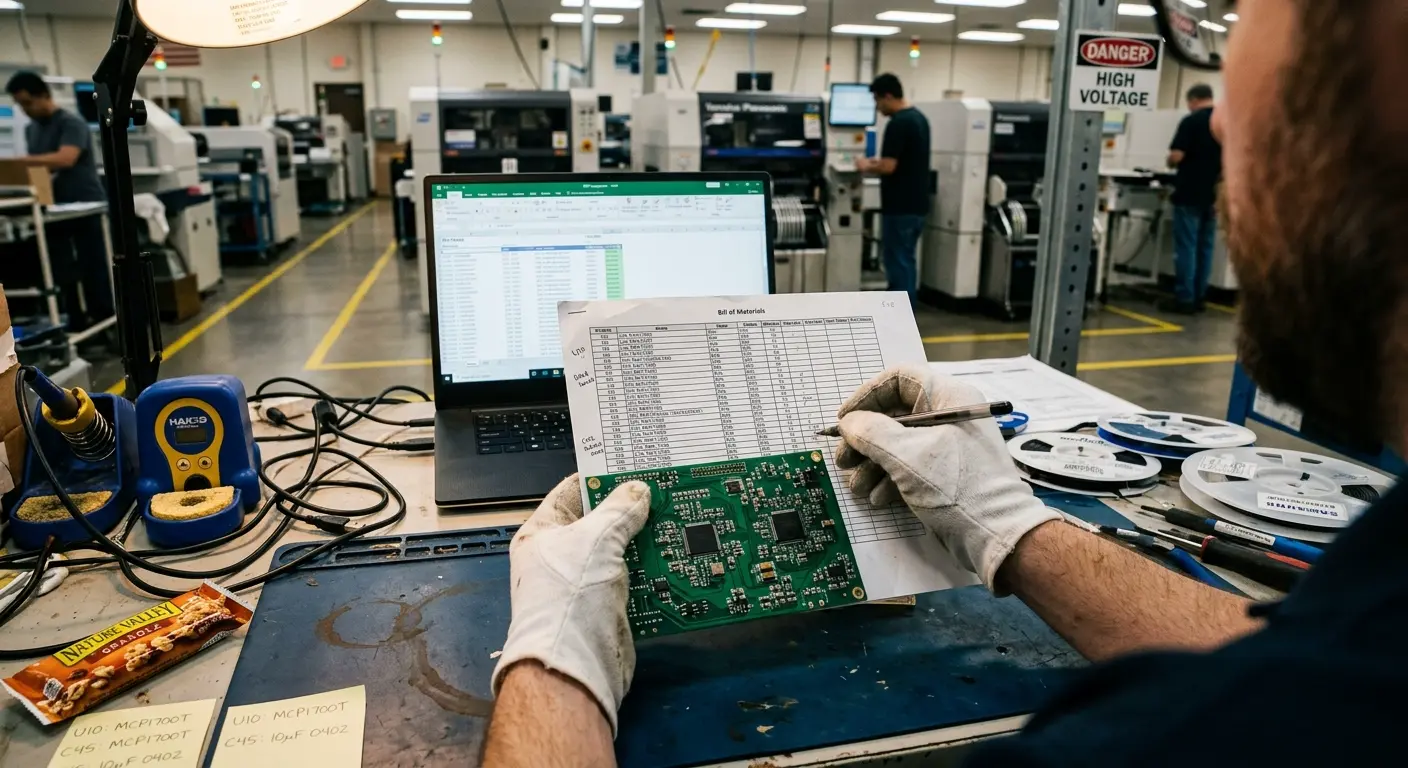
- CAD File Validation: Verify Gerber files, BOM completeness, and design rule compliance for target manufacturing processes
- Component Sourcing Review: Confirm availability, lead times, and lifecycle status for all BOM items—identifying alternatives for at-risk parts
- DFM Score Assessment: Evaluate manufacturability across solderability, test access, thermal management, and assembly complexity
- Process Window Analysis: Define optimal manufacturing parameters based on component specifications and PCB characteristics
⚠️ Critical Insight: The 80% Rule
Design decisions determine 80% of final manufacturing costs. A component placement that's 2mm off optimal may seem trivial in CAD, but it can add $2-5 per unit in assembly complexity. At 10,000 units, that's $20,000-50,000 in unnecessary cost—costs that are locked in once production begins.
Hours 24-48: Rapid Fabrication & Component Prep
With DFM validation complete, the physical build process begins:
⚡ Quick-Turn PCB Fabrication
2-4 layer prototypes fabricated in 12-24 hours using advanced laser direct imaging (LDI) for precise trace alignment.
📦 Component Kitting
Automated BOM validation and component sourcing from strategic inventory—95% of parts available within 24 hours in Shenzhen.
🔍 Stencil & Tooling Prep
Laser-cut stainless steel stencils (3-5 mil thickness) optimized for paste volume control on fine-pitch components.
📋 Work Instruction Generation
Automated assembly documentation with 3D visualization and step-by-step verification checkpoints.
Hours 48-72: Assembly, Test & FAI
The final phase transforms components into validated prototypes:
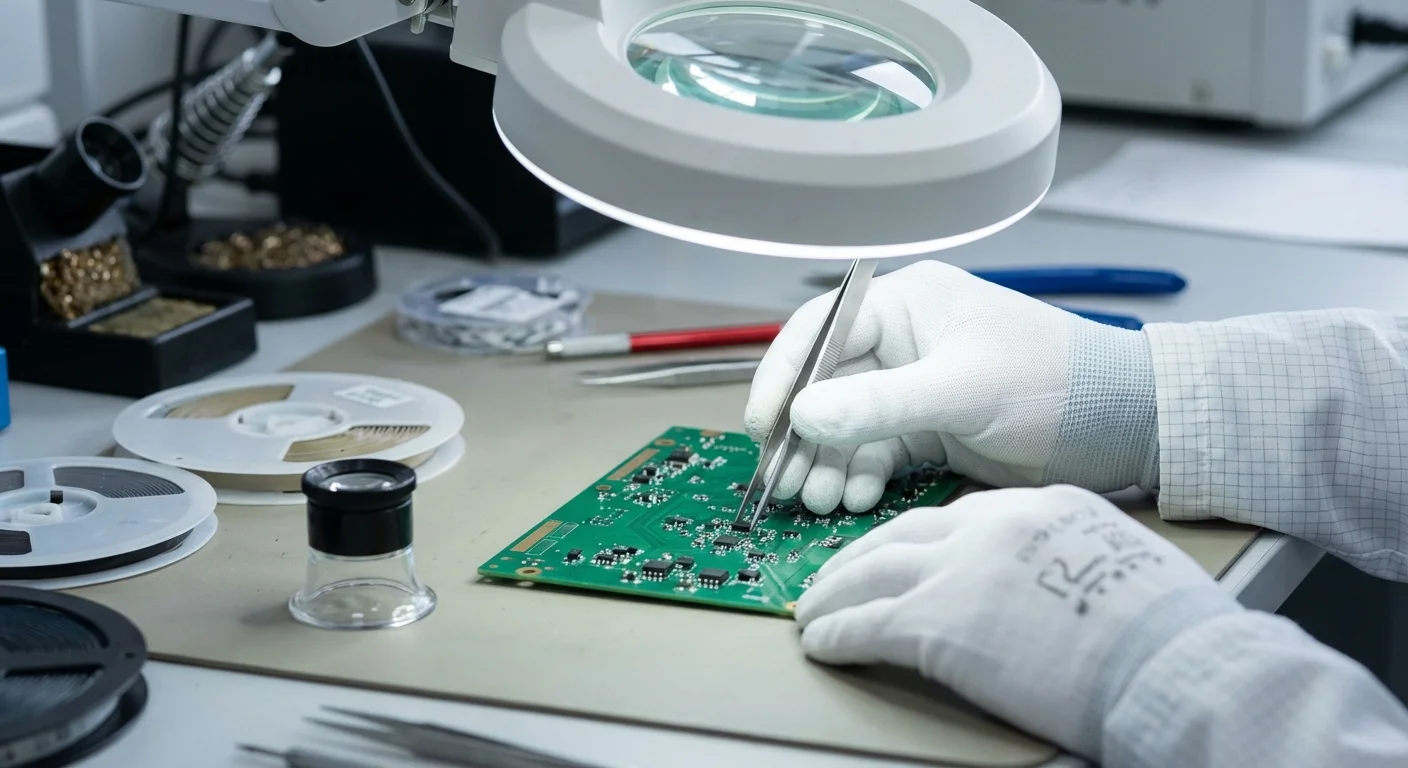
- SMT Assembly: High-speed pick-and-place with ±25μm accuracy for components down to 0201 and 0.4mm pitch BGA
- Reflow Optimization: Thermal profiling with 6-10 zone ovens to ensure proper solder joint formation without component damage
- AOI Inspection: Automated Optical Inspection catches 99.7% of placement and solder defects before electrical test
- Electrical Verification: Flying probe or bed-of-nails testing validates connectivity, power rails, and critical signal integrity
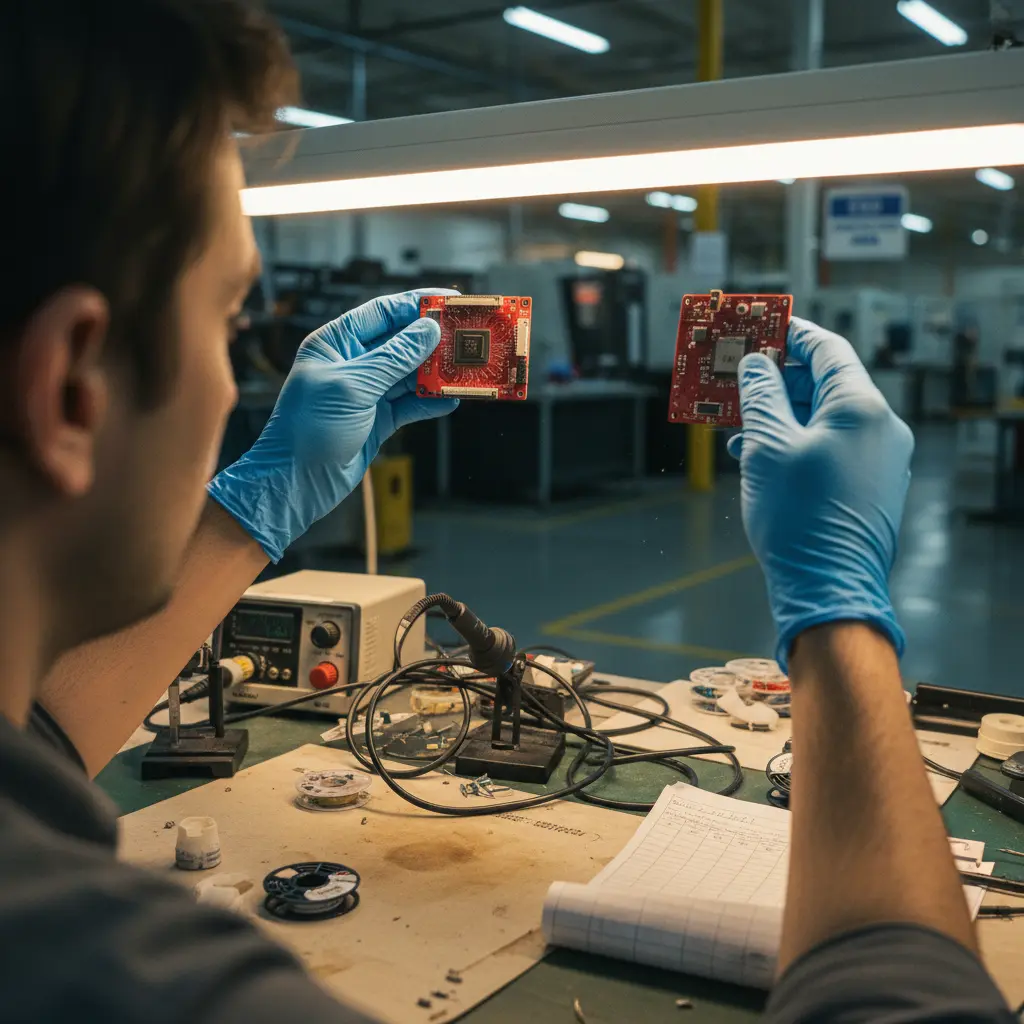
- First Article Inspection (FAI): Comprehensive dimensional and functional validation against design specifications
✅ First Article Inspection Checklist
FAI is the quality gate that separates successful products from field failures. Every prototype undergoes:
- Dimensional verification: All critical dimensions measured against CAD specifications (±0.05mm tolerance)
- Electrical validation: Full functional test under operating conditions
- Environmental screening: Thermal cycling and vibration testing for mission-critical applications
- Documentation package: Complete inspection reports with traceability for design iteration
🏭 DFM Best Practices: Design Stage Decisions That Drive 80% of Costs
Design for Manufacturing isn't a manufacturing problem—it's a design opportunity. Here are the critical DFM principles that determine manufacturing success:
Standardize on common packages. Using 0402 passives instead of 0201 reduces placement errors by 60% and eliminates specialty nozzle requirements. Choose components with multiple qualified suppliers to avoid single-source risk.
Maintain adequate spacing. Component-to-component spacing of ≥0.5mm enables automated optical inspection. Thermal relief patterns on copper pours prevent soldering defects on large ground planes.
Design for testability. Include test points for all power rails and critical signals. Boundary scan (JTAG) capability enables comprehensive board-level testing without physical probe access.
Unify component orientations. Consistent polarized component placement (diodes, capacitors, ICs) reduces assembly errors and accelerates programming. Avoid placing tall components near short ones that create shadowing during reflow.
💡 Real-World Impact: IoT Sensor Case Study
A smart agriculture startup initially designed their sensor board with 0201 passives and 0.35mm pitch QFN packages to minimize size. Our DFM analysis revealed:
- Prototype yield: 34% (66% rework rate)
- Assembly cost: $12.50/unit due to specialized handling
- Test coverage: 45% due to inaccessible test points
After DFM optimization to 0402 passives and 0.5mm pitch QFP packages:
- Prototype yield: 94%
- Assembly cost: $4.20/unit (66% reduction)
- Test coverage: 98% with automated flying probe
Result: 3-week schedule recovery and $180,000 annual cost savings at 10K units/year.
🚀 From Prototype to Mass Production: The Transition Strategy
Rapid prototyping is only valuable if it leads to successful mass production. Here's the proven transition framework:
Phase 1: Design Freeze & PPAP
Once prototypes validate the design, formalize the production baseline:
- Engineering Change Control: Lock the BOM and PCB revision; all changes require formal ECO process
- Production Part Approval Process (PPAP): Submit Level 3 documentation including FAI reports, material certifications, and process capability studies
- Supplier Qualification: Audit critical component suppliers for quality systems (ISO 9001, IATF 16949 where applicable)
- Process Validation: Run 300+ units to establish Cpk ≥1.67 on all critical dimensions
Phase 2: Pilot Production
📊 Statistical Process Control
Implement SPC charts for key process parameters—reflow profiles, placement accuracy, solder paste volume.
🔧 Workstation Qualification
Validate all assembly and test equipment with GR&R studies (Gage Repeatability & Reproducibility).
👥 Operator Training
Certify production operators with hands-on training and competency validation for critical operations.
📋 Quality Gate Definition
Establish IPC-A-610 Class 2 or Class 3 inspection criteria based on product requirements.
Phase 3: Volume Ramp
Scale from pilot to full production with confidence:
📈 Capacity Planning
Line balancing and takt time optimization to meet delivery commitments
🔄 Supply Chain Sync
VMI (Vendor Managed Inventory) programs for high-volume components
📊 Yield Monitoring
Real-time defect tracking with automated Pareto analysis
🚚 Logistics Integration
Direct integration with fulfillment systems for order-to-delivery visibility
🔍 Continuous Improvement
Kaizen events targeting top defect contributors
📞 Customer Support
Field failure analysis and rapid response protocols
📈 Success Metrics: Industrial Controller Case Study
A factory automation startup used our 72-hour NPI process for their industrial IoT controller:
- Timeline: CAD to First Article in 68 hours (ahead of 72-hour target)
- First-pass yield: 96% on initial prototype run (5 units)
- DFM issues identified: 12 critical, 8 minor—all resolved before production
- Mass production transition: 3 weeks from prototype approval to 5,000 units/month
- Field failure rate: 0.3% at 12 months (vs. 2.1% industry average)
Business Impact: Captured $2.4M contract by meeting aggressive customer delivery requirements that competitors couldn't match.
🎯 Choosing the Right NPI Partner
Not all rapid prototyping services are created equal. Here's what to evaluate:
Can they handle your technology? Verify experience with your specific requirements—fine-pitch BGA, high-speed signals, RF circuits, or high-voltage applications. Ask for relevant case studies and customer references.
What certifications do they hold? ISO 9001 is baseline; IATF 16949 indicates automotive-grade discipline; IPC-A-610 Class 3 certification ensures highest reliability standards for mission-critical applications.
Do they provide actionable feedback? Look for partners who deliver detailed DFM reports with specific recommendations, not just automated checks. The best partners challenge your design assumptions to optimize for manufacturability.
Can they grow with you? Ensure your prototyping partner has a clear pathway to mass production with consistent quality systems. Changing manufacturers between prototype and production introduces risk and delays.
🚀 Speed Without Compromise
In 2026's competitive hardware landscape, the companies that win are those that move fastest without sacrificing quality. The 72-hour NPI process isn't about cutting corners—it's about eliminating waste, automating validation, and compressing the time between design decision and physical verification.
The 80% rule still applies: Design stage decisions determine manufacturing success. Partner with an NPI provider who brings DFM expertise, rapid prototyping capability, and a clear path to mass production.
At Illuminious, we've refined this process across 200+ projects, helping hardware startups capture market windows and scale with confidence. From CAD to First Article in 72 hours—it's not just possible, it's your competitive advantage.