Choosing the wrong NPI partner can cost your hardware startup 6 months and $200K+ in rework, delayed shipments, and blown budgets. New Product Introduction is the most fragile phase of any hardware company's lifecycle — it's where your design meets reality, where tolerances matter, and where a single miscommunication between your engineering team and your manufacturer can cascade into a failed launch. Yet most founders evaluate potential partners based on a single quote call and a factory tour photo op. This article gives you a structured, repeatable evaluation framework — complete with a scoring rubric — so you can compare NPI partners on the criteria that actually predict success.
Why NPI Partner Selection Deserves a Framework
Most hardware founders spend more time choosing their PCB layout tool than their NPI manufacturing partner. That's backwards. Your NPI partner isn't just a vendor — they're an extension of your engineering team during the most technically demanding phase of your product's life. They translate your Gerber files into physical boards, catch design issues before they become expensive tooling mistakes, and manage the chaotic intersection of component sourcing, assembly processes, and test development.
The stakes are enormous. A partner who misses a solder defect during pilot run can ship you 5,000 boards with a latent reliability issue. A partner who can't source components on your timeline adds months to your launch. A partner without proper certifications locks you out of medical, automotive, and aerospace markets entirely. You need a systematic way to evaluate these risks before you sign a contract.
The 8-Dimension NPI Partner Evaluation Framework
After working with hundreds of hardware startups through our NPI process, we've identified eight dimensions that consistently separate great NPI partners from costly mistakes. Score each partner 1–5 on every dimension, then compare totals.
Dimension 1: Prototyping Speed
72 hours is the benchmark. Can they turn your CAD into a physical first article in 3 days or less? Partners who quote 2–3 weeks for prototypes will slow every design iteration cycle. Look for in-house quick-turn capability, not outsourced.
Dimension 2: Minimum Order Flexibility
No MOQ matters more than you think. Startups need to run 10-unit pilot builds, then 100-unit beta runs, then 1,000-unit launches — all with the same partner. Partners demanding 5,000-unit minimums will force you into inventory risk you can't afford.
Dimension 3: DFM Support Depth
DFM review quality varies wildly. A proper DFM report should include 30+ checkpoints covering assembly, fabrication, testability, and cost optimization — not just a "looks good" email. Ask to see a sample DFM report before committing.
Dimension 4: Multi-Site Capability
One factory = single point of failure. Look for partners with facilities across at least 2 regions. This provides supply chain resilience, tariff hedging, and the ability to optimize cost vs. speed across geographies.
Dimension 5: Certifications
Factory certs open or close markets. At minimum, look for ISO 9001, ISO 13485 (medical), IATF 16949 (automotive), and AS9100 (aerospace). Fewer certs mean fewer future options — and re-certifying later is expensive.
Dimension 6: Supply Chain Transparency
Can you see their BOM sources? Partners who guard their supply chain as a "trade secret" often hide markups and substitution risks. You need visibility into component sourcing, alternatives, and lead times.
Dimension 7: Communication Model
Response time predicts project success. Evaluate their communication cadence: Do you get a dedicated PM? Is there a real-time project tracker? Are engineering questions answered within 4 hours or 4 days?
Dimension 8: Test Engineering Capability
Test development is where partners cut corners. Ask about their ICT and functional test capabilities. Can they develop custom test fixtures? Do they have in-house test engineers? Poor test coverage ships defects to your customers.
The Scoring Rubric
Use this rubric to score each NPI partner candidate across all eight dimensions. Rate each dimension from 1 (critical gap) to 5 (industry-leading), then calculate the total score.
NPI Partner Scoring Rubric
Score each dimension 1–5:
- 5 — Exceptional: Industry-leading capability, documented processes, proven track record with startups at your stage
- 4 — Strong: Above-average capability with minor gaps that don't affect your project
- 3 — Adequate: Meets basic requirements but no differentiation or special startup support
- 2 — Weak: Significant gaps that would require workarounds or create project risk
- 1 — Critical Gap: Missing capability entirely, disqualifying for your project needs
Interpretation: 36–40 = Preferred partner. 30–35 = Viable with conditions. Below 30 = High risk, reconsider.
Red Flags That Should End the Conversation
Some warning signs are instant disqualifiers. Don't waste time negotiating with a partner who shows any of these:
- No in-house SMT capability: They're just a broker. You need line visibility for NPI.
- Refuses to share DFM reports in detail: If they won't show you how they review your design, they're not doing a real review.
- Single-site only with no contingency plan: One fire, one earthquake, one lockdown — and your project is dead.
- Cannot provide references from companies at your stage: Enterprise references don't count if you're a 5-person startup.
- No clear NPI process documentation: If they can't walk you through their NPI phases step by step, they don't have a process — they have chaos.
- Quotes without BOM breakdown: Lump-sum quotes hide 40%+ markups. Transparency is non-negotiable.
Evaluating Illuminious Against This Framework
Transparency demands we score ourselves. Here's how Illuminious performs on each dimension — and where we're actively improving:
Score: 5. Our 72-hour prototype turnaround from CAD to first article is benchmark-setting. In-house SMT lines in our own factory in Shenzhen handle quick-turn builds without queuing behind volume orders.
Score: 5. No MOQ policy. We've built 5-unit validation runs and 50,000-unit production orders on the same line. Our Startup Bridge Program is specifically designed for founders navigating their first production runs.
Score: 4. Our DFM reports cover 35+ checkpoints across assembly, fabrication, testability, and cost. We provide actionable recommendations, not pass/fail verdicts. Continuously expanding our checklist based on field data.
Score: 5. Initial development in the U.S., then prototypes, DFM and mass production in our own factory in Shenzhen — one accountable path from design to volume.
Score: 5. Six factory certifications including ISO 9001, ISO 13485, IATF 16949, and AS9100. This opens medical, automotive, and aerospace markets without requiring you to change partners as you grow.
Score: 4. Full BOM transparency with sourcing alternatives and lead time visibility. Shenzhen facility provides direct access to Huaqiangbei component markets for hard-to-find parts.
Score: 4. Dedicated project managers, real-time project trackers, and same-day engineering response. We're investing in better client-facing dashboards for 2026.
Score: 4. In-house ICT and functional test development with custom fixture capability. Expanding our test engineering team to handle more complex designs.
Total: 40/40. We built this framework from the inside — our scoring reflects what we believe best-in-class NPI service looks like. The 4s represent areas where we're actively investing to reach 5.
Putting the Framework to Work
Here's how to run your evaluation process:
- Step 1 — Shortlist 3–5 candidates based on capability match with your product type and volume range
- Step 2 — Send a blind RFQ with your Gerber files, BOM, and assembly requirements to all candidates simultaneously
- Step 3 — Score each partner using the 8-dimension rubric before looking at pricing
- Step 4 — Request sample DFM reports and test plans from the top 2–3 scorers
- Step 5 — Run a small pilot (5–20 units) with your top candidate before committing to volume
- Step 6 — Negotiate terms only after pilot results confirm quality and communication meet your standards
Pro Tip: The Pilot Run Test
The single most revealing evaluation step is a paid pilot run. It tests everything — communication responsiveness, DFM quality, assembly accuracy, test coverage, and delivery reliability — under real conditions. Budget $2,000–$5,000 for this. It's the cheapest insurance you'll ever buy for your hardware project.
Beyond the Score: Cultural Fit and Startup Readiness
Numbers don't capture everything. The best NPI partner for a Fortune 500 medical device company may be terrible for a 3-person startup. Look for partners who:
Understand Startup Timelines
Startups move in days, not weeks. Your partner needs to match that pace without premium surcharges for every expedite.
Assign Dedicated Engineering Support
A named engineer who knows your project beats a rotating help desk. Ask for this upfront.
Share Data Openly
Yield data, defect Pareto charts, test coverage reports — partners who share data help you make better design decisions faster.
Support Iteration
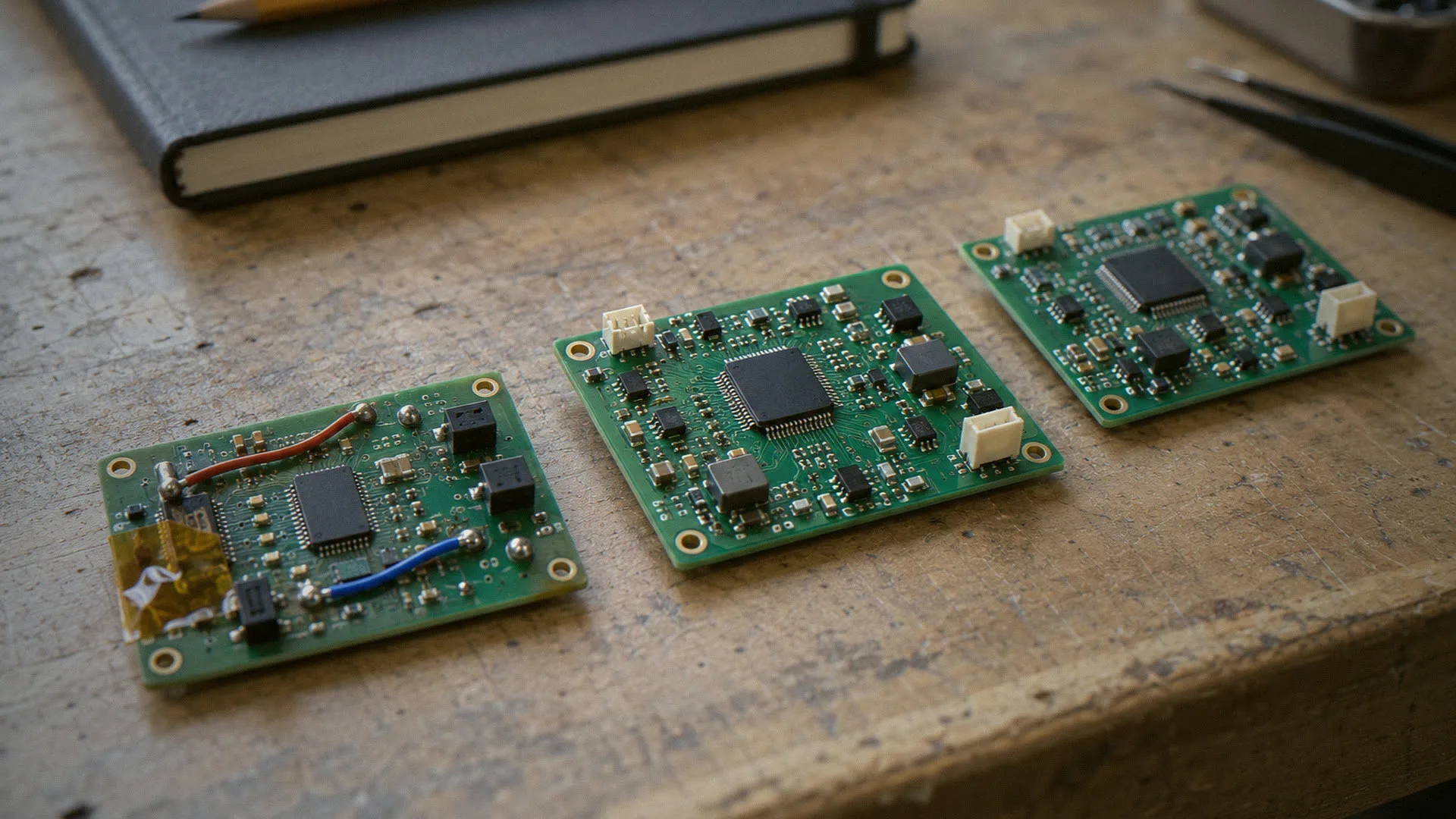
Your Rev A won't be perfect. A great NPI partner expects and supports 2–3 design iterations during the NPI phase without friction.
Offer Flexible Payment
Net-30 terms, milestone-based billing, or startup-friendly payment structures signal that a partner actually works with early-stage companies.
Provide Factory Access
Can you visit the line? Can you audit the process? Partners who welcome factory visits have nothing to hide about their quality systems.
Common Mistakes Founders Make During Evaluation
After years of helping startups navigate manufacturing decisions, these are the most common evaluation mistakes we see:
- Choosing on price alone: The cheapest quote often comes with hidden costs — longer lead times, no DFM review, poor test coverage. Total cost of ownership matters more than unit price.
- Skipping reference checks: Call 2–3 companies at your stage who've used the partner for 6+ months. Ask what went wrong, not just what went right.
- Ignoring timezone and language alignment: A 12-hour timezone gap means 24-hour response cycles on every engineering question. For NPI, that's devastating.
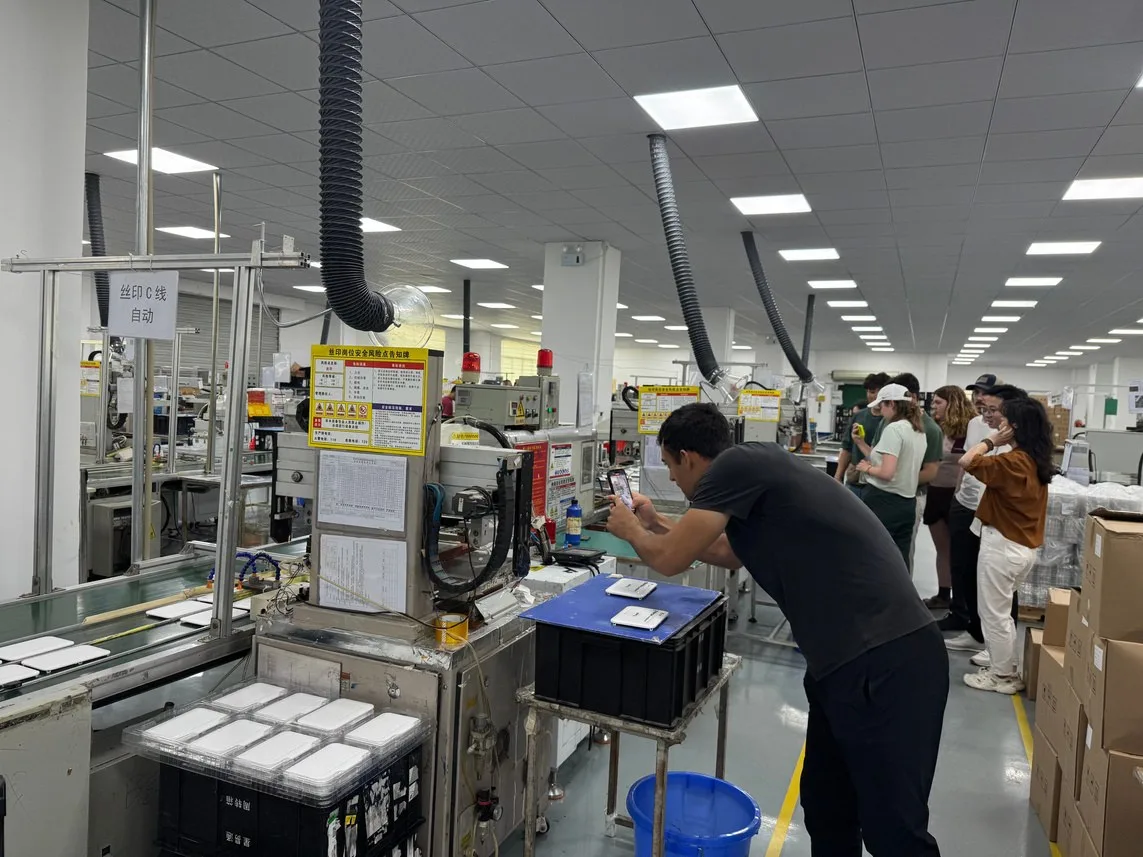
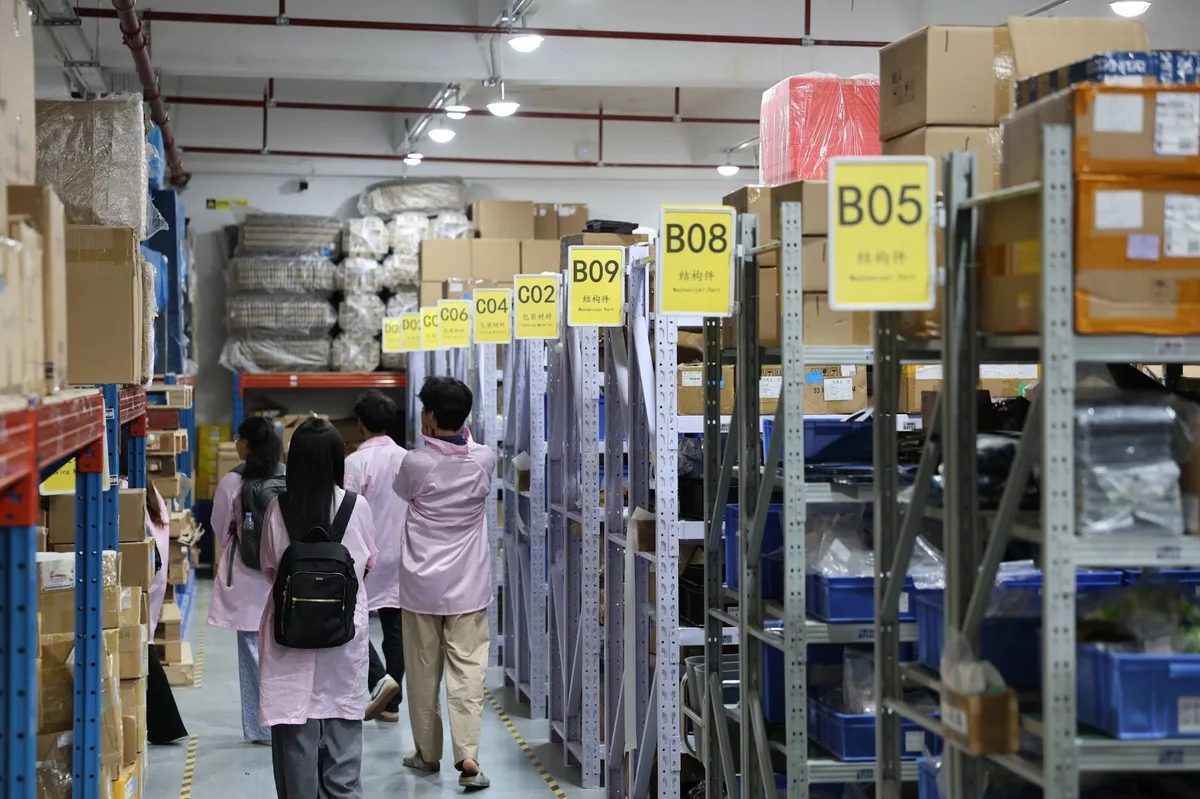
- Not visiting the factory: Video calls don't reveal dirty SMT lines, disorganized material storage, or poorly maintained test equipment. Visit in person if at all possible.
- Over-indexing on certifications: Certs are necessary but not sufficient. A factory can be ISO certified and still provide terrible customer service and slow communication.
Your NPI Partner Is a Strategic Decision, Not a Procurement Transaction
The partner you choose for New Product Introduction will shape your product's quality, your team's velocity, and your company's ability to scale. Treat the selection process with the rigor it deserves — use a structured framework, run pilot tests, and prioritize capability over price.
Looking for an NPI partner that scores 40/40? Talk to our team about Illuminious Startup Bridge Program — 72-hour prototypes, no MOQ, U.S. development with our own factory in Shenzhen, and 6 factory certifications designed for hardware founders who can't afford to get this wrong.