DFM services before the first build
Illuminious is a U.S. NPI engineering company that runs the DFM review inside the design phase, while a change still costs a CAD edit. Engineered in San Francisco. Prototype builds, DFM and mass production in our own factory in Shenzhen. Your demo build then tests the product and the way it will be made.
What are DFM services, and when do they happen?
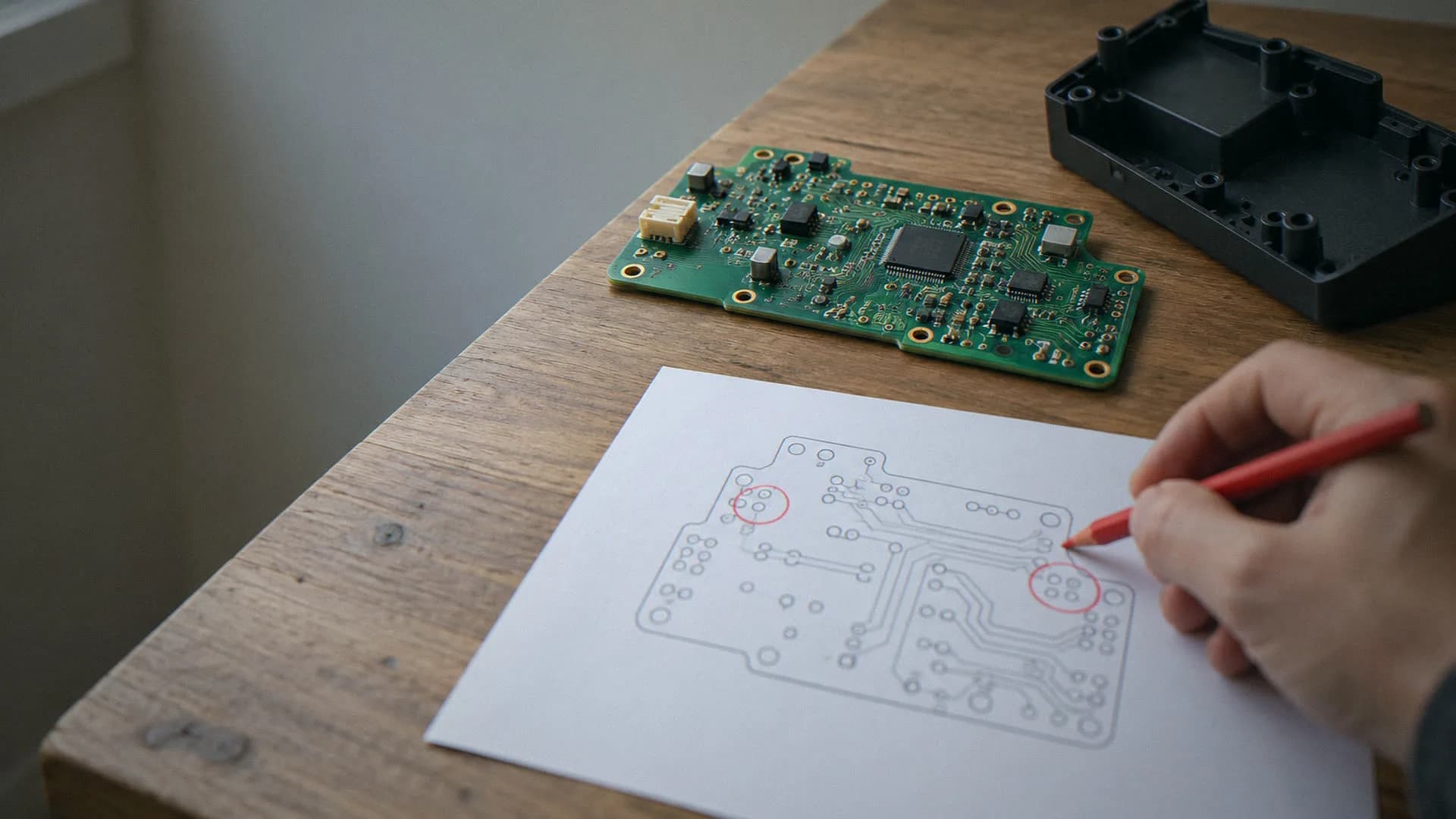
DFM services are engineering work that changes your design so the factory can build it the same way every time. We run the DFM review while the design is still in CAD, before the demo build. Findings come back as a report, the design changes, and the changed files are checked again before release.
DFM review or free engineering review: what is the difference?
The free engineering review on a portal order checks that order's files, including the manufacturability risks of its route. A DFM review is a design stage: our engineers change the product itself, in the layout, the parts or the enclosure, so it is easier to build, test and source.
Both matter, at different times. The free engineering review protects one order. The DFM review shapes the product before any order exists. For the checks each portal order gets, by route, see the DFM analysis page.
What the factory side adds
Those per-route checks cover the board, the stencil and the machined or printed part. The DFM review adds three checks that only the people who will build and test the product can make:
The reviewers are engineers who work in the Shenzhen factory, next to the lines that will build your product. They know which tolerance costs a second machine setup and which part placement slows the pick-and-place. That knowledge is the point of the review.
- Test access. Test points for the in-circuit and functional fixtures that will check each unit, placed where a probe can reach them.
- Box build. How the parts go together, in what order, and with which fasteners or adhesives, so assembly does not depend on one skilled hand.
- Alternates. Availability, lifecycle and a second source for each key part, checked across our network of 350 audited suppliers.
What do you send for a DFM review?
The schematic, the PCB layout, the BOM and the enclosure CAD, in their native formats where you have them. Add the target volume, the markets you will sell in and any test you already run. Volume and markets decide which process the review checks against, and which certification path the test points must serve.
A partial set is fine for a first pass. A layout without a finished enclosure can still be checked for test access and parts; the box-build check then waits for the housing.
When is the cheapest point to change a design?
Before the first build. In CAD, a change is an edit and a re-check. After the demo build, it is a new board spin and new parts. After tooling is cut, it can mean a new mold. That is why we run the DFM review in the design phase and not after the first units fail.
A late finding costs the demo date. A board respin can push an investor demo; a mold change can push a launch. Skipping the DFM review to save time before the demo build moves the lost time to after it. The guide to prototype-to-production cost traps lists the usual ones.
What does a DFM finding look like?
A finding names the part of the design, the risk, the evidence and the change we propose. For example: a decoupling capacitor placed in a zone that flexes under vibration, so the sensor rail drops out. The fix moves the part. You approve each change before the design is released to the demo build.
That finding came from a robotics startup with an investor demo close. Its hand-built perception boards dropped the sensor stream under vibration. A review of the layout found the capacitor and an antenna keep-out problem; we fixed both and built a small emergency run of tested boards in time. Found in CAD, each change would have been an edit. Read the case study.
A findings report sorts each finding by when it must be fixed: before the demo build, before EVT, or before production. Not every finding needs a change now. A demo build can carry a known issue that EVT removes, as long as everyone knows it is there.
How a DFM review runs
- CAD review. Our engineers read the schematic, the layout, the BOM and the enclosure CAD against the factory's processes.
- Findings report. Each finding has a location, a risk, the evidence and a proposed change. You receive the report.
- Design change. You approve, question or decline each change. Approved changes go into the design files.
- Re-check. We check the changed files again, so a fix does not create a new problem.
- Release to the demo build. The reviewed file set is released, and you receive it at the stage gate.
What changes because of it
The demo build is no longer only a test of the idea. It is built from files that already suit the factory's processes, so EVT starts from a board that can be built again. Parts have alternates before a shortage hits. Test points are in place when the fixtures are designed. The enclosure is ready for molding instead of printing. When the product moves on to transfer to production, fewer of the problems are new.
DFM is not a one-time event. We repeat the DFM review before DVT and before tooling, because each stage adds detail that the first review could not see.
Order DFM-related work online
Two portal services sit inside the design phase: Project initiation and PCB layout. Both have a published fixed price and a free engineering review in 2 business days. A DFM review of a full product is scoped with an engineer and priced in an official quote.
More reading: design for manufacturing best practices for electronics products.
Facts and questions
How long does a DFM review take?
It depends on the size of the design and how many parts it has, so the lead time is stated in the official quote. The free engineering review on a portal order takes 2 business days for the four design services and 1 business day for the rest of the portal.
What does a DFM review cost?
An engineer scopes it after reading your files, because the size of the design and the number of parts set the work. The price is in the official quote, and nothing is charged before you accept it. The free engineering review on a portal order stays free.
Is DFM only for circuit boards?
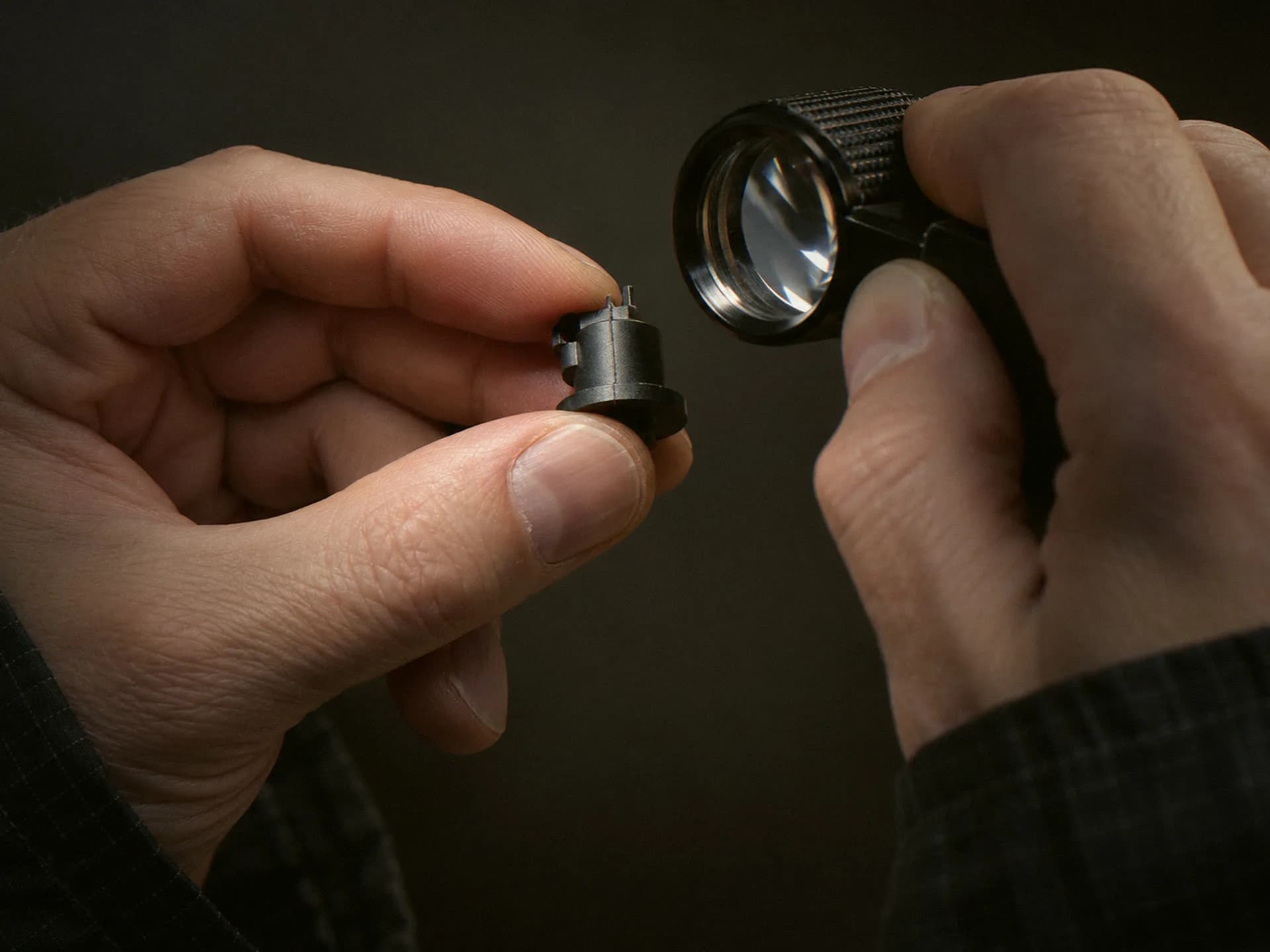
No. We review boards, assemblies, molded and machined parts, sheet metal and the box build. Expensive findings can sit in the enclosure: a wall that will sink, a snap that will break, a draft angle that will not release from the mold. In engineering nylon, the factory molds walls down to 0.8 mm.
Do I have to build with you after the review?
No. The findings report and the changed files are yours to take to any factory. Building the demo build with us saves a hand-off, because the factory that reviewed the design already knows it. The choice stays with you at every stage gate.
Tell us what you are building
- An engineer runs a free engineering review of your files, and nothing is charged when you submit.
- You see the findings first.
- We publish the official quote with an itemized total, lead time and validity window.
- You accept the official quote, and only then does payment open.