Transfer to production without a supplier change
Illuminious is a U.S. NPI engineering company, and your demo build, validation builds and first production run happen with one team and one set of files. Engineered in San Francisco. Prototype builds, DFM and mass production in our own factory in Shenzhen. Nothing is handed to a new supplier halfway.
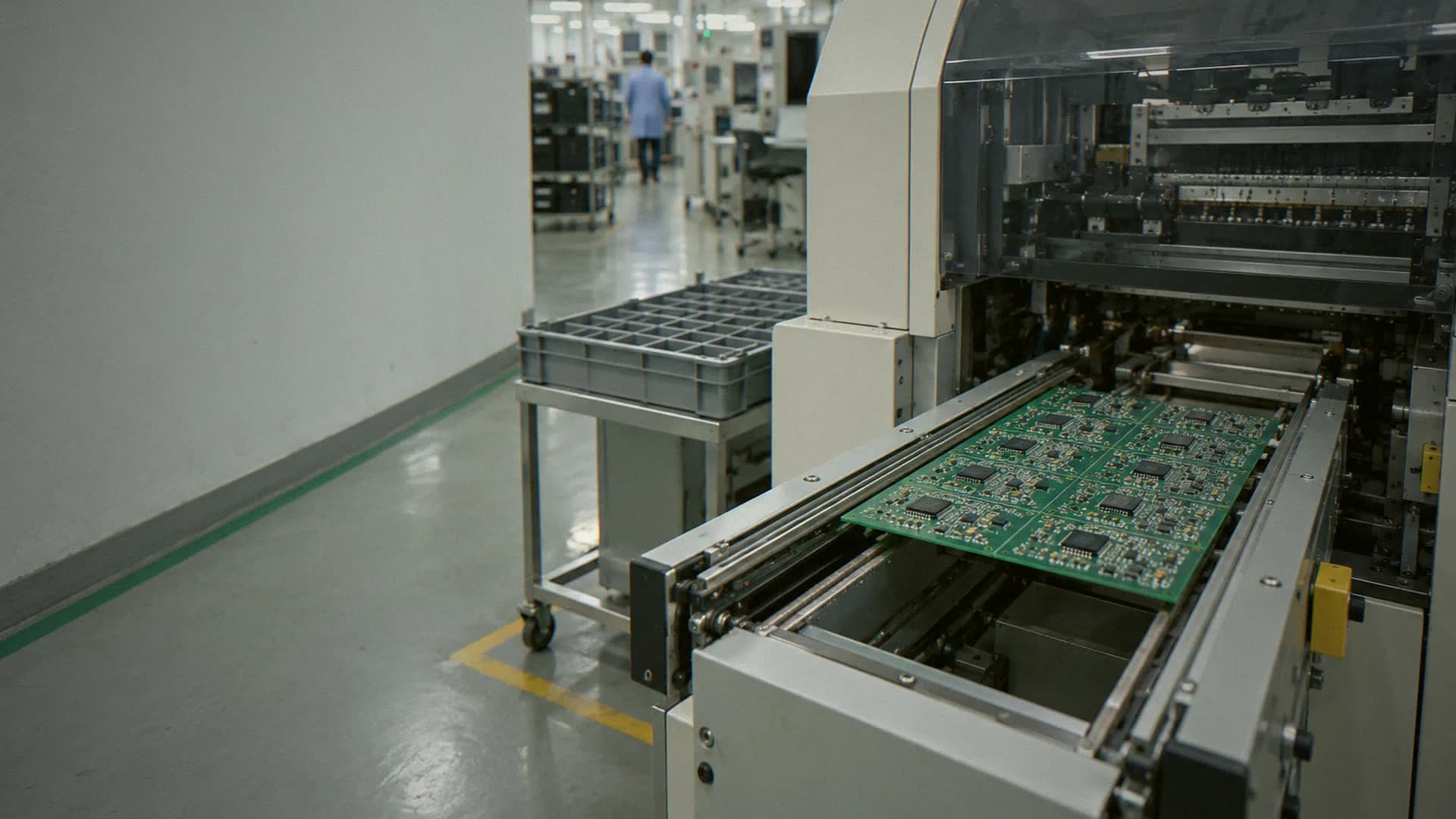
What does transfer to production mean here?
It means your product moves into volume in the factory that already built it. The engineers who drew the schematic stay on the project. They run EVT, DVT and PVT in the Shenzhen factory, from the same files, BOM and test plan. You sign the golden sample, and volume starts with no supplier change.
Why a supplier change costs you
When a design moves from a prototype shop to a volume factory, the new supplier starts again. It quotes again, sources the parts again, builds new fixtures and learns the product from the drawings. Problems the prototype shop already solved have to be found again, on your launch schedule. Knowledge that lived in one engineer's head does not travel with the files. A prototype shop is paid to make a few units work; a volume factory is paid to make every unit the same.
Here, the files, the parts list and the people stay the same. The DFM review was done against the same lines that will build volume. The test plan starts at EVT and is finished at PVT, so the line tests what the bench tested. See the guides to prototype-to-production cost traps and how to choose an NPI partner.
Build by build: goal, exit gate and what you approve
| Build | Goal | Exit stage gate | What you approve | What you receive |
|---|---|---|---|---|
| EVT | The design works as drawn | Every function passes on the bench | Design fixes before DVT | EVT units, test results, updated files |
| DVT | The product meets its specification | Validation tests pass; the certification path has started | Design freeze and tooling release | DVT units, a validation report, units for the certification path |
| PVT | The line builds it the same way every time | The line meets the test plan on production fixtures | The golden sample | PVT units, the test plan, fixture definitions |
| Production | Volume matches the golden sample | Each batch passes inspection and test | Any change to the signed revision | Batches with inspection and test results |
Each build is small enough to learn from and large enough to measure. The official quote sets each build's quantity from what that build must prove, for example enough DVT units for the lab tests. It states the lead time for each build too, after an engineer has read your files. For a plain explanation of the stages themselves, see our NPI services page and what NPI work involves.
What do you approve between EVT and DVT?
You approve the design fixes that EVT found, and at the end of DVT you approve the design freeze and the tooling release. EVT asks whether the design works as drawn. DVT asks whether it meets its specification across temperature, drops, battery life and the certification path, on units built closer to production.
EVT units can use printed shells and hand fixes. DVT units use soft tooling where the product needs it. DVT is also where the field speaks. One logistics startup put DVT units on working construction equipment, and the trial exposed a housing resin that chalked in sunlight and a connector that worked loose under vibration. Both were fixed before production tooling was cut. Read that case study.
When is production tooling cut?
After DVT has shown the design meets its specification, and before PVT. PVT must run on production tooling and fixtures, or it does not test the process. Cutting tooling earlier risks a new mold for every late change. A hardened steel production mold lasts 500,000+ shots, so it should be cut once, from a frozen design.
For how each production batch is then held to the signed unit, see the golden sample page.
What runs in the Shenzhen factory
Nine processes run in-house, and we fabricate the bare boards ourselves: PCB fabrication, SMT, injection molding, die casting, metal stamping, CNC machining, sheet metal, box build and test. In a transfer, three things are built first, because PVT cannot start without them:
- Test fixtures. Built before PVT, so PVT tests the real process. In-circuit and functional tests run on the factory's 30+ ICT/FCT test stations.
- Molds. Cut after DVT, from the frozen design, and run on 30+ injection molding presses.
- Test stations. Set up with the production test firmware and the test plan, so every unit is checked the same way.
SMT runs on 8 automated SMT lines. Components come from a network of 350 audited suppliers, so the parts your demo build used can be bought in volume. Tooling you pay for (molds, fixtures, test stations) is yours; you can move it to another factory.
The Shenzhen factory holds ISO 9001, ISO 13485, IATF 16949, AS9100 and ISO 14001. See the factory tour and box build.
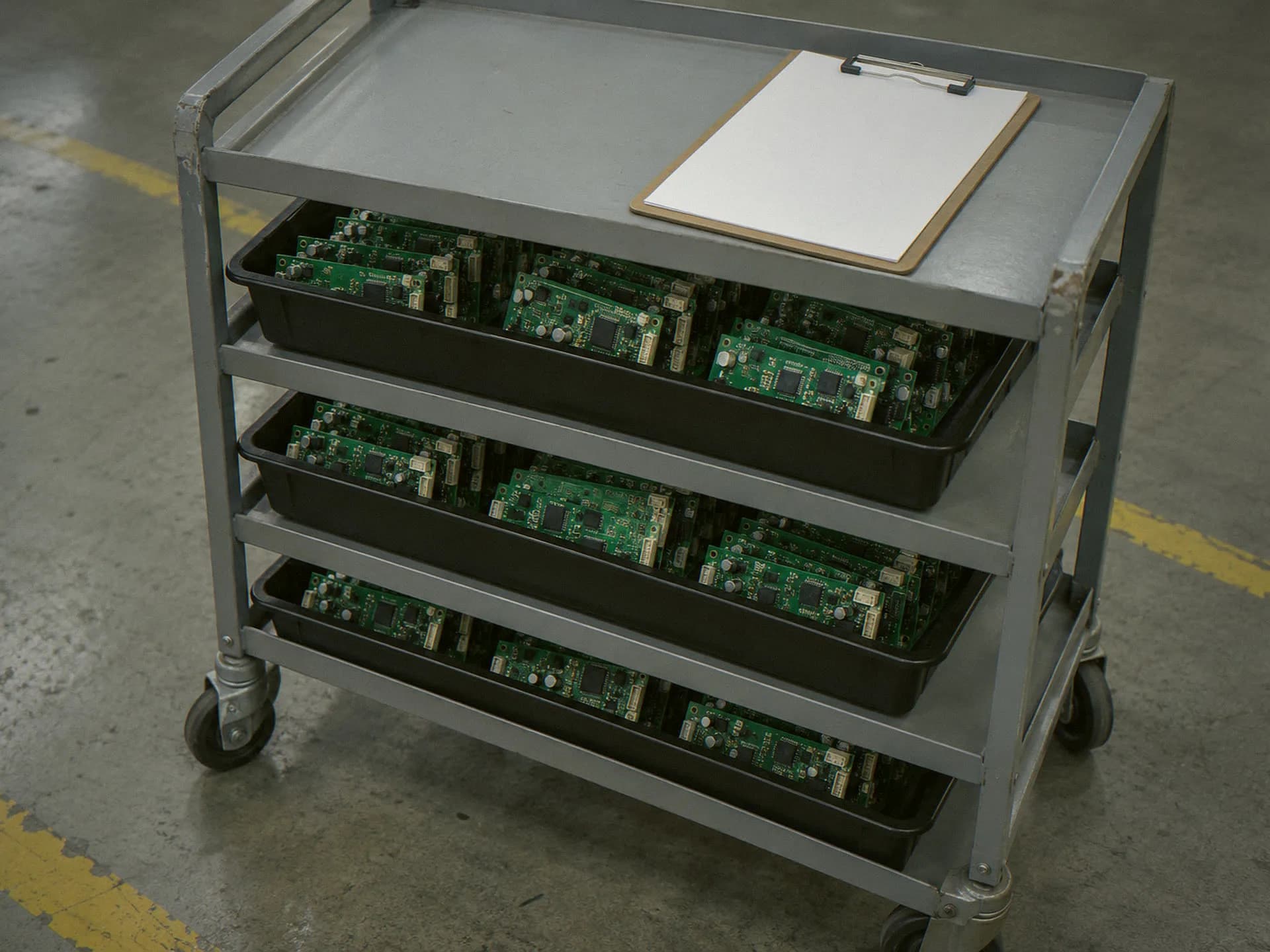
Who carries the project into the factory
Our engineers attend the EVT, DVT and PVT builds in person in Shenzhen. They read the test results and decide the fixes with you. When a production batch drifts, the person who reviews the drift knows why the design is the way it is, and why each alternate part was approved.
If you move volume later, the production file set, BOM and test plan are already yours. Contracts are with Illuminious LLC (Wyoming).
Start the transfer
Injection molding, die casting and other production work is priced by an engineer, not online.
- For an early design, start with Project initiation in the portal.
- For a design that already works, Talk to an engineer. An engineer scopes EVT, DVT, PVT and volume, and you get an official quote.
Recent work: an actuator split across three vendors
A humanoid robotics startup was stuck at prototype quantities, with machining, motor drive boards and assembly at three separate vendors. In the Shenzhen factory we combined them into one program and took it through EVT, DVT and PVT. A golden sample actuator was kept as the production reference, and every unit ran burn-in before it shipped. Read the case study.
Facts and questions
Can you take over production from another factory?
Yes. We start with a DFM review of the files you hold, then build units in the Shenzhen factory and compare them with your current product. When they match, you sign a golden sample made in our factory, so production is held to our build and not to the old one.
How long does a transfer take?
It depends on where the product is: a working demo build needs all three validation builds, while a product already in volume may need only a PVT-style build. The official quote states the lead time for each build after an engineer has read your files and the free engineering review is done.
Do I need EVT if my prototype already works?
Yes. A working prototype proves the idea on the bench. EVT proves the design on boards built the way the factory builds them, with parts you can buy in volume. Skipping it moves the problems into DVT, where each fix costs more.
What do you need from us to start?
The files you hold: schematic, layout, BOM, enclosure CAD, firmware and any test plan. Add the target volume, the launch date and the markets you will sell in, because they set the certification path. An engineer reads it all and proposes the first build.
Tell us what you are building
- An engineer runs a free engineering review of your files, and nothing is charged when you submit.
- You see the findings first.
- We publish the official quote with an itemized total, lead time and validity window.
- You accept the official quote, and only then does payment open.