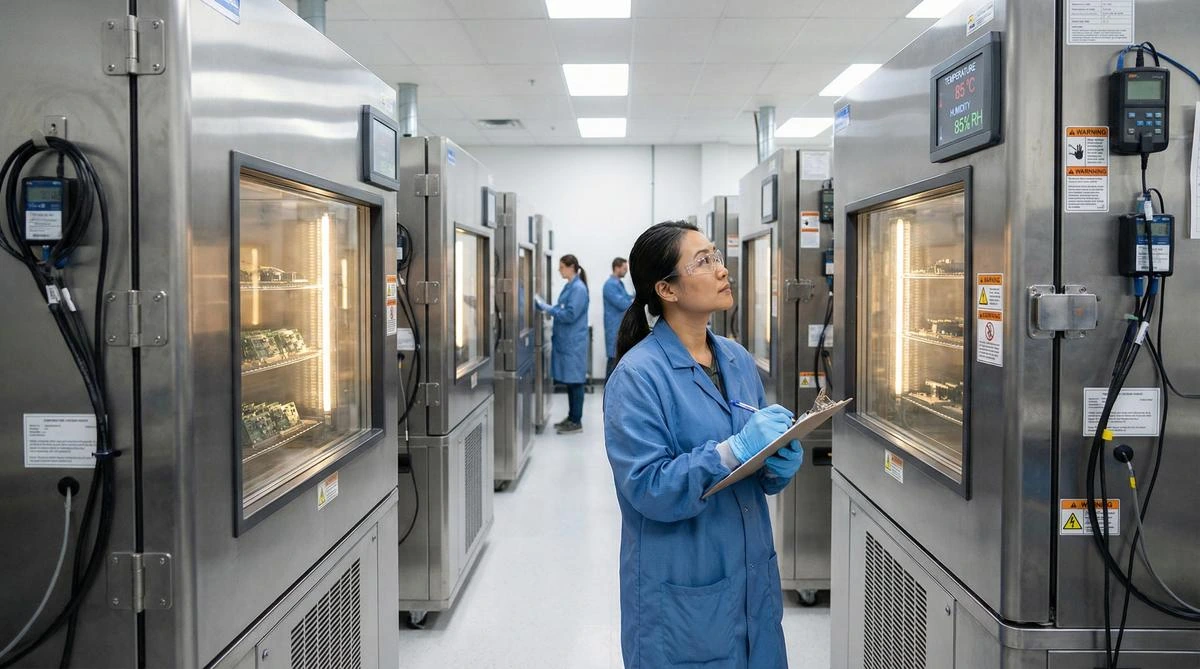
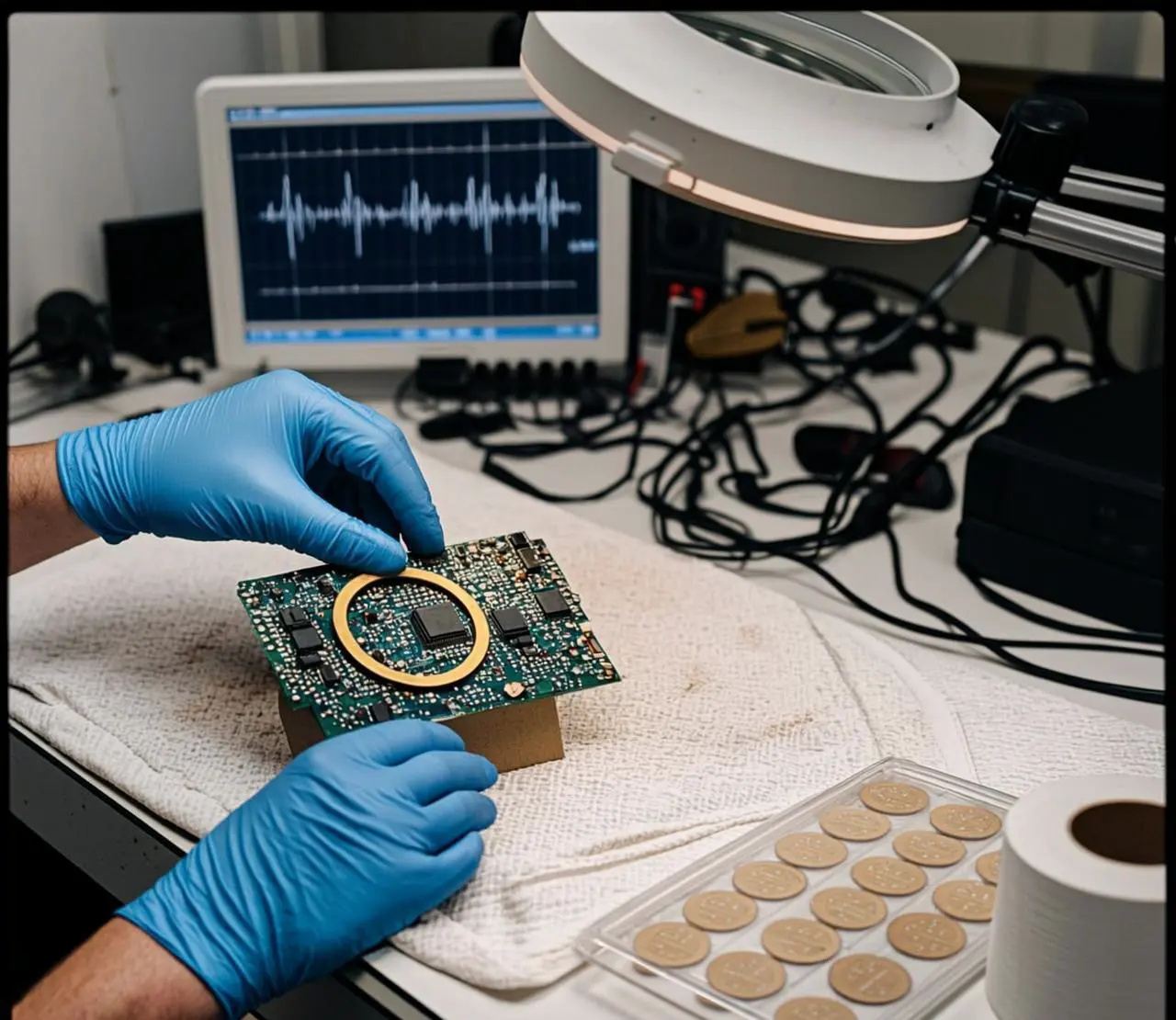
Illuminious ran the full journey under one NPI program and one US-based PM: 5-piece samples in week 1 on a 72-hour PCBA turn with SLA shells for fit checks; EVT iteration on antenna keepout and sleep-current to hit a 5-year battery target; DVT with soft-tooling overmolded TPE/PC housings and a 100-unit, 60-day field trial on working construction equipment that exposed two failure modes — a UV-chalked housing resin and a connector back-out under vibration — both fixed with a UV-stabilized resin grade and an insert-molded brass nut before PVT tooling was cut; then PVT bridge tooling, scientific decoupled molding with TPE seal lips and insert-overmolded flanges, conformal-coated 4-layer LoRa PCBA with RF chamber and OTA validation, box build with battery assembly and serialized traceability, and US fulfillment for pilot and first production waves to 50,000 units in month 11.
The Challenge: TrackWell IoT picked a market that is growing under everyone's feet. Company name and individuals have been anonymized for confidentiality. The Austin, TX startup builds battery-powered LoRa asset trackers for construction equipment and rental fleets — the exact hardware the predictive-maintenance boom runs on. The IoT-based asset tracking and monitoring market is projected to grow from $6.51 billion in 2026 to $17.36 billion by 2034 at roughly 13% CAGR, and the predictive maintenance market it feeds is projected to grow from $17.1 billion in 2026 to $97.4 billion by 2034, on sensor-price declines, edge-cloud convergence, and fleet owners finally digitizing iron that used to be tracked with a spreadsheet and a phone call. LoRa's low-power wide-area footprint fits battery-powered trackers that must report for years on one cell. But TrackWell faced the classic pre-seed squeeze: no contract manufacturer would quote a 5-piece sample build, the EVT units wearing 3D-printed shells could not survive jobsite shock, a summer of UV exposure, or high-pressure washdown, and with RF performance, battery life, and enclosure sealing split across three vendors, nobody owned the system.
The Solution
Illuminious ran the full journey under one NPI program — from the 5-piece sample build to 50,000 units in month 11 — with one US-based PM as a single point of contact. Key elements include:
- LoRa Sensor PCBA: 4-layer boards with a low-power MCU plus LoRa module, RF chamber join-and-report validation plus OTA firmware check on every unit, and conformal coating for condensing-humidity jobsites.
- Overmolded TPE/PC Enclosure: Rigid PC body with TPE seal lips overmolded in the same shot — no separate gasket part — with insert-molded brass mounting nuts for torque retention through vibration.
- Insert Molding for the Mounting Flange: Brass nuts placed by robot and overmolded into the flange, replacing self-tapping bosses that backed out under track vibration.
- The Field-Trial Gate: A 100-unit, 60-day pilot deployed on working equipment between DVT and PVT tooling — shock, UV exposure, and high-pressure washdown on real iron, not a test bench.
- Startup Bridge Program: No MOQ at any phase, free engineering review before any payment, and serialized traceability from reel to carton with US fulfillment for pilot and first production waves.
11 Months
5 Samples to 50K Units
From the first 5-piece sample build to 50,000 cumulative units, with the 60-day field-trial gate protecting PVT tooling — no MOQ at any phase.
2 Caught at Pilot
Failure Modes Fixed Pre-Tooling
UV-chalked housing resin and vibration-induced connector back-out, both fixed at the pilot gate for under $40K in soft tooling and resin changes — not after 50,000 units shipped.
5+ Years
Battery Life Target Reached
Sleep current cut from 48 µA to 6 µA across EVT iterations — one board respin plus firmware power-mode fixes — on Li-SOCl2 chemistry with no chemistry change.
98.1%
PVT First-Pass Yield
Every tracker 100% RF-chamber OTA validated, conformal-coating inspected, serialized, and packed direct to US fulfillment for the first production waves.
1. Samples — 5 Units in Week 1, 72-Hour PCBA Turn
TrackWell's founder sent schematics and a STEP file on a Monday. Illuminious returned a DFM with three findings inside 24 hours — antenna keepout against the battery holder, a decoupling capacitor placement that lengthened the RF return path, and a sleep-mode design flaw in the power tree. The 5-piece sample build shipped in week 1: 4-layer LoRa PCBA on a 72-hour turn, housed in 3D-printed SLA shells for fit checks. The free engineering review cost nothing and happened before any payment.
2. EVT — Antenna Placement and the 48 µA Problem
EVT units showed two gaps between prototype and product. Measured RSSI ran 9 dB below the link budget because the antenna sat 4 mm from the battery holder — a keepout conflict the DFM had flagged, now confirmed with numbers. And sleep current measured 48 µA against a 6 µA budget, which would have killed the 5-year battery target. One board respin moved the antenna to the housing crown, and firmware fixes on the LoRa module's sleep states brought quiescent draw down to 6 µA. Battery-life math went from fictional to fundable.
3. DVT — Soft-Tooling Overmold and the 100-Unit Field Gate
At DVT the printed shells came off and soft tooling went in: rigid PC bodies with TPE seal lips overmolded in the same shot, insert-molded brass mounting nuts in the flange, scientific decoupled molding process windows on 50-1,000T presses. One hundred units went onto working construction equipment — skid steers, trenchers, rental generators — for a 60-day field trial: shock and vibration, a full summer UV load, and weekly high-pressure washdown. This field-trial gate is the step most NPI programs skip, and it is the one that saved the product.
4. What the Field Found — Two Failures, Caught for $40K
Units came back with two failure modes no bench test would have caught. First, the housing resin had chalked and micro-cracked under UV — the resin grade was swapped to a UV-stabilized PC grade before PVT. Second, the battery-connector latch had backed out under diesel-engine vibration; the fix was an insert-molded brass nut retaining the connector boss, which the insert-molding cell already produced. Total cost of both fixes: under $40K in soft tooling and resin requalification. The same two failures found after 50,000 units would have meant a full recall and likely the company.
5. PVT and Volume — Bridge Tooling to 50K in Month 11
PVT ran on bridge-to-production tooling cut only after the field-trial gate passed, with production molding on scientific decoupled processes and 100% RF chamber OTA validation on every tracker. Conformal coating, box build with battery assembly, serialized traceability, and US fulfillment carried the pilot wave and the first production waves. The Series A closed two months after the first volume delivery. 50,000 cumulative units shipped in month 11, first-pass yield at 98.1%.
This story is an anonymized client narrative anchored to publicly verified market data; the manufacturing program, timeline, and engineering decisions are described with client identity withheld. For adjacent paths, see how die casting and PCBA consolidation cut industrial IoT enclosure cost 40%, and our hardware startup manufacturing cost planning. Service pages: injection molding, PCB assembly, 3D printing, NPI engineering, and the Startup Bridge Program.
A Pilot Run on Real Iron Is Cheaper Than a Recall on 50,000 Units.
Illuminious runs integrated NPI for asset-tracking and IoT hardware startups: low-power LoRa PCBA with RF chamber and OTA validation, overmolded TPE/PC enclosures with insert-molded hardware, the 60-day field-trial gate between DVT and PVT, and serialized box build to US fulfillment — from 5-piece samples to 50,000 units with no MOQ at any phase. Send us your tracker design for a free engineering review.