PCB assembly, from first demo boards to production
No CAD yet? Our design team can take it from a sketch or a spec.
Walk Shenzhen factories with us, Dec 6–11. See the tour
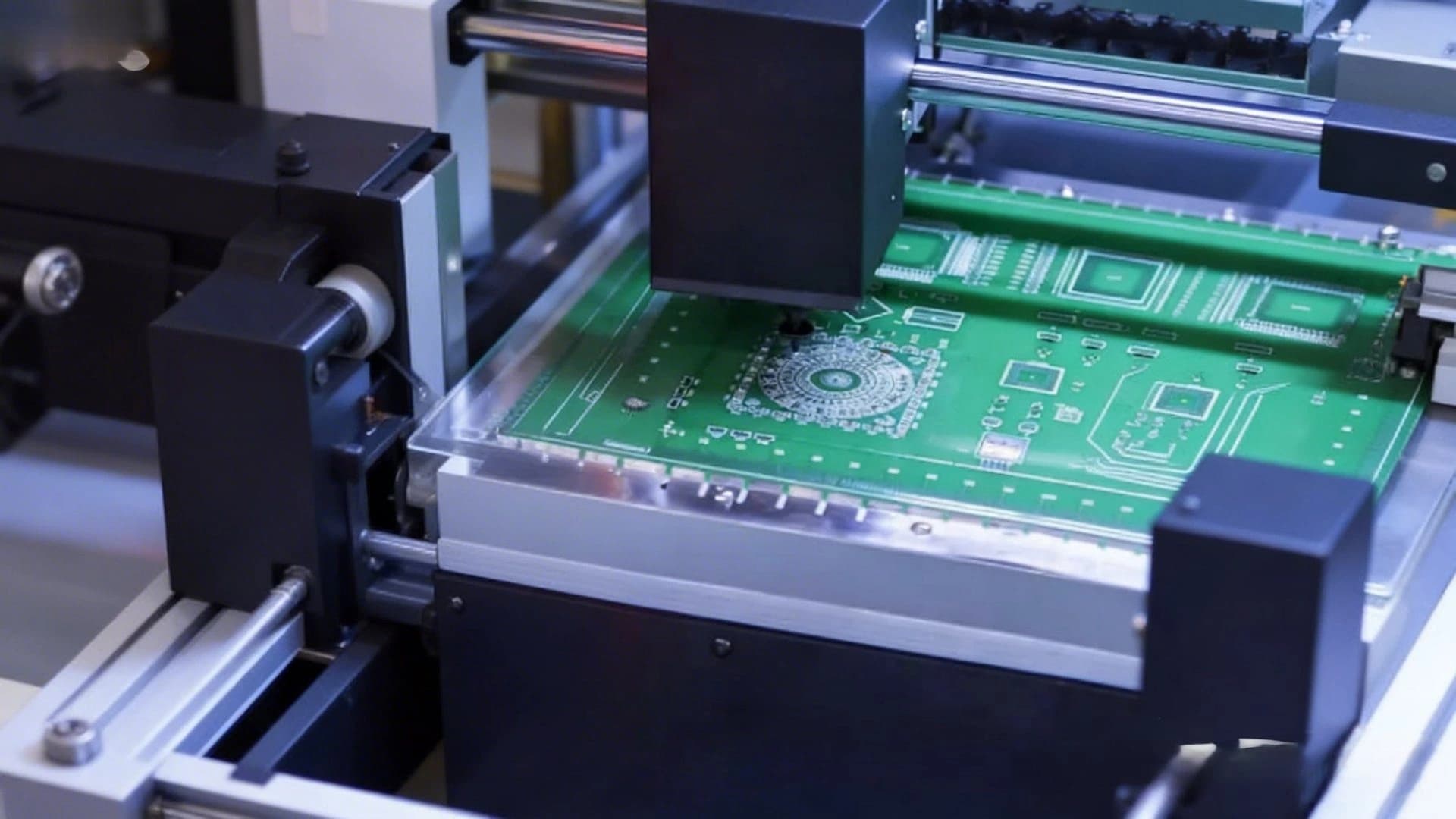
PCB assembly turns a bare board into a working one. Solder paste is printed through a stencil, parts are placed, the board is reflowed, through-hole parts are soldered, and the result is inspected and tested. You buy it as its own decision because its cost drivers differ from fabrication: placements, part variety and parts supply. Illuminious is a U.S. NPI engineering company, and our engineers check your board files against how the factory will assemble and test them before the first board is built. Engineered in San Francisco. Prototype builds, DFM and mass production in our own factory in Shenzhen.
A bare board is priced by area and layer count. An assembly is priced by how many parts are placed, how many different parts there are, and who supplies them. In the portal, assembly is configured on the same order as the board, so fabrication and assembly stay on one record with one revision history. A configurator can price placements and part numbers. It cannot tell you whether your test plan proves anything. That is where the free engineering review starts.
How a board is assembled
Parts and file check
The free engineering review confirms footprints, polarity, parts and test access. Parts are ordered or received.
Paste printing
Lead-free, RoHS-compliant paste is printed through a laser-cut stencil, and the paste deposits are inspected.
Placement
Vision-guided machines place the surface-mount parts into the wet paste. A pre-reflow check confirms placement and polarity on each run.
Reflow
A profiled oven melts the paste and forms the joints, with the profile set for your board's mass and parts.
Inspection
AOI checks presence, polarity and visible joints. On the advanced route, X-ray checks the joints under the part. The first board of each run is checked against the BOM before the run continues.
Through-hole step
Leaded parts are inserted, by machine where the design allows, and soldered by wave, selective or hand. Flux residue is removed where the assembly requires it.
Test and programming
Electrical test, firmware loading and functional test, as declared on the order.
Coating and packing
Conformal coating where declared, then anti-static packing, with a humidity indicator card for moisture-sensitive assemblies.
What our engineers check before the first board
The free engineering review reads your Gerbers, BOM and placement file against how the boards will be built. It looks for the problems that stop a line or cost yield:
- Footprints against the BOM. A footprint that does not match the part on the BOM line, or a part with two packages in the same family.
- Polarity and orientation. Marks on the silkscreen and in the placement file that disagree.
- Paste and pads. Fine-pitch parts and large thermal pads on the same board, where one stencil thickness will not suit both.
- Test access. Test points the in-circuit and functional fixtures can reach, placed before the layout is frozen.
- Parts. Lines with no stock, one source or a short life, with alternates proposed for your approval.
- Panel. Breakaway tabs, fiducials and edge clearance that suit both fabrication and assembly.
On an engineering project these checks are part of the DFM services our engineers run while the design is still in CAD. On a portal order they come in the free engineering review, before payment.
What the Shenzhen factory assembles
| Capability | What it covers |
|---|---|
| SMT placement | 8 automated SMT lines. Parts down to the 01005 package (0.4 mm × 0.2 mm), BGA pitch down to 0.25 mm, placement accuracy of ±25 µm. A high-speed line places 150,000 components per hour. |
| Through-hole and mixed boards | Machine insertion where the design allows, hand insertion elsewhere, then wave, selective or hand soldering, sequenced after reflow on mixed boards. See through-hole assembly. |
| Inspection | Automated optical inspection on populated boards. On the advanced route, X-ray for joints under BGA, QFN and other bottom-terminated packages. |
| Electrical and functional test | Sample or 100% flying-probe test, and ICT and FCT on fixtures built for your board. The factory has 30+ ICT/FCT test stations. |
| Programming | Firmware loaded on the line. Firmware test results are kept per unit, by serial number. Production units ship with debug ports locked. |
| Coating and box build | Conformal coating and potting on request, and box build into the enclosure with harnesses and displays. |
| Parts supply | Turnkey from our network of 350 audited suppliers, consigned by you, or a mix of both. |
| Workmanship | Assemblies judged to IPC-A-610, with Class 3 acceptance when the order states it. |
Which board types can the factory assemble?
Rigid FR-4 boards, HDI boards with microvias, flexible circuits, rigid-flex boards and metal-core boards. Each needs its own handling: flex and rigid-flex boards ride on carriers that hold them flat during printing and placement, and metal-core boards need a reflow profile that allows for the heat the aluminum pulls away from each joint.
The board type is declared on the fabrication side of the same order, so the assembly plan knows which board it is soldering before the parts arrive. For the constructions themselves, see HDI PCB, rigid-flex PCB and metal-core PCB.
What drives the cost of assembling a board?
Placement count and unique part count, more than anything else. Placements are machine time. Unique part numbers are setup: each distinct part needs its own feeder, its own incoming check and its own BOM line. Four hundred placements from thirty part numbers is a different job from four hundred placements from a hundred and eighty.
After those two come the technology mix (surface-mount only, through-hole only, or both), the number of sides populated, and whether parts are sourced by us, consigned by you, or split. Programming, functional test and the depth of inspection are declared as extras. Boards larger than 600 mm per side, up to 610 mm × 914 mm, are priced by an engineer in the official quote rather than online.
Should I consign the parts or have them sourced?
Consign when you already hold the stock, when your allocation on a scarce part beats the open market, or when a part is specific to you. Have them sourced when you want one accountable party for the build, or when chasing stock for a long BOM is the real cost. A mixed model is a declared option.
Whichever you choose, no part is substituted silently. A proposed alternate is an itemized change you approve, question or decline before it is fitted. On an engineering project, availability and alternates are checked before the schematic is drawn, so these questions are settled before a board exists.
How much inspection does an assembly need?
It depends on what is on the board and what a bad joint would cost. Optical inspection checks presence, polarity, alignment and the visible solder joints, and suits any populated board. X-ray, on the advanced route, is what you add when the joints you need to see sit under the part, because no optical method reaches them.
Electrical and functional test answer a different question. They do not ask whether the board was built as drawn; they ask whether it works. Both are declared per order, because a functional test needs a fixture and a definition of pass, and both come from you. Our engineers can write that definition with you when the board is ours to design.
How do I prepare a BOM that assembles cleanly?
Give every line a manufacturer part number, a reference designator list and a quantity that matches the placement file. Mark parts that must not be substituted, and name approved alternates where you have them. Note moisture-sensitive and polarized parts. A clean BOM shortens the free engineering review and keeps the price stable.
Four BOM problems cost the most review time:
- A generic description, such as "10k resistor 0402", with no tolerance, rating or part number.
- Reference designators on the BOM that do not match the placement file or the silkscreen.
- Parts marked "do not fit" in one file and fitted in another.
- An obsolete or single-source part with no alternate and no warning.
Our engineers flag each one in the review, with a proposed fix. You approve the fix before parts are bought.
What does a functional test need from me?
A definition of pass. Tell us what the board must do when powered: which rails to measure, which interfaces to exercise, which firmware to load, and the limits for each result. From that, our engineers design the fixture and the test program. Without a definition, a functional test only proves the board powers up.
When we design the board, we write the test definition with you during EVT and build the fixture before PVT. The ICT and FCT stations then run the production test firmware, and each unit's results are stored against its serial number, so a field return can be traced to the test it passed.
Is a demo build assembled differently from production?
On the same lines, with different controls. A demo build is assembled from reviewed files for a date that cannot move, and small changes between units are allowed. A production run is held to the golden sample you signed: fixed alternates policy, fixed inspection level, fixtures built before PVT, and each batch compared with the reference.
The boards in your investor demo come off the same SMT lines as the boards in your first production batch, built from the same files. The SMT program, the stencil and the reflow profile from the demo build carry into production. When the design moves through EVT, DVT and PVT, nothing moves to a new supplier, and the engineers who drew the schematic stay on the project. The portal also takes 72-hour prototype builds for teams with a fixed demo date.
Assembly scope on a standard board order
Three rows carry limits the standard-route configurator enforces: placements per board, through-hole parts per board and unique part numbers. The other rows list options you declare, files the order needs and the published review target. A build outside a limit goes to an engineer for the official quote.
Declared optionSettings available
- Assembly
- No assembly, SMT, through-hole, or mixed SMT and through-hole
- Sides populated
- Top side only, or both sides
- Placements per board
- 0 to 5,000 SMT placements (the advanced route accepts up to 10,000)
- Through-hole parts per board
- 0 to 5,000, each part counted once
- Fine-pitch parts
- BGA, QFN or pin pitch under 0.5 mm: "Yes" or "Not sure" sends the assembly to a specialist
- Unique part numbers
- 0 to 1,000
- Parts supply
- Illuminious sources parts, customer consigned, or mixed
- Test and programming
- Electrical or flying-probe test, AOI, programming, functional test
- Board marking
- None, order number at our position or yours, or a 2D data-matrix code
- Packing
- Humidity indicator card on request
- Production file
- Confirmation before fabrication, on request
- Stencil
- An SMT stencil can be added to the same order
- Required files
- Fabrication Gerber archive, plus BOM and placement file when assembly is selected
- Free engineering review
- Within 24 hours on business days after you submit
Quality behind every board
The Shenzhen factory holds ISO 9001, ISO 13485, IATF 16949, AS9100 and ISO 14001, so medical, automotive and EV, and aerospace and drone assemblies run under the matching system. Board marking is declared on the order, so a shipped board can be identified after it leaves. In production, each batch is compared with the golden sample, and an engineer reviews any drift before the next batch runs.
IPC-A-610 Class 2 and Class 3 differ in how much a joint may deviate before it is rejected: fill in a plated hole, wetting at a fillet, the position of a part on its pads. Class 3 is for products that must keep working where a failure is not acceptable, and it takes more inspection time. State it on the order when your product needs it, and the free engineering review scopes the inspection to match.
Recent work: boards that dropped their sensor stream
A robotics startup's hand-assembled perception boards kept losing the sensor stream under vibration, days before a public demo. Our engineers read the layout, found the cause in a part placed where the board flexed, and changed it. The factory then assembled and tested a small run of boards in time for the demo. Read the case study
Order PCB assembly online
Board and assembly orders go through Standard PCB & PCBA, which returns a live supplier price when suppliers can price the build. BGA, QFN and fine-pitch assembly, and every assembly on Advanced PCB & PCBA for HDI, rigid-flex and high layer counts, go to a specialist, who prices it within 24 hours on business days. Add an SMT stencil to the same order. For the steps in detail, see SMT assembly and testing and inspection. For a test plan that fits a small budget, read small-batch PCBA testing.
Facts and questions
What is the difference between SMT and through-hole assembly?
Surface-mount parts sit on the board and are soldered by printing paste through a stencil and reflowing the board. Through-hole parts have leads that pass through plated holes and are soldered from the far side, by wave, selective or hand soldering. A mixed board uses both: surface-mount for the circuit, through-hole for connectors and heavy parts.
Can you assemble BGA and QFN parts?
Yes, down to a 0.25 mm BGA pitch. On a standard board order, answer the fine-pitch question: "Yes" or "Not sure" sends the assembly to a specialist, who prices it within 24 hours on business days. For X-ray inspection of the hidden joints, order the board on the advanced route, where X-ray is a declared inspection level.
Can you program and functionally test the boards?
Yes. Both are declared options on the assembly scope, with AOI and electrical test. A functional test needs a defined pass condition and a fixture, so its scope is agreed in the free engineering review instead of guessed from the BOM. Programming loads the firmware release you name, and the record shows which release each board carries.
Do you remove flux residue after soldering?
Yes, where the assembly requires it. Residue left under a part can trap moisture and cause leakage between close pins, and it can stop conformal coating from bonding. Tell us on the order when the board will be coated or used in a damp place, and the cleaning step goes into the reviewed scope.
Can boards go straight into a box build after assembly?
Yes. Box build runs in the same factory, so assembled and tested boards move into the enclosure with harnesses and displays without a second shipment. Declare the assembly needs on custom mechatronic parts and assemblies: fasteners and torque, wiring, calibration, functional test and custom packing.
Can I order a few boards now and more of the same design later?
Yes. The standard route takes 1 to 100,000 boards per line, and each order stays attached to its revision. A later order of the same revision builds from the same files, program and stencil, so the second batch matches the first unless you approve a change.
How your official quote is prepared
On the standard route the portal shows a live supplier price where suppliers can price the build. A specialist prices fine-pitch and advanced-route assembly within 24 hours on business days. An engineer reviews every order before payment, and the official quote is the amount you pay.
- An engineer runs a free engineering review of your files, and nothing is charged when you submit.
- You see the findings first.
- We publish the official quote with an itemized total, lead time and validity window.
- You accept the official quote, and only then does payment open.