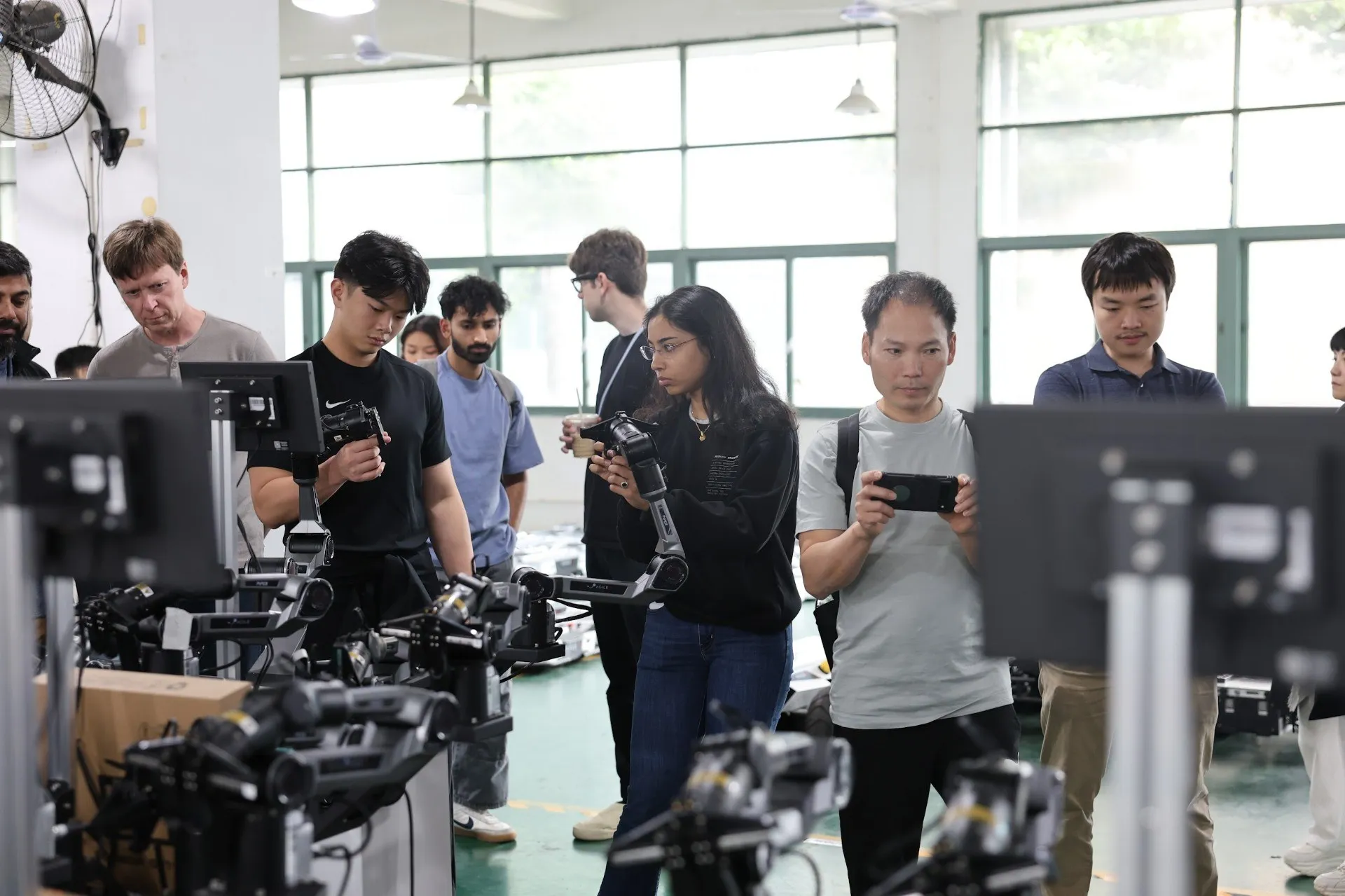
What is the Shenzhen Hardware Founder Playbook?
The Shenzhen Hardware Founder Playbook 2026 is a free guide for founders building physical products who plan to visit factories in Shenzhen. It covers why the city matters, entry rules, the factory types to see, how to vet a manufacturer, IP protection, costs, a trip checklist and whether to go alone or with a group.
Why do hardware founders go to Shenzhen?
Shenzhen is where much of the world's consumer electronics and a growing share of its robotics are designed, sourced and built. Component distributors, board assemblers, plastics plants, motor makers, sensor factories and prototyping studios sit within driving distance of each other. A founder can follow a product from a single part to a finished unit in a few days, which is hard to do anywhere else.
Robotics is a clear example. China installed 354,000 industrial robots in 2025, the most of any country, according to the International Federation of Robotics (September 24, 2026). Shenzhen has also published an embodied-AI robotics action plan for 2025 to 2027, as the Shenzhen government reported on March 10, 2025. Suppliers that serve this demand have deep experience in actuators, sensors and control boards.
A visit does three things a video call cannot. You see how your parts are really made, so your design gets better. You meet the engineers who will work on your product, so you can judge them. And you build relationships that make the next quote, sample and change request go more smoothly.
What are the China entry rules for a December 2026 trip?
As of October 17, 2026, and subject to change at short notice, the main options for US and EU founders are below. Confirm with the Chinese embassy or consulate that serves you before you book anything.
- Most EU passports: 30-day visa-free entry for business, tourism and visits, until December 31, 2026, per the Chinese embassy notice of November 4, 2025. Check that your country is on the list.
- US passports: a visa is generally required for a normal business trip. The embassy lists a USD 140 single-entry fee at a reduced rate until December 31, 2026, per its fee notice, updated December 29, 2025.
- Transit: eligible travelers going on to a third country may qualify for the 240-hour visa-free transit, under conditions the State Council announced on December 17, 2024. The rules on routes and onward tickets are strict.
- Arriving via Hong Kong: many founders fly into Hong Kong and cross into Shenzhen by land or rail. Check the Hong Kong Immigration Department rules for your passport as well.
Read next: China entry rules for US and EU founders, December 2026
Which factory types should you see?
A connected device is a stack of supply chains. The board, the enclosure, the motor, the cable, the sensor and the final assembly can each come from a different site. Seeing several factory types in a row shows you where cost, lead time and risk sit in your own product.
Pick the types that make the most expensive or riskiest parts of your product first. For most connected devices that means electronics assembly and plastics. Robotics founders add actuators and sensors.
- Robotics labs, where robots are still being designed and tested.
- Actuator and motor lines, which turn power into motion.
- Sensor and camera-module factories, where calibration is the core skill.
- Plastics and injection molding floors, where enclosures and housings are made.
- Electronics assembly plants with SMT lines, test and box build.
- Wearables factories, built around miniature assembly and cosmetic quality.
- Robotics labs and actuator and motor factories, which show system integration at scale.
- Incubators, prototyping studios and makerspaces, where the first units are built.
Read next: The factory types hardware founders visit in Shenzhen
How do you find and vet a manufacturer in Shenzhen?
Start by deciding what you need now: a prototype, a pilot run or volume production. Each stage suits a different kind of partner. Then build a long list from referrals, trade platforms, trade shows, sourcing agents and visits, and cut it down with the same checks for every candidate.
- Check the business license on the National Enterprise Credit Information Publicity System (gsxt.gov.cn) and make sure the name matches the quote and the bank account.
- Ask for quality certificates and confirm each one with the body that issued it.
- Ask for references from customers in your product category.
- Order a paid sample run before any production order.
- Visit, or have someone you trust audit the site, before you commit tooling money.
What is Huaqiangbei and how should you use it?
Huaqiangbei is the electronics market district in central Shenzhen, described by Eyeshenzhen, the Shenzhen government's English portal (May 29, 2023). It is not a factory, but it shows the supply chain from the buyer's side: components, modules, tools and finished gadgets sold in small quantities.
Founders use it to buy samples, see what competitors ship, find modules for a prototype and meet distributors. Pay with Alipay or WeChat Pay linked to a foreign card, which the official payment guide for overseas visitors (April 11, 2024) explains. Treat every part as unverified until you test it, because counterfeit and remarked parts exist.
Read next: Huaqiangbei electronics market guide for founders
How do you protect your IP and prepare your design?
File your trademark in China before you show your brand to factories. China uses a first-to-file system for trademarks, as the EU's China IP SME Helpdesk explains (accessed October 17, 2026). Use an NNN agreement (non-disclosure, non-use, non-circumvention) written for enforcement in China, in Chinese, rather than a generic NDA from home.
Share by need-to-know: each supplier gets only the files it needs to quote its part. Write tooling ownership into the contract. Then do a first design-for-manufacturing (DFM) pass before you visit, so factories quote what you will really build and the visit is spent on real trade-offs. This is general information, not legal advice; work with a lawyer qualified in Chinese law.
Read next: NDAs, IP and DFM before you visit a factory
What does a Shenzhen factory trip cost?
A DIY trip is a set of separate lines: return flight, visa, hotel, local transport, a translator, perhaps a sourcing agent, meals, insurance, phone data and samples. Flights, hotels and services change price daily, so quote each line for your own dates. The visa line is the one with an official number: see the entry rules above.
The hidden line is time. Finding candidates, getting meetings, planning routes, briefing a translator and following up can take weeks. Put a value on your own time before you compare a DIY trip with an organized one.
As one organized example, the Future Factory × Illuminious: Shenzhen Founder Tour runs December 6–11, 2026. The fee is USD 3,500. Applications received by Nov 15, 2026 (11:59 pm Pacific) qualify for the USD 3,000 early-bird fee. Hotel room, meals, ground transport, translation, all visits, photo and video included. Flights, visa and travel insurance not included.
Read next: How much a Shenzhen factory trip costs, DIY vs organized
What should be on your first-trip checklist?
The checklist below is the short version. The printable PDF has every item with a box to tick, and the full post explains each one.
- Set one goal for the trip and confirm each visit in writing.
- Check your passport and the entry rules for it, as of the week you book.
- Set up Alipay or WeChat Pay, phone data, a translation app and a map app before you fly.
- Prepare a request pack: company summary, BOM, part drawings, key specs, samples and questions.
- Sign an NNN agreement and file your trademark before you share designs.
- Check each supplier's business license and certificates.
- On each visit: agenda, photo rules first, walk the line, meet an engineer, agree one next step.
- After the trip: thank each host, score suppliers on the same criteria, request like-for-like quotes, order paid samples.
Should you go alone or join a group trip?
Go alone when you already have a shortlist, need deep private work with one supplier, have a team in China, or cannot travel on fixed dates. A focused trip to a few known sites is the most efficient use of your time.
Join a group trip when it is your first visit, you lack introductions, you want to compare many factory types before you choose, or you value a group of peers who share suppliers and contacts. Many founders do both: a group trip first to build a shortlist, then a private trip to the suppliers that fit best.
Whatever you choose, ask any organized trip the same questions: which visit types, who hosts each visit, group size, what the fee includes, when you pay, refund terms, and whether the organizer earns commission from the factories.
Read next: Is a Shenzhen founder tour worth it? · A Shenzhen hardware founder tour, day by day
Can I get the checklist as a PDF?
Yes. Leave your first name and email and we will take you straight to the printable first-trip checklist. It is free. We may also email you about the Shenzhen Founder Tour; you can unsubscribe at any time.
Frequently asked questions
Is the Shenzhen Hardware Founder Playbook free?
Yes. The whole guide is free to read on this page with no sign-up. Only the printable PDF checklist asks for your first name and email.
Who is the playbook for?
Founders and engineers building physical products, such as consumer electronics, wearables, robotics and physical-AI devices, who plan a first factory trip to Shenzhen.
How current are the entry rules in the playbook?
They are as of October 17, 2026, with each rule linked to its official source. Rules can change at short notice, so confirm with your embassy or consulate before you book.
Do I need to join the founder tour to use the playbook?
No. The playbook works for a trip you plan yourself. The Future Factory × Illuminious tour is one option if you want visits, translation and logistics arranged.
Which other Shenzhen founder guides should you read?
- China Entry Rules for US and EU Founders, December 2026
- How to Find a Manufacturer in Shenzhen in 2026
- Huaqiangbei Electronics Market Guide for Hardware Founders
- What a Shenzhen Hardware Founder Tour Looks Like, Day by Day
- How Much Does a Shenzhen Factory Trip Cost? DIY vs Organized
- The Factory Types Hardware Founders Visit in Shenzhen
- Shenzhen for Robotics and Physical-AI Founders: a Supply-Chain Map by Part Type
- Your First Shenzhen Factory Trip: a Checklist
- NDAs, IP and DFM Before You Visit a Factory in Shenzhen
- Is a Shenzhen Founder Tour Worth It? Going Alone vs a Group Trip
Want the visits arranged for you?
Future Factory × Illuminious: Shenzhen Founder Tour runs December 6–11, 2026 for max 20 founders, with 10+ factory and lab visits. Applications received by Nov 15, 2026 (11:59 pm Pacific) qualify for the USD 3,000 early-bird fee.
See the tour and applyA licensed Future Factory program, hosted by Illuminious.