Hardware engineering, field by field
Each field asks for different engineering. A smart ring lives on a tiny battery, a robot hand on motor control, a medical device on records and a certification path. Our engineers start from what your product has to survive, then design it, build the demo build and carry it into production. Engineered in San Francisco. Prototype builds, DFM and mass production in our own factory in Shenzhen.
Which fields do you design and build for?
We design and build wearables, robotics and data-collection hardware, connected devices and sensors, power and energy products, and lab and test instruments. Regulated work runs in four fields, each under a certificate the Shenzhen factory holds: medical devices, automotive and EV parts, aerospace and drone parts, and exoskeletons and rehab devices.
What we build, by field
Wearables and consumer devices. Smart rings, smartwatches and wristbands, smart glasses, wellness wearables and personal AI devices. The hard parts are battery life, radio range in a small shell and a finish people wear every day. See consumer electronics.
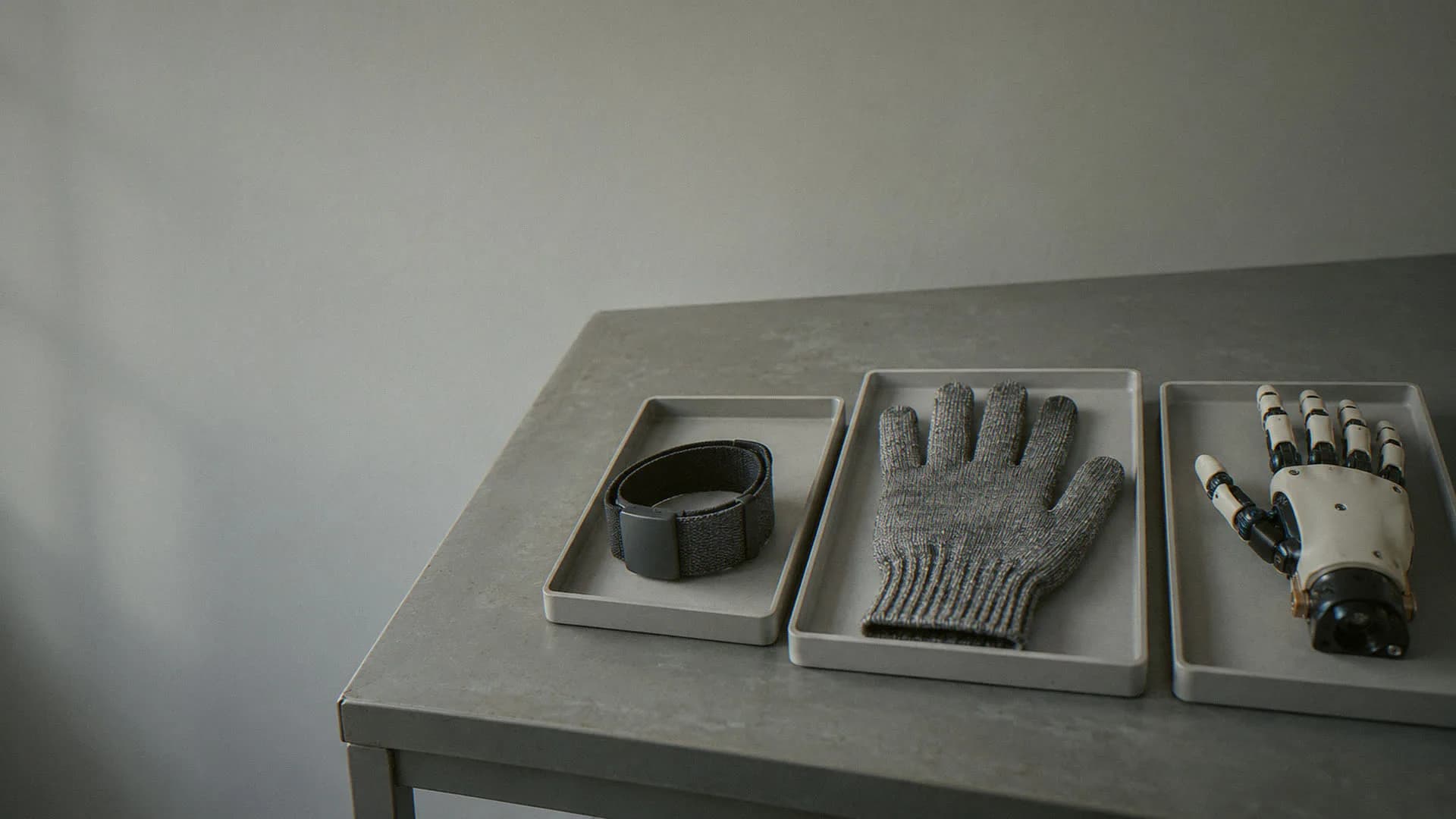
Robotics and data collection. Robot hands and grippers, robots and teleoperation rigs, and data gloves for robot training. Motor drives, encoders and synced sensor data decide whether the product works. See industrial electronics.
Connected devices and sensors. Industrial IoT sensors and smart home devices that must pair easily, stay online and last years on a battery. See IoT and connected devices.
Power and energy. Battery packs and BMS, chargers and power electronics. Cell protection, heat and isolation set the design rules. See power stages on industrial electronics and vehicle packs on automotive and EV.
Instruments. Lab and test instruments, where precise analog front ends and calibration matter more than size.
Networking hardware. Boards with dense RF and high-speed layers. See telecom and networking.
Which regulated fields do you cover, and under which certificate?
Four fields. Medical devices run under ISO 13485, and the FDA path runs with your regulatory team. Automotive and EV parts run under IATF 16949. Aerospace and drone parts run under AS9100. Exoskeletons and rehab devices run under ISO 13485. The Shenzhen factory holds each of these certificates, plus ISO 9001 and ISO 14001.
We make no disease, treatment or safety-outcome claims for any product. Wellness wearables stay in the consumer group and carry no medical claims. See medical devices and quality and certifications.
How does a project run, whatever the field?
The same stage path applies to every field: design, DFM review, demo build, EVT, DVT, PVT, golden sample and production. What changes is the test plan. A sensor needs radio and battery tests; an automotive part needs thermal cycling and traceability records; a medical device needs documents your regulatory team can file.
Start with engineering services for design work, or order prototype boards and parts in the portal: Standard PCB & PCBA, CNC machining and the rest of the 12 services. When volume starts, the files, the BOM and the test plan are already in the factory, so nothing moves to a new supplier. Read transfer to production.
What every field gets
- One quality system. The Shenzhen factory runs ISO 9001, and boards are built to IPC-A-610 Class 3 workmanship where your product needs it.
- Audited sourcing. Parts come through a network of 350 audited suppliers, and our engineers check availability and alternates before the schematic is drawn.
- Nine processes in-house. Bare-board fabrication, SMT, injection molding, CNC machining, sheet metal, die casting, metal stamping, box build and test run in the factory, so the board and the enclosure are built side by side.
- Engineers at the builds. Our engineers attend the EVT, DVT and PVT builds in person, and every stage gate ends with a written report.
Recent work: an actuator split across three vendors
A humanoid robotics startup had its actuator spread across a gear machining shop, a motor supplier and a separate board house, and nobody owned the performance of the whole module. We brought the machined parts, the motor drive board and the final assembly into one program, with end-of-line testing on the finished actuator. Read the case study.
Questions about industries
My field is not listed. Can you still help?
Probably. The engineering underneath is shared: boards, enclosures, firmware and test. Send a short description, and an engineer tells you which stage you are in and whether the factory's certificates cover your market. Your product still needs its own approvals, such as FCC for electronics sold in the U.S.
Do you certify my product?
No. We hold certificates for the factory's quality system. Your product's approval, such as FCC, CE or the FDA path, is a separate certification path. We plan design margin from the first layout, build DVT units for the lab and supply the documents it asks for. Your team or your lab files the submission.
Can I order prototypes before I commit to a field-specific program?
Yes. The portal takes boards, stencils, flexible heaters and machined, printed or sheet-metal parts at a price you see before you submit. A free engineering review comes before you pay. Field-specific testing starts at EVT, once the design is drawn.
We are a software company adding a device. Is that a fit?
Yes. Some products in these fields start with an app or a data platform that now needs hardware. We design the device, its firmware and its enclosure to work with your software, and run the DFM review before the first build. You keep ownership of the design files at hand-off.
Tell us what you are building
- An engineer runs a free engineering review of your files, and nothing is charged when you submit.
- You see the findings first.
- We publish the official quote with an itemized total, lead time and validity window.
- You accept the official quote, and only then does payment open.