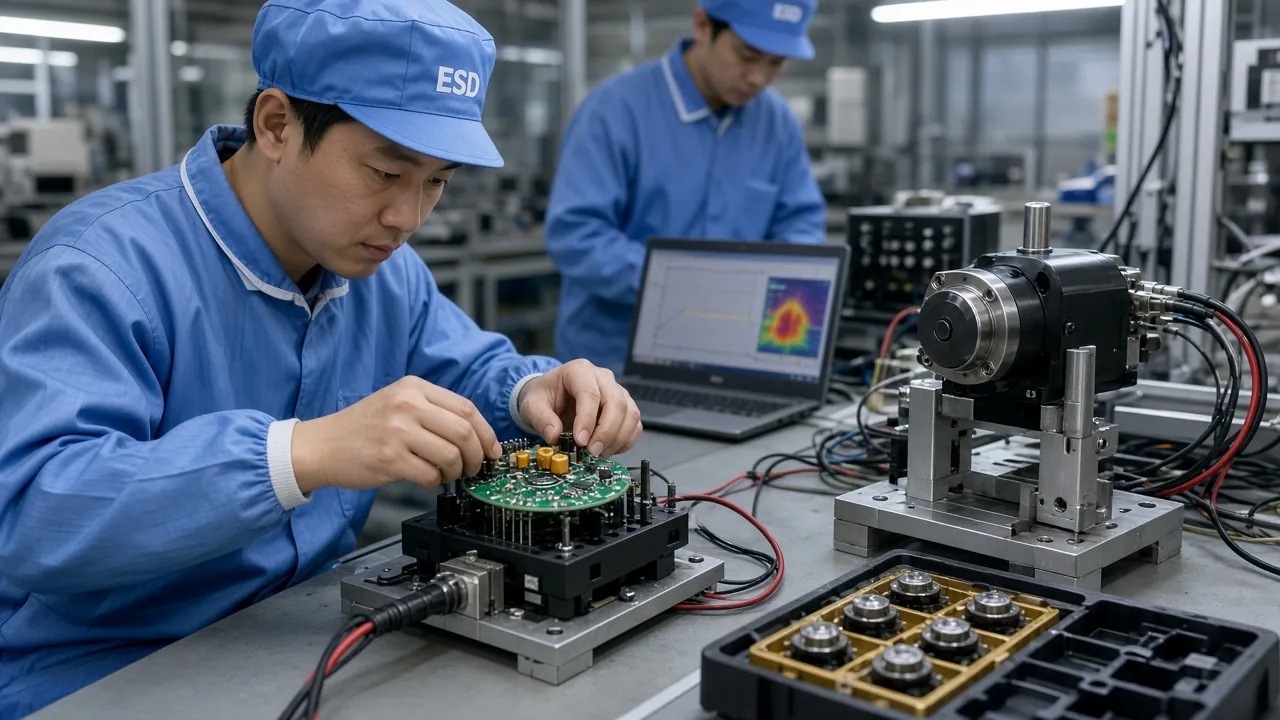
Robotics / Physical AI / Motor Driver PCBA + DFM + Testing
Do you trust a factory you've never met? Go meet them.
Shenzhen tour · Dec 6–11

Humanoid Robotics / Precision Actuator Modules / CNC Machining + PCBA + Box Build
KineticMind Robotics, a San Jose-based Series B startup with $85M in funding, builds the KMA-120 rotary actuator module for humanoid robot makers — a ...
Walk Shenzhen factories with us, Dec 6–11. See the tour
KineticMind Robotics, a San Jose-based Series B startup with $85M in funding, builds the KMA-120 rotary actuator module for humanoid robot makers — a planetary gearbox, frameless torque motor, encoder, and integrated motor drive PCBA delivering 120 Nm output torque at under 8 arc-minutes of backlash. Their manufacturing was fragmented across three vendors with no single source accountable for actuator-level performance: a precision gear CNC shop delivering inconsistent ±0.02mm tolerances on 12-week lead times with 6% of gear sets rejected for excess backlash, a motor supplier offering no encoder integration support, and a PCBA house whose motor drive boards failed thermal cycling at a 4.7% rate. Stuck at 200 prototype units against a signed order book of 50,000, the actuator supply chain — not software, not fundraising — had become the company's existential risk.
Illuminious consolidated precision transmission machining, motor drive electronics, and full actuator assembly into one integrated Shenzhen manufacturing program. 5-axis CNC machining produced planetary gear carriers and actuator housings in 7075 aluminum with titanium output shafts at ±0.01mm tolerance, 100% CMM verification on gear-bearing surfaces, gear rolling tester validation of backlash, and Cpk 1.67 on critical dimensions. In-house tooling cut progressive-die stamping lead time to 3 weeks for motor laminations, brackets, and precision shims. The 6-layer motor drive PCBA — FOC driver ICs, BiSS-C encoder interface, 01005 passives, BGA and QFN assembly to IPC Class 3 with 100% AOI plus X-ray — was qualified through 500 cycles of -40°C to +105°C thermal cycling. Full box build assembly added automated torque-ripple and backlash end-of-line testing, 4-hour burn-in on every unit, and serialized traceability, while a structured NPI program took the client from EVT 30 units through DVT 300 to PVT 2,000 and into 50,000-unit volume in 8 months.
The Challenge: KineticMind Robotics had raised an $85M Series B to do one thing exceptionally well: build the rotary actuator modules that make humanoid robots move. Their KMA-120 module combined a precision planetary gearbox, a frameless torque motor, a high-resolution encoder, and an integrated motor drive PCBA into a joint-scale package delivering 120 Nm of output torque with backlash held under 8 arc-minutes. The design was right. The market timing was even better — 2026 is the year humanoid robotics moved from demo videos to production programs, with each biped requiring 25 to 30 precision actuators across shoulders, elbows, hips, and knees, and industry analysts now describing the actuator supply chain as the single biggest constraint on the entire category's rollout.
That constraint was KineticMind's daily reality. Fewer than ten suppliers worldwide could deliver high-precision, high-torque actuators at qualification grade, and established players were reserving capacity for the largest OEM programs. Startups could not buy their way out — they had to manufacture their way out, with a precision partner. KineticMind's three-vendor setup made that impossible. The gear CNC shop held 12-week lead times, held ±0.02mm only inconsistently, and 6% of delivered gear sets were rejected for excess backlash that surfaced only at actuator assembly — when the scrap cost was highest. The motor supplier shipped frameless torque motors but offered no encoder integration support, leaving KineticMind's engineers to solve alignment and commutation tuning on their own. The PCBA house assembled motor drive boards that failed thermal cycling at a 4.7% rate — unacceptable for a joint actuator that swings between -40°C cold soak and 100°C+ winding temperatures in service. No vendor owned actuator-level performance, so every failure became a forensic investigation instead of a corrective action.
The stakes were existential. KineticMind had a signed order book of 50,000 actuator modules from humanoid robot makers racing their own launch windows — and a factory reality of 200 prototype units. In humanoid robotics, the actuator supply chain, not software and not fundraising, decides which companies ship. KineticMind needed a manufacturing partner who could own precision transmission components, motor drive electronics, and final actuator assembly under one quality system.
Illuminious built an integrated manufacturing program spanning precision CNC machining, metal stamping, motor drive PCBA assembly, full box build, and structured NPI scaling — one partner, one quality system, accountable for actuator-level performance. Key elements include:
Actuator cost reduced 35% from $410 through DFM consolidation and unified yield — making the module viable for Tier-1 OEM volume pricing.
Backlash-driven rejection cut from 6% to 0.2% via ±0.01mm machining, 100% CMM verification, and gear rolling tester validation at Cpk 1.67.
Component lead time cut from 12 weeks to 5 weeks through single-facility integration and parallel NPI processing of machining, stamping, and PCBA.
Scaled from 200 prototypes to 50,000 units through the EVT-DVT-PVT ramp, clearing the entire signed order book and securing a Tier-1 humanoid OEM contract.
Illuminious engineers began with a full DFM teardown of the KMA-120's transmission stack. The gear carrier — previously two bolted components sourced from the CNC vendor at inconsistent tolerance — was redesigned as a single 5-axis machined 7075 aluminum carrier, eliminating the bolted joint that amplified backlash variation and saving $18 per unit in parts and assembly. Titanium output shafts replaced the prior specification for stiffness at the 120 Nm rating. Machining cells then held ±0.01mm on all gear-bearing bores and faces, with 100% CMM verification feeding statistical process control that reached Cpk 1.67 on critical dimensions within the first production lots. A gear rolling tester validated mesh quality and backlash on every gear set before it could enter assembly — catching at receipt what the previous vendor only revealed at actuator test. In parallel, the in-house tool and die shop delivered progressive stamping dies in 3 weeks for motor lamination prototype batches, mounting brackets, and precision shims, keeping motor iteration cycles fast. The EVT build of 30 units achieved backlash under 8 arc-minutes on 100% of modules — the first time KineticMind had ever seen zero backlash rejects in a build.
The motor drive electronics moved to Illuminious's PCBA line as a 6-layer board running FOC driver ICs with a BiSS-C encoder interface for absolute position feedback — the integration the previous motor supplier had refused to support. Assembly included 01005 passive placement and BGA/QFN packaging to IPC Class 3 workmanship, with 100% AOI and X-ray inspection on every BGA joint. The decisive step was reliability qualification: 500 cycles of thermal cycling from -40°C to +105°C on sample lots from every build, reproducing the temperature swings a joint actuator endures in service. The thermal screening surfaced and eliminated the solder joint and via failure modes behind the previous vendor's 4.7% failure rate, and production boards passed with zero early-life failures. DVT ramped to 300 units with the full box build process in place — gear train, frameless torque motor, encoder, and PCBA integrated on one line, each module serialized for traceability from raw material lot to final test record. DVT units passed automated torque-ripple and backlash end-of-line testing at a 99.6% first-pass yield.
PVT validated the production rate: 2,000 units built on the configured line with 4-hour burn-in on every unit — thermal and electrical stress screening that catches infant mortality before a module ever ships. A golden sample actuator was archived as the production reference standard, anchoring torque-ripple signatures and backlash baselines for every subsequent build. With PVT complete, the line scaled into mass production, climbing from KineticMind's 200-unit prototype base to 50,000 delivered units in 8 months while lead time on the full actuator BOM compressed from 12 weeks to 5 weeks. Unit cost fell from $410 to $265 as DFM savings compounded with yield gains and the elimination of three-vendor logistics overhead. Deployed modules accumulated field data at a 0.4% failure rate. On the strength of that volume and quality record, KineticMind closed a Tier-1 humanoid OEM supply contract — the outcome the entire program was built for.
"We thought our existential risk was software or fundraising. It was neither — it was the actuator supply chain. There are fewer than ten qualified high-precision actuator suppliers on the planet, and none of them were going to prioritize a Series B startup. Illuminious machined our gear carriers to Cpk 1.67, qualified our motor drive boards through 500 thermal cycles, and assembled the complete actuator under one roof with end-of-line testing on every unit. We went from 200 prototypes we built ourselves to 50,000 units delivered in eight months — and won a Tier-1 OEM contract on the quality data. That is the difference between buying parts and having a manufacturing partner."
One partner owning module performance: Consolidating gears, motor integration, PCBA, and final assembly under a single quality system replaced three vendors' mutual finger-pointing with one accountable partner — turning every field failure into a corrective action instead of a forensic dispute.
Cpk 1.67 on critical gear dimensions: Holding ±0.01mm with 100% CMM verification and gear rolling tester validation moved backlash from a luck-based outcome to a statistically controlled one — cutting gear set rejection 30-fold.
500-cycle thermal cycling qualification: Validating motor drive PCBAs from -40°C to +105°C eliminated the early-life solder failures that drove the previous 4.7% board failure rate in a joint-actuator duty environment.
Two-part carrier redesigned as one: Consolidating the bolted gear carrier into a single machined part removed a backlash-adding joint, simplified assembly, and saved $18 per unit — a major share of the total 35% cost reduction.
Torque ripple, backlash, and 4-hour burn-in on every unit: Automated EOL testing plus burn-in on all 50,000 units delivered the 0.4% field failure rate that Tier-1 OEM qualification demands.
EVT 30, DVT 300, PVT 2,000, then 50,000: The disciplined NPI staircase with a golden sample reference took KineticMind from 200 stuck prototypes to volume production in 8 months without a quality cliff.
Humanoid robotics has a software problem it solved and a supply chain problem it hasn't: fewer than ten qualified high-precision actuator suppliers globally, with capacity spoken for by the largest OEM programs. Startups building humanoids and actuator modules cannot buy their way in — they have to manufacture their way in, with a precision partner who owns transmission machining, drive electronics, and final assembly. KineticMind's path from 200 units to 50,000 shows what integrated execution delivers: 35% lower unit cost, 30x lower gear rejection, and a Tier-1 supply contract. If actuator components are the gate between your order book and your revenue, start the conversation now. Explore our capabilities in precision CNC machining, metal stamping, PCB assembly, box build assembly, NPI engineering, and testing and inspection — or learn how our startup program scales hardware companies from prototype to volume.
"We thought our existential risk was software or fundraising. It was neither — it was the actuator supply chain. Illuminious machined our gear carriers to Cpk 1.67, qualified our motor drive boards through 500 thermal cycles, and assembled the complete actuator under one roof. We went from 200 prototypes to 50,000 units in eight months — and won a Tier-1 OEM contract on the quality data."
Robotics / Physical AI / Motor Driver PCBA + DFM + Testing
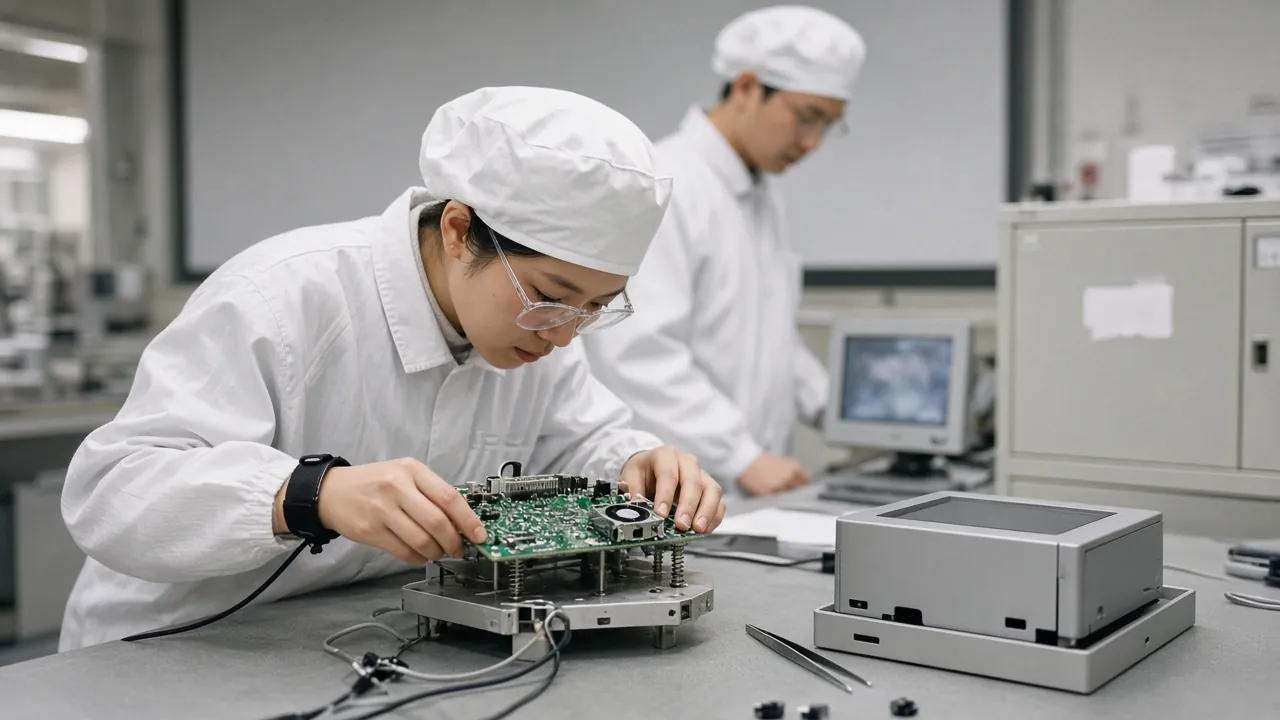
Consumer AI / Portable AI Projector / Prototype PCBA + SMT + Testing
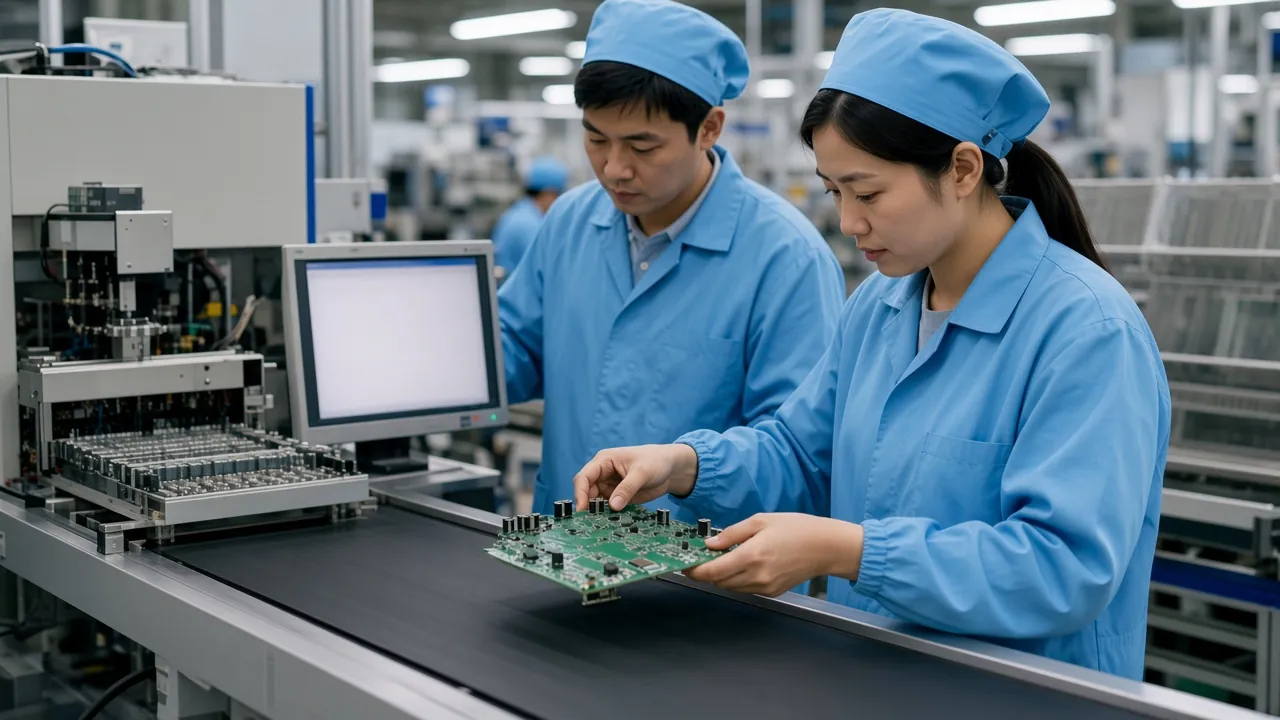
Consumer AI / AI Voice Recorder / Prototype PCBA + SMT + Testing
Let's discuss how we can help your project succeed with our end-to-end manufacturing capabilities.