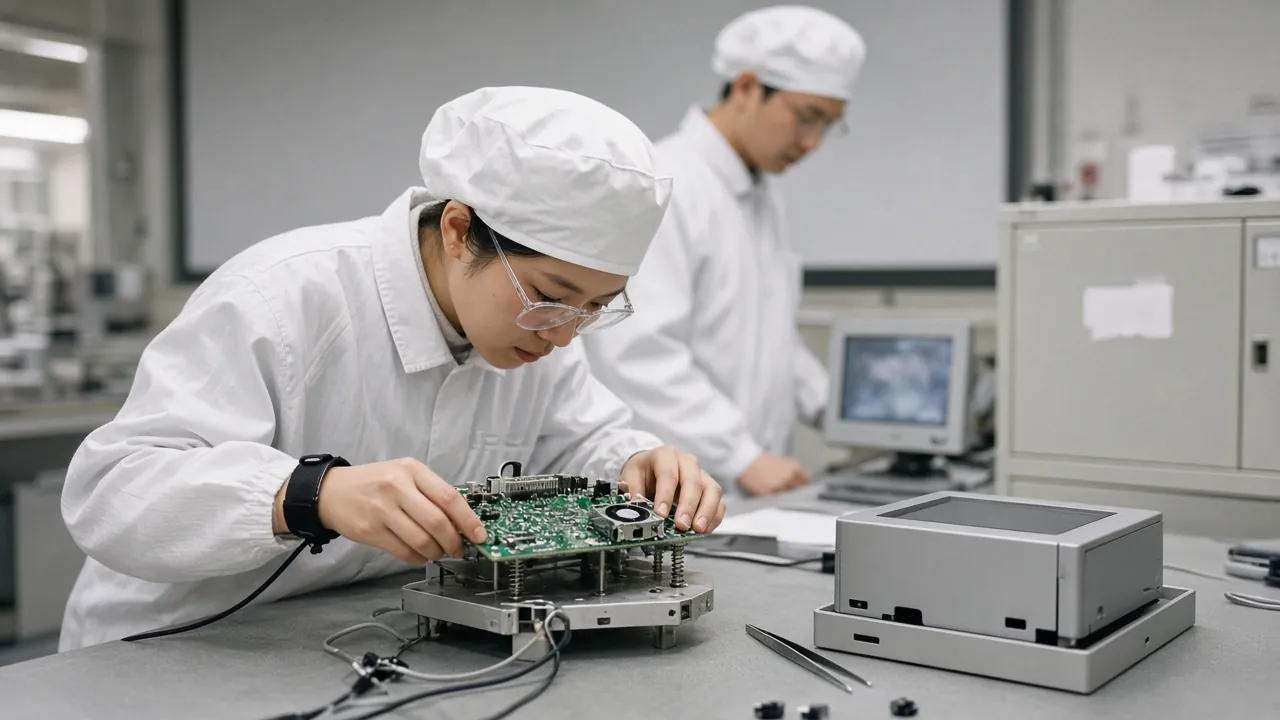
Consumer AI / Portable AI Projector / Prototype PCBA + SMT + Testing
Do you trust a factory you've never met? Go meet them.
Shenzhen tour · Dec 6–11
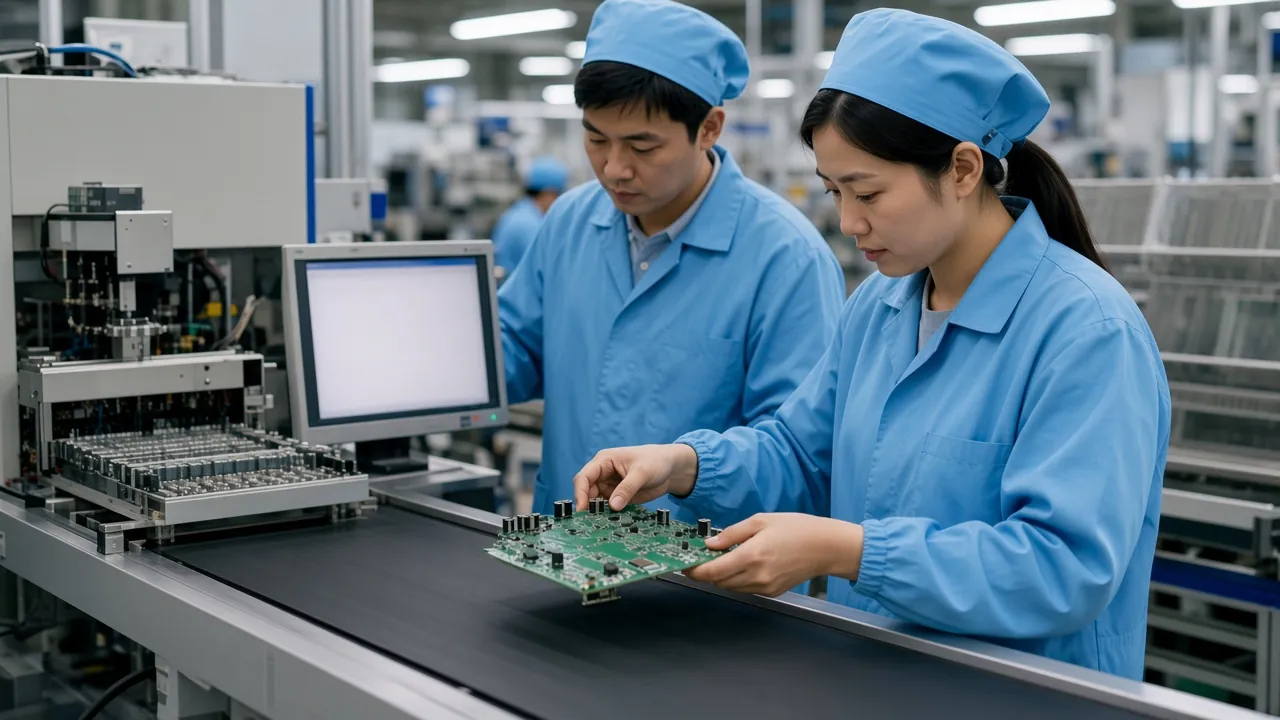
Consumer AI / AI Voice Recorder / Prototype PCBA + SMT + Testing
Wrenquill Labs needed dual-mic AI voice recorder boards that could prove recording quality and battery life quickly, absorb a Q4 2026 NAND price rise ...
Walk Shenzhen factories with us, Dec 6–11. See the tour
Wrenquill Labs needed dual-mic AI voice recorder boards that could prove recording quality and battery life quickly, absorb a Q4 2026 NAND price rise with a second qualified storage source, and carry per-serial audio test records from EVT through mass production in Shenzhen without losing BOM control.
Illuminious ran 72-hour prototype boards via the portal, a free DFM and BOM review that fixed mic sealing, pogo-pin access and storage second-source, then EVT/DVT/PVT dual-mic PCBA in the Shenzhen factory with bench-to-line audio fixtures, golden-sample sign-off and ICT/FCT results per serial through the first low-thousands production batch.
The challenge: Wrenquill Labs had a thin card-style AI voice recorder that worked on a bench and a product roadmap that needed real boards, not another round of hand-wired samples. Company name and individuals have been anonymized for confidentiality. The early U.S. consumer hardware team designs a dual-MEMS-mic recorder with BLE, onboard flash, a Li-po cell, one button and an LED, with transcription handled in the client's own app and cloud. The housing was already designed by the client and would stay mostly in the background of this program. What they needed was a hardware prototype partner for startup electronics: AI voice recorder manufacturing that could move from prototype PCB assembly on a quick turn PCBA prototype into a production line without losing audio quality or BOM control.
Memory pricing made the clock louder. TrendForce reported on September 30, 2026 that overall NAND flash contract prices were projected to rise 15% to 20% quarter over quarter in Q4 2026, with conventional DRAM up 10% to 15%, as suppliers kept shifting capacity toward AI server products. For a recorder that stores audio on board before sync, flash cost is not a footnote. Wrenquill needed AI voice recorder manufacturing and prototype to production electronics that could qualify a second storage source early, freeze a dual-mic PCBA, and keep per-serial audio records from the first EVT boards through mass production in Shenzhen.
Wrenquill sent schematic, layout, BOM, firmware build and housing CAD. We signed the client's NDA before the first call. A US-based program manager owned the stage path with Illuminious engineers attending EVT, DVT and PVT builds in person at our ISO 9001 Shenzhen factory. The plan was written as gates, not a hope:
The outcomes below are rounded and relative. They show what a disciplined prototype PCB assembly path and a hardware prototype partner for startup teams can protect when the product is an AI voice recorder and the market is moving storage prices.
Mic matching and test-pad access drove two layout revisions before the design freeze at DVT.
First-pass yield on the pilot run reached the yield target both parties wrote into the PVT gate.
Second-source NAND qualification kept storage cost inside the agreed BOM target through the Q4 2026 price move.
First mass-production batch left the Shenzhen factory for the client's own logistics provider.
Decision: order a quick turn PCBA prototype and start prototype to production electronics planning through the portal to measure recording quality and battery life on hardware that matched the intended stack-up. Gate: boards built and shipped against the portal configuration, with a short bring-up script covering BLE join, button, LED, mic capture and discharge curve. What changed: the team stopped arguing about desk samples and started deciding from measured noise floor and hours of continuous record.
Decision: run a free engineering review before committing EVT quantity. Gate: a written DFM and BOM report with changed files. What changed: mic port placement and acoustic sealing were adjusted so the dual MEMS packages would not share a leaky cavity with the button and LED; pogo-pin test pads were moved for fixture access; flash and eMMC options were compared, and a second qualified storage part was added because TrendForce's September 30, 2026 outlook pointed to NAND contract prices rising 15% to 20% QoQ in Q4 2026. That BOM work sat inside our component sourcing process and the same logic we cover in consigned vs kitted PCBA and our note on the 2026 DRAM and MCU shortage.
Decision: build a small dual-mic PCBA lot with SMT assembly in our Shenzhen factory and bring up firmware on the line. Gate: firmware bring-up for BLE, flash, button, LED and dual-mic capture, plus mic matching and noise-floor checks on a bench audio fixture with a written pass band. What changed: one mic channel needed gain trim and a seal tweak after the fixture showed mismatch; a decoupling change landed in the next layout before DVT. Our firmware engineering team kept bring-up notes tied to serials from this stage onward.
Decision: freeze schematic, layout and BOM after the second board revision. Gate: audio and RF functional test with numeric limits, EMC and RF pre-scans ahead of the client's own certification path, and golden-sample sign-off. What changed: the signed golden sample record listed design revision, BOM, firmware release and measured audio and RF values both parties keep. Illuminious does not own the certification filing; the client does. Pre-scans existed so surprises showed up before that filing, not after. How those gates nest is covered in our NPI engineering complete guide.
Decision: move the frozen design onto a real production line with production test firmware. Gate: ICT and FCT across more than 30 stations available in the factory, with results stored per serial number, plus OTA verify and fallback checks on a sample of units. What changed: a fixture seating step and a flash programming timeout were fixed on the line after pilot failures traced to handling and programmer settings, not to the design. First-pass yield on the pilot reached the agreed target before release to mass production. See testing and inspection for how AOI, X-ray, ICT and FCT sit around those gates.
Decision: run production batches against the golden sample on the same ISO 9001 factory that built EVT and DVT. Gate: each batch compared with the golden sample, debug ports locked, and audio test records retained per serial. What changed: the first production batch, in the low thousands, left the Shenzhen factory for the client's own logistics provider. Housing assembly stayed on the client's supplied design; the electronics program owned the PCBA, firmware test and release discipline.
"We thought the dual mics were the hard part. The review that moved our test pads and forced a second flash source was what kept the BOM and the line honest when memory prices moved."
"Hearing noise-floor numbers tied to serials at EVT, then watching the same limits hold at PVT, is what made mass production feel like a continuation instead of a restart."
Prototype PCB assembly for a recorder is an audio problem as much as a soldering problem, and a quick turn PCBA prototype only pays off if the same limits survive prototype to production electronics. Two MEMS packages only help if ports seal, if the fixture can reach pads, and if every board that leaves the line can be compared with a signed reference. Wrenquill used Illuminious as a hardware prototype partner for startup work that needed both prototype PCB assembly on a quick turn schedule and a clear path from prototype to production electronics. That is the core of AI voice recorder manufacturing at this stage: prove the dual-mic board early, then hold the same limits on the line. Parts came through a network of 350+ audited suppliers. DFM ran before DVT. Engineers were present in Shenzhen for EVT, DVT and PVT. US-based program management kept the written gates moving.
Founders evaluating a similar path can also look at the startups page for how Illuminious works with early hardware teams, including the Shenzhen Founder Tour on December 6–11, 2026, with early-bird pricing of USD 3,000 available until November 15.
Illuminious is a U.S. NPI engineering company. Engineered in San Francisco. Prototype builds, DFM and mass production in our own factory in Shenzhen. Send your schematic, BOM and housing CAD, and our engineers will walk through DFM, EVT, DVT and PVT with you. Instant price for configurable services · Free engineering review in 1–2 business days · Official quote within 24 hours.
"We thought the dual mics were the hard part. The review that moved our test pads and forced a second flash source was what kept the BOM and the line honest when memory prices moved."
Consumer AI / Portable AI Projector / Prototype PCBA + SMT + Testing
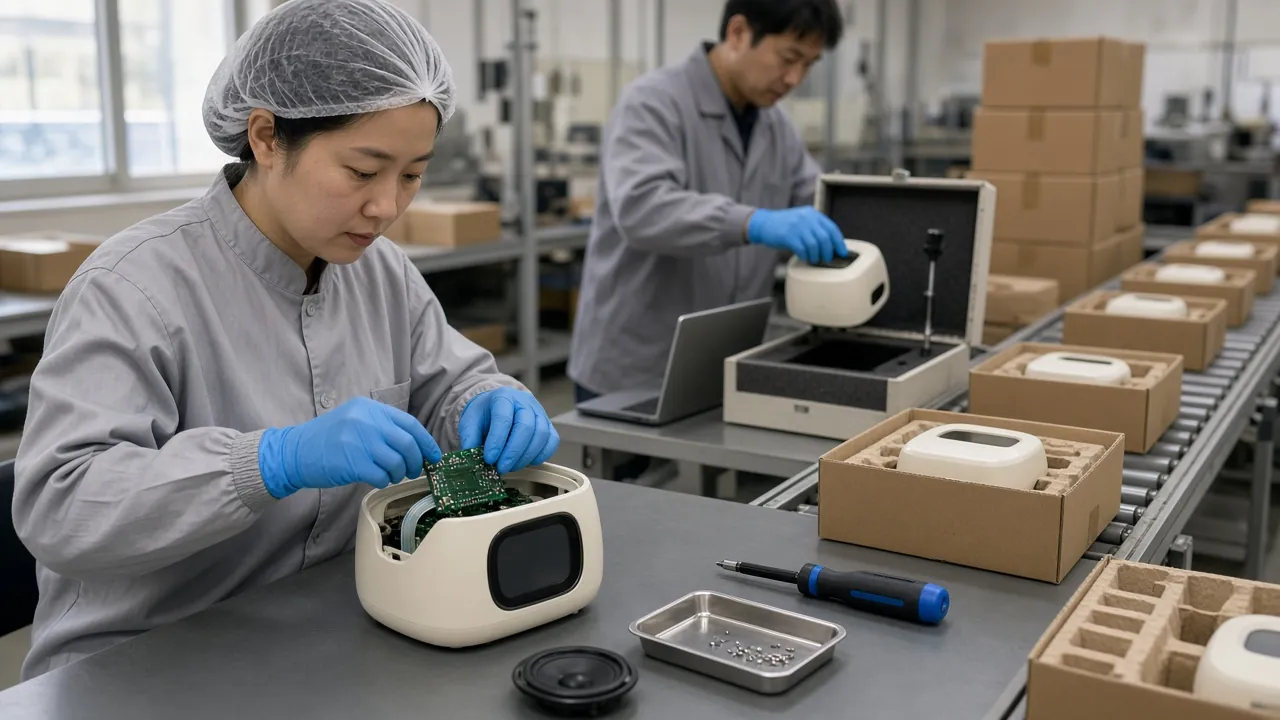
Consumer AI / Desktop AI Companion / Box Build Assembly + PCBA + Injection Molding
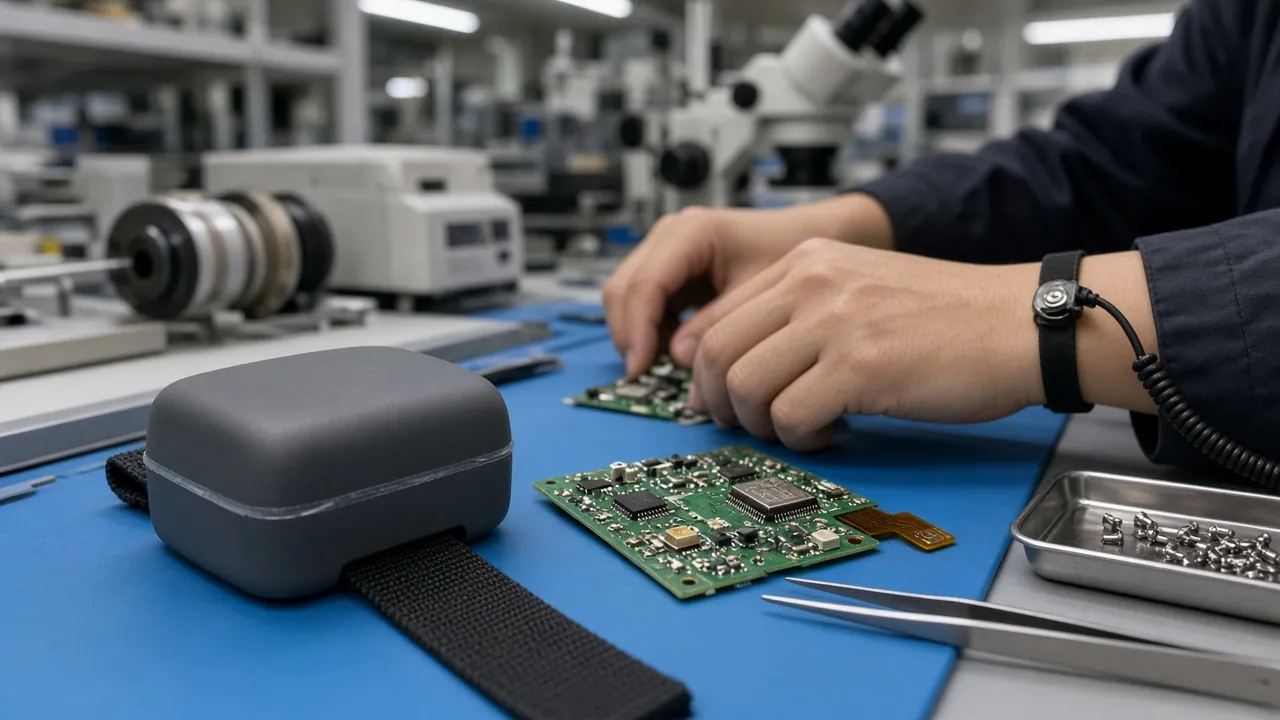
Consumer IoT / Pet Wearables / Smart Collar PCBA + Overmolding + NPI
Let's discuss how we can help your project succeed with our end-to-end manufacturing capabilities.