Last reviewed: October 17, 2026.
Finding a manufacturer in Shenzhen means turning a long list of possible factories into one or two partners you have checked: their legal registration, their certificates, their past work, a paid sample and a visit to the floor. The process is the same for a first prototype and a first production run. Only the depth of each check changes.
The short version
- Decide what you need first: prototype, pilot run or volume.
- Collect candidates from referrals, trade platforms, sourcing agents and visits.
- Check the business license, the certificates and the references yourself.
- Protect your brand and files before you share them.
- Pay for a sample, then visit the factory before a large order.
What do I need before I contact a Shenzhen factory?
Factories answer clear requests faster and more honestly. Before you send a single email, write down which stage you are in, because each stage needs a different kind of partner:
- Prototype: a few units to prove that the design works. You need speed, engineering help and tolerance for changes. Prototyping studios and quick-turn PCB assembly shops fit here.
- Pilot run: a small batch to test assembly, yield and the supply chain. You need a factory that writes down its process and test steps, not only one that can build the part.
- Volume: repeat production. You need capacity, a stable quality system and a clear plan for parts with long lead times.
Then prepare a short request pack: drawings or CAD, a bill of materials (BOM), target quantities per stage, the main materials and finishes, test needs, and your target date. A factory that asks good questions about this pack is often a better sign than a fast low price.
Where do founders find manufacturer candidates?
No single channel is best. Most founders use a mix and compare what each one gives:
- Referrals: other founders, investors and engineers who have shipped hardware. These are usually the best leads, because someone has already worked with the factory.
- Trade platforms: large online directories of suppliers. They are good for a first long list. Treat every profile as a claim to check, not as a fact.
- Sourcing agents: local agents who find and manage suppliers for a fee or a margin. Ask how they are paid, and whether they also take money from the factory.
- Visits and events: factory visits, makerspaces, hardware meetups and electronics markets. A short conversation on the floor tells you more than many emails. Our Huaqiangbei market guide covers the parts side.
How do I check that a Shenzhen manufacturer is real?
Start with the legal entity. Every company in mainland China is registered with the market regulator. The official register is the National Enterprise Credit Information Publicity System (gsxt.gov.cn), run by the State Administration for Market Regulation. You can search it by the company's Unified Social Credit Code, which is printed on its business license, or by its full Chinese name.
Compare what the register shows with what the factory sent you:
- The company name, credit code and legal representative match the license.
- The status shows the company is active, not cancelled or revoked.
- The business scope covers manufacturing, not only trading. A trading company can be a fine partner, but you should know that you are not talking to the factory itself.
- The registered address is near the factory you will visit, or the company explains why not.
- The same name and code appear on the quote, the contract and the invoice.
The site is in Chinese and uses a security check, so ask a Chinese-speaking colleague or your sourcing partner to help, and keep a screenshot with the date.
How do I check certificates such as ISO 9001?
A certificate is only as good as the body that issued it. Ask for a copy, then confirm it with the issuer. For certificates issued in mainland China, the national certification regulator, CNCA, provides a public lookup, and many certificates carry a QR code that links to the record. For international certification bodies, use the body's own online register.
Check three details: the company name matches the legal entity, the certificate is still valid, and the scope covers the work you want. A certificate for "injection molding" does not cover PCB assembly at the same site.
How do I protect my design and brand before I share files?
China uses a first-to-file trademark system. The person who files first usually gets the mark, even if someone else used it first. The EU-funded China IP SME Helpdesk explains this in its free FAQ. A US or EU registration alone does not protect your brand in China, as the UK Intellectual Property Office noted (September 8, 2017).
Practical steps:
- File your trademark in China early, before you share branded packaging or a product name with suppliers.
- Use an NNN agreement (non-use, non-disclosure, non-circumvention) instead of a simple NDA when you share production files. Lawyers who work in China, such as Harris Sliwoski, recommend a Chinese-language contract that a Chinese court can enforce.
- Share in layers. Send a quote pack first, full CAD only after you choose a partner, and firmware or test code last.
What should I ask for in a sample run?
Pay for a sample. A free sample tells you little about how the factory works under normal conditions. Ask the factory to build a small batch with the same process it will use later, and ask for:
- A design-for-manufacturing (DFM) report before the build, with the risks they see and the changes they suggest.
- An inspection record for the batch: what they checked, what failed and why.
- Photos or video of the build and test steps.
- A written list of the parts they substituted, if any.
How the factory handles a failed unit tells you more than a perfect batch. For the costs that hide in this stage, read our post on prototype-to-production cost traps.
What should a first factory visit cover?
A visit lets you see whether the factory you checked on paper is the factory that will build your product. Use a fixed agenda so you can compare factories fairly:
- Meet the people: the engineer and the project manager who will own your project, not only the sales lead.
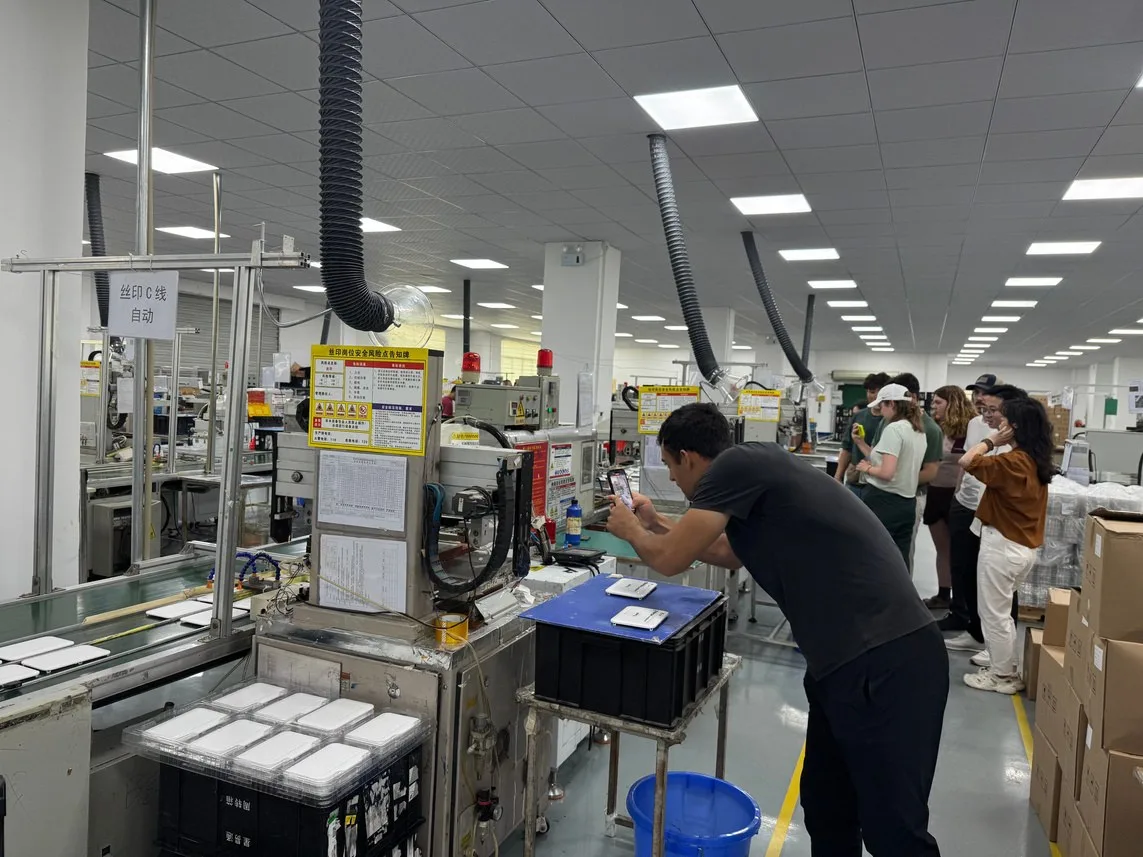
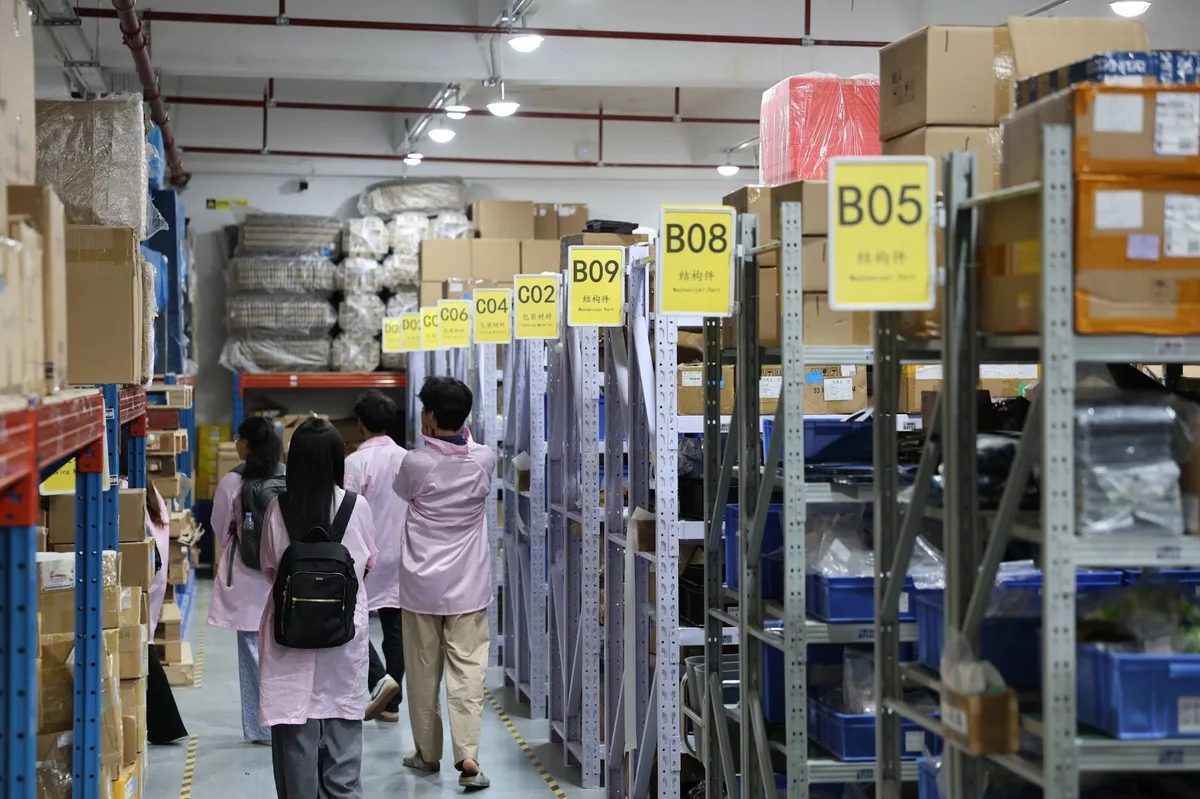
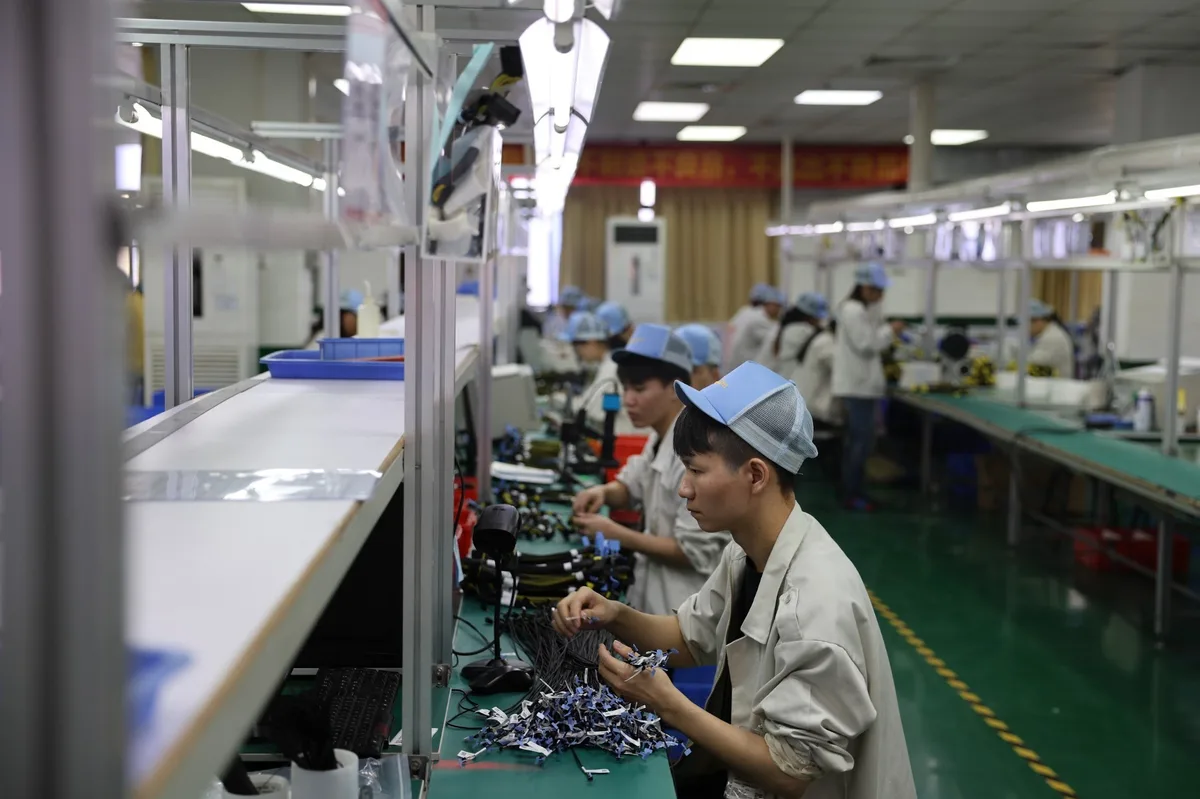
- Walk the line: look at the machines, the incoming inspection area and the storage of parts.
- See the quality system: ask to see a real inspection record and a real corrective-action report from another job, with customer names hidden.
- Review your sample together: go through the DFM points and the failures.
- Agree on next steps: quote, timing, payment terms and who sends what by when.
Our NPI partner evaluation framework gives a scoring sheet you can bring to each visit.
What are the red flags?
- The name on the license, the quote and the bank account do not match.
- The factory will not let you visit, or the visit site changes at the last minute.
- A price far below every other quote, with no clear reason.
- No questions about your drawings, tolerances or tests.
- Pressure to pay the full amount before a sample is approved.
- Certificates that you cannot find with the issuing body.
How does a founder tour shorten the list?
Visiting factories alone takes time: finding candidates, getting meetings, arranging transport and translation. A group tour gives you several factory types in one week, so you can compare how different factories work before you commit to a search of your own. The Future Factory × Illuminious: Shenzhen Founder Tour runs December 6–11, 2026, with 10+ factory and lab visits. See what each day looks like, and plan your entry with our China entry rules for US and EU founders.
Turn a long list into a short one
See robotics and electronics factories in Shenzhen with a small founder group, and ask the questions in this post on the floor. Learn more about the Future Factory × Illuminious: Shenzhen Founder Tour.
Frequently asked questions
How do I check a Chinese business license?
Search the company's Unified Social Credit Code or full Chinese name on gsxt.gov.cn. Check that the name, status, legal representative and business scope match what the factory sent you.
Is a trading company a bad sign?
Not always. A trading company can manage several factories for you. But you should know who builds your product, and you should be able to visit that site.
Is an NDA enough to protect my design in China?
Usually not on its own. File your trademark in China early and use a Chinese-language NNN agreement for production files. Get advice from a lawyer who works in China.
When should I visit the factory?
Before your first large order, and ideally after a paid sample, so you can review the results with the team that built it.