Last reviewed: October 17, 2026. This map lists part types and the kinds of suppliers that make them. It names no companies. Figures come from the linked, dated sources.
A robotics supply-chain map is a list of the parts inside a robot, grouped by type, with the kind of supplier that makes each one. For robotics and physical-AI founders, Shenzhen is useful because suppliers for most of these part types work in the same region, so you can compare options in person within days.
Who this is for
Founders building humanoids, mobile robots, robot arms, drones, smart devices with motors, or any product where AI models drive physical motion. Use the map to plan which supplier types to meet and which questions to ask each one.
Why do robotics founders look at Shenzhen?
Two reasons stand out. First, demand: China is the largest market for industrial robots. The International Federation of Robotics reports that 354,000 industrial robots were installed in China in 2025, 59% of global deployments (IFR, September 24, 2026). Suppliers that serve that market have built deep experience in motors, reducers, controllers and sensors.
Second, policy and density. Shenzhen published an action plan for embodied-AI robotics for 2025 to 2027. Its targets include more than 1,200 enterprises in the embodied-AI robotics cluster by 2027, as the Shenzhen government reported on March 10, 2025. Targets are not outcomes, but they show where local investment and supplier attention are going.
What are the main part types inside a robot?
Most robots, from a robot arm to a humanoid, share the same layers. The table maps each layer to the supplier type you would meet.
| Part type | What it includes | Supplier type to meet |
|---|---|---|
| Actuation | Motors, reducers and gearboxes, encoders, integrated joint modules | Motor and actuator factories; reducer specialists |
| Power | Battery packs, battery management systems, chargers, power distribution boards | Battery pack assemblers; power-electronics makers |
| Sensing | Cameras, depth sensors, lidar, IMUs, force and torque sensors, tactile skins | Sensor and camera-module factories |
| Compute and control | Main compute boards, motor drivers, safety controllers, wiring to each joint | Electronics assembly (EMS) plants; board design houses |
| Structure | Frames, links, covers, hands and grippers | CNC machining shops; die casting; injection molding |
| Interconnect | Cable harnesses, slip rings, connectors | Cable and harness factories |
| Data | Teleoperation rigs, data collection and labeling for training | Data-collection and teleoperation centers |
| Integration and test | Final assembly, calibration, burn-in, safety testing | Contract manufacturers with system-integration lines |
What should you ask actuator and motor suppliers?
Actuators decide much of a robot's cost, weight and reliability. A joint module often combines a motor, a reducer, an encoder and a driver in one housing.
- Can you show torque, speed and backlash data from units off the line, not only from a sample?
- What life tests do you run, and can I see the results?
- Which parts of the module are standard, and which can you customize for my design?
- What does a change in gear ratio or flange do to price and lead time?
What should you ask sensor and camera-module suppliers?
Perception quality depends on optics, calibration and firmware. Ask how each unit is calibrated and how the data reaches your software.
- Is calibration done per unit, and is the data stored by serial number?
- What interfaces and drivers do you support for my compute platform?
- How do you handle a lens or sensor end-of-life notice?
Where do electronics and compute fit?
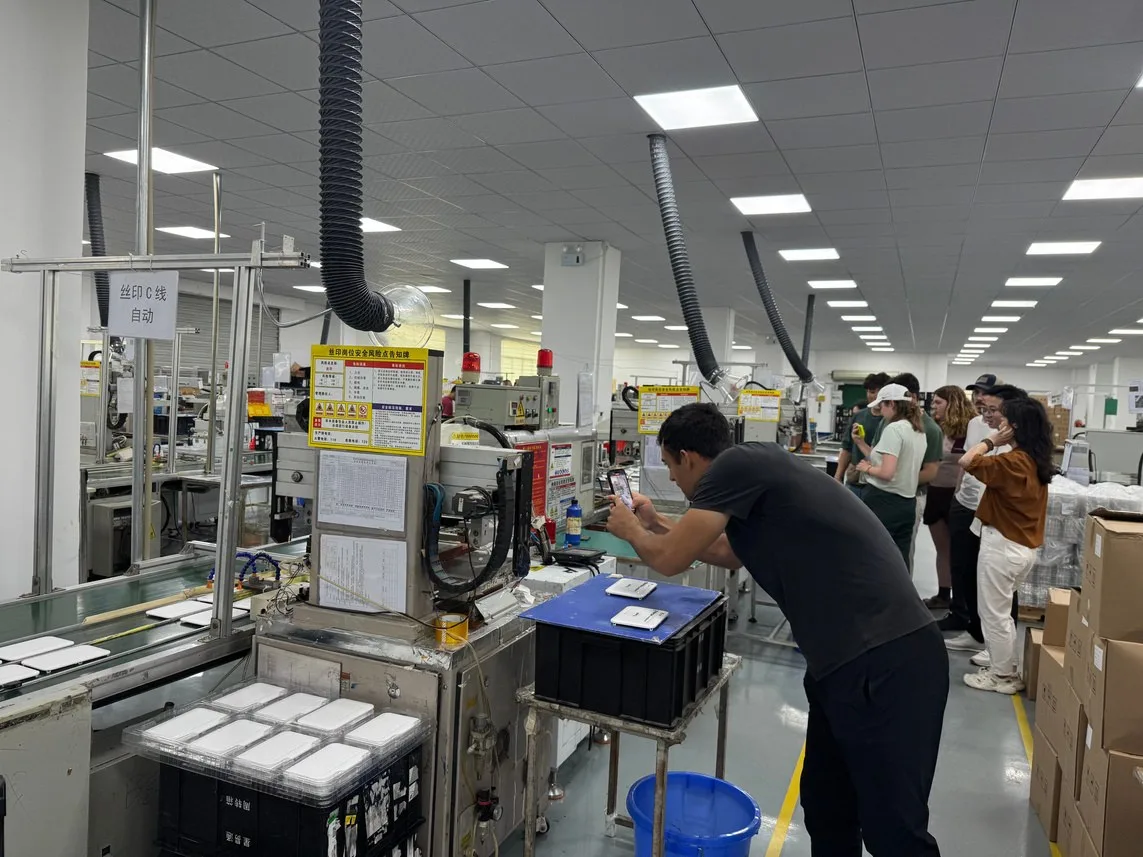
Robots carry several boards: a main compute board, motor driver boards, power boards and sensor interface boards. These are built on standard SMT lines, so an electronics assembly plant can usually build all of them. The design work matters more than the plant. Plan test points and firmware loading early. Our guide to small-batch PCBA testing explains how to budget for test from the first run.
How are robot structures and covers made?
Early robots use CNC-machined aluminum frames and 3D-printed covers. As volume grows, teams move to die casting for structural parts and injection molding for covers. Each move cuts unit cost and adds tooling cost, so time it to your volume plan. See our guides to aluminum die casting and injection molding for housings.
Why do data and teleoperation centers matter for physical AI?
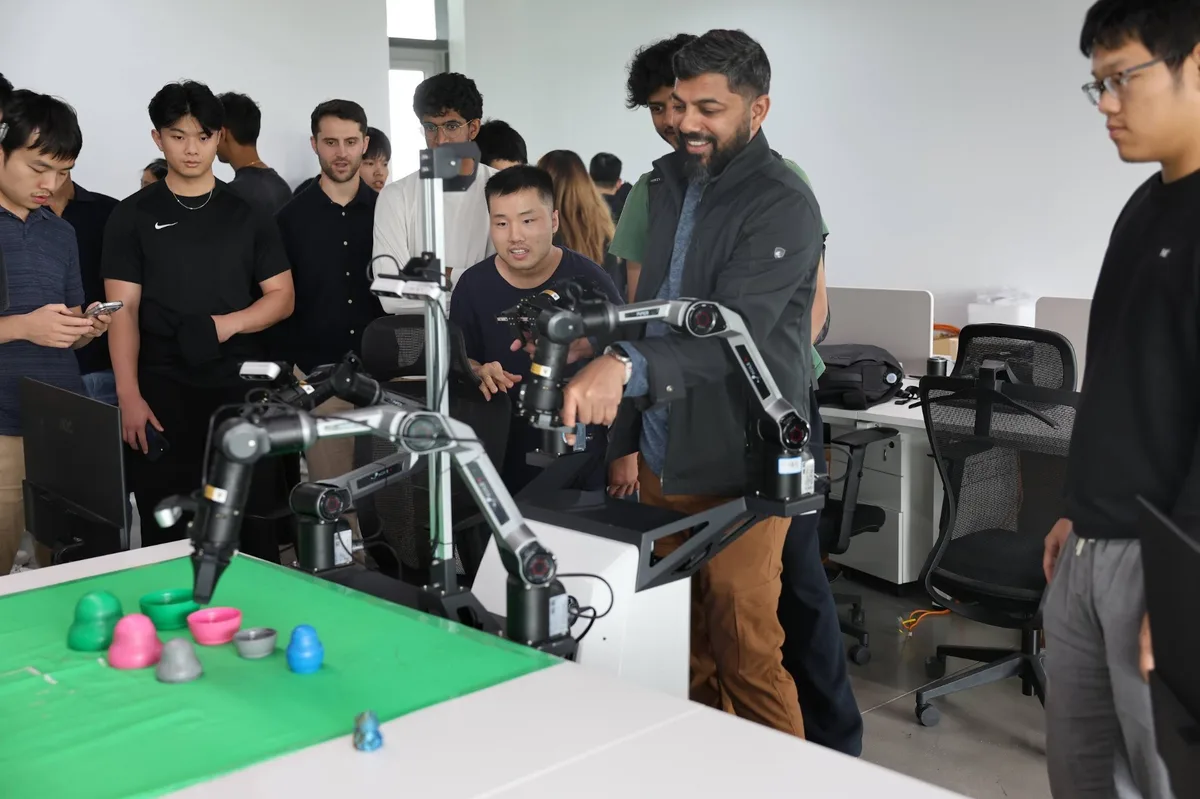
Physical-AI models learn from demonstrations. Teleoperation centers record people guiding robot arms or humanoids through tasks, then label the data for training. Visiting one shows how data is collected at scale, what it costs in time and what equipment it needs. If your product depends on learned behavior, plan your data pipeline as carefully as your hardware.
How do you plan a robotics supplier trip?
- Mark your critical parts. Pick the part types that drive cost or risk, usually actuation and sensing.
- Prepare a short brief per supplier type. Include your target specs, expected volumes and what you want to learn.
- Check each candidate. Verify the business license and certificates, as our guide to finding a manufacturer in Shenzhen explains.
- Protect your design. Read NDAs, IP and DFM before a factory visit before you share drawings.
- Group visits by district. Robotics suppliers are spread across the region; route planning saves days.
For a broader view of the factory types you can visit, read the factory types hardware founders visit in Shenzhen. For entry rules, costs and a full trip plan, read the Shenzhen Hardware Founder Playbook 2026.
What are the risks of sourcing robotics parts in Shenzhen?
The region's depth is an advantage, but it does not remove the normal risks of a new supply chain. Plan for them from the first visit.
- Sample versus production gap. A hand-built sample can perform better than units from the line. Ask for test data from production lots and repeat your own tests on units you pick.
- Single-source parts. A custom joint or sensor from one supplier can stop your line if that supplier changes priorities. Identify a second source for critical parts, even if you do not use it yet.
- Export controls and compliance. Some robotics, drone and sensing parts fall under export or import rules in the US, the EU or China. Check classification with a trade specialist before you design a part in.
- Specification drift. Suppliers may change a sub-component without notice. Put a change-notification clause in your supply agreement and ask for a bill of materials for each module.
- Communication. Time zones and language slow down engineering changes. Agree on one contact, a shared tracker and a weekly call.
Visit robotics suppliers with a founder group
Two days of the Future Factory × Illuminious: Shenzhen Founder Tour (December 6–11, 2026) focus on robotics: a humanoid robotics lab, an actuator factory, a sensor factory and a plastics factory. Max 20 founders, 10+ factory and lab visits. A licensed Future Factory program, hosted by Illuminious.
Frequently asked questions
Is Shenzhen a good place to source humanoid robot parts?
For many part types, yes. Actuators, sensors, batteries, boards and structures are all made in the region. Compare several suppliers per part and test samples before you commit.
Should I buy standard joint modules or design my own?
Start with standard modules to learn early what your robot needs. Design your own only when volume and performance needs justify the tooling and test work.
Do I need to share my full design with suppliers?
No. Share only what each supplier needs to quote its part. Sign an NDA, ideally an NNN agreement, before you share drawings.
Can a tour replace supplier due diligence?
No. A tour helps you see supplier types and build a shortlist. You still need samples, audits and contracts before you order.