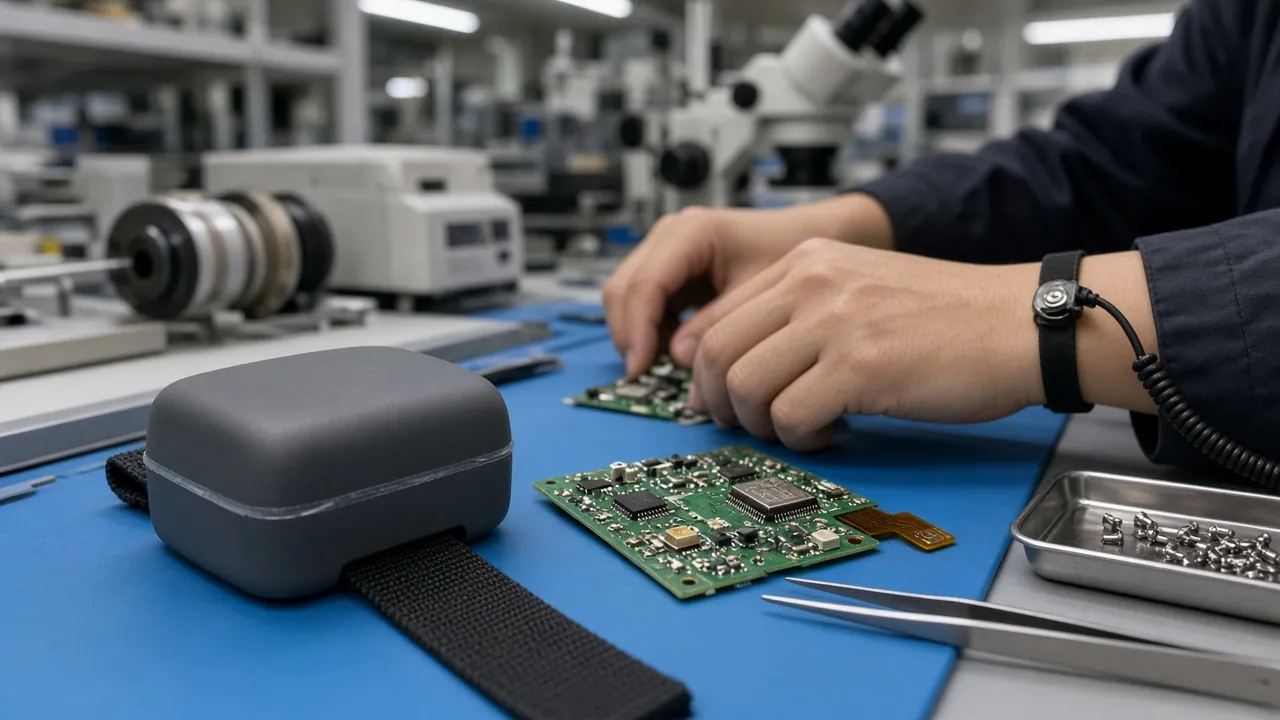
Consumer IoT / Pet Wearables / Smart Collar PCBA + Overmolding + NPI
Do you trust a factory you've never met? Go meet them.
Shenzhen tour · Dec 6–11
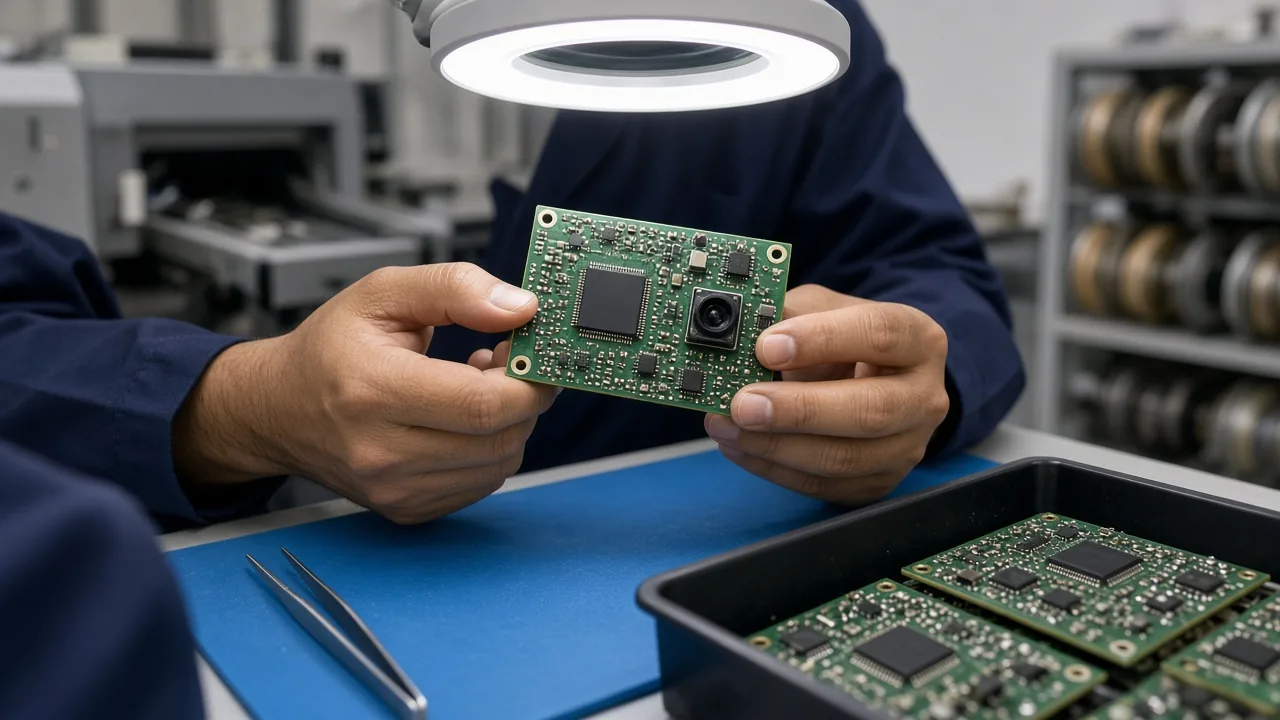
Physical AI / Warehouse Robotics / Edge-AI Perception Module + Quick-Turn PCBA + NPI
Percepta Robotics, an 8-person pre-seed physical AI startup building an edge-AI perception module for warehouse robots, was seven days from its Tech W...
Walk Shenzhen factories with us, Dec 6–11. See the tour
Percepta Robotics, an 8-person pre-seed physical AI startup building an edge-AI perception module for warehouse robots, was seven days from its Tech Week investor demo when its hand-assembled demo boards began dropping the sensor stream under vibration. The original board house quoted three weeks for a rebuild, and nobody had yet found the root cause.
Illuminious ran a free engineering review within 24 hours that caught a decoupling capacitor placement causing intermittent rail dropout under flex and vibration, plus an antenna keep-out violation that would have degraded RF at demo distance. After revised files were released, a 5-piece quick-turn PCBA run with no MOQ went through SMT, AOI, X-ray, functional test and a vibration screen, and shipped in 72 hours under one US-based program manager.
The Challenge: Seven days before its Tech Week investor demo, Percepta Robotics had a deck, a working robot, and five hand-assembled perception boards that kept going dark. Company name and individuals have been anonymized for confidentiality. The 8-person, pre-seed physical AI startup builds an edge-AI perception module for warehouse robotics: a camera and depth sensor feeding an on-board neural processor that lets autonomous mobile robots see pallets, people and forklift tines in real time. On the bench, the boards worked. Bolted onto a moving robot, the sensor stream dropped out every few minutes under vibration. The original board house quoted three weeks for a new build. The demo was in seven days, in front of the investors the company needed to close its round.
The timing was not an accident. The warehouse robotics market is projected to grow from roughly $11 billion in 2026 to about $24.6 billion by 2031, at a 17.5% compound annual rate, on tight warehouse labor pools, SKU proliferation and computer-vision advances that let robots handle irregular loads. Capital has followed: physical AI startups raised a record $16.3 billion across 492 deals in the first quarter of 2026 alone. Tech Week, the decentralized event series presented by a16z, ran October 5 to 11 in San Francisco and October 12 to 18 in Los Angeles, with physical AI showcases packed onto the calendar. For a pre-seed hardware team, a live demo in that window is a fundraising event. A board that resets on stage is not a bug report. It is a pass.
Percepta sent Gerbers and a BOM on a Thursday morning. Illuminious treated it as an emergency prototype PCB assembly run, not a quote request: free engineering review first, then a 5-piece quick-turn PCBA build with no MOQ, managed end to end by a US-based program manager. Key elements include:
From released revised files to five tested boards in a courier box, against a three-week quote from the original board house.
A decoupling placement that caused intermittent rail dropout under vibration, and an antenna keep-out violation that would have cut RF range at demo distance.
Every board passed functional test and a 30-minute vibration screen with zero sensor dropouts, and ran through the full live robot demo without a reset.
Investor conversations moved to "when can you ship 100." Percepta ordered a 50-unit pilot with dedicated test fixtures.
The first five boards were assembled by hand at a local prototype shop to save time. Hand assembly was not the root cause, but it made the root cause worse. The layout placed the 10 µF bulk capacitors and a cluster of 0402 decoupling capacitors for two critical rails along the board edge, between a mounting hole and the board-to-board connector that tied the perception module to the robot's main controller. That is the line where the board flexes most when a robot chassis shakes over a dock plate.
Ceramic capacitors do not like flex. Strain across their terminations opens micro-cracks, and marginal hand-soldered joints open and close under vibration. Each time a joint flickered, the local energy reservoir for the sensor rail disappeared for a few milliseconds, the rail sagged under the processor's burst current, and the image sensor reset. On a bench, nothing moved, so nothing failed. On a robot, it failed every few minutes. This is the classic intermittent fault that no bench test reproduces, and exactly the kind of DFM review catch that pays for itself before a single part is placed.
The fix took Percepta's layout engineer about four hours with our notes in hand: move the capacitors inboard, away from the mounting hole and connector, re-orient them to reduce strain across their terminations, tighten the return path to the regulator with added ground vias, and add a second bulk capacitor near the point of load. Machine placement and a profiled reflow then removed the hand-solder variable entirely.
The second catch had not shown up at all, because nobody had tested the board at demo distance. The robot streamed its perception overlay to a laptop over Wi-Fi so investors could watch what it saw. The chip antenna's keep-out area had a copper pour on an inner layer, a ground stitching via, and the edge of a shield-can footprint inside the clearance the antenna datasheet required. At one meter on a desk, the link looked fine. At 15 meters across a room full of phones, laptops and 2.4 GHz noise, the link margin would have collapsed. The revised layout cleared copper on every layer under the antenna, moved the shield can, and kept the matching network pads so the antenna could be tuned. Bench measurement on the new boards showed about 8 dB more link margin at 15 meters than the original layout.
Gerbers, BOM and pick-and-place files arrived Thursday morning Pacific time. Within the first hours, the US-based PM held a 30-minute call with the CEO and hardware lead, signed a mutual NDA, and our sourcing team checked every BOM line against stock in Shenzhen. Two passives were swapped to in-stock equivalents with matching specs, approved by the client the same day. No MOQ, no deposit, and a confirmed build slot before the engineering review began.
Our NPI engineers reviewed the layout, stack-up and BOM overnight. The DFM report flagged the decoupling placement as the likely cause of the vibration dropouts and the antenna keep-out as a demo-day RF risk, with marked-up screenshots and specific fixes. The review landed in under 24 hours, before Percepta paid anything.
Percepta's layout engineer applied the fixes, we re-checked the revised Gerbers against the report, and the files were released to production. Stencils were ordered and parts kitted in parallel. The 72-hour clock started at file release.
Boards ran through SMT placement and a profiled reflow, then AOI on every board and X-ray on the processor package. Each board was powered up, flashed, and checked for rail ripple, sensor streaming and Wi-Fi throughput, then run through a 30-minute vibration screen while logging the sensor stream. Five of five passed with zero dropouts.
The five boards shipped by international express with ESD packaging, test logs and an assembly report. The PM tracked the shipment through customs and confirmed delivery to the Bay Area. Shipped 72 hours after file release, against a three-week quote elsewhere.
Percepta bolted the new modules onto the robot, re-ran its perception model, and drove the robot around a mock warehouse aisle for two days of rehearsal. On D7 the robot ran a live pallet-detection demo in front of investors, streaming its view to a laptop across the room. No dropouts, no resets, and the question in the room changed from "does it work" to "when can you ship 100."
"We thought we had a firmware problem. Illuminious found a capacitor placement problem and an antenna problem in less than a day, before we paid a cent, and had tested boards on a plane three days later. The demo ran clean, and the next conversation with investors was about our pilot run, not our risk."
The week after the demo, Percepta ordered a 50-unit pilot run so it could put perception modules on robots at two design-partner warehouses. The pilot adds what an emergency run skips: a dedicated pogo-pin test fixture for power rails, sensor streaming and RF throughput, a vibration screen on a sample from every lot, serialized boards, and a DFM pass for volume that consolidates passives and locks the stack-up. The same US-based PM carries the program, with prototypes, DFM and mass production in our own factory in Shenzhen when the company needs volume.
If you are budgeting validation for a run this size, our guide to testing strategy for small-batch PCBA on a startup budget breaks down what to test at 5, 50 and 500 units. For the full prototype workflow behind a quick-turn PCBA startup build, see how NPI rapid prototyping goes from CAD to first article in 72 hours.
Engineering review first, not after: A faster rebuild of the same layout would have shipped the same dropout to the demo. The free review found the cause before parts were placed.
Vibration and distance, not just power-on: The functional screen tested what the demo would do to the board: shaking on a robot and streaming across a room.
A 5-piece run treated like a real program: No minimum order, no deposit before the review, and the same process controls a pilot run gets.
A US-based PM on Pacific time: One person owned the review call, the file release and the shipment, so an 8-person startup did not have to manage a factory during demo week.
Planning a hardware demo deadline? Start with PCB assembly for quick-turn and pilot builds, NPI engineering for DFM review and EVT to PVT planning, and the Startup Bridge Program for no MOQ prototype runs from 5 pieces, a 72-hour PCBA turn, and a free engineering review before you pay. Illuminious does initial development in San Francisco, CA, with prototypes and production in our own factory in Shenzhen.
Illuminious helps physical AI and robotics hardware startups get from pitch deck to working boards: free engineering review in 24 hours, 5-piece quick-turn PCBA with no MOQ, functional and vibration screening, and a clear path to a 50-unit pilot and beyond, all run by a US-based program manager. Send us your Gerbers and BOM for a free engineering review before your next demo.
"We thought we had a firmware problem. Illuminious found a capacitor placement problem and an antenna problem in less than a day, before we paid a cent, and had tested boards on a plane three days later. The demo ran clean, and the next conversation with investors was about our pilot run, not our risk."
Consumer IoT / Pet Wearables / Smart Collar PCBA + Overmolding + NPI
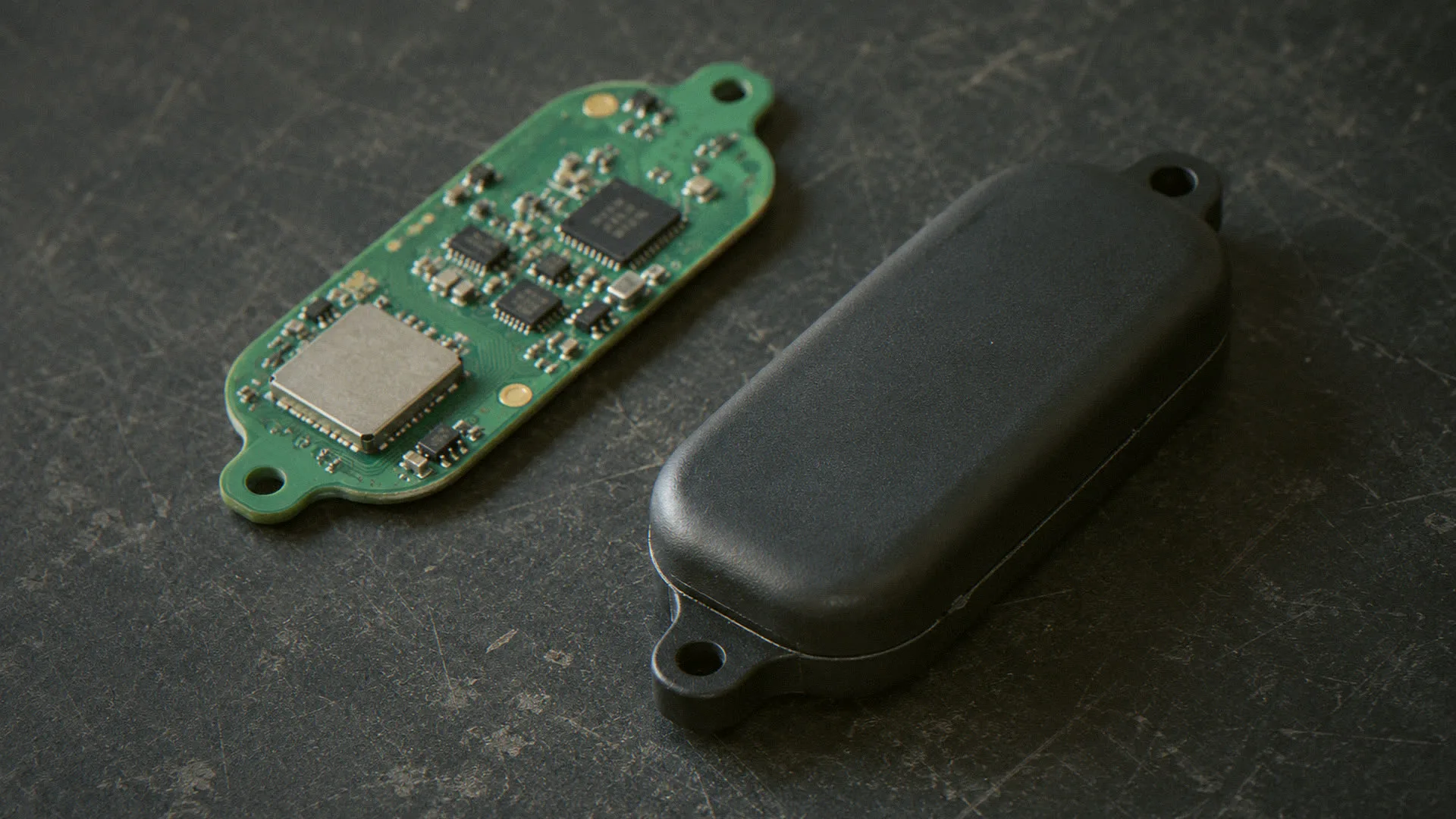
Logistics / Asset Tracking IoT / Overmolded Enclosure + LoRa PCBA + NPI
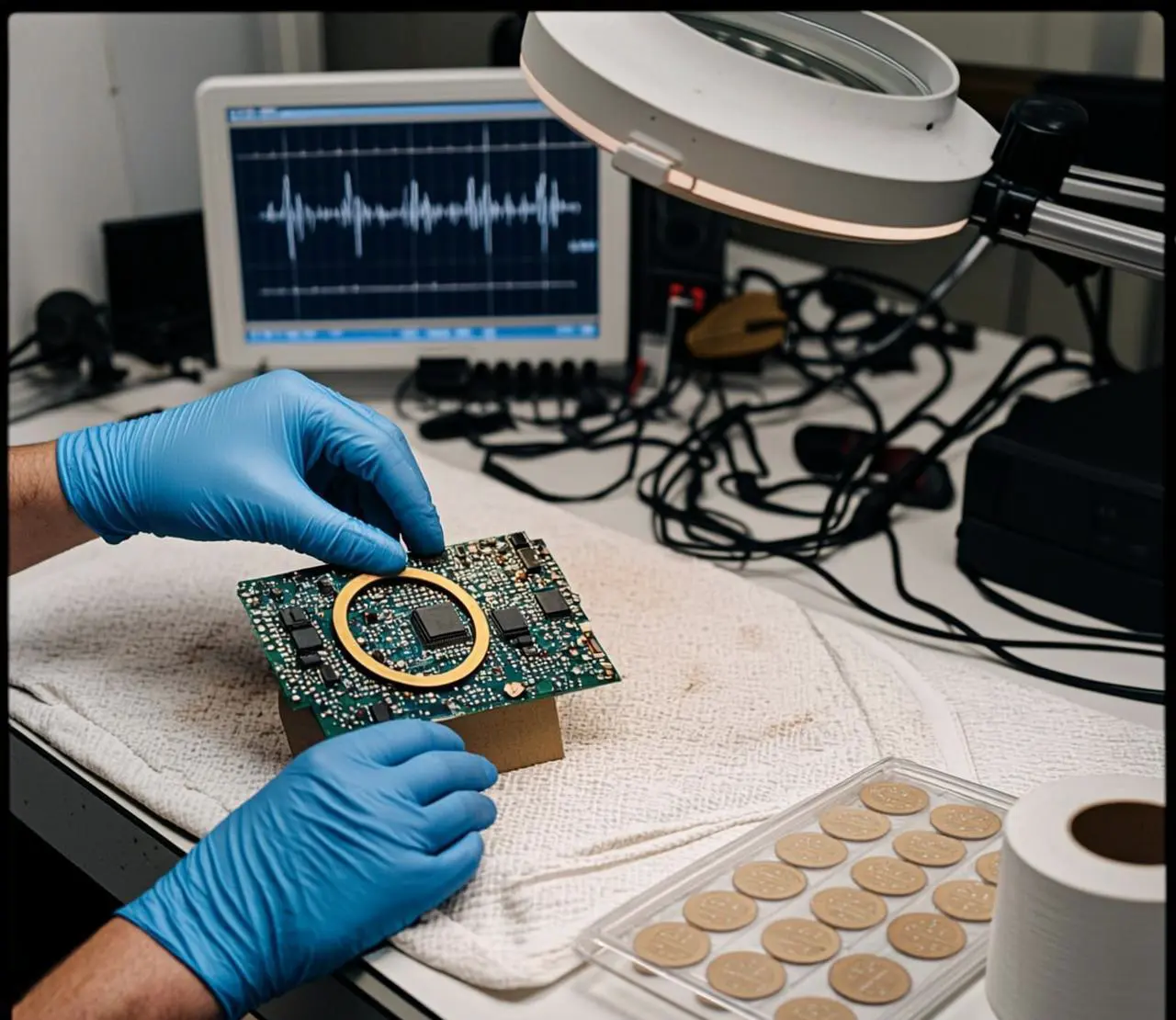
Medical Wearable / Connected Health / Flex PCBA + Biocompatible Encapsulation + NPI
Let's discuss how we can help your project succeed with our end-to-end manufacturing capabilities.