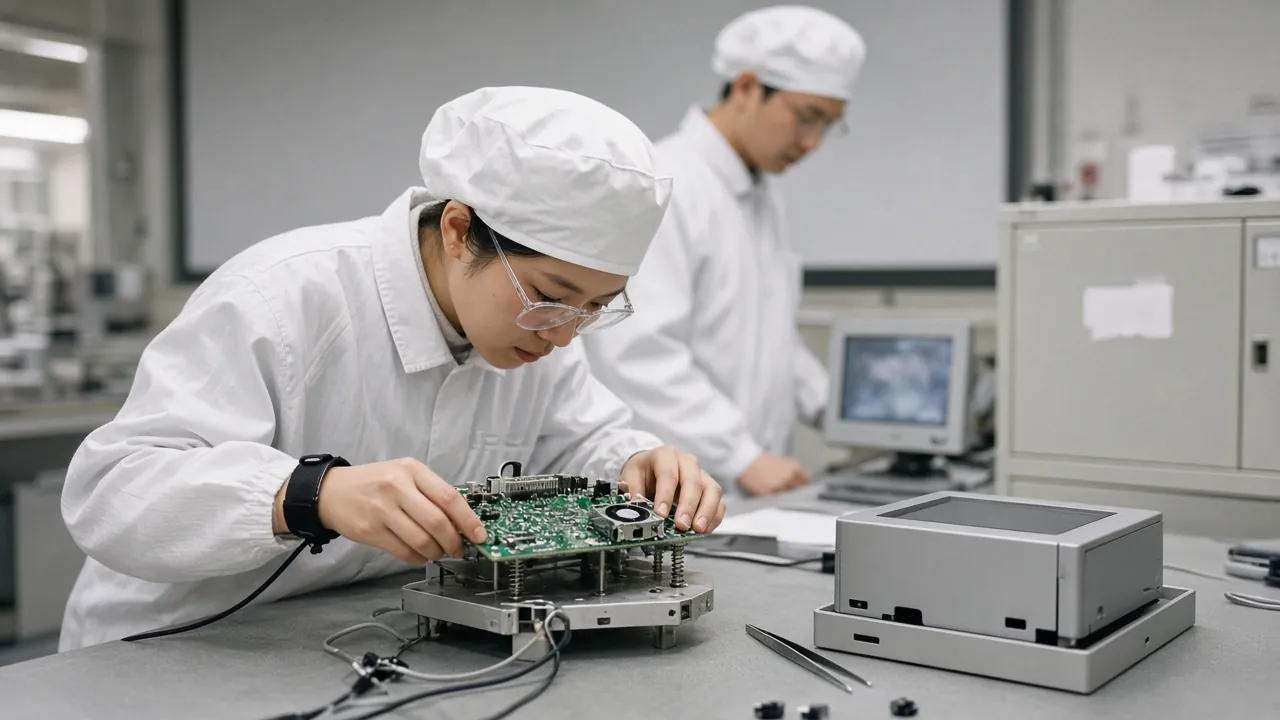
Consumer AI / Portable AI Projector / Prototype PCBA + SMT + Testing
Do you trust a factory you've never met? Go meet them.
Shenzhen tour · Dec 6–11
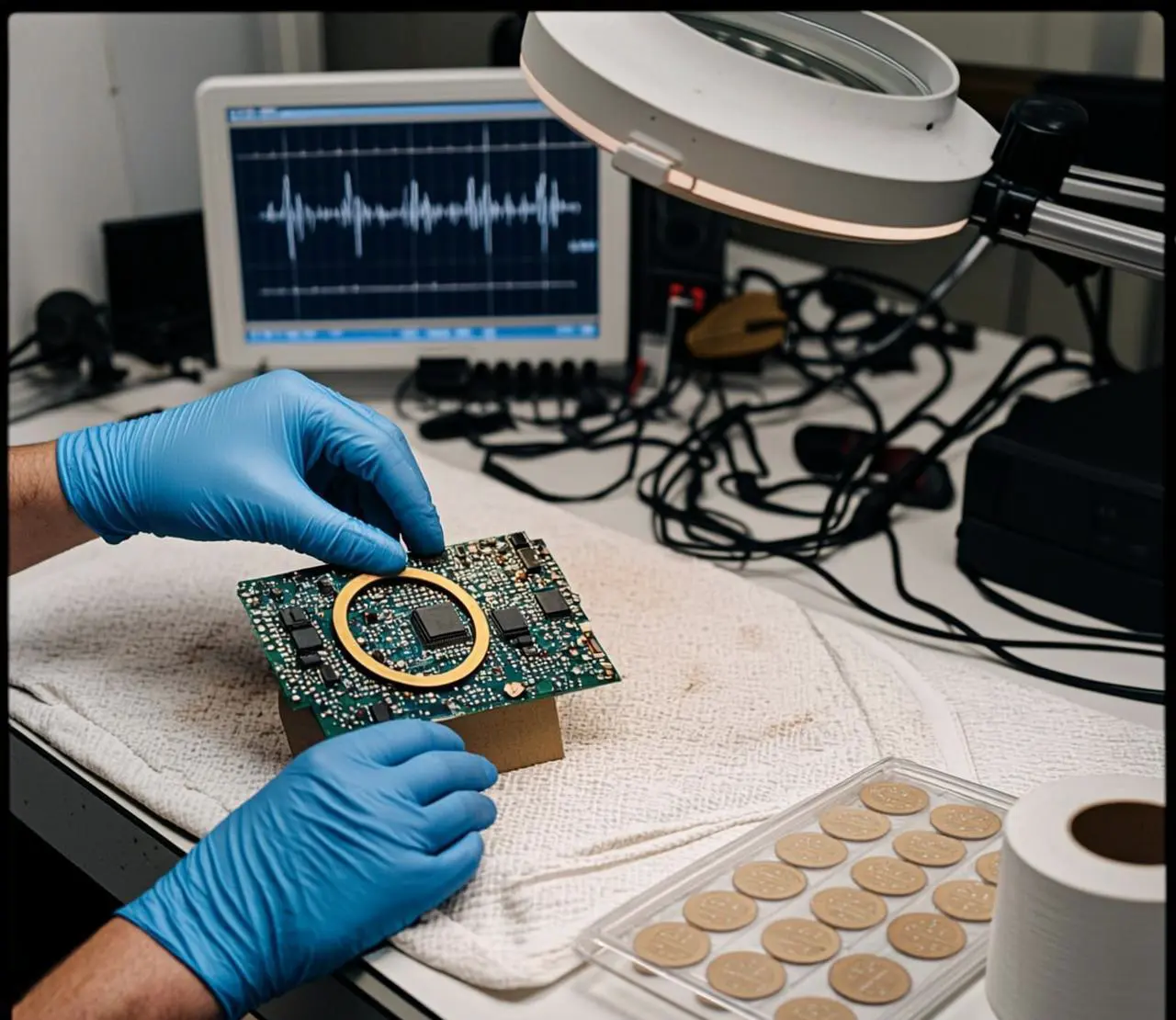
Medical Wearable / Connected Health / Flex PCBA + Biocompatible Encapsulation + NPI
Vitalis Health, a 7-person seed-stage startup in Austin, TX, developed a disposable vital-sign monitoring patch combining single-lead ECG, skin temper...
Walk Shenzhen factories with us, Dec 6–11. See the tour
Vitalis Health, a 7-person seed-stage startup in Austin, TX, developed a disposable vital-sign monitoring patch combining single-lead ECG, skin temperature, and a 3-axis accelerometer for post-discharge recovery monitoring. Connected wearable patches are projected to grow from $11.79B in 2025 to $12.98B in 2026 and $28.07B by 2034 at roughly 10% CAGR, and the FDA continues to clear wearable-patch remote monitoring systems through the 510k pathway — but Vitalis faced the classic seed-stage squeeze: a crowdfunding backlog waiting on volume, an FDA 520-f Class II production path demanding unit-level traceability, flex-PCBA bend-stress reliability questions, biocompatible skin-contact requirements under ISO 10993, and no contract manufacturer willing to quote a 5-piece pilot without punitive no-MOQ pricing.
Illuminious ran the full FDA-aware NPI program under one quality system and one roadmap: a 5-piece hand-built EVT with 72-hour DFM feedback that caught an antenna-keepout conflict with the battery placement before layout freeze; a 50-piece DVT validating ISO 10993-qualified medical-grade adhesive, waterproof overmold, and optical isolation of skin-contact sensor paths while characterizing second-bend stress on the flex tail; a 1,000-piece PVT ramp with 100% functional test on ECG signal quality and OTA wireless plus statistical adhesion sampling; and a 10,000-unit production run with unit-level serialization from component reel to fulfillment carton, medical adhesive shelf-life FIFO management, and pack-out direct to US fulfillment. No MOQ at any phase, and one manufacturing partner from pilot to crowdfunding delivery.
The Challenge: Vitalis Health, a 7-person seed-stage wearable startup in Austin, TX, had a working prototype of a disposable single-lead ECG, skin temperature, and 3-axis accelerometer patch for hospital-at-home recovery monitoring — and a crowdfunding backlog waiting on volume. The market timing was right: connected wearable patches are projected to grow from $11.79 billion in 2025 to $12.98 billion in 2026 and $28.07 billion by 2034 at roughly 10% CAGR, and the FDA keeps clearing wearable-patch-based remote monitoring systems through the 510k pathway. But the path from 5 hand-built pilot patches to 10,000 shipped units runs straight through flex-PCBA bend-stress reliability, biocompatible skin-contact encapsulation, and FDA 520-f Class II production controls. No contract manufacturer would quote a 5-piece build without punitive no-MOQ pricing.
Illuminious ran the full FDA-aware NPI program — from the 5-piece EVT build to 10,000 serialized units delivered to US fulfillment — under one quality system. Key elements include:
From the 5-piece hand-built EVT pilot to the first 10,000-unit delivery batch at US fulfillment in 20 weeks, on a seed-stage budget with no MOQ commitments anywhere in the program.
First-pass yield climbing from 89% on the first 1,000-piece PVT lot to a sustained 97.3%, with every patch functionally tested for ECG signal quality and OTA wireless performance.
Crowdfunding backers fully fulfilled from the first two production batches with zero late shipments, protecting the campaign reputation the company's next raise depends on.
Every patch carries a unit-level serial number traceable from component lot to shipping carton — audit-ready device history records for the FDA 520-f Class II production path.
Vitalis built 5 hand-assembled patches on flex PCBA with off-the-shelf sensor modules. Illuminious returned a full DFM report in 72 hours; the critical finding was an antenna-keepout conflict with the battery location that would have degraded wireless range at DVT. The layout was fixed on paper before a single DVT board was fabricated.
The 50-piece DVT run validated the skin-side stack: ISO 10993-qualified medical-grade adhesive, waterproof overmold, and optical isolation of the skin-contact sensor path. Second-bend stress on the flex tail was characterized and the bend radius relaxed to survive repeated patch reapplication. The design of record froze for production.
The 1,000-piece PVT ramp ran 100% functional test — ECG signal quality, OTA join-and-report, and sampled adhesive strength per lot. Yield analysis from the first lots drove two stencil and reflow profile tweaks; first-pass yield climbed from 89% to 97.3%. Production readiness was demonstrated with data, not promises.
Volume delivered in batches with unit serialization from component reel to carton, medical adhesive shelf-life FIFO management on the line, and pack-out direct to US fulfillment. The crowdfunding backlog cleared on schedule with zero late batches.
Right-sized builds at every phase: 5, 50, 1,000, then 10,000 units on one program — the seed-stage team never bought inventory ahead of learning, and never paid punitive no-MOQ surcharges that would have burned the round.
Second-bend stress engineered out early: The 72-hour DFM caught the antenna-battery conflict, and DVT bend-radius characterization ensured the flex PCBA survived repeated patch reapplication in the field.
Biocompatibility built into the BOM: ISO 10993-qualified adhesive and overmold selected at DVT, with adhesive shelf-life managed FIFO through production — no material surprises at audit time.
Serialization as a design decision: Unit-level traceability from reel to carton was designed in at PVT, so the device history record for every shipped patch exists by construction, not reconstruction.
"As a 7-person seed team, every vendor told us to come back when we had volume. Illuminious quoted the 5-piece EVT build like it mattered, caught an antenna and battery conflict in 72 hours, and carried the same program through to 10,000 serialized patches in backers' hands. We never changed manufacturing partners, and we never missed a crowdfunding date."
This story is an illustrative example narrative anchored to publicly verified market data; it does not describe any specific identifiable client. For teams on the same path, see how micro-molding and ISO 13485 cleanroom manufacturing took a medical wearable to zero-defect production, our box build assembly guide, and hardware startup manufacturing cost planning. Service pages: PCB assembly and NPI engineering.
Illuminious runs FDA-aware NPI for wearable and connected-health hardware: flex PCBA with medical sensor integration, biocompatible encapsulation, full-functional test, and unit-level traceability — from a 5-piece pilot to 10,000 serialized units at US fulfillment, with no MOQ at any phase. Send us your wearable design for a 72-hour DFM review.
"Illuminious quoted the 5-piece EVT build like it mattered, caught an antenna and battery conflict in 72 hours, and carried the same program through to 10,000 serialized patches in backers' hands — we never missed a crowdfunding date."
Consumer AI / Portable AI Projector / Prototype PCBA + SMT + Testing

Consumer AI / AI Voice Recorder / Prototype PCBA + SMT + Testing
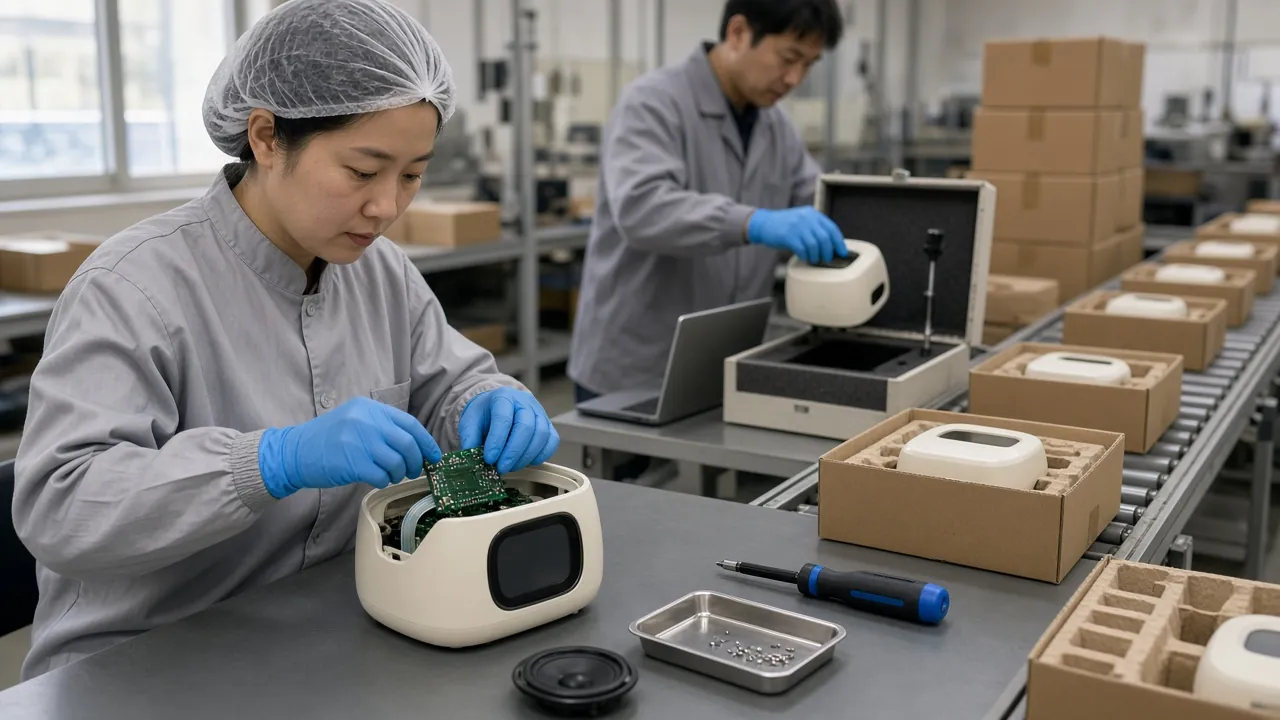
Consumer AI / Desktop AI Companion / Box Build Assembly + PCBA + Injection Molding
Let's discuss how we can help your project succeed with our end-to-end manufacturing capabilities.