The Challenge: VoltAura Power had raised a $60M Series B to build the battery backup units that keep AI server fleets alive through grid events. Their rack-mounted 3.3kW hot-swap BBU combined a battery management system on a 4-layer 3-oz copper PCBA, stamped copper busbars carrying hundreds of amps, a galvanized steel hot-swap chassis, and an integrated battery pack — a product where the hard engineering lives not in the cells but in the power delivery chain that connects them. The market timing could not have been sharper. Every AI rack shipped in 2026 needs battery backup: AI server power density is climbing so fast that industry surveys report 57% of data center operators citing higher power density requirements as a major AI-driven impact, the data center BBU power supply market is projected to more than double from roughly $948M in 2025 to $2.08B by 2032, and cell makers from LG Energy Solution to CBAK Energy are pivoting capacity toward AI data center backup. AI data center BBU demand even drove Taiwan inductor maker Trio-KY's July 2026 revenue to a 14-month high.
That demand was VoltAura's opportunity and its trap. A Tier-1 data center customer demanded UL certification and 20,000 units for Q4 2026 deployment. VoltAura's factory reality was 500 prototype units and a four-vendor supply chain with no owner of BBU-level performance. The BMS PCBA vendor built competent 4-layer 3-oz copper boards but delivered a 4.7% thermal failure rate on the high-current paths — a number that compounds brutally when every failure is a 3.3kW board carrying hundreds of amps. The busbar fabricator stamped pure copper but could not control plating thickness, so contact resistance varied unit to unit and every BBU shipped with different internal impedance. The sheet metal shop's chassis passed visual inspection but failed EMI screening, forcing expensive rework with conductive tape. The final assembler owned none of it — no power-path accountability, no system-level functional test beyond power-on. When a BBU failed, four vendors pointed at each other and VoltAura's engineers became full-time forensic investigators.
The stakes were existential. Data center OEMs qualify suppliers once and sign multi-year agreements with whoever demonstrates volume capability — and disqualify everyone else. VoltAura needed a manufacturing partner who could own high-power PCBA, stamped copper busbars, EMI-tight sheet metal chassis, and full BBU assembly under one quality system, in 16 weeks.
The Solution
Illuminious built an integrated manufacturing program spanning high-power PCBA, metal stamping, sheet metal fabrication, full box build, and structured NPI scaling — one partner, one quality system, accountable for BBU-level power-path performance. Key elements include:
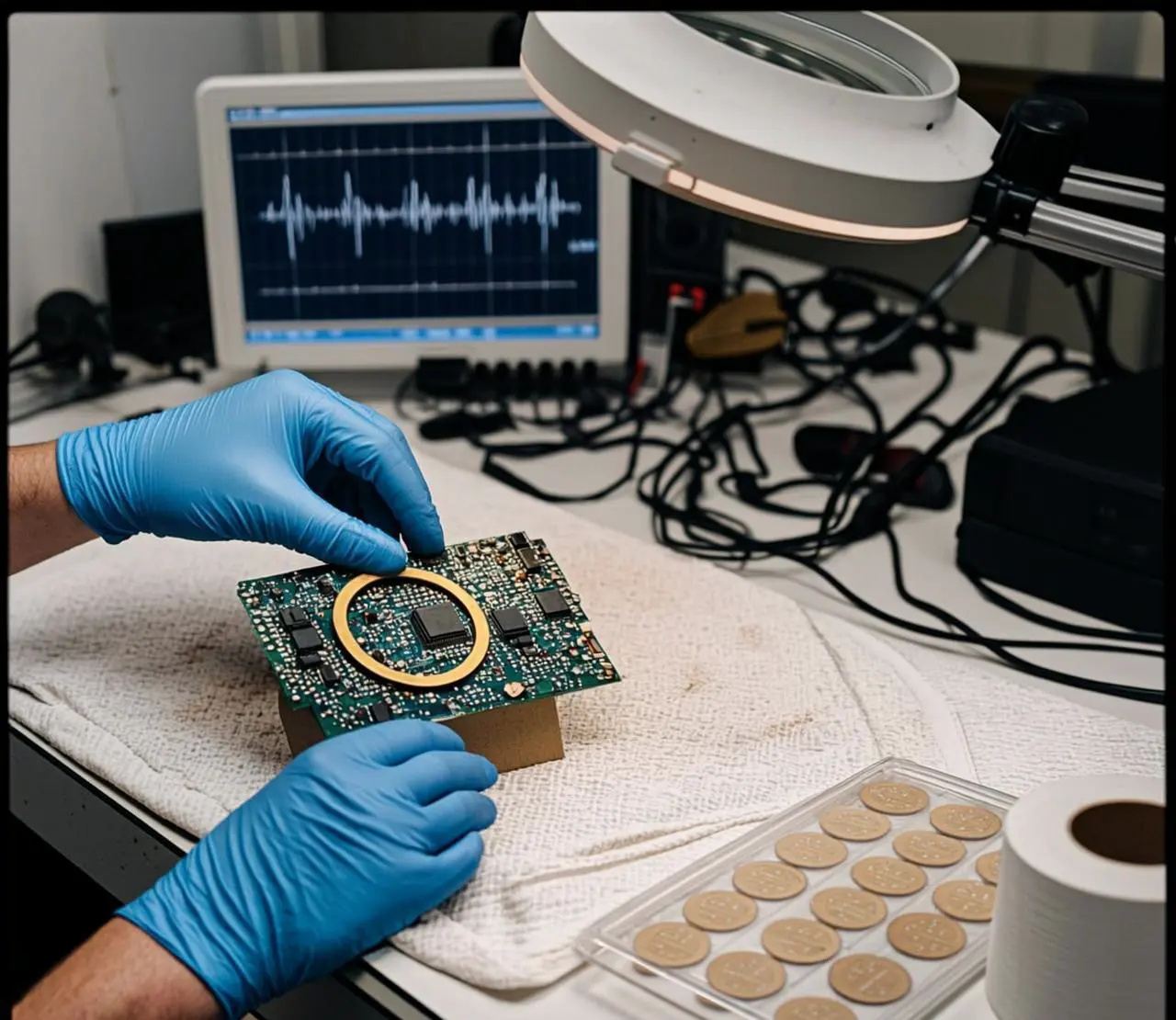
- High-Power BMS PCBA: 4-layer boards with 3-oz copper, mixed SMT and high-current through-hole assembly to IPC Class 3. 100% AOI plus X-ray inspection, ICT followed by a functional battery-simulation test that exercises real charge and discharge profiles, and conformal coating rated for data center humidity.
- Progressive-Die Copper Busbar Stamping: Pure copper busbars stamped in-house with controlled tin/silver plating. The in-house tool and die shop cut tooling lead time to 3 weeks, plating thickness held at Cpk 1.6, and every busbar passed 100% contact resistance validation before entering assembly.
- Sheet Metal Hot-Swap Chassis: 1.5mm galvanized steel chassis cut on fiber laser and formed on a 250T press brake, with PEM hardware insertion for repeatable rack-mount fit and a conductive EMI coating that eliminated the rework cycle the previous vendor's chassis required.
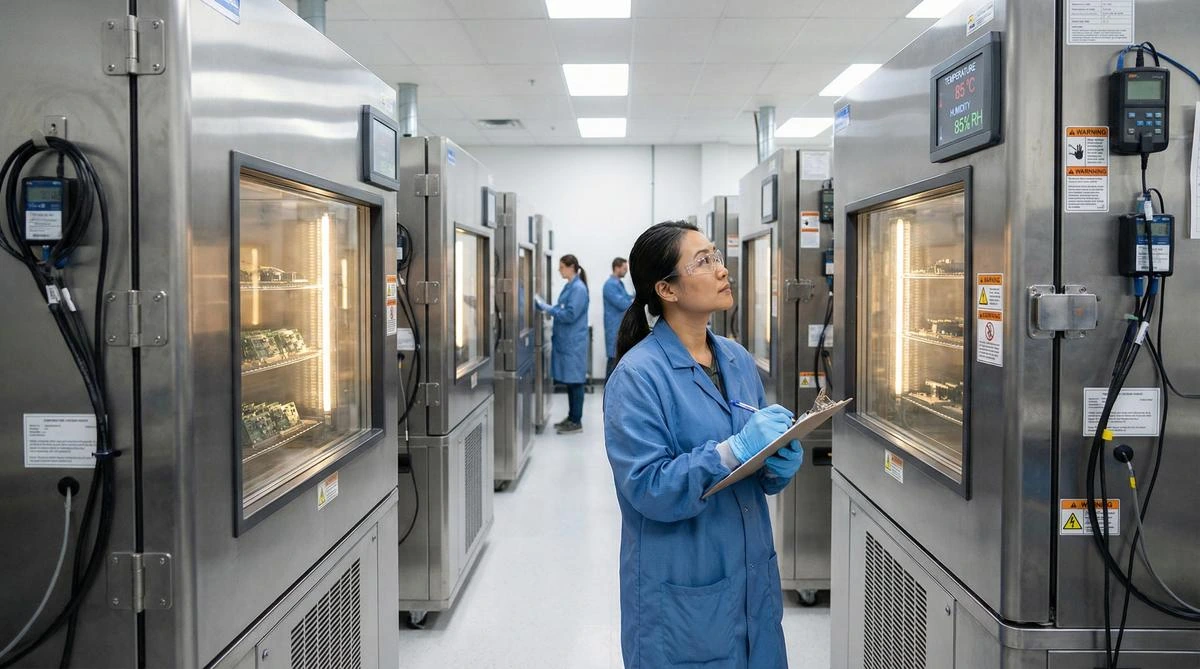
- Box Build + FCT: Full BBU assembly with battery pack integration, automated charge/discharge functional testing of every unit, thermal chamber validation, serialized traceability from raw material lot to shipped module, and pack-out direct to US fulfillment.
- Structured NPI Scaling: EVT to DVT to PVT in 16 weeks, UL pre-scan support that de-risked the customer's certification requirement, and a golden sample archived as the production reference standard.
$262
Unit Cost
BBU cost reduced 32% from $385 through single-partner integration, unified yield, and elimination of four-vendor logistics and quality overhead.
99.3%
First-Pass Yield
First-pass yield lifted from 91% through IPC Class 3 high-current PCBA control, 100% busbar contact resistance validation, and full power-path functional test.
-60%
Contact Resistance Variance
Busbar contact resistance variance cut 60% through progressive-die copper stamping and controlled tin/silver plating held at Cpk 1.6, unit to unit.
20,000
Units in 7 Months
Scaled from 500 prototypes to 20,000 units with zero field thermal failures in the first 6 months — clearing the Q4 2026 deployment window and locking a multi-year OEM agreement.
1. Power-Path NPI — EVT to DVT in 16 Weeks
Illuminious engineers disassembled failed prototype BBUs and traced the 4.7% thermal failure rate to via and joint heating on the BMS board's high-current paths, then redesigned the stack-up with redistributed copper pours and heavier through-hole current carriers. The busbar die was cut in-house in 3 weeks, and the EMI chassis design moved from tape-patched rework to a coated galvanized design that passed screening on the first DVT build. EVT and DVT units cleared all functional gates in 16 weeks, including a UL pre-scan that flagged no major findings.
2. Integrated Production Ramp
PCBA lines ran the 3-oz copper BMS boards with 100% AOI plus X-ray, followed by ICT and functional battery-simulation test. The stamping cell produced busbars with plating thickness at Cpk 1.6 and validated contact resistance on every single part. Sheet metal chassis flowed from fiber laser to 250T press brake to PEM insertion and EMI coating without leaving the building. First-pass yield climbed from 91% to 99.3% within the first production quarter.
3. Volume, Validation, and US Fulfillment
PVT locked the golden sample as the production reference, and every finished BBU ran automated charge/discharge functional test plus thermal chamber validation with serialized traceability. Finished units were packed out direct to US fulfillment centers against the data center customer's deployment schedule. 20,000 units shipped in 7 months with zero field thermal failures in the first 6 months of operation.
"We thought our scaling bottleneck would be battery cell supply. It wasn't. It was the power path — the busbars, the high-current boards, the chassis that held it all together and kept EMI quiet. No single vendor would own that chain. Illuminious owned BBU-level performance end to end, and that's what let us say yes to a 20,000-unit deployment with a straight face."
Daniel Reyes, VP of Operations at VoltAura Power
Integration
One owner for the power path: Because busbar stamping, high-power PCBA, sheet metal chassis, and final assembly shared one quality system, failures were root-caused in hours instead of litigated across four vendors for weeks.
Process Control
Statistical control on the parts that matter: Plating thickness at Cpk 1.6 and 100% contact resistance validation turned busbars from a variance source into a specified, measurable interface — the single biggest driver of the 60% variance reduction.
Qualification
Testing that mirrors the field: Automated charge/discharge functional test, thermal chamber validation, and battery-simulation profiles caught the thermal and EMI failure modes that power-on checks miss — delivering zero field thermal failures across the first 6 months.
Speed
NPI discipline as a commercial weapon: EVT to DVT to PVT in 16 weeks with UL pre-scan support let VoltAura meet a Q4 2026 deployment window that fragmented competitors could not quote against.
Power Density Is a Manufacturing Problem
AI data centers are turning battery backup from a compliance line item into a scaled product category — and the BBU's power delivery chain is where costs, yields, and field reliability are actually won. Illuminious builds high-power IPC Class 3 PCBA, progressive-die copper busbars, EMI-tight sheet metal chassis, and full box build under one roof, with NPI programs that take power hardware from EVT to volume in weeks. Scaling a power product? Talk to our NPI engineering team about an integrated power-path manufacturing program.