Illuminious activated its Startup Bridge Program, combining 72-hour prototype turnaround from the Shenzhen facility with tariff-optimized volume production at the Batam, Indonesia plant. The program provided no-MOQ pilot runs, parallel DFM optimization, and a dual-facility strategy that leveraged Shenzhen's rapid iteration speed for NPI and Batam's ASEAN Free Trade Zone status for US-market tariff savings.
The Challenge: VitaSignal had the algorithms, the clinical data, and investor interest — but no path to 10,000 units before their Series A window closed. Their edge AI wristband combined PPG, ECG, skin temperature, and blood oxygen sensors on a custom flex-rigid PCB, with on-device inference running a proprietary anomaly detection model. Three contract manufacturers told them the same thing: 6-8 months NPI, 50K minimum order, and no flexibility on design changes after tooling commitment. For a startup burning $180K per month in runway, the math didn't work.
The Solution
Illuminious deployed its Startup Bridge Program — a structured NPI pathway designed specifically for pre-Series A hardware startups that need production-grade units without enterprise-scale commitments. Key elements include:
- 72-Hour Prototype Turnaround: Shenzhen facility produced functional PCBA samples within 3 business days of Gerber release, enabling rapid design validation cycles
- No-MOQ Pilot Run: 500-unit pilot production with zero minimum order quantity, allowing VitaSignal to validate manufacturing processes before committing to volume
- Dual-Facility Strategy: Shenzhen handled NPI iteration and pilot builds; Batam managed volume production with 15-25% tariff savings on US-bound shipments
- Parallel DFM Optimization: Manufacturing engineers reviewed the design while prototypes were being built, identifying 14 cost-reduction opportunities without affecting sensor performance
14 Weeks
Concept to 10K Units
60% faster than industry average for wearable health devices with flex-rigid PCB assemblies
28%
BOM Cost Reduction
Reduced from $47 to $33.80 per unit through strategic component substitution and design simplification
15-25%
Tariff Savings
Batam ASEAN Free Trade Zone production eliminated Section 301 tariffs on US-bound shipments
99.2%
First-Pass Yield
Achieved through inline AOI, X-ray inspection, and 100% functional testing with calibrated vital signs simulation
1. DFM Review & BOM Optimization (Weeks 1-2)
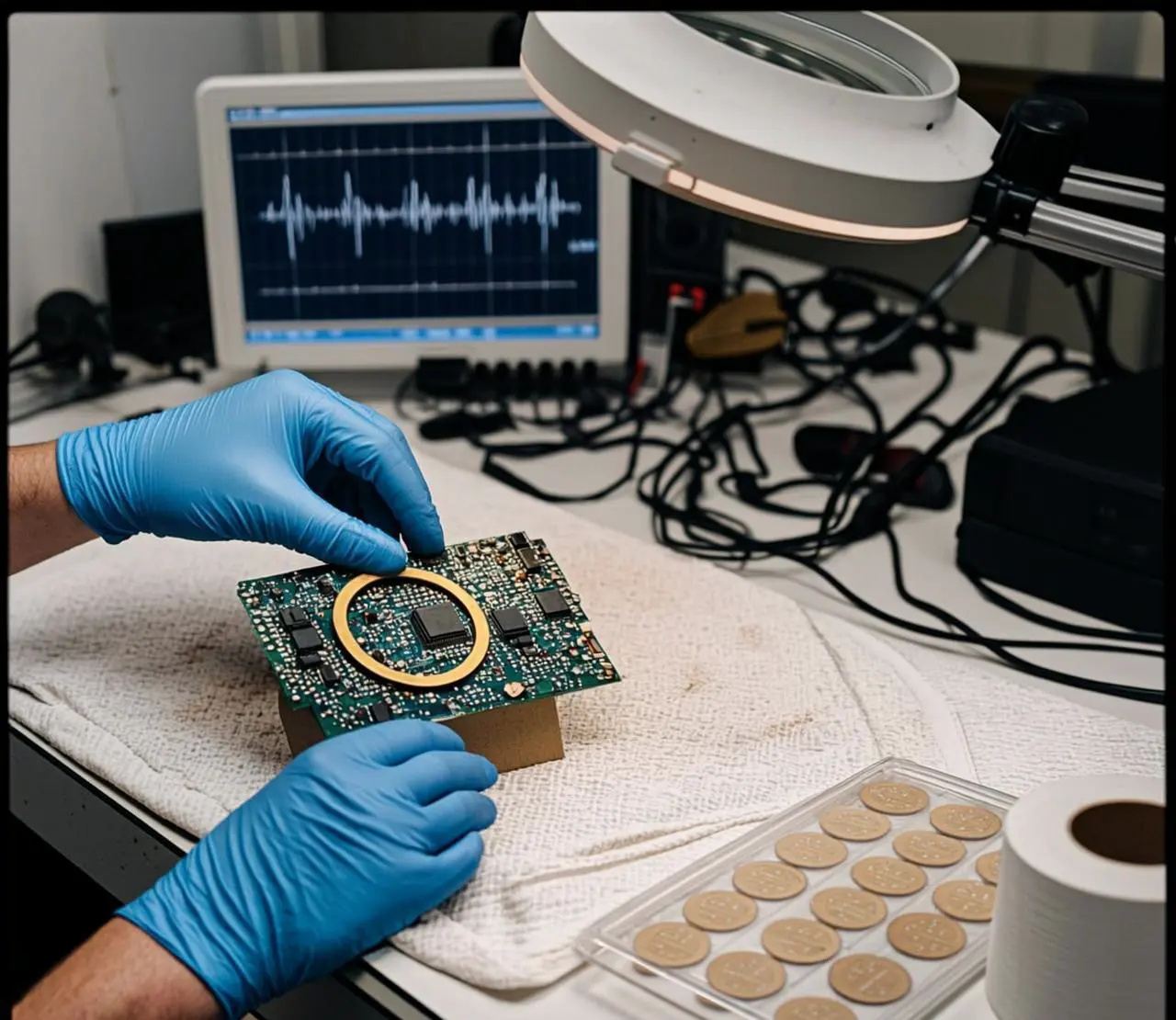
VitaSignal's hardware team flew to Illuminious Shenzhen for a two-day intensive DFM review. Engineers identified that the original flex-rigid PCB stackup could be simplified from 6 layers to 4 without impacting signal integrity for the analog sensor traces. The PPG sensor's discrete op-amp circuit was replaced with an integrated AFE chip, cutting component count by 22 parts and reducing board area by 15%. The BOM dropped from $47 to $33.80 per unit — a 28% reduction — while maintaining the clinical-grade accuracy their FDA 510(k) submission required.
2. Prototype Revision & Validation (Weeks 3-4)
With the optimized design released, Illuminious produced functional PCBA samples within 72 hours. VitaSignal's firmware team loaded the edge AI inference model and ran validation against their clinical trial dataset. Two minor rework cycles were completed in the same week — a ground plane adjustment to reduce EMI on the ECG analog front end, and a silkscreen correction for the OEM labeling requirement. The entire prototype-to-validation loop closed in 11 days, compared to the 4-6 weeks each of their previous CMs required.
3. Pilot Run — 500 Units (Weeks 5-8)
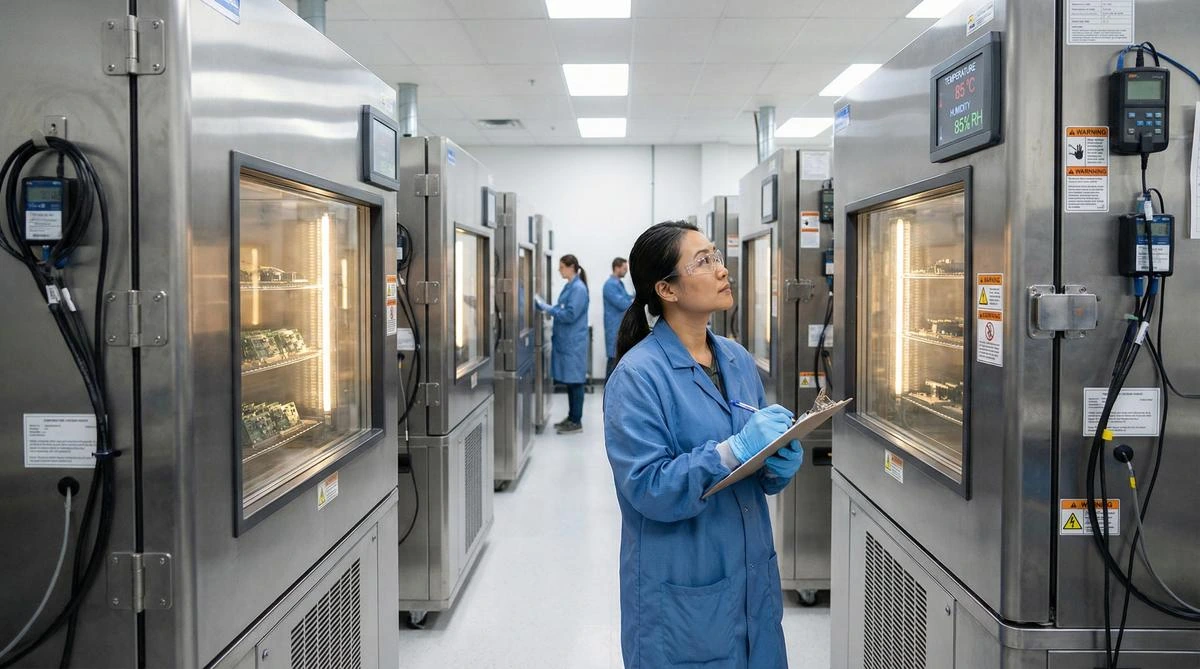
Illuminious ran a 500-unit pilot at the Shenzhen facility with full production processes: automated SMT placement, reflow soldering with nitrogen atmosphere, selective soldering for through-hole battery connectors, and conformal coating. Every unit underwent inline AOI, X-ray inspection of the BGA-packaged application processor, and 100% functional testing with a calibrated vital signs simulator that cycled through normal sinus rhythm, atrial fibrillation, and hypoxia patterns. The pilot achieved 99.2% first-pass yield — exceptionally high for a first production run of a complex wearable with flex-rigid construction.
4. Volume Production Ramp to 10K (Weeks 9-14)
With pilot data validated and VitaSignal's Series A investors satisfied with the manufacturing readiness evidence, production transferred to the Batam facility for volume ramp. Batam's ASEAN Free Trade Zone status eliminated 15-25% in Section 301 tariffs on US-bound shipments — critical margin preservation for a consumer health product targeting a $199 retail price. The Batam team scaled from 500 to 2,500 units per week over three weeks, with incoming quality checks on every component lot and statistical process control monitoring solder paste height, placement accuracy, and reflow profile adherence. All 10,000 units shipped on schedule, 2 weeks before the Series A deadline.
"We'd been told by three other manufacturers that our timeline was impossible. Illuminious didn't just say yes — they showed us exactly how the 14-week plan would work, with milestone gates and a real pilot run that let us verify quality before going all in. The Batam tariff savings alone added 8 points to our gross margin. We walked into our Series A with 10,000 production units and a manufacturing partner we actually trust."
Dr. Sarah Chen, Co-Founder & CTO at VitaSignal
Key Success Factors
Startup Bridge Program
Structured for pre-revenue startups: No-MOQ pilot runs and milestone-gated NPI eliminated the traditional barrier of 50K unit minimums, enabling VitaSignal to validate manufacturing quality before committing their entire raise to production.
Dual-Facility Strategy
Shenzhen for speed, Batam for cost: Leveraging Shenzhen's component ecosystem and rapid iteration capability for NPI, then transferring to Batam's tariff-optimized facility for volume production, delivered both speed and margin preservation.
Parallel DFM Optimization
28% BOM reduction without performance compromise: Manufacturing engineers reviewed the design concurrently with prototype production, identifying 14 cost-reduction opportunities — including a critical op-amp-to-AFE integration that simplified assembly and improved analog signal integrity.
Quality-First Pilot Process
99.2% first-pass yield on first production run: Full production processes during the 500-unit pilot — including inline AOI, X-ray, and calibrated functional testing — meant zero quality surprises during volume ramp.
For hardware startups navigating the prototype-to-production gap, the VitaSignal project demonstrates what's possible when manufacturing is treated as a strategic capability rather than an afterthought. Learn more about the Illuminious Startup Bridge Program and how it helps health tech startups go from validated prototype to market-ready units on startup timelines.
Explore more customer success stories or discover our NPI engineering services and rapid prototyping capabilities.
Ready to Scale Your Health Tech Hardware?
VitaSignal went from breadboard to 10,000 production units in 14 weeks — with 28% lower costs and 99.2% yield. If your startup needs a manufacturing partner that moves at your speed, start a conversation with our team.