From aluminum tooling to mass production, in the Shenzhen factory.
Illuminious is a U.S. NPI engineering company. Injection molding covers plastic molding, metal injection molding, die casting and overmolding, with the tooling designed and reviewed before it is cut. Engineered in San Francisco. Prototype builds, DFM and mass production in our own factory in Shenzhen. Upload your files, get a free engineering review, and pay only the official quote that review publishes.
Our engineers repeat the DFM review before DVT and again before tooling. Aluminum tools serve validation, and production steel molds are cut after DVT closes the design.
Molding is one of nine processes the Shenzhen factory runs in-house: SMT, bare PCB fabrication, injection molding, CNC, sheet metal, die casting, metal stamping, box build and test. Molds you pay for belong to you, and you may move them to another factory.
300+ molds deliveredISO 9001 & ISO 13485SPI A1–D3 finishes

Walk Shenzhen factories with us, Dec 6–11. See the tour
- ISO 9001 certified
- Class 100,000 (ISO 8) molding cleanroom
- Free engineering review
- 50+ resin options
- No MOQ
- ISO 13485
- IATF 16949
- RoHS & REACH verified
- UL 94V-0 rated
- First article inspection
- SPI & CMM inspection
- Conformal coating available
- PPAP documentation
Four processes, infinite possibilities
From standard plastic injection to metal injection molding and die casting: choose the right process for your part geometry, material, and volume requirements.
Plastic injection moldingHigh-volume plastic parts with tight tolerances
Our core capability — high-precision plastic injection molding for consumer electronics, medical devices, automotive components, and industrial products. From aluminum tooling for prototype validation to hardened P20/H13 steel molds for long production runs. We work with 50+ engineering-grade resins and provide complete DFM analysis on every project.
- Clamping force
- 50–1,000 tons
- Part weight
- 1g – 2kg per shot
- Tolerance
- ±0.05mm (precision)
- Mold life
- 500K+ shots (steel)
- Tooling time
- Set in the official quote
- Surface finish
- SPI A1–D3, texture, paint
Equipment
Haitian 50–1000T Machines · CNC Machining Center (±0.01mm) · EDM Wire Cutting · CMM Coordinate Measuring
Certifications
ISO 9001 · Free engineering review · First Article Inspection (FAI) · PPAP Documentation
Metal injection molding (MIM)Complex metal parts with injection molding economics
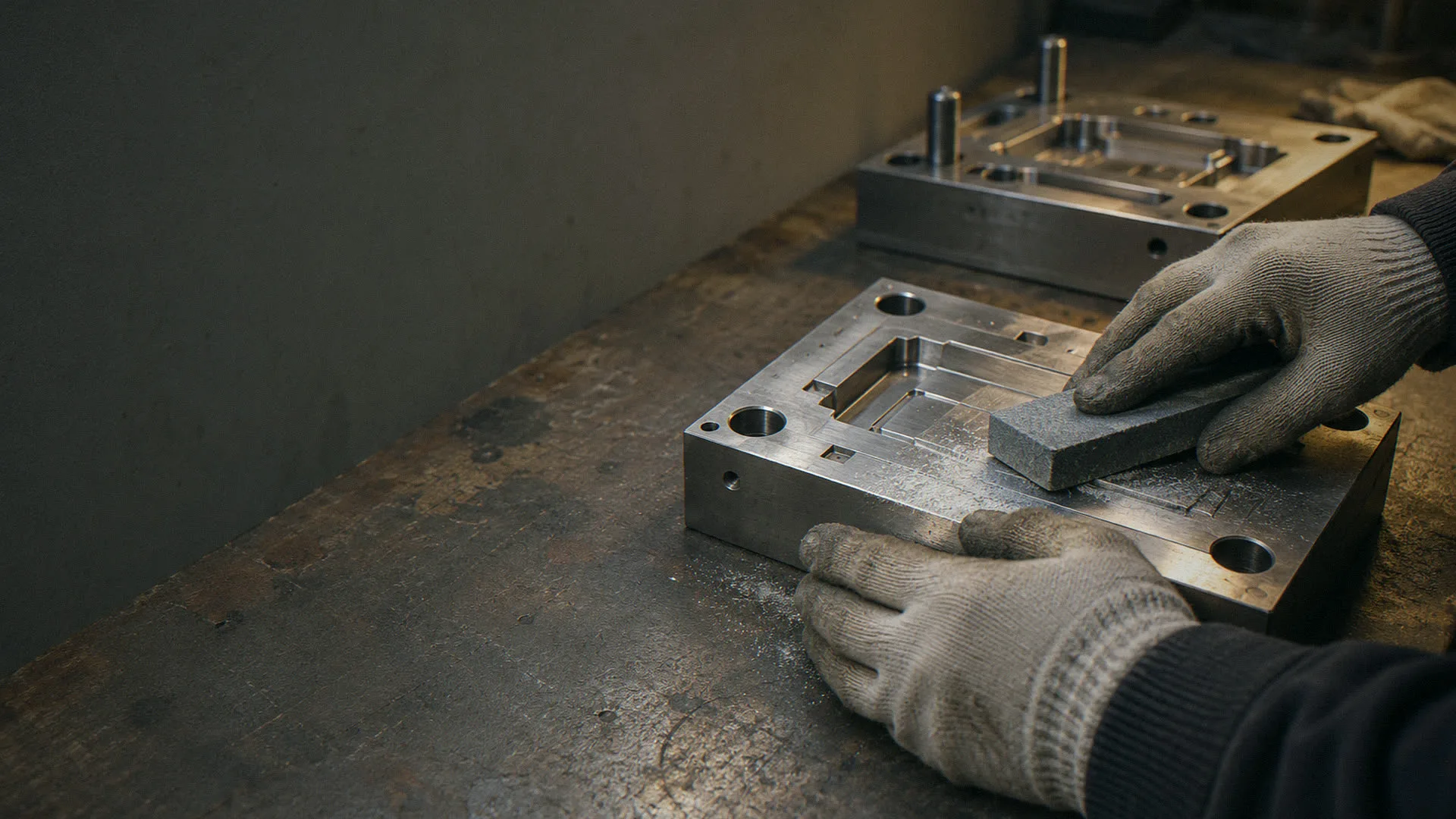
Metal Injection Molding combines the design freedom of plastic injection molding with the material properties of metals. Ideal for small, complex metal parts (1–100g) that would be prohibitively expensive to CNC machine. MIM sinters to near-full theoretical density, delivering mechanical properties comparable to wrought metals. Perfect for watch components, surgical instruments, firearm parts, and electronic connectors.
- Part weight
- 1–100g optimal
- Density
- Near-full theoretical after sintering
- Tolerance
- ±0.3% of dimension
- Materials
- 316L SS, 17-4PH, Ti, Fe-Ni
- Min wall
- 0.3mm achievable
- Surface finish
- As-sintered; Ra confirmed in review
Equipment
MIM Injection Machines · Debinding Furnace · Sintering Furnace (1400°C) · Densitometer
Certifications
ISO 9001 · ASTM B883 (MIM) · Full Metallurgical Reports · Dimensional Inspection
Die castingHigh-volume aluminum & zinc alloy castings

High-pressure die casting for aluminum (A380, ADC12) and zinc (Zamak 3, 5) alloy parts. Ideal for structural housings, heat sinks, brackets, and enclosures that require the strength and thermal conductivity of metal at production volumes. Our die casting process delivers near-net-shape parts with excellent surface quality, reducing secondary machining requirements.
- Materials
- Al A380/ADC12, Zn Zamak 3/5
- Clamping force
- 160–800 tons
- Part weight
- 10g – 5kg
- Tolerance
- ±0.1mm standard
- Die life
- 100K–500K shots
- Surface finish
- As-cast, machined, anodized
Equipment
Cold Chamber Die Cast Machines · Vacuum-Assisted Casting · CNC Secondary Machining · X-Ray Porosity Inspection
Certifications
ISO 9001 · ASTM B85 (Al Alloys) · Full Porosity Analysis · Pressure Leak Testing
Overmolding and insert moldingMulti-material parts and embedded metal inserts
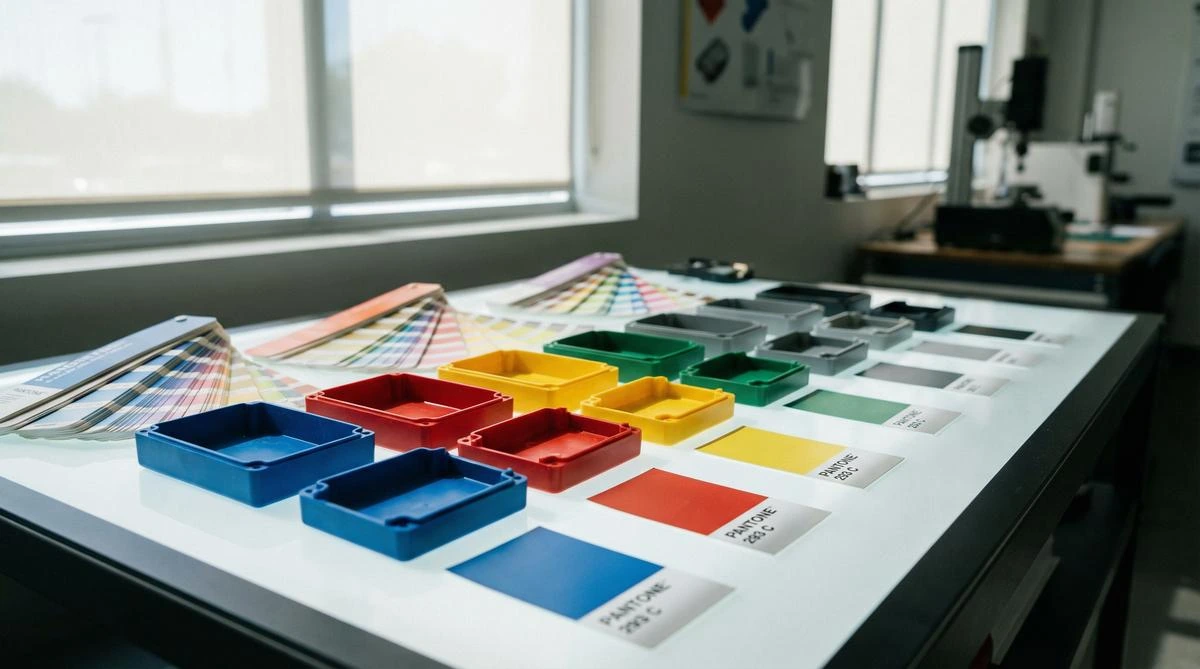
Overmolding bonds two or more materials in a single part — typically a rigid substrate with a soft-touch TPE/TPU grip, or a plastic housing with embedded metal inserts. Insert molding places pre-formed metal components (threaded inserts, pins, contacts) into the mold cavity before injection, creating a permanent mechanical bond. Both processes eliminate secondary assembly steps and improve part reliability.
- Substrate
- PC, ABS, PA, POM
- Overmold
- TPE, TPU, silicone
- Insert types
- Threaded, pins, contacts
- Bond strength
- Chemical + mechanical
- Applications
- Grips, seals, connectors
- Tooling
- Multi-shot or rotary mold
Equipment
2K Injection Machines · Rotary Platen Molds · Insert Loading Fixtures · Pull-Out Force Tester
Certifications
ISO 9001 · Material Compatibility Testing · Bond Strength Reports · UL 94 Flammability
Not sure which process is right?
Send us your 3D model and requirements. Our engineers will recommend the optimal process, material, and tooling strategy, free of charge.
3D printing vs. CNC vs. injection molding
Each manufacturing process has its sweet spot. Use this guide to choose the right approach for your project stage and volume.
| Feature | 3D printing | CNC machining | Injection molding |
|---|---|---|---|
| Tooling | None | None | A mold, quoted per part after DFM review |
| Where the cost sits | All per part | All per part | Mostly in the mold, then amortised |
| Cost at volume | Flat: no volume benefit | Falls a little with quantity | Falls sharply as the mold is amortised |
| Material options | Limited resins | Wide range | 50+ engineering resins |
| Surface finish | Layer lines visible | Excellent | Excellent (SPI A1–D3) |
| Dimensional accuracy | ±0.1–0.3mm | ±0.01–0.05mm | ±0.05mm |
| Design complexity | Very high | Moderate | High (with DFM) |
| Best for | Concept validation | Functional prototypes | Production (500+ parts) |
Pro tip: start with prototyping, scale with molding
Most successful hardware products start with 3D printed concept models, validate with CNC functional prototypes, then transition to injection molding for production. We run all three stages in the Shenzhen factory, so your design intent is kept from prototype to production.
Which DFM rules save the most money?
Follow these guidelines to reduce tooling cost, shorten lead time, and improve part quality. Every quote follows a free engineering review of your part files.
| Design rule | What it covers |
|---|---|
| Uniform wall thickness | Maintain consistent wall thickness (1.5–3mm for most resins) to prevent sink marks, warping, and internal stresses. Gradual transitions of ≤15% change per 10mm length. |
| Draft angles | Apply 1–2° draft on all vertical surfaces for clean part ejection. Textured surfaces need additional draft: add 1° per 0.025mm texture depth. |
| Rib design | Ribs should be a little over half the adjacent wall thickness to prevent sink marks. Height should not exceed 3× wall thickness. Add draft of 0.5–1° per side. |
| Gate location | Position gates at the thickest section for proper packing. Avoid gating near cosmetic surfaces. Consider gate vestige removal requirements. |
| Undercuts | Minimize undercuts to reduce tooling complexity and cost. When unavoidable, design for side actions, lifters, or collapsible cores. |
| Radius and fillets | Add radii of 0.5× wall thickness minimum at all internal corners to improve flow, reduce stress concentration, and extend mold life. |
50+ engineering-grade resins
From commodity ABS to high-performance PEEK, we stock and source the right material for your application's mechanical, thermal, and chemical requirements.
| Material | Key properties | Common applications |
|---|---|---|
| ABS | Impact resistant, easy to paint | Consumer electronics, toys, housings |
| PP (polypropylene) | Chemical resistant, living hinges | Packaging, automotive, medical |
| PE (polyethylene) | Low cost, chemical resistant | Containers, caps, industrial parts |
Real projects, real results
See how we've helped hardware companies solve complex injection molding challenges.
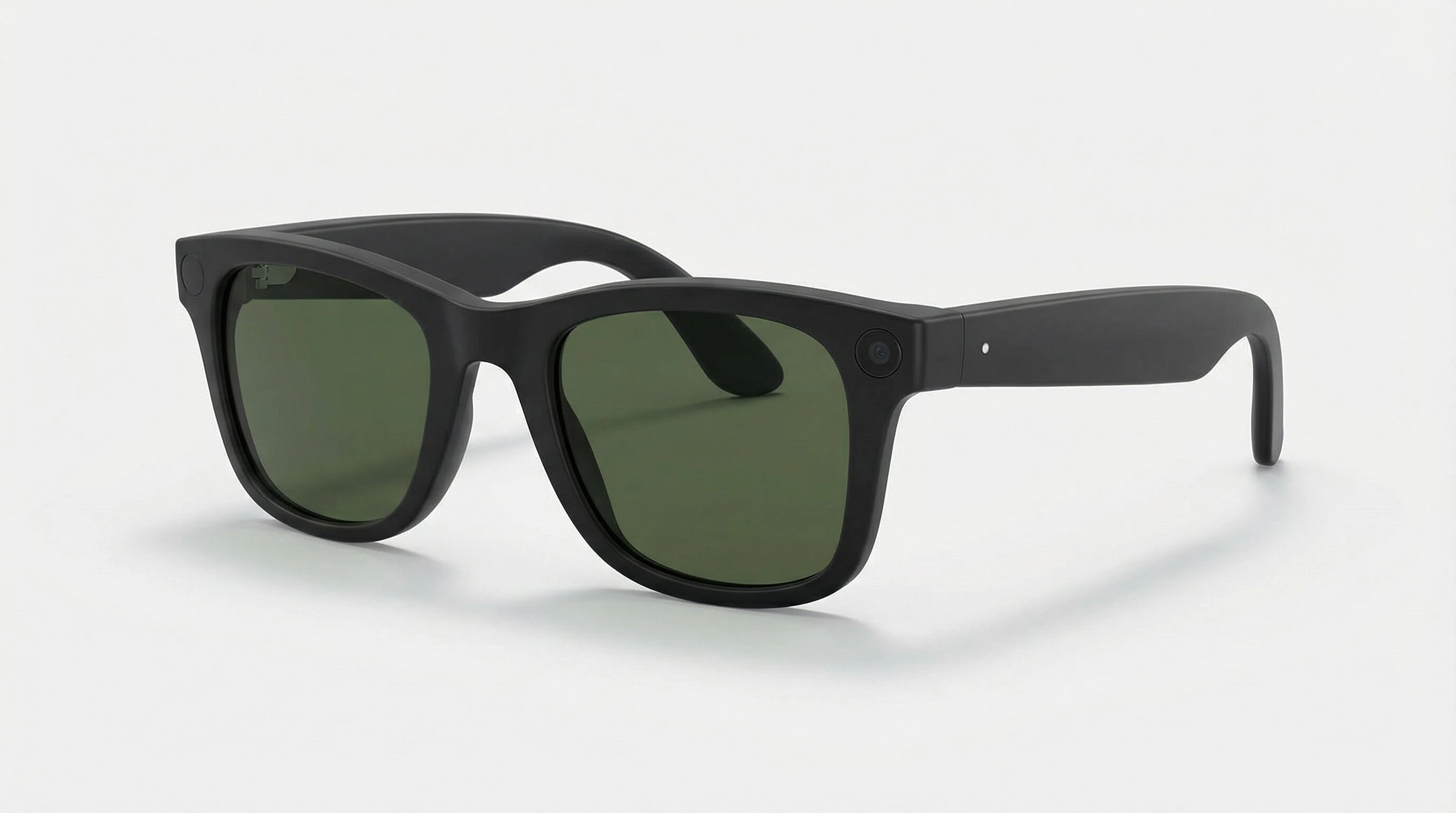
AI Wearables Startup
TR-90 Nylon Frame with Thin Walls
- Challenge
- Needed ultra-lightweight TR-90 Nylon frames with 0.8mm wall thickness, complex curves, and integrated hinge mechanisms for their AI smart glasses, against a trade-show deadline.
- Solution
- Aluminum tooling with optimised gate placement for thin-wall flow, delivering cosmetic-grade frames with integrated metal hinge inserts.
Trusted by
Serving hardware teams from Y Combinator startups to Fortune 500 R&D labs
 Startups
 Creators
 R&D teams
 Entrepreneurs
 Featured
 Media
Frequently asked questions
Answers to the questions product teams ask most, based on real conversations and community feedback.
How much does an injection mold cost?
Mold cost depends on part complexity, size, material and expected volume, and those four can move it by more than an order of magnitude. That is why we do not publish a range. An aluminum prototype tool and a multi-cavity steel tool with side actions are different products. The official quote itemizes the mold cost, after a free engineering review.
When should I use injection molding vs. 3D printing or CNC?
Use 3D printing for concept models and early prototypes (1–20 parts). Use CNC for functional prototypes and bridge production (1–500 parts). Switch to injection molding when: (1) you need 500+ identical parts, (2) you need production-grade materials, (3) per-part cost matters more than tooling cost, or (4) you need specific surface finishes like SPI A1 polish or custom textures.
What materials can you injection mold?
We work with 50+ engineering-grade resins including ABS, PC, PA (Nylon), POM (Delrin), PP, PE, PC/ABS blends, PMMA, TPE/TPU, silicone (LSR), PEEK, PEI (Ultem), LCP, and glass/carbon fiber reinforced variants. We also offer custom color matching (Pantone, RAL) and additive packages (UV stabilizers, flame retardants, anti-static).
What is your typical dimensional tolerance?
Standard tolerance is ±0.1mm for general dimensions. Precision tolerance of ±0.05mm is achievable for critical features with proper mold design and process control. For ultra-precision applications, we can achieve ±0.02mm with specialized tooling. All tolerances are validated with CMM inspection and documented in our FAI reports.
How does per-part pricing work at different volumes?
Per-part cost decreases significantly with volume because tooling cost is amortized. The same part typically costs several times less per unit at fifty thousand pieces than at one thousand, because the mold is paid for once. We provide tiered pricing at multiple volume levels so you can plan your production ramp with full cost visibility.
What is the lead time for injection molding?
It runs in four stages: tooling, T1 samples, sample review, then the production run. How long each takes depends on the tool, the cavity count and the quantity. The schedule for your part is stated in the official quote published after the free engineering review, not promised before we have seen the geometry.
What surface finishes are available?
We offer the full SPI (Society of Plastics Industry) finish range: A1–A3 (mirror polish), B1–B3 (semi-gloss), C1–C3 (matte), D1–D3 (textured). Custom textures (VDI 3400, Mold-Tech) are available. We also offer secondary finishes: painting, pad printing, laser engraving, chrome plating, and soft-touch coating.
Do you handle the transition from prototype to production?
Yes. We start with aluminum tooling for validation (T0/T1 samples), change the part from your feedback, then cut hardened steel production tooling after DVT closes the design. Our engineers repeat the DFM review before DVT and again before tooling, so what the prototype tool taught carries into production.
What is the difference between aluminum and steel molds?
Aluminum cuts more easily, so the tool costs less and is ready sooner; it suits prototype validation and low-volume production. Steel (P20, H13) costs more and takes longer to make, but it lasts far longer and supports tighter tolerances, finer textures and higher-temperature resins. The free engineering review recommends one for your part, and the official quote states the cost and the schedule.
Can you do multi-cavity molds?
Yes. We design and build single-cavity, multi-cavity (2, 4, 8, 16+), and family molds. Multi-cavity molds reduce per-part cost at high volumes. Family molds produce different parts in a single shot cycle, ideal for assemblies with multiple components. We use mold flow analysis to ensure balanced filling across all cavities.
Free engineering review
Free engineering review of your files. We aim to reply within 24 hours on business days.
Ready to mold your next product?
Upload your 3D model and get a detailed quote with DFM feedback. Review is free, comes before payment, and there are no hidden fees.
Or email us at info@illuminious.com, or schedule a call.
- An engineer runs a free engineering review of your files, and nothing is charged when you submit.
- You see the findings first.
- We publish the official quote with an itemized total, lead time and validity window.
- You accept the official quote, and only then does payment open.