From CAD File to Physical Part in One Upload.
Illuminious is a U.S. NPI engineering company. Rapid prototyping covers 3D printing, CNC machining, sheet metal and urethane casting, configured online from your CAD file. Engineered in San Francisco. Prototype builds, DFM and mass production in our own factory in Shenzhen. Upload your files, get a free engineering review, and pay only the official quote that review publishes.
Use it for the parts of a demo build: housings, brackets and fit-check models. Every order gets a free engineering review before you pay.
Six material families across four technologies. Our engineers review your files, and the factory, certified to ISO 9001, makes the parts.
15,000+ parts delivered4 technologiesA free engineering review on every order

Walk Shenzhen factories with us, Dec 6–11. See the tour
- Express tier
- 50+ materials
- ISO 9001 certified
- Free engineering review
- ±0.01mm tolerance
- Express and standard tiers
- ±0.01mm CNC tolerance
- SLA / SLS / MJF / FDM
- Sheet metal & laser cut
- Urethane casting
- CNC aluminum & steel
- First article inspection
- CMM dimensional report
- 50+ materials available
- Anodize & powder coat
How do the lead-time tiers work?
Three tiers, each with its trade on the same line. Each schedule is a target; the lead time itself is stated on the official quote, after the free engineering review.
- Economy
- A longer target lead time than Standard, for work that is not on a deadline. Takes a discount line off the price, never below the service minimum, shown before you commit.
- StandardDefault
- The lead-time range quoted for your configuration, counted from approved files. No schedule charge. It is the price you were quoted.
- Express
- Shortens the standard range where the process and the queue allow it. Adds an expedite line, priced on your own configuration and shown before you commit.
4 technologies, 50+ materials
Each technology is optimized for different applications. Our engineers recommend the best process for your specific requirements.
3D printing5 Technologies, 30+ Materials
From concept models to functional prototypes, our 3D printing services cover the full spectrum of additive manufacturing. Each technology is optimized for different applications.
- SLA (stereolithography)
- Best for: Smooth surfaces, fine details, transparent partsTolerance: ±0.05mmMaterials: Standard Resin, Tough Resin, Flexible, Clear, Castable
- SLS (selective laser sintering)
- Best for: Durable functional parts, living hinges, snap fitsTolerance: ±0.1mmMaterials: Nylon PA12, PA11, Glass-Filled Nylon, TPU
- FDM (fused deposition modeling)
- Best for: Large parts, low-cost concept modelsTolerance: ±0.2mmMaterials: ABS, PLA, PETG, ASA, Nylon, PC, ULTEM
- MJF (Multi Jet Fusion)
- Best for: Production-grade parts, isotropic strengthTolerance: ±0.1mmMaterials: Nylon PA12, PA11, TPU
- DMLS (metal 3D printing)
- Best for: Complex metal geometries, tooling insertsTolerance: ±0.05mmMaterials: SS 316L, Ti64, AlSi10Mg, Inconel 718
CNC machiningMetals & Plastics, ±0.01mm
For prototypes that need production-grade materials and tight tolerances, CNC machining delivers unmatched precision. 3-axis, 4-axis, and 5-axis milling plus CNC turning.
- CNC milling (3/4/5-axis)
- Best for: Complex geometries, tight tolerancesTolerance: ±0.01mmMaterials: Al 6061/7075, Steel, SS, Brass, Ti, Delrin, PEEK
- CNC turning
- Best for: Cylindrical parts, shafts, bushingsTolerance: ±0.01mmMaterials: All machinable metals and plastics
- Wire EDM
- Best for: Hard metals, complex internal featuresTolerance: ±0.005mmMaterials: Hardened steel, titanium, tungsten carbide
Sheet metalEnclosures, Brackets, Panels
Sheet metal prototyping for enclosures, brackets, chassis, and structural components. Cutting, bending, welding, and finishing — from single prototypes to short-run production.
- Laser cutting + bending
- Best for: Enclosures, brackets, panels, chassisTolerance: ±0.1mmMaterials: Aluminum, Steel, Stainless, Copper, Brass
- Stamping (short run)
- Best for: Clips, contacts, spring elementsTolerance: ±0.05mmMaterials: Steel, SS, BeCu, Phosphor Bronze
Urethane castingProduction-Like Parts Without Tooling
Bridge prototyping and injection molding. Urethane casting produces production-quality parts from silicone molds — ideal for user testing, trade shows, and pre-production validation.
- Vacuum casting
- Best for: Production-like parts without toolingTolerance: ±0.15mmMaterials: ABS-like, PP-like, Rubber-like, Clear
- RTV silicone molding
- Best for: Overmolded parts, soft-touch grips, gasketsTolerance: ±0.2mmMaterials: Shore 20A–80A silicone
Not sure which technology to use?
Upload your CAD file and our engineers will recommend the best process, material, and finish for your application. Free, no obligation.
Which materials can you prototype in?
From commodity plastics to aerospace-grade titanium, we stock the materials you need.
| Category | Materials | Available via |
|---|---|---|
| Engineering plastics | ABS, Nylon PA12, PC, PEEK, POM (Delrin), ULTEM | CNC, 3D Print, Casting |
| Commodity plastics | PLA, PETG, PP-like, ABS-like | 3D Print, Casting |
| Aluminum alloys | 6061-T6, 7075-T6, AlSi10Mg (DMLS) | CNC, DMLS |
| Steel and stainless | 304 SS, 316L SS, 1018 Steel, 4140 Steel | CNC, DMLS, Sheet Metal |
| Specialty metals | Titanium Ti64, Brass C360, Copper C110, Inconel 718 | CNC, DMLS |
| Elastomers | TPU, Silicone (20A–80A), Rubber-like Resin | 3D Print, Casting |
What does a prototyping project look like?
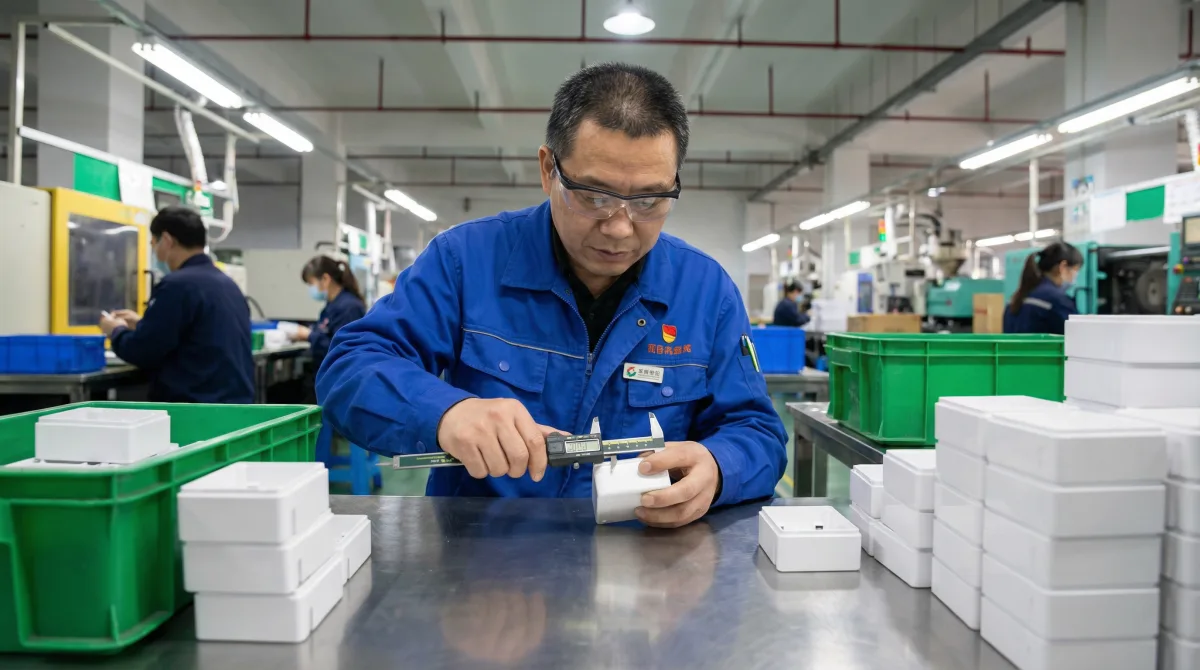
IoT Sensor Startup
Four Enclosure Iterations Before Tooling
- Challenge
- The team needed to validate four enclosure designs before committing to injection-mold tooling.
- Solution
- SLS nylon prototypes for each iteration, with snap-fit testing, IP65 gasket validation and antenna performance testing. The final design went to tooling without modification.
Trusted by
Serving hardware teams from Y Combinator startups to Fortune 500 R&D labs
 Startups
 Creators
 R&D teams
 Entrepreneurs
 Featured
 Media
Frequently asked questions
Which prototyping process is right for my project?
It depends on your requirements: 3D Printing (SLA/SLS/MJF) for complex geometries and low setup cost; CNC Machining for production-grade materials and tight tolerances; Sheet Metal for enclosures and structural parts; Urethane Casting for production-like parts in small quantities without tooling. Upload your CAD file and our engineers will recommend the best process.
What file formats do you accept?
STEP (.stp/.step), IGES (.igs/.iges), Solidworks (.sldprt), Parasolid (.x_t), STL (.stl), and 3MF (.3mf). For best results, submit native CAD or STEP files. We also accept 2D drawings (PDF/DXF) for parts with specific tolerances or GD&T callouts.
What's the difference between SLA, SLS, and MJF?
SLA cures liquid resin with a UV laser and suits smooth surfaces and fine detail. SLS sinters nylon powder with a laser and suits durable, functional parts. MJF (HP) fuses nylon powder with a jetted agent, much like SLS but with a better surface finish and more even strength. For most functional prototypes, we recommend SLS or MJF.
What tolerances can you achieve with CNC machining?
Standard: ±0.05mm. Precision: ±0.01mm for critical dimensions. Ultra-precision: ±0.005mm with Wire EDM. All verified with CMM inspection and documented in the inspection report.
What is the typical cost of a prototype?
It depends on the process, the geometry, the material and the quantity, which is why the configurator asks for all four. We do not publish a range: one wide enough to cover a simple SLA part and a five-axis titanium part would tell you nothing. Configure the part online or send the file to an engineer, and a specialist sends your price within 24 hours on business days. Nothing is charged until you accept the official quote.
Can 3D printed parts be used for functional testing?
Yes. SLS nylon PA12 and MJF parts hold up well in functional tests, snap fits and living hinges. DMLS metal parts are fully dense for structural tests. A material data sheet comes with every order.
Can you machine PEEK, Ultem, or other high-performance plastics?
Yes. We regularly machine PEEK, ULTEM (PEI), POM (Delrin), PTFE and other engineering plastics, and our machinists have experience with high-performance polymers for medical, aerospace and industrial applications. If your part needs a specific grade, name it in the configurator and review confirms availability before pricing.
Do you offer surface finishing and post-processing?
Yes: bead blasting, anodizing (Type II/III), powder coating, painting, plating (nickel, chrome, zinc), polishing (mirror finish), heat treatment, and assembly. All specified during quoting.
Can you help optimize my design for prototyping?
Every order gets a free engineering review. It runs these checks for that order's route: wall thickness, draft angles, undercuts, tolerance stack-ups and material choice. The findings come back with the official quote.
What's the maximum part size you can print?
SLA: 335×200×300mm. SLS: 380×284×380mm. FDM: 900×600×900mm. MJF: 380×284×380mm. DMLS: 250×250×325mm. For larger parts, we split and bond sections or use CNC.
Free engineering review
Upload your files or describe your project. Engineering review is free and comes before payment.
Ready to validate your design?
Upload your CAD file and get a price from a specialist within 24 hours on business days. Every order gets a free engineering review from our engineering team.
Or email us at info@illuminious.com, or schedule a call.
- An engineer runs a free engineering review of your files, and nothing is charged when you submit.
- You see the findings first.
- We publish the official quote with an itemized total, lead time and validity window.
- You accept the official quote, and only then does payment open.