Most hardware companies understand the strategic logic of the US Plus Two model: US management, China NPI, and Southeast Asian production for tariff optimization. But understanding the strategy and actually implementing it are two completely different challenges. This guide focuses exclusively on the operational playbook—how to qualify partners, transfer processes between sites, align quality systems, and manage day-to-day operations across a three-node manufacturing network. No theory, no geopolitics—just the practical steps to make US Plus Two work for your hardware company.
The Three-Node Operating Model
The US Plus Two model is not about spreading production randomly across three countries. Each node has a specific role, and success depends on executing the handoffs between nodes seamlessly.
US Node: Command Center
IP protection, program management, engineering support. All design decisions, BOM approvals, and customer communications run through US-based teams. IP stays under US legal jurisdiction.
Shenzhen Node: NPI Engine
Prototyping, DFM validation, Golden Sample creation. Leverage the world's deepest component ecosystem for rapid iteration. EVT through PVT happens here before production transfer.
Southeast Asia Node: Production Scale
Mass production, tariff optimization, volume fulfillment. Free Trade Zone status eliminates import duties on US-bound products. ISO 9001/13485 certified facilities for quality parity.
The Handoff
Process transfer is the critical operation. A poorly executed handoff between Shenzhen NPI and Southeast Asian production negates the benefits of both nodes. This guide covers the transfer process in detail.
Step 1: Partner Qualification Checklist
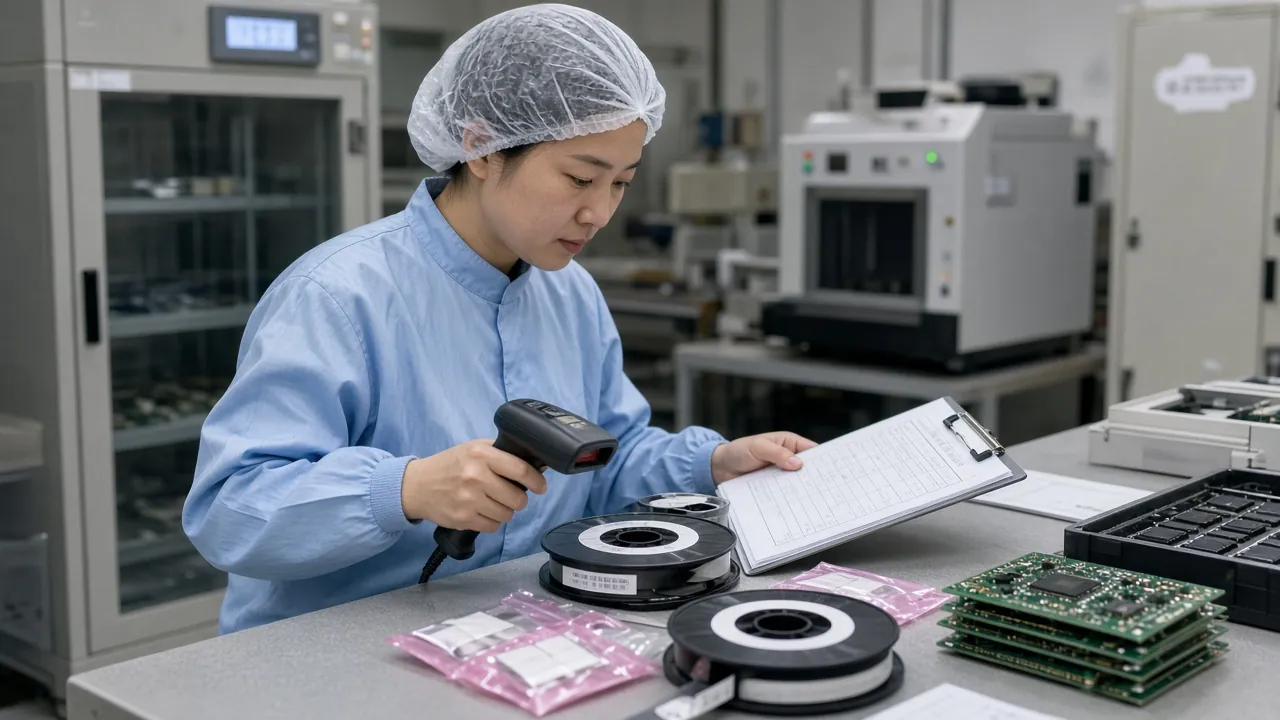
Before anything moves between nodes, each partner must pass a structured qualification process. This is not a factory tour and a handshake—it's a documented audit with pass/fail criteria.
ISO 9001 minimum, IATF 16949 for automotive, ISO 13485 for medical. Verify current certification status—do not accept expired or pending certs. Request the actual certificate and check the scope.
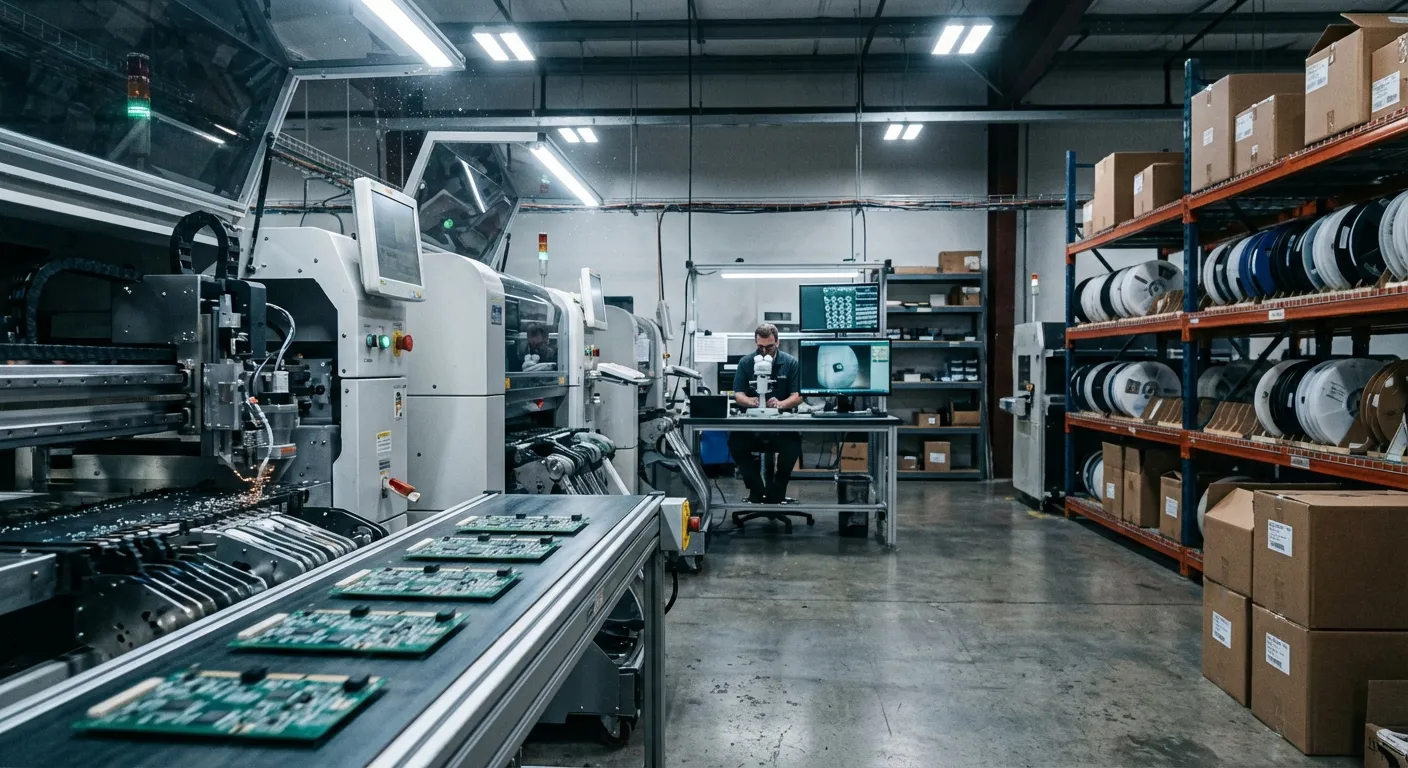
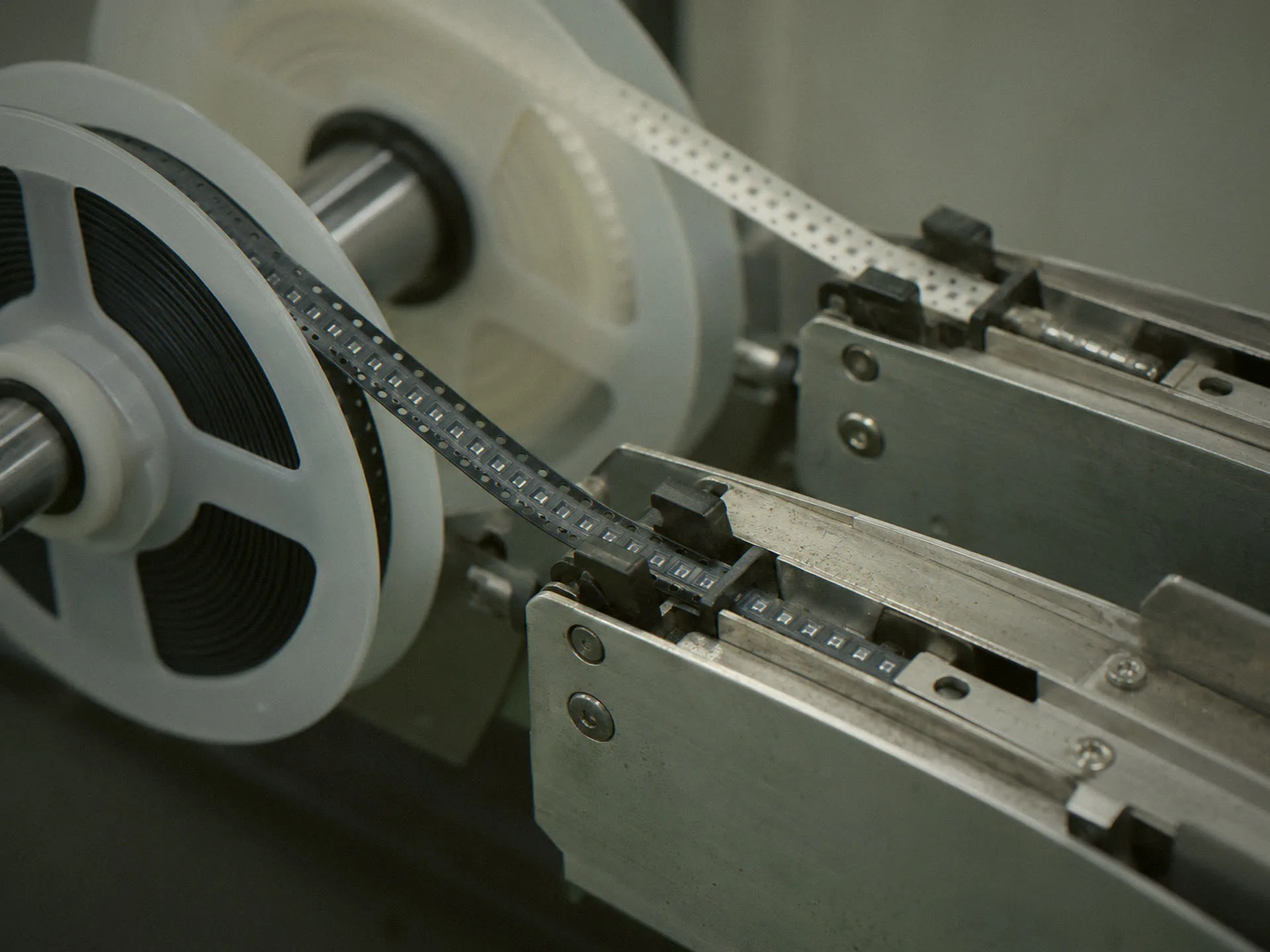
Verify specific equipment: pick-and-place accuracy (target 0.05mm CPH), solder paste printer type, reflow oven zones (10+ for lead-free). Ask for capability reports on fine-pitch placement (0.4mm BGA) and component range (0201 to large connectors).
AOI, ICT, functional test capability. Does the facility have in-house AOI? Can they build test fixtures? What is their defect detection rate? Request test capability documentation.
Standard operating procedures for every process step. If they cannot show you written SOPs for SMT setup, reflow profiling, and inspection criteria, they are not ready for multi-site production.
- Financial stability: Request 2 years of audited financials or bank references. A partner going bankrupt mid-production is catastrophic.
- Capacity verification: Confirm available line time meets your volume needs plus 30% surge capacity. Get written commitment.
- Communication capability: Verify English proficiency of program managers and quality engineers. Request a test call with the team that will manage your project.
- Reference customers: Ask for 2-3 US-based reference customers and actually call them. Ask about communication quality, on-time delivery, and defect rates.
Step 2: Quality System Alignment
The biggest risk in multi-site manufacturing is quality variation between nodes. A product built in Shenzhen must be identical to one built in Southeast Asia—same solder joints, same test criteria, same inspection standards.
Quality Alignment Checklist
- Unified quality manual: One quality manual governing all sites. Same incoming inspection criteria, same process control parameters, same outgoing inspection standards.
- Shared defect codes: Identical defect categorization at all sites. "Solder bridge on U5 pin 3" means the same thing everywhere.
- Calibration alignment: All measurement equipment calibrated to the same standards with traceable certificates. Splicing machines, AOI systems, multimeters—all must agree.
- Golden Sample distribution: Physical Golden Samples stored at every site, with photographic documentation of acceptable and unacceptable solder joints, component placement, and cosmetic standards.
- Monthly quality cross-audit: Each site audits another site's output quarterly. Results shared across the network with corrective actions tracked in a shared system.
Step 3: The Process Transfer Playbook
Transferring a product from Shenzhen NPI to Southeast Asian production is the most operationally complex step in the US Plus Two model. A structured transfer process prevents the quality drops that plague multi-site manufacturing.
Phase 1: Documentation Package (Week 1-2)
Shenzhen team prepares a complete production transfer package:
- Frozen BOM with approved alternates, MPNs, and supplier contact information
- Final Gerber files with manufacturing notes and special instructions
- Solder paste stencil design with aperture sizes and thickness specification
- Reflow profile with actual temperature measurements from Shenzhen runs
- Assembly SOP with step-by-step instructions, torque specs, and inspection criteria
- Test procedures with pass/fail criteria, test fixture designs, and known-good test results
- Golden Sample shipped via express courier with photographic documentation
Phase 2: First Article Build (Week 3-4)
The production-site team builds first articles using the transfer documentation without assistance from Shenzhen engineers. This tests whether the documentation is complete enough for independent production.
First Article Inspection
100% inspection of first 50 units. Compare against Golden Sample. Document every deviation—even cosmetic ones.
Yield Comparison
Production-site first-pass yield must be within 5% of Shenzhen yield. Larger gaps indicate incomplete process transfer.
Test Validation
Run all test procedures on first article units. Results must match Shenzhen baseline within specified tolerances.
Gap Documentation
Every issue found during first article is documented with root cause and corrective action. Shenzhen team reviews and approves fixes.
Phase 3: Production Ramp (Week 5-8)
Gradual volume increase with quality gates:
- Week 5: 100 units/week. 100% outgoing inspection. Shenzhen engineer on-site at the production site.
- Week 6: 500 units/week. AQL inspection (Level II, 0.65 AQL). Remote support from Shenzhen.
- Week 7: 1,000 units/week. Standard inspection protocol. Shenzhen engineer returns.
- Week 8: Full production volume. Monthly quality review cadence established.
Step 4: Tariff Optimization Playbook
The financial engine of the US Plus Two model is tariff savings. Free Trade Zone status in the production country can eliminate import duties on US-bound shipments—but only if you structure your operations correctly.
Section 301 tariffs apply: 25% on most electronics. A $45 BOM product incurs $11.25 in tariffs alone. Plus standard 3.4% MFN duty.
ASEAN origin qualification: Sufficient transformation in Indonesia (assembly, testing, packaging) qualifies the product for preferential tariff treatment. 15-25% total landed cost savings.
- Rules of origin compliance: Ensure the manufacturing process in Batam meets the substantial transformation test for ASEAN origin qualification.
- Documentation trail: Maintain complete records of material movement, processing steps, and value-add at each node. Customs audits require this paperwork.
- HS code optimization: Work with a customs broker to classify your finished product under the most favorable HS code. Small classification differences can mean large tariff savings.
Step 5: Communication and Governance
Three nodes across three time zones require deliberate communication architecture. Ad-hoc communication will fail.
Weekly Program Review
Tuesday 9am PST (Wed 12am in Shenzhen and at the production node). Review production status, quality metrics, open issues, and action items. Mandatory for all site leads.
Shared Dashboard
Real-time production tracking visible to all sites. Yield, throughput, WIP, and open issues updated daily. No information silos.
Escalation Protocol
Defined escalation paths: site lead to program manager (4 hours), program manager to VP engineering (12 hours), VP to CEO (24 hours). Every issue has an owner and a deadline.
Document Control
Single source of truth for all production documentation. BOM, Gerbers, SOPs, test procedures—all version-controlled in a shared system. No local copies.
Quarterly Business Review
In-person review rotating between sites. Quality trends, cost optimization opportunities, capacity planning, and relationship management.
Daily Standup Chat
Asynchronous chat channel for all site leads. Quick questions, status updates, and minor issue resolution. Keeps everyone aligned without meeting overload.
Common Implementation Pitfalls
After helping dozens of companies implement the US Plus Two model, these are the most common operational mistakes:
- Rushing the process transfer: Skipping the first article phase to hit a deadline. Result: quality drops, rework costs, and a longer timeline overall.
- Incomplete documentation: Assuming "they'll figure it out." They won't. Every process step, inspection criterion, and test procedure must be explicitly documented.
- Quality system mismatch: Different defect classification at different sites. What Shenzhen calls "acceptable" the production site rejects (or vice versa). Align before transfer.
- Single point of contact: One person managing all three nodes is a bottleneck and a risk. Build redundant communication paths.
- Ignoring cultural differences: Management styles, escalation comfort, and feedback norms differ between US, China, and the production country. Invest in cross-cultural training for your team.
Implementation Is the Strategy
The US Plus Two model is powerful on paper, but its value is realized only through disciplined implementation. Partner qualification, quality system alignment, structured process transfer, and deliberate communication governance are not optional—they are the strategy. Companies that skip these steps end up with three misaligned sites, quality variation, and no actual cost savings.
Illuminious has implemented the US Plus Two model for dozens of hardware companies across consumer, industrial, and medical markets. Our operational playbook is battle-tested across 500+ production transfers. Contact us to discuss implementing US Plus Two for your product.