Robotics / Physical AI / Motor Driver PCBA + DFM + Testing
Do you trust a factory you've never met? Go meet them.
Shenzhen tour · Dec 6–11
AgriTech / IoT / Startup
AgriNode Systems, a Singapore-based precision agriculture startup, had developed a LoRaWAN-enabled soil monitoring sensor node that combined soil mois...
Walk Shenzhen factories with us, Dec 6–11. See the tour
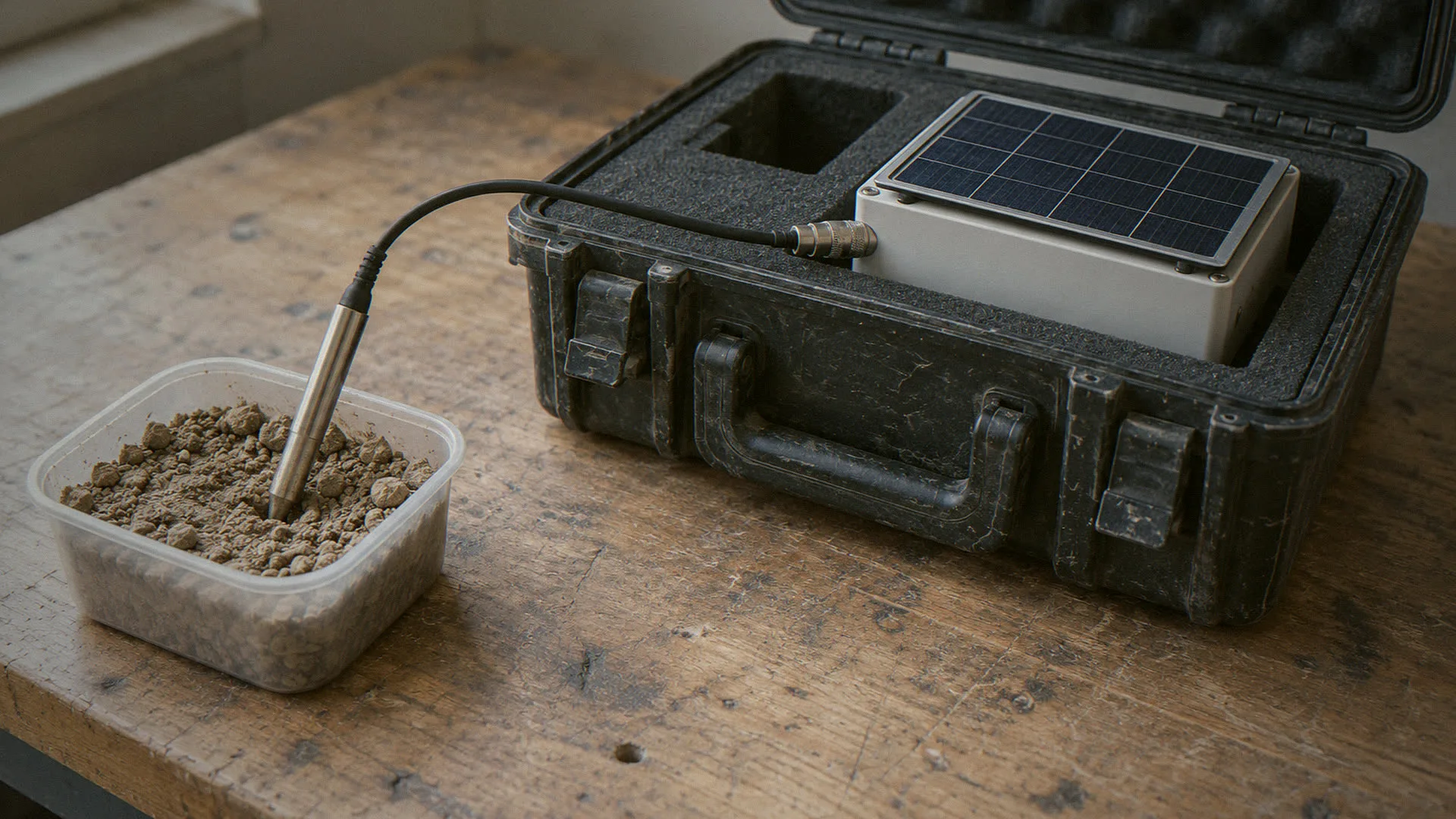
AgriNode Systems, a Singapore-based precision agriculture startup, had developed a LoRaWAN-enabled soil monitoring sensor node that combined soil moisture, NPK nutrient, and pH sensing in a single IP67-rated probe. After a successful pilot with 200 hand-assembled units across three palm oil plantations, they won a government contract to deploy 15,000 units across Sumatra and Kalimantan within 6 months. Their challenge: no manufacturing partner could deliver production-grade, weather-sealed IoT hardware at that volume on that timeline from Southeast Asia.
Illuminious made its own factory in Shenzhen the primary manufacturing hub, with planned sea-freight lots timed to the deployment schedule. The Startup Bridge Program provided no-MOQ pilot runs, parallel-path DFM optimization, and IP67 sealing process development — all within a 12-week compressed NPI timeline.
Project note: this project dates from 2026. Since October 2026 Illuminious operates from San Francisco and its Shenzhen factory.
Editor's note (October 2026): this case study was updated. Illuminious now runs prototypes and production in our own factory in Shenzhen, after initial development in the U.S.
The Challenge: AgriNode Systems had the product, the validation data, and the contract. What they didn't have was a manufacturing partner who could deliver. Their LoRaWAN soil monitoring nodes — each packing three sensor types, a LoRa radio, and a solar charging circuit into a single IP67 probe — were hand-assembled in a university lab for their 200-unit pilot. The results were promising: plantation managers reported 22% water savings and 15% yield improvement within the first season. But hand-built units failed at 8% within three months due to moisture ingress at the cable gland seals and inconsistent solder joints on the sensor daughterboards.
When the national Ministry of Agriculture awarded them a contract to deploy 15,000 units across six provinces, the startup faced a brutal reality: every contract manufacturer they approached in Shenzhen, Ho Chi Minh City, and Jakarta quoted 24-30 weeks for NPI with 5,000-unit MOQs. The deployment window was non-negotiable — sensors had to be in the ground before the October monsoon season, or the contract would be void. With only 18 weeks until the deadline, AgriNode needed a partner who could compress NPI, guarantee IP67 integrity at volume, and ship to the deployment provinces on a fixed schedule.
Illuminious made its own factory in Shenzhen the primary manufacturing site — beside the world's densest component supply chain, with planned sea-freight lots to the deployment provinces. The Startup Bridge Program was tailored for AgriNode's specific challenges:
From validated prototype to 15,000-unit production — compressed from the 26-week industry standard for ruggedized agricultural hardware.
BOM optimization and automated assembly cut unit cost from $52 to $34, saving $270,000 across the full contract.
Down from 8% on hand-built units. Automated SMT, conformal coating, and 100% burn-in testing delivered plantation-grade reliability.
Illuminious engineers identified three critical failure modes from the pilot units: moisture ingress at the cable gland, solder joint cracks on the sensor daughterboard due to thermal cycling, and inconsistent epoxy potting depth. The team redesigned the cable gland interface with a double O-ring seal, converted the sensor daughterboard from through-hole to SMD components with underfill adhesive, and developed a custom automated dispensing profile for the IP67 epoxy potting. Three pilot batches validated each improvement before full-volume commitment.
The Shenzhen SMT line ran pilot batches of 100, 300, and 1,000 units with increasing automation. Each batch underwent the full test protocol: automated optical inspection, in-circuit test, IP67 dunk test per IEC 60529, and a 48-hour burn-in at 85°C/85% RH. First-pass yield climbed from 94% on Batch 1 to 99.1% on Batch 3. The automated potting line achieved consistent 2.3mm seal thickness with ±0.1mm tolerance — impossible to replicate by hand.
With the process qualified, the Shenzhen factory ramped to 2,000 units per week. Sea-freight lots went to distribution hubs in Medan, Pekanbaru, and Pontianak on a fixed schedule, each matched to an install window. The final 15,000-unit order was completed and delivered in five shipments, all arriving before the October monsoon deadline. AgriNode's deployment teams installed the last sensor nodes as the first rains began.
"We went from lab-built prototypes to 15,000 production-grade sensors in 12 weeks — something every other manufacturer told us was impossible. Illuminious didn't just manufacture our product, they redesigned our seal and potting process to achieve the field reliability our government contract demanded. We've since expanded to 40,000 units across three Southeast Asian markets."
One Factory, NPI to Volume: Building pilot and volume lots on the same Shenzhen lines removed a line transfer and kept the IP67 seal process stable from the first batch to the last.
Automated IP67 Sealing: Custom dispensing system for epoxy potting replaced manual application, achieving consistent seal thickness and reducing field failure rate from 8% to 0.4%.
No-MOQ Iterative Validation: Three graduated pilot batches de-risked the volume commitment and validated process improvements without forcing the startup into large minimum orders.
Parallel-Path Development: Running DFM redesign and tooling fabrication simultaneously saved 3 critical weeks, enabling the monsoon-season deployment deadline.
Government contracts and large-scale IoT deployments don't wait for manufacturing delays. If you're building ruggedized sensor hardware for agriculture, environmental monitoring, or industrial applications, you need a partner with the engineering depth and geographic reach to deliver on time and on spec. Contact Illuminious today to discuss your NPI and volume manufacturing requirements.
"We went from lab-built prototypes to 15,000 production-grade sensors in 12 weeks — something every other manufacturer told us was impossible."
Robotics / Physical AI / Motor Driver PCBA + DFM + Testing
Consumer AI / Portable AI Projector / Prototype PCBA + SMT + Testing
Consumer AI / AI Voice Recorder / Prototype PCBA + SMT + Testing
Let's discuss how we can help your project succeed with our end-to-end manufacturing capabilities.