Shenzhen tour · Dec 6–11

Apply
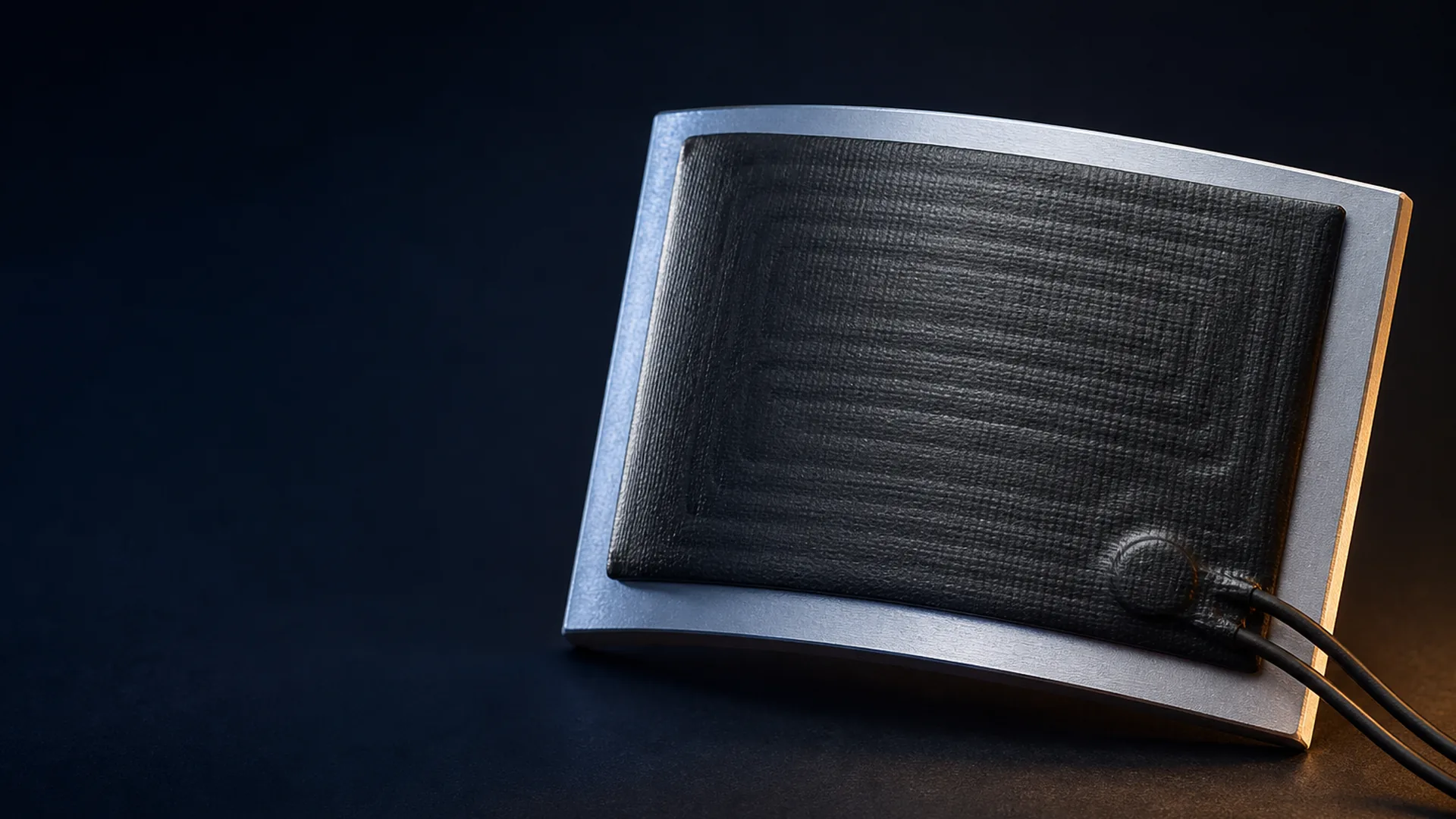
Black silicone rubber heater pad with integrated thermostat bonded to a curved aluminum plate

Silicone rubber heaters for larger, hotter, more rugged installations.

Illuminious is a U.S. NPI engineering company. Silicone rubber heaters are wire-wound or etched-foil circuits vulcanised into silicone sheet, which suits larger, hotter and more rugged installations than film can take. Engineered in San Francisco. Prototype builds, DFM and mass production in our own factory in Shenzhen. Upload your files, get a free engineering review, and pay only the official quote that review publishes.

A silicone rubber heater carries its element inside a fiberglass-reinforced silicone laminate. It is thicker and slower to respond than polyimide. In return it is tougher, runs hotter, covers larger areas and survives places that would destroy a film heater.

Two ways in: configure it online and a specialist prepares your official quote within 24 hours on business days, or send the job to an engineer. Engineering review is free either way and comes before you pay.

Payment
Official price after free review
Review target
Within 24 hours on business days after you submit

The configurator opens with this configuration preselected. An engineer reviews every order. Account required; engineering review is free and comes before payment.

When is silicone rubber the right heater construction?

  • Larger heated areas — tanks, plates, drums, and enclosures
  • Higher operating temperatures than polyimide suits
  • Rugged, damp, or abrasive environments
  • Freeze protection and equipment warming
Typical orders
Prototype quantities through production batches. Every heater is reviewed before production regardless of quantity.
Accepted files
Gerber, DXF, or DWG for a heater you have already designed, or a structured requirements document (PDF, XLS/XLSX) describing the thermal problem. Reference photographs and mechanical drawings upload alongside.
Payment basis
Official price after free review
Preparation workbook
Download the intake workbook

The choices that decide the part.

Each of these is a real configuration decision with a cost and a consequence, not a feature list. Where one of them constrains another, engineering review is the step that resolves it.

Reinforced silicone laminate

The element is enclosed in fiberglass-reinforced silicone, which is what gives the heater its mechanical toughness and its tolerance of damp and abrasive environments.

Larger heated areas

Silicone covers area economically, which is why tanks, plates, and enclosure panels are usually silicone rather than film.

Integration

Adhesive backing, lead wires, and bare, connectorized, or solder-pad termination are declared options. Bonding versus clamping is a review conversation, because it changes the thermal path.

Control

An integrated thermostat or NTC thermistor can be built in. For a heater bonded to a large mass, where the sensor sits matters as much as what it is.

What the configurator accepts, and where review takes over.

Silicone heaters capability bounds
ParameterSupported range
ConstructionFiberglass-reinforced silicone rubber with an enclosed heating element.
Size and quantity5–1200 mm width and height, 1–10,000 heaters per line. Larger formats are quoted through review.
Electrical design basisTotal power, target resistance, or target temperature — pick the one you actually know, and the design is worked from it.
Electrical range0.1–600 V operating voltage with the target value entered against your chosen basis.
DutyIntermittent, cycled, or continuous. Continuous operation routes to engineering review.
IntegrationPressure-sensitive adhesive backing, 0–5000 mm lead wire, and bare/tinned leads, a connector, or solder pads. Connectors route to review.
Sensing and controlNone, NTC thermistor, thermostat, or a custom sensor. Custom sensors route to review.
Resistance toleranceStandard, ±5%, or ±3%. The tightest band routes to review. Resistance testing is part of the reviewed scope; the sampling plan is confirmed in review.
End-use contextGeneral equipment, vehicle/battery, medical, aerospace, or continuous unattended operation. The context is a priced and reviewed input, not a disclaimer.
Watt densityDetermined in review from your heated area, mounting surface, ambient conditions, and duty. This is a safety-relevant figure and is never assumed.

The bounds above are configurator ranges. What your installation can safely dissipate depends on what the heater is bonded to and how it is controlled, which is settled in review before production.

Boundaries

  • Watt density limits depend on the mounting surface, heat sinking, and airflow — they are set in review, never on a web page
  • Silicone is thicker and has more thermal mass than polyimide, so it responds more slowly by design
  • Continuous unattended, vehicle, medical, and aerospace contexts are declared end-use fields and are reviewed as such

How is a silicone heater price built?

Quotation by a specialist. Quotation within 24 hours on business days. A specialist prices your exact Flex Heater scope from your files and specifications. You submit your request online, and the quotation arrives in your account and by email. Review is free. Nothing is charged until you accept a quotation.
  • Heated area, outline, and quantity
  • Circuit or element design implied by the declared design basis
  • Engineering and setup, itemized separately from material
  • Die-cutting, adhesive backing, lead wires, and termination style
  • Integrated sensors or thermostats, resistance tolerance, testing, and requested lead time

What engineering reviews

Customer approvals may include

  • The proposed circuit layout, watt density, and any change to the heated area
  • Sensor, thermostat, or lead-termination changes proposed in review
  • Any itemized price or lead-time revision
  • Watt density against the mounting surface, thermal mass, and airflow
  • Whether silicone or polyimide better suits the temperature and response requirement
  • Element layout and hot-spot risk near edges, corners, and lead attachment
  • Voltage, resistance, and power consistency against the declared basis
  • Thermostat or sensor placement relative to the mass being heated
  • Adhesive or clamping method and its effect on the thermal path

Free review first. Keep every later decision explicit.

The thermal environment field is required before you request review. A silicone heater bonded to a heavy aluminum plate and the same heater hanging in still air are different designs, and review needs to know which one you have.

  1. Create your account

    Verify your email before the persistent quote workspace opens. Every file, estimate, message, and payment stays attached to that account.

  2. Configure and upload

    Provide service-specific inputs and place technical files in private project storage. Saved drafts remain available across sessions.

  3. Free engineering review

    Submit the configured cart at no charge. A reviewer checks the exact file and specification revision, then prices it or opens a documented question or correction request.

  4. Official quote

    Review publishes an itemized quote with lead time and a validity window. That is the binding figure; anything shown earlier was a preliminary estimate.

  5. Accept and pay

    Accepting opens payment rather than charging you. Lead time is counted from settled payment, and any later itemized revision needs your approval first.

  6. Produce and deliver

    After all commercial, technical, and customer gates are complete, the project moves through the service-specific production or design milestones.

Commitments the order system actually enforces.

Official quote prepared by a specialist, then engineering review

Your official quote is prepared by a specialist within 24 hours on business days from the declared area, integration, and testing. An engineer works the thermal problem for your actual installation and confirms or revises it before you are asked for an official price.

Requirements stay private

Drawings, requirement documents, and revisions live in per-project storage reached through short-lived authenticated links, tied to your account rather than an email thread.

Review target

A specialist prepares your official flexible-heater quote within 24 hours on business days. Review is free and precedes the official price.

Answers before you upload anything.

Why is a silicone heater slower than a polyimide one?

Because it is thicker and carries more thermal mass. That is the trade you are making: ruggedness, area coverage, and higher temperature tolerance in exchange for response time. If thermal response time is the requirement, polyimide is usually the better answer.

Should the heater be bonded or clamped?

It depends on the surface, the service temperature, and whether the assembly is ever taken apart. Both change the thermal path materially, so describe the installation and review recommends one rather than defaulting to adhesive.

Can you include a thermostat?

Yes — select it in the configurator. Where it sits matters, because a thermostat reading the heater rather than the mass being heated will cycle at the wrong time. Review confirms placement against your assembly.

Is the amount at checkout final?

The free engineering review comes first. Depending on the service you see a live supplier price, a published fixed price, or a price from a specialist within 24 hours on business days, and nothing is charged when you submit. After the review we publish an official quote with an itemized total, lead time and a validity window, and that is the amount you are asked to pay. Accepting the official quote opens payment rather than charging you. If a later correction changes scope or price, you see an itemized revision and can approve, question or decline it. We never silently charge an increase.

How are my requirements protected?

Your technical files are stored in private project storage and accessed through short-lived authenticated links. Files, prices, replacements and approvals stay tied to your account and keep their revision history.

Get an official quote for a silicone heater with the construction already selected.

Describe the heated mass, the installation, and the duty. Review sizes watt density and confirms sensor placement before you are asked for an official price.

Three lead-time tiers, each with its trade on the line: Economy lengthens the quoted target range and takes a discount line; Standard is the quoted target range at the quoted price; Express shortens it and adds an expedite line. You see the line before you commit, and every range is a target, not a promise.

  1. An engineer runs a free engineering review of your files, and nothing is charged when you submit.
  2. You see the findings first.
  3. We publish the official quote with an itemized total, lead time and validity window.
  4. You accept the official quote, and only then does payment open.