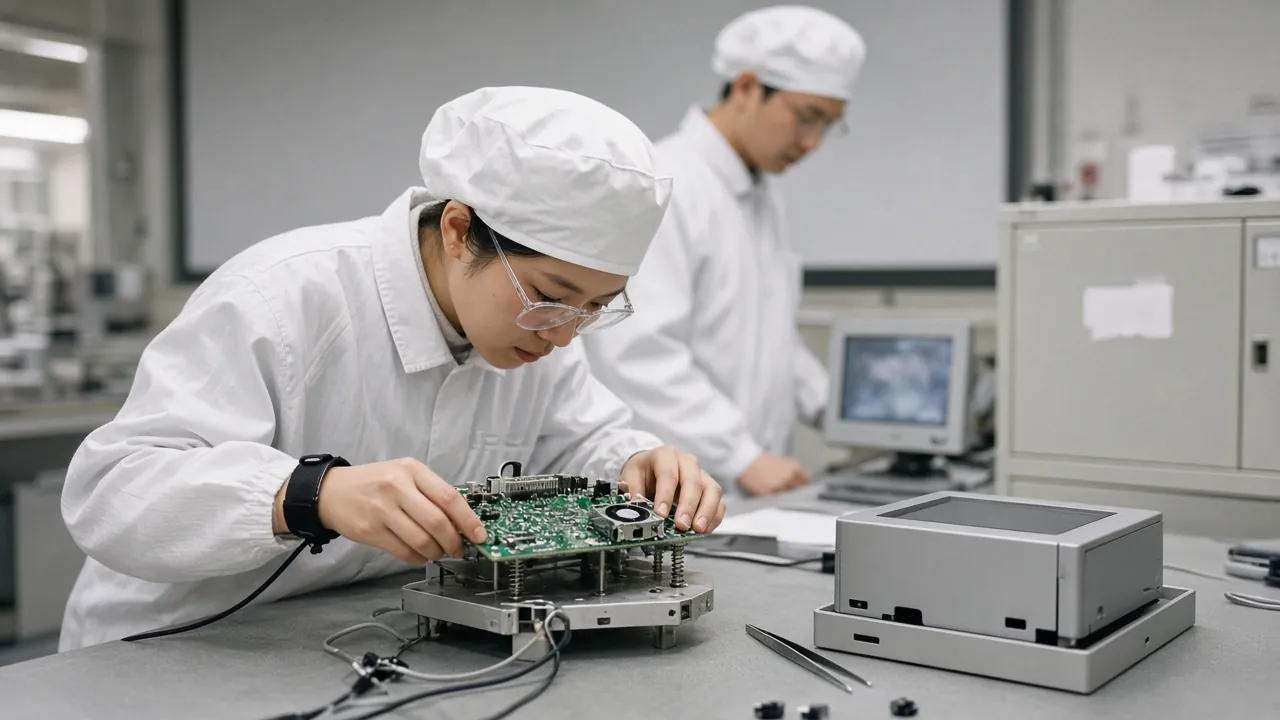
Consumer AI / Portable AI Projector / Prototype PCBA + SMT + Testing
Do you trust a factory you've never met? Go meet them.
Shenzhen tour · Dec 6–11

Aerospace / Defense
A Tier-1 aerospace electronics contractor developing next-generation airborne radar systems for a major fighter aircraft program faced a critical manu...
Walk Shenzhen factories with us, Dec 6–11. See the tour
A Tier-1 aerospace electronics contractor developing next-generation airborne radar systems for a major fighter aircraft program faced a critical manufacturing gap. Their 14-layer rigid-flex PCBs — integrating 6 rigid sections connected by 4 flexible hinge zones — required MIL-PRF-31032 compliance, impedance-controlled RF traces at X-band frequencies, and operation from -55°C to +125°C. Their existing supplier's first-pass yield was stuck at 71%, with flex-to-rigid transition failures accounting for 42% of defects. With flight qualification testing just 16 weeks away and 2,400 units required for LRIP, they needed a manufacturing partner with proven aerospace rigid-flex expertise.
Illuminious established a dedicated aerospace rigid-flex production cell with MIL-STD-883 Class 3 manufacturing protocols, implementing a laser-defined flexible hinge process to eliminate mechanical stress at transition zones, nitrogen-inerted reflow with profile optimization for BGA packages on flex sections, and 100% automated optical and X-ray inspection with aerospace-grade traceability documentation for every panel.
The Challenge: A Tier-1 aerospace electronics contractor was building the heart of a next-generation fighter's radar — a 14-layer rigid-flex PCB assembly that had to survive the most demanding environment in military aviation. Six rigid sections needed to fold into a compact radar module, connected by four flexible hinge zones that had to endure thousands of flex cycles at altitude. Their existing manufacturer could not get past 71% first-pass yield, with nearly half of all failures occurring at the critical flex-to-rigid transitions. With flight qualification testing just 16 weeks out and 2,400 low-rate initial production units on the line, the stakes were enormous. In aerospace, a failed board isn't just a return — it's a potential mission failure.
Illuminious deployed a purpose-built aerospace rigid-flex manufacturing program designed around MIL-PRF-31032 and MIL-STD-883 Class 3 requirements. Key elements included:
Up from 71% — flex-to-rigid transition failures eliminated entirely through laser hinge process
Rigid-flex replaced cable-and-connector assemblies, saving critical weight in the fighter's radar module
Across 2,400 LRIP units after 500 thermal cycles from -55°C to +125°C per MIL-STD-883
From kickoff to qualified production, meeting the flight qualification testing deadline with margin
Illuminious NPI engineers conducted a comprehensive design review of the 14-layer rigid-flex stackup. They identified that mechanical routing at flex transitions created stress concentrations causing delamination during thermal cycling. The team redesigned the transition zone geometry and switched to UV laser ablation for hinge definition. A custom lamination cycle with stepped pressure profiles ensured void-free bonding across polyimide flex cores. The redesign eliminated flex-to-rigid transition failures in the first pilot run of 50 units.
A 200-unit pilot run validated the manufacturing process under MIL-STD-883 conditions. Every panel underwent automated optical inspection, X-ray for BGA solder joints, and TDR measurement on all RF traces. 30 units from the pilot were subjected to 500 thermal cycles from -55°C to +125°C, followed by mechanical shock and vibration testing. All 30 units passed qualification with zero failures — the contractor's previous supplier had never achieved better than 88% pass rate on thermal cycling.
With qualification complete, Illuminious ramped to 600 units per month across two dedicated production cells. A digital traceability system captured material certifications, process parameters, and inspection data for every unit — producing the complete documentation package required for flight qualification review. 2,400 units delivered on schedule with 99.97% reliability, enabling the contractor to pass flight qualification testing on the first attempt.
"Illuminious didn't just manufacture our boards — they solved the flex-to-rigid transition problem that had plagued us for two years. Going from 71% yield to 97.4% on a military-spec rigid-flex assembly is extraordinary. Their engineering team understood aerospace requirements at a level we hadn't experienced outside of in-house manufacturing. When every board has to survive -55°C to 125°C at 40,000 feet, you need a partner who treats quality as a mission requirement, not a line item."
Laser Ablation Flex Hinges: Replacing mechanical routing with UV laser-defined hinges eliminated the micro-cracking and delamination that caused 42% of all board failures
Hybrid RF Stackup: Combining Rogers RO4350B with polyimide flex cores in a 14-layer build required precise CTE matching and lamination control — expertise built across dozens of aerospace programs
MIL-PRF-31032 Compliance: Full Class 3 manufacturing protocols with lot traceability, panel-level TDR data, and unit-level X-ray records met the contractor's flight qualification documentation requirements
12-Week NPI Timeline: Compressed engineering review, pilot production, and qualification testing into 12 weeks — enabling the contractor to meet their flight qualification window with four weeks of margin
The rigid-flex PCB market is projected to reach $76.5 billion by 2035, driven largely by aerospace and defense applications demanding lighter, more reliable interconnect solutions. This program demonstrated that Illuminious can deliver military-grade rigid-flex assemblies with yields and reliability that match or exceed in-house aerospace manufacturing. When failure is not an option, partner with a manufacturer who has earned that trust.
"Illuminious didn't just manufacture our boards — they solved the flex-to-rigid transition problem that had plagued us for two years. Going from 71% yield to 97.4% on a military-spec rigid-flex assembly is extraordinary."
Consumer AI / Portable AI Projector / Prototype PCBA + SMT + Testing

Consumer AI / AI Voice Recorder / Prototype PCBA + SMT + Testing
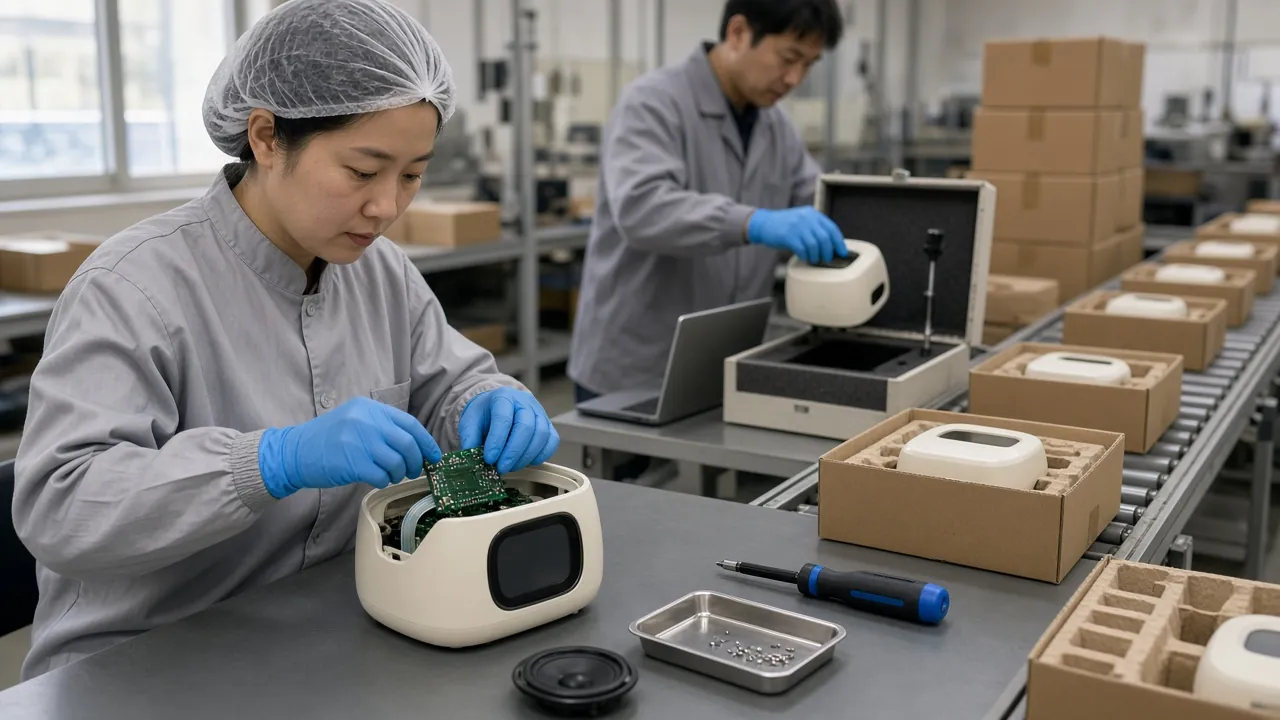
Consumer AI / Desktop AI Companion / Box Build Assembly + PCBA + Injection Molding
Let's discuss how we can help your project succeed with our end-to-end manufacturing capabilities.