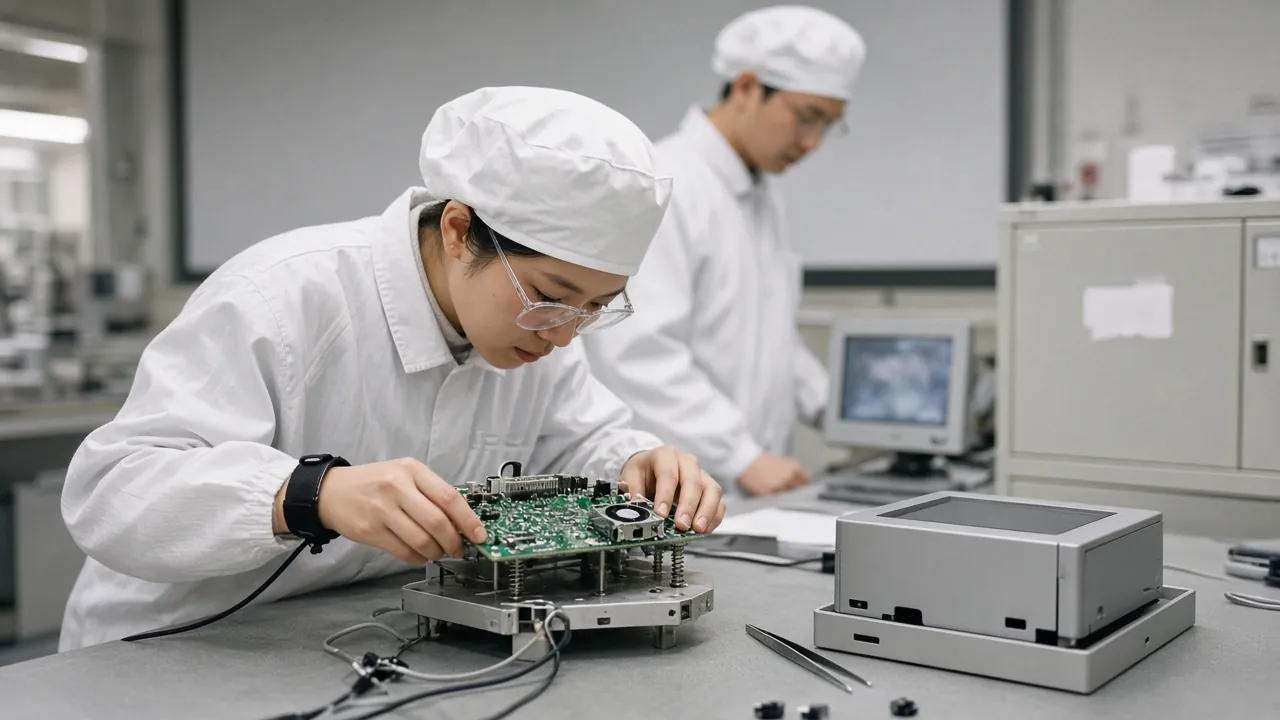
Consumer AI / Portable AI Projector / Prototype PCBA + SMT + Testing
Do you trust a factory you've never met? Go meet them.
Shenzhen tour · Dec 6–11

AI Hardware / Startup / NPI
SentinelSense Technologies, a Series A AI sensor startup, had a working breadboard prototype of their industrial air-quality sensing platform but face...
Walk Shenzhen factories with us, Dec 6–11. See the tour
SentinelSense Technologies, a Series A AI sensor startup, had a working breadboard prototype of their industrial air-quality sensing platform but faced a critical 14-week runway before their next funding round. Traditional contract manufacturers quoted 24+ weeks for NPI with 10,000-unit MOQs — a death sentence for a startup needing to prove product-market fit with limited capital.
Illuminious activated its Startup Bridge Program, providing SentinelSense with a dedicated NPI team, no-MOQ pilot production, 72-hour first article turnaround, and iterative DFM consulting. The program compressed the entire journey from breadboard validation through DFM optimization to 5,000-unit production in just 10 weeks.
The Challenge: SentinelSense Technologies had the algorithm, the sensor fusion IP, and a working breadboard prototype of their AI-powered industrial air-quality monitoring platform. What they didn't have was time. With only 14 weeks of runway before their Series B fundraise, the San Francisco-based startup needed to ship 5,000 production units to three pilot customers — a Fortune 500 chemical manufacturer, a national railway operator, and a Southeast Asian smart-city program. Every traditional CM they approached quoted 24+ weeks for NPI with minimum orders starting at 10,000 units. The math was brutal: commit to inventory they couldn't afford, built on a timeline they couldn't meet, or watch their funding window close.
Illuminious designed the Startup Bridge Program specifically for hardware startups trapped between prototype validation and volume production. For SentinelSense, the program provided a full-stack NPI acceleration:
Full NPI cycle completed 58% faster than industry average, preserving the Series B funding window
DFM-driven component consolidation and Shenzhen sourcing reduced per-unit cost from $47 to $33.80
In-line AOI and X-ray inspection at every stage caught defects early, exceeding the 95% startup-phase benchmark
72-hour first article turnaround enabled three complete design revisions in three weeks
SentinelSense arrived with a functional breadboard built around an STM32H7 MCU, a custom MEMS sensor array, and a Coral Edge TPU module for on-device inference. The Illuminious DFM team identified 14 immediate improvements: consolidating 23 discrete passives into 8 array components, upgrading the power stage from a linear LDO to a synchronous buck converter reducing thermal stress by 40%, and redesigning the sensor interface layout to meet impedance matching requirements for the 24-bit ADC. Two days after receiving the design files, the DFM report was delivered with a complete BOM cost breakdown and alternative sourcing options.
With the optimized design locked, Illuminious produced the first article run of 30 boards in 72 hours. First-pass testing revealed a thermal coupling issue between the buck converter and the MEMS sensor — the switching noise was coupling into the ADC reference. The design team re-routed the power plane and added a guard ring around the analog section. Second article run, another 72 hours. This time, sensor noise dropped from 12 LSB RMS to 3 LSB RMS — well within spec. A third revision optimized the antenna placement for the integrated NB-IoT modem, improving signal strength by 6 dB. Three complete design iterations in three weeks, each validated with real hardware.
The validated Rev C design entered pilot production at the Shenzhen facility — 500 units on the high-speed Yamaha YRM20 line, with in-line SPI, AOI, and X-ray inspection at every stage. First-pass yield hit 99.4% on the pilot run. With process parameters locked, the same Shenzhen lines built the remaining 4,500 units at volume cost without re-qualifying the process. All 5,000 units shipped to three pilot customers across four countries, delivered two weeks ahead of the funding deadline.
"We pitched two dozen CMs before finding Illuminious. Every other option was either too slow, too rigid on MOQs, or treated us like we were too small to matter. The Startup Bridge Program changed the equation entirely — they gave us enterprise-grade NPI support at startup volumes. Three design spins in three weeks with 72-hour first articles? That's not a typo. That's what actually happened. We walked into our Series B with 5,000 units deployed and real customer data. Game changer."
72-hour first article turnaround: Compressed the typical 2–3 week prototyping cycle into 3 business days, enabling rapid design iteration without schedule risk
Proactive design optimization: DFM consulting identified 14 improvements that reduced BOM cost by 28% while improving sensor performance — not just manufacturable, but better
Shenzhen speed at volume cost: One factory allowed fast NPI iteration and cost-optimized volume in Shenzhen without process re-qualification
No MOQ, no penalty: The Bridge Program eliminated forced overcommitment, letting SentinelSense match production volume to actual demand and conserve runway
SentinelSense's journey proves that hardware startups don't have to choose between speed and quality. With the right manufacturing partner, a working prototype can become 5,000 deployed units in 10 weeks — complete with DFM optimization, 99.4% yield, and real customer validation data. If your startup is ready to bridge the gap from prototype to production, talk to our NPI team.
"We pitched two dozen CMs before finding Illuminious. The Startup Bridge Program changed the equation entirely — they gave us enterprise-grade NPI support at startup volumes. Three design spins in three weeks with 72-hour first articles? We walked into our Series B with 5,000 units deployed and real customer data. Game changer."
Consumer AI / Portable AI Projector / Prototype PCBA + SMT + Testing
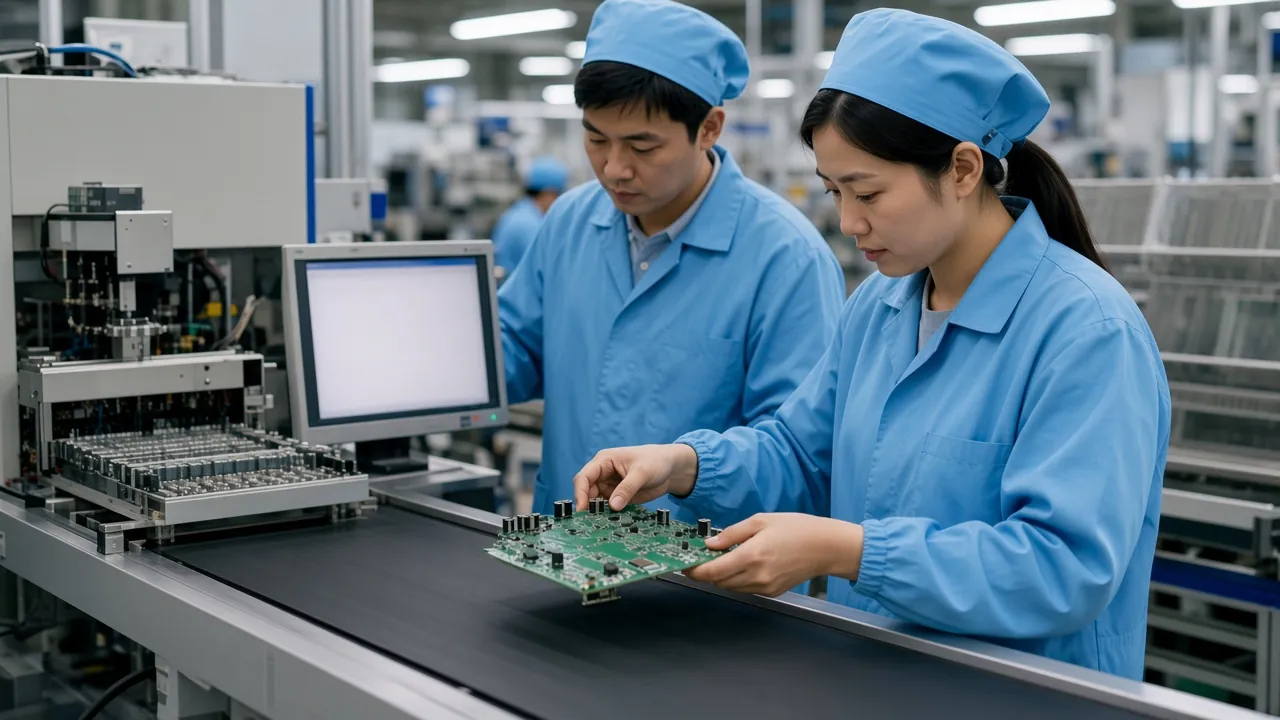
Consumer AI / AI Voice Recorder / Prototype PCBA + SMT + Testing
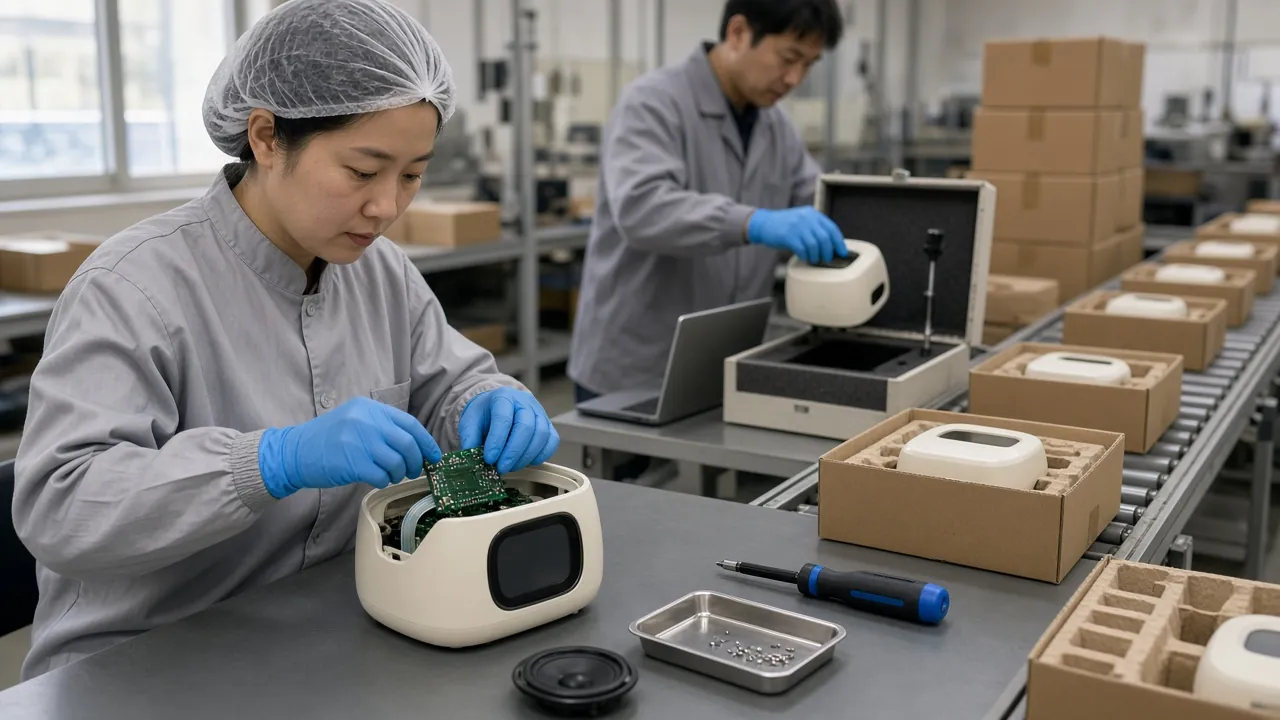
Consumer AI / Desktop AI Companion / Box Build Assembly + PCBA + Injection Molding
Let's discuss how we can help your project succeed with our end-to-end manufacturing capabilities.