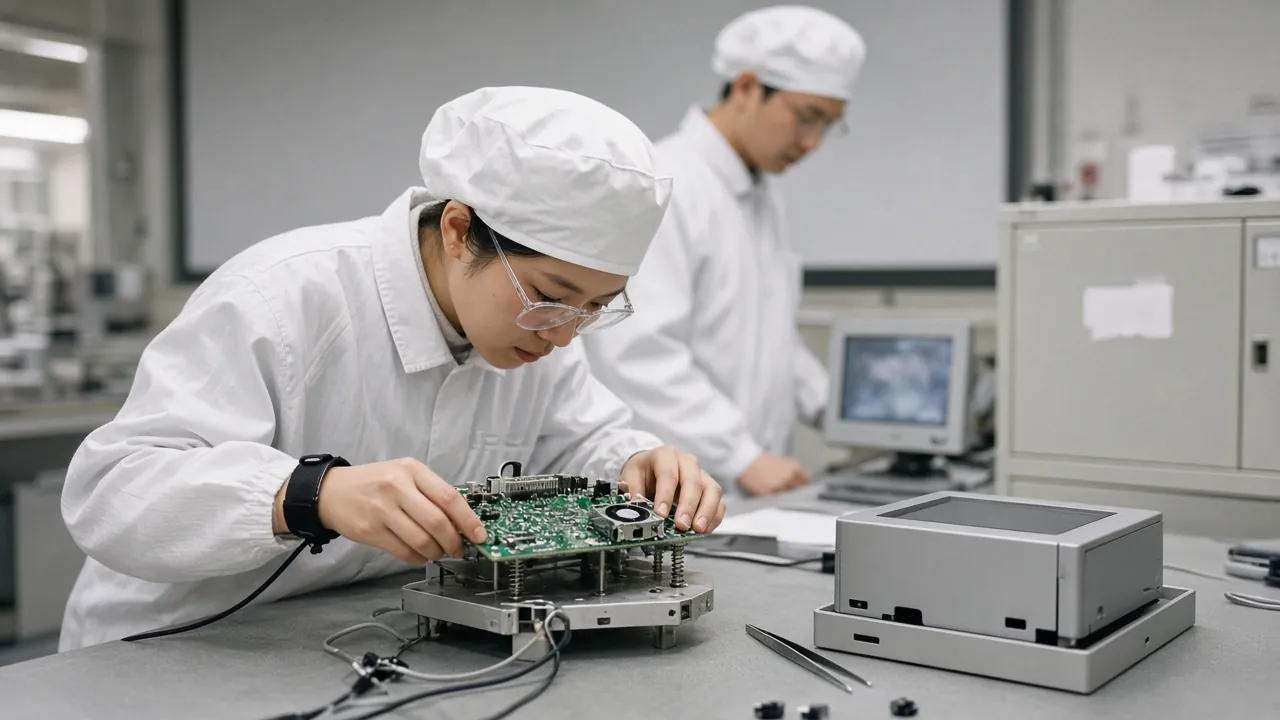
Consumer AI / Portable AI Projector / Prototype PCBA + SMT + Testing
Do you trust a factory you've never met? Go meet them.
Shenzhen tour · Dec 6–11

Smart Home / Consumer Electronics / Overmolding + HDI PCBA + Box Build
Lumina Home, a Seattle-based Series A smart home company building premium ambient computing devices for the luxury residential market, had developed t...
Walk Shenzhen factories with us, Dec 6–11. See the tour
Lumina Home, a Seattle-based Series A smart home company building premium ambient computing devices for the luxury residential market, had developed the Lumina Hub — a voice-controlled smart home controller with edge AI processing, integrated LED matrix display, and multi-protocol wireless support. Their manufacturing was fragmented across four vendors on two continents: a China injection molder producing TPU overmolded housing shells with 8% surface defect rates, a Taiwan PCBA house assembling 8-layer HDI boards with 6% microphone array tuning failures, a Shenzhen display module vendor whose components suffered light leakage at the overmold interface, and a US assembly contractor achieving only 90.8% field reliability across 16-week cumulative lead times at $73 per unit. With Amazon Echo launching a competing premium product in Q4, Lumina needed to hit the holiday window or lose the market.
Illuminious consolidated overmolding, HDI PCBA assembly, LED matrix integration, and full box build into a single Shenzhen facility under one ISO 9001 quality system. The two-shot molding process loaded the PCBA as an insert during first-shot rigid PC/ABS housing formation, then overmolded soft-touch TPU directly to create a hermetic seal eliminating moisture ingress. Mold flow analysis optimized 0.8mm TPU wall thickness without sink marks, while a Class 101 four-cavity mold in ISO Class 8 cleanroom conditions reduced overmold defects from 8% to 0.3%. The 8-layer HDI board used any-layer via processing with impedance-controlled microphone channels, laser-drilled acoustic ports with bonded mesh for IP54 protection, and 100% AOI plus X-ray inspection. Integrated LED matrix light guide channels were molded directly into the TPU, eliminating separate display assembly. Full box build including firmware loading, acoustic calibration, RF testing, and retail packaging ran on a single line at 45-second cycle times.
The Challenge: Lumina Home had a product that the premium smart home market wanted. The Lumina Hub was a cylindrical voice-controlled smart home controller — 95mm diameter, 42mm height — with edge AI processing via an NPU and dual-core ARM processor, a 6-microphone beamforming array, an integrated LED matrix display ring, USB-C power input, multi-protocol wireless support for Zigbee, Matter, Thread, and Wi-Fi 6E, and a soft-touch overmolded silicone exterior backed by an aluminum bottom plate for thermal management. It was designed for luxury residential installations where both acoustic performance and tactile quality mattered equally.
Their manufacturing supply chain made it impossible to build the Hub reliably. Four vendors across two continents, each with independent quality systems and no shared accountability, produced a 16-week cumulative lead time at $73 per unit — and the units that did ship failed in the field at a 9.2% rate within the first six months. The China injection molder produced TPU overmolded housing shells at $14.50 per set with 12-week lead times, but 8% of parts showed surface defects and shrink marks visible through the cosmetic surface. The Taiwan PCBA house assembled 8-layer HDI boards at $32 each with 10-week lead times, but microphone array tuning failed on 6% of boards because acoustic channel dimensional variation from the insert-molded housings threw off beamforming calibration. The Shenzhen display module vendor supplied LED matrix assemblies at $8.50 per module with 6-week lead times, but light leakage occurred at the overmold-to-display interface on a significant fraction of units. The US assembly contractor handled manual final assembly, firmware loading, acoustic calibration, and packaging at $18 per unit with 4-week lead times — and logged a 9.2% field failure rate driven primarily by overmold delamination from PCBA thermal expansion, microphone failure from moisture ingress, and LED display misalignment.
The market pressure was relentless. Amazon Echo was launching a competing premium product in Q4. Lumina Home needed to cut their lead time to hit the holiday launch window, or they would lose the first-mover advantage their investors had funded. Three quality disputes between vendors over root cause accountability consumed engineering bandwidth every week. No single vendor owned the quality outcome, and Lumina's hardware team was spending half its time mediating supplier conflicts instead of preparing for mass production.
Illuminious consolidated overmolding, HDI PCBA assembly, LED matrix integration, and full box build assembly into a single Shenzhen facility operating under one ISO 9001 certified quality management system. Every process step — from PCBA fabrication through retail packaging — occurred under one roof with unified quality accountability. Key elements include:
Cumulative lead time cut 31% from 16 weeks to 11 weeks through single-facility integration — hitting the holiday launch window.
Manufacturing cost reduced 29% from $73 to $52 per unit by eliminating four vendor handoffs and integrating all assembly steps.
Field failures reduced 90% from 9.2% — hermetic overmold seals eliminated moisture ingress and integrated testing caught defects pre-shipment.
50,000 units delivered in the first 4 months of production, achieving annual volume targets ahead of schedule.
Illuminious engineers began with a comprehensive Design for Manufacturing review focused on the root causes of the previous vendors' quality failures. The 8% overmold surface defect rate traced back to inconsistent TPU flow across varying wall thicknesses in the original design. Illuminious mold engineers ran mold flow analysis on the full 95mm-diameter cylindrical geometry and optimized the TPU overmold to a uniform 0.8mm wall thickness, eliminating the flow variations that caused sink marks and surface defects. The PCBA was redesigned with molded-in alignment features — precision holes and posts — that would locate the LED matrix and microphone array to plus or minus 0.05mm during the insert molding process. This eliminated the dimensional variation that had caused 6% microphone tuning failures and LED display misalignment in the previous fragmented approach. The two-shot molding concept — loading the completed PCBA as an insert during first-shot rigid housing formation, then overmolding TPU directly — eliminated a separate assembly step and created a hermetic seal around all electronics. A Class 101 four-cavity mold was designed and built for the 50,000-unit annual volume target, with the overmolding process running in ISO Class 8 cleanroom conditions to prevent particulate contamination on optical and acoustic surfaces.
The 8-layer HDI board — 2+N+2 structure with any-layer HDI via processing — was assembled on the same factory floor where the overmolding would occur. The NPU utilized package-on-package configuration with DDR5 memory, requiring X-ray inspection on every joint to verify bond integrity under the stacked die. Microphone array channels were impedance-controlled to plus or minus 5 ohms to ensure beamforming consistency across all six microphones — a specification the previous Taiwan vendor could not meet because they had no control over the housing dimensions that affected acoustic chamber geometry. Laser-drilled 0.4mm acoustic ports in the PCBA were bonded with acoustic mesh material providing IP54 moisture and dust protection, directly addressing the moisture ingress failure mode that had caused microphone field failures. The LED matrix display was redesigned as a flexible PCBA integrated into the overmold: light guide channels laser-etched into the TPU material distributed light uniformly around the display ring, eliminating the separate display module and the light leakage that occurred at the material interface. EMI shielding cans were custom-formed over the wireless module and processor. Every board received 100% AOI, X-ray inspection on BGA and PoP joints, ICT, and acoustic functional test — all before the board was loaded into the molding tool as an insert.
With completed PCBAs and the two-shot molding line prepared, the insert molding process began. First shot: rigid PC/ABS housing formed around the loaded PCBA, with molded-in alignment features positioning the LED matrix, microphone array, and speaker module precisely. Second shot: soft-touch TPU overmolded directly onto the housing, flowing around all components to create a hermetic seal. The die-cast A380 aluminum bottom plate — serving as both EMI shield and thermal spreader — was installed with machined thermal interface pads positioned to transfer NPU heat (3.5W TDP) to the exterior surface, validated by thermal simulation to maintain surface temperature below 45 degrees Celsius. The completed assembly then proceeded through a single production line: firmware loading, acoustic beamforming calibration, RF testing across all wireless protocols, final cosmetic inspection under controlled lighting, and retail packaging — at a 45-second cycle time per unit. The integrated line delivered 50,000 units in the first 4 months of production with 0.9% field failure rate — compared to the previous 9.2% rate — while microphone channel-to-channel variation dropped from 2.3dB to 0.4dB and overmold surface defects fell from 8% to 0.3%.
"Our previous setup was four vendors arguing about whose fault the latest field failure was. Overmold delamination was the PCBA vendor's fault according to the molder, and the molder's fault according to the PCBA vendor. Meanwhile our customers were returning units because their microphone stopped working after humidity exposure. Illuminious loaded our PCBA into the mold as an insert, overmolded TPU around it to create a hermetic seal, and ran acoustic calibration on the same line. Field failures dropped from 9.2% to under 1%. The integrated approach eliminated vendor finger-pointing and let our engineering team focus on the product experience instead of supply chain management."
PCBA-as-insert two-shot molding: Loading the completed PCBA as an insert during housing formation eliminated alignment variation, created hermetic sealing, and removed an entire assembly step from the process — directly addressing the root causes of moisture ingress and component misalignment failures.
Scientific decoupled molding with flow analysis: Optimizing TPU overmold to uniform 0.8mm wall thickness through mold flow simulation eliminated the sink marks and surface defects that had affected 8% of production units at the previous vendor.
Impedance-controlled microphone routing: Controlling microphone channel impedance to plus or minus 5 ohms with laser-drilled 0.4mm acoustic ports and bonded mesh reduced channel-to-channel variation from 2.3dB to 0.4dB — critical for beamforming performance in voice-controlled devices.
Light guide channels in TPU overmold: Eliminating the separate LED display module by molding optical light guide channels directly into the TPU removed a failure-prone assembly interface and resolved the light leakage issue permanently.
Unified quality system across all processes: One ISO 9001 QMS covering overmolding, PCBA, display integration, and box build eliminated the inter-vendor finger-pointing that had consumed Lumina's engineering bandwidth and delayed root cause resolution.
72-hour DFM feedback and 5-phase NPI: The dedicated US-based project manager and structured NPI program compressed decision cycles, enabling Lumina to hit the holiday launch window despite starting manufacturing transition late in the product cycle.
The Lumina Hub demonstrates what becomes possible when overmolding, HDI PCBA, display integration, and box build assembly happen under one roof with a single quality system. The hermetic seal created by two-shot insert molding eliminated the moisture ingress failures that fragmented supply chains cannot prevent. The precision alignment from insert-molded PCBA features delivered acoustic consistency that separate vendors blaming each other will never achieve. For premium consumer products where both tactile quality and functional reliability matter, integrated manufacturing is not an optimization — it is the prerequisite for market success. Explore our capabilities in injection molding and overmolding, PCB assembly, HDI PCB manufacturing, box build assembly, NPI engineering, and testing and inspection — or learn how our startup program accelerates time-to-market for hardware companies.
"Our previous setup was four vendors arguing about whose fault the latest field failure was. Illuminious loaded our PCBA into the mold as an insert, overmolded TPU around it to create a hermetic seal, and ran acoustic calibration on the same line. Field failures dropped from 9.2% to under 1%."
Consumer AI / Portable AI Projector / Prototype PCBA + SMT + Testing
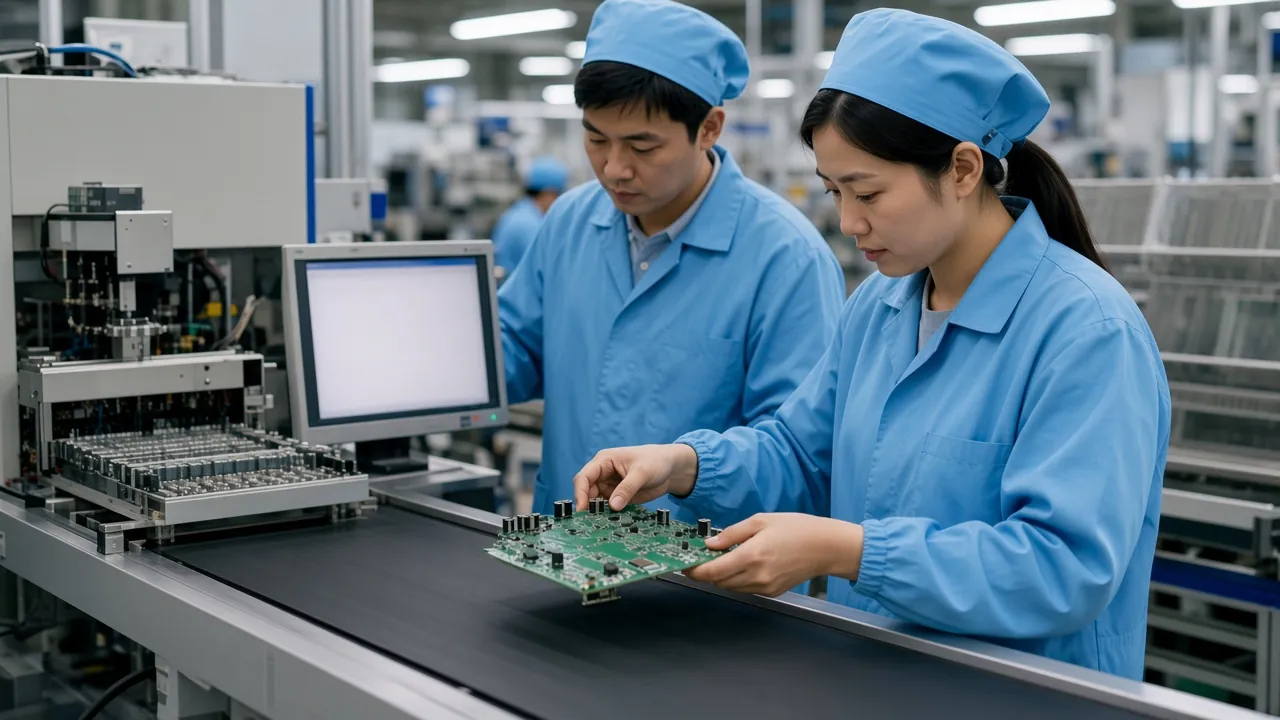
Consumer AI / AI Voice Recorder / Prototype PCBA + SMT + Testing
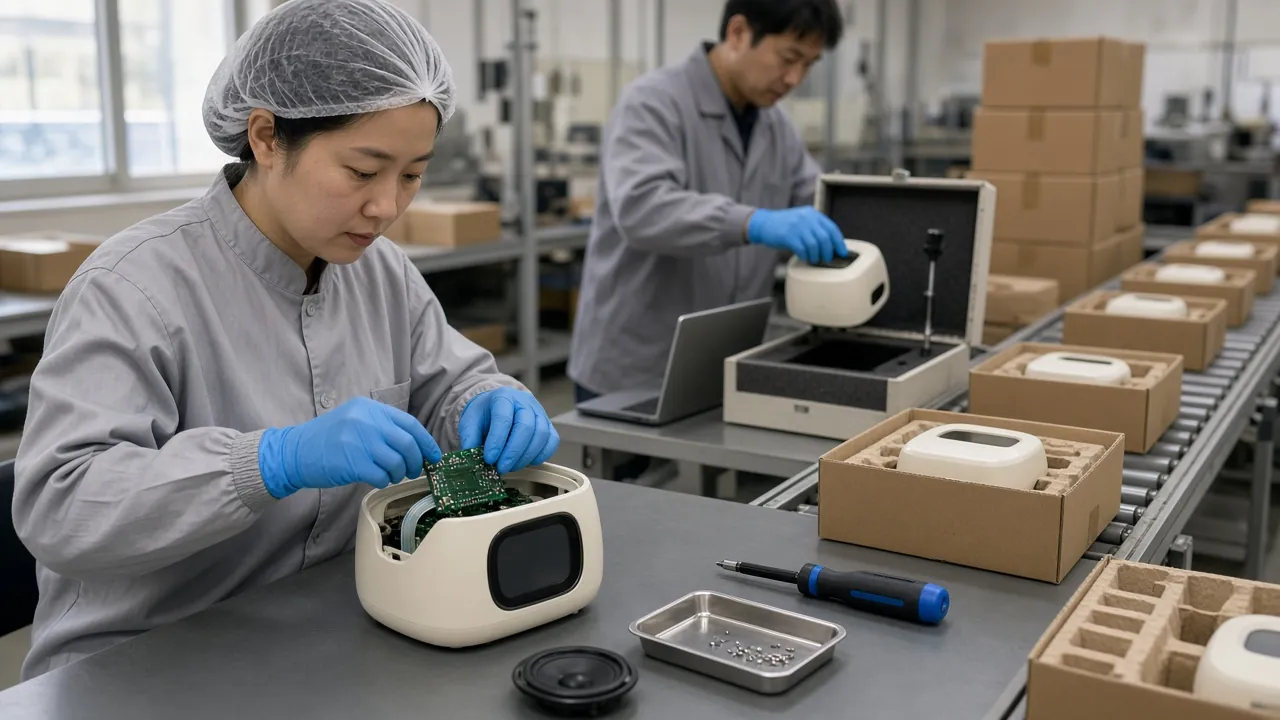
Consumer AI / Desktop AI Companion / Box Build Assembly + PCBA + Injection Molding
Let's discuss how we can help your project succeed with our end-to-end manufacturing capabilities.