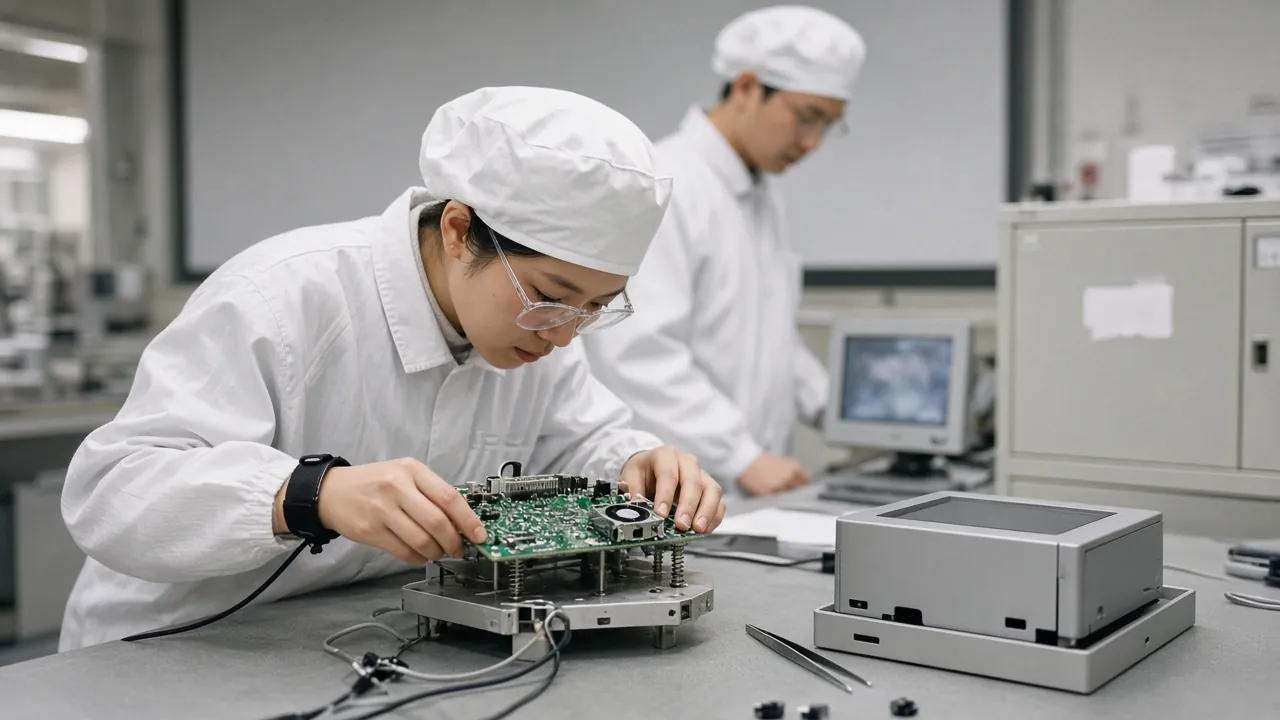
Consumer AI / Portable AI Projector / Prototype PCBA + SMT + Testing
Do you trust a factory you've never met? Go meet them.
Shenzhen tour · Dec 6–11

Medical Devices / Life Sciences
A Class III medical device manufacturer producing implantable insulin pump PCBA assemblies faced a regulatory crisis. Their previous contract manufact...
Walk Shenzhen factories with us, Dec 6–11. See the tour
A Class III medical device manufacturer producing implantable insulin pump PCBA assemblies faced a regulatory crisis. Their previous contract manufacturer delivered a defect rate of 1.2% — unacceptable for FDA 21 CFR Part 820 compliance and ISO 13485 certification requirements. With 12,000 units needed for a pivotal clinical trial and an FDA pre-approval inspection scheduled in 14 weeks, they needed a manufacturing partner capable of zero-defect PCBA production with full component-level traceability and IPC-A-610 Class 3 inspection standards.
Illuminious established a dedicated medical-grade production cell with AI-enhanced 3D AOI inspection, 100% X-ray verification of BGA and QFN solder joints, and a digital traceability system tracking every component from incoming lot to finished assembly. Our engineering team implemented a multi-stage inspection protocol: 3D SPI before placement, post-reflow 3D AOI, automated X-ray inspection, and ICT/FCT functional testing — all aligned to IPC-A-610 Class 3 and ISO 13485 process controls.
The Challenge: When a Class III medical device manufacturer discovered their implantable insulin pump PCBA assemblies had a 1.2% defect rate, the implications were severe. Each defective board represented not just a cost — but a potential patient safety event. The FDA had scheduled a pre-approval inspection in 14 weeks, and 12,000 units were needed for a pivotal clinical trial that could not be delayed. Their existing contract manufacturer, despite holding ISO 13485 certification, lacked the advanced inspection capabilities and process controls required for consistent Class 3 assembly quality on the 8-layer HDI boards populated with 487 components each.
Illuminious deployed a medical-grade manufacturing program built around zero-defect principles and full regulatory compliance. Key elements included:
Zero defects across 12,000 implantable-grade PCBA units — from first pilot run through full production
On 487-component HDI assemblies with 0201 passives and 0.4mm pitch BGA, up from 94.1%
Passed FDA 21 CFR Part 820 pre-approval inspection without a single finding
Four weeks ahead of FDA inspection schedule, with full production qualification complete
Illuminious NPI engineers conducted a comprehensive DFM review of the 8-layer HDI board, identifying 7 design features that contributed to the previous manufacturer's yield problems. Staggered microvia placement reduced drill breakout risk, solder mask defined pads were converted to non-solder mask defined for BGA reliability, and component placement was optimized for AOI accessibility. A 100-unit process qualification run validated all changes. The pilot run achieved 100% yield — a result the customer had never seen from any CM.
Every board passed through a four-stage inspection gauntlet: 3D solder paste inspection before placement, post-reflow 3D AOI with AI defect classification, automated X-ray inspection for hidden solder joints, and ICT plus functional testing against the device specification. The AI-enhanced AOI system, trained on medical board datasets, could detect tombstoned 0201 components, insufficient solder on QFN thermal pads, and BGA head-in-pillow defects with 99.99% accuracy. Across 12,000 production units, the AOI system caught 23 potential defects that manual inspection would have missed — and not a single board reached the customer with a defect.
Illuminious built a complete device history record for every unit, including incoming material certifications, solder paste lot numbers, reflow profiles, AOI pass images, X-ray records, and test results — all searchable by board serial number. When the FDA inspector arrived four weeks later, every record was immediately accessible. The inspector noted the traceability system as best-in-class for a contract manufacturer, and the facility passed with zero non-conformances.
"When you manufacture implantable devices, 99% is not good enough — it means 1 in 100 patients gets a defective product. Illuminious understood this at a fundamental level. Their AI-enhanced inspection caught defects we never would have found, and their documentation system made our FDA audit almost anticlimactic. Zero defects across 12,000 boards is not something we expected. It is something we now demand."
AI-Enhanced 3D AOI: Machine learning trained on 50,000+ medical board images delivered 99.99% defect detection, catching 23 defects across 12,000 units that conventional inspection would have missed
FDA 21 CFR Part 820 Compliance: Full device history records with component-level traceability enabled zero-non-conformance audit results
ISO 13485 + IPC-A-610 Class 3: Dual-standard manufacturing protocols with controlled environment production ensured consistent quality across all 12,000 units
10-Week NPI Timeline: Compressed DFM review, process qualification, and production ramp into 10 weeks — delivering four weeks of margin before the FDA inspection
The global medical PCBA market is projected to reach $38.2 billion by 2030, driven by miniaturization of implantable electronics and tightening FDA and EU MDR regulatory requirements. This program proved that zero-defect PCBA production is achievable at scale when advanced inspection technology meets rigorous process controls. For medical device manufacturers, the question is no longer whether zero-defect is possible — it is whether your manufacturing partner can deliver it.
"When you manufacture implantable devices, 99% is not good enough. Illuminious understood this at a fundamental level. Zero defects across 12,000 boards is not something we expected. It is something we now demand."
Consumer AI / Portable AI Projector / Prototype PCBA + SMT + Testing
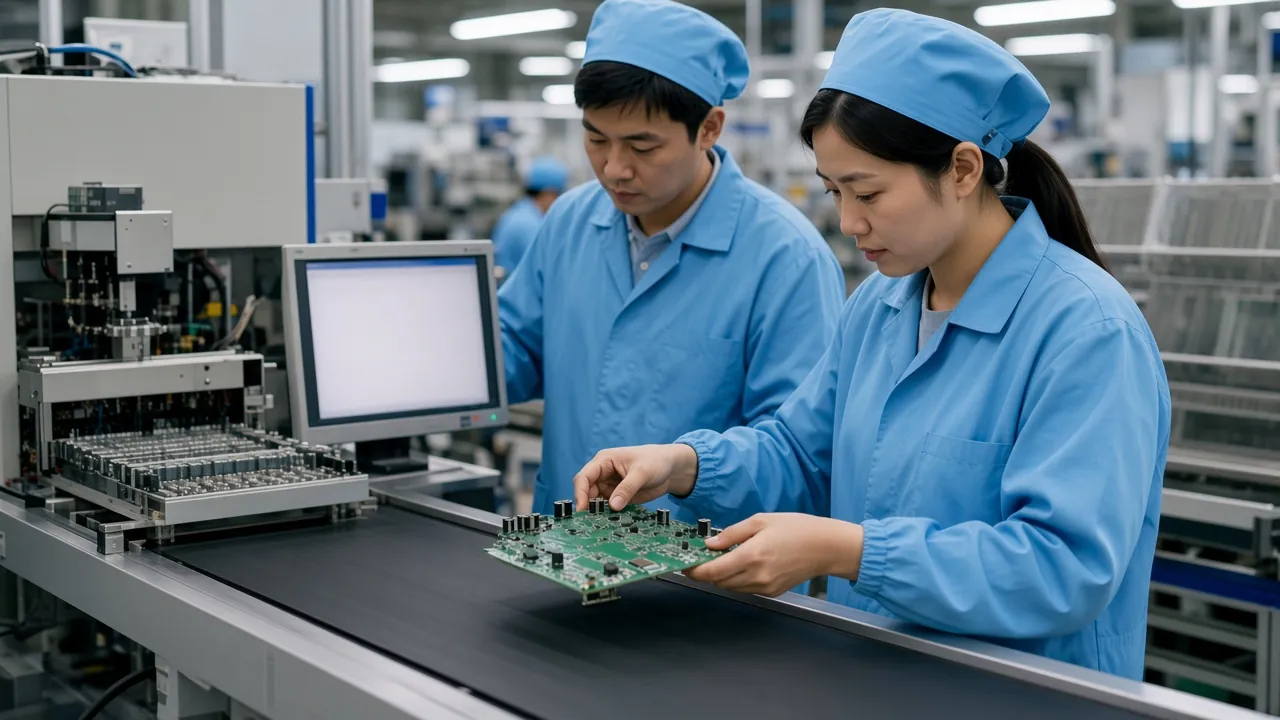
Consumer AI / AI Voice Recorder / Prototype PCBA + SMT + Testing
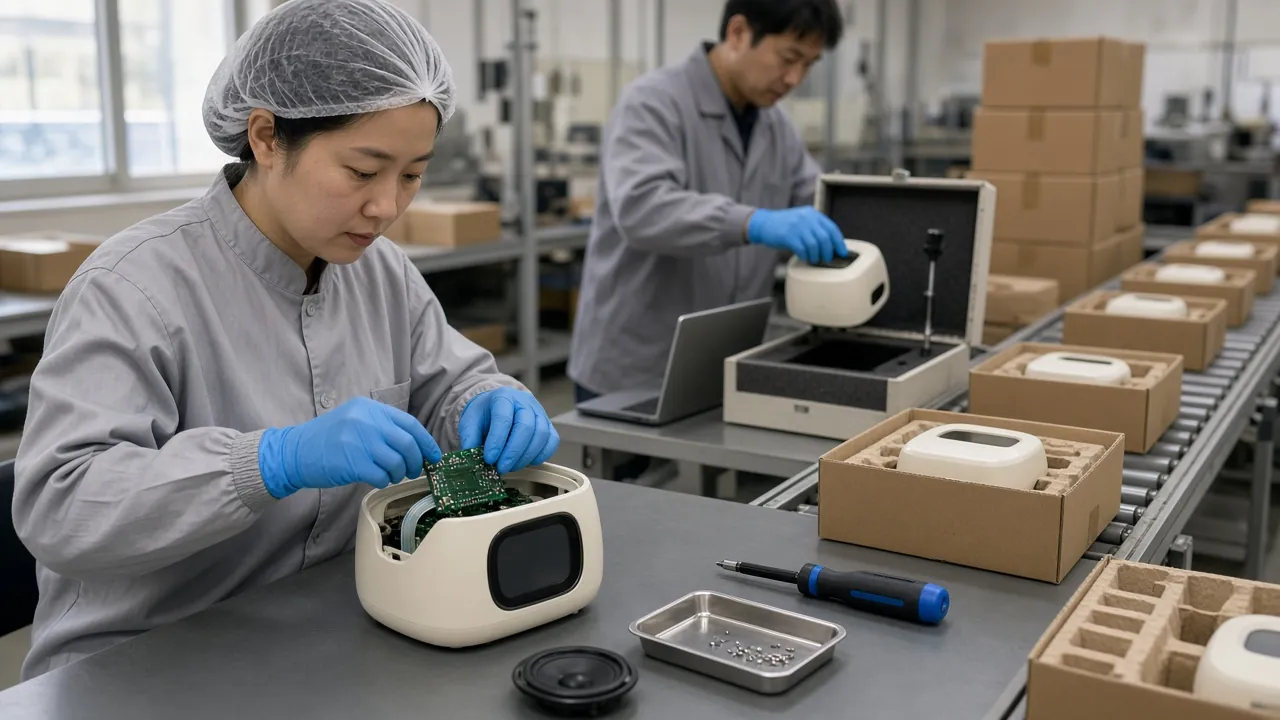
Consumer AI / Desktop AI Companion / Box Build Assembly + PCBA + Injection Molding
Let's discuss how we can help your project succeed with our end-to-end manufacturing capabilities.