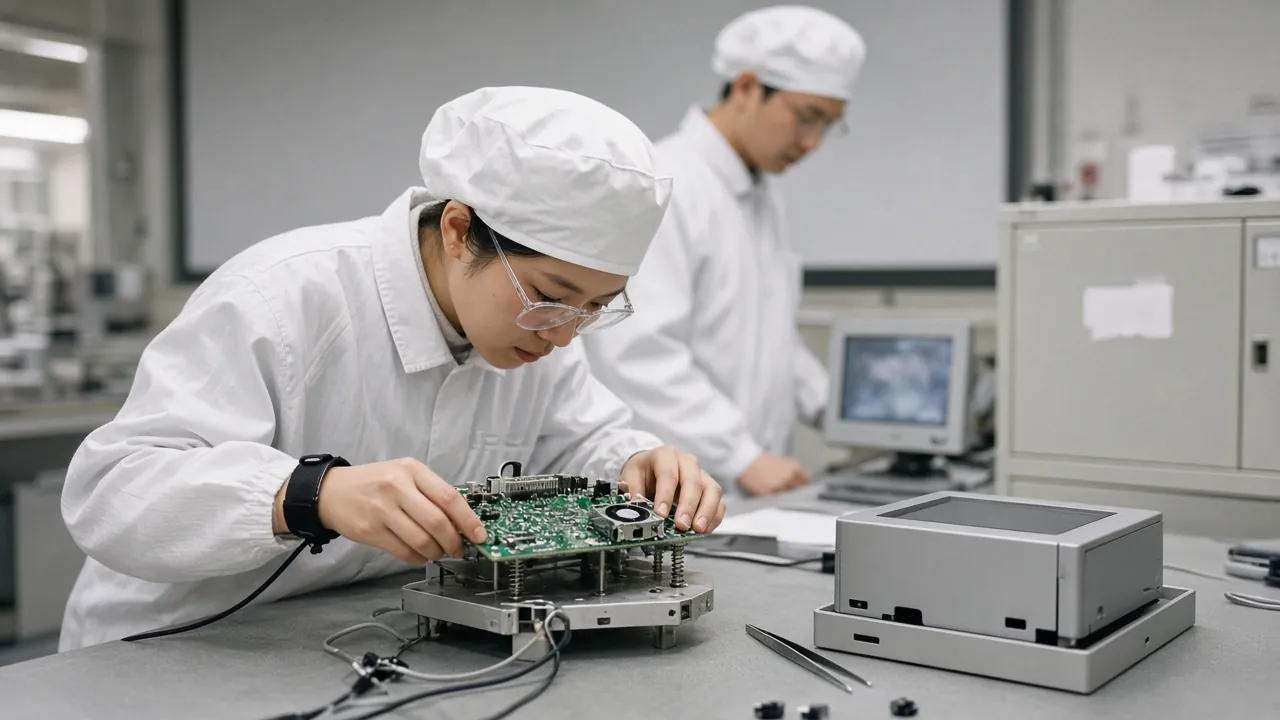
Consumer AI / Portable AI Projector / Prototype PCBA + SMT + Testing
Do you trust a factory you've never met? Go meet them.
Shenzhen tour · Dec 6–11

Medical Device / Surgical Robotics / Precision CNC Machining
MediForge Robotics, a Boston-based surgical robotics startup backed by Series B funding, needed complex 5-axis CNC machined titanium components for th...
Walk Shenzhen factories with us, Dec 6–11. See the tour
MediForge Robotics, a Boston-based surgical robotics startup backed by Series B funding, needed complex 5-axis CNC machined titanium components for their FDA-cleared minimally invasive surgical robot. The robotic instrument arm required Ti-6Al-4V structural joints held to ±0.01mm tolerance, surgical end-effector mounts with Ra 0.4 surface finish, and PEEK electrical insulator bushings for biocompatible electrical isolation. Their previous vendor delivered 16-week lead times with inconsistent quality — a 3.5% dimensional rejection rate — and operated without an ISO 13485 quality management system, putting FDA compliance at risk.
Illuminious deployed a dedicated medical-device machining cell combining 5-axis CNC machining centers for complex titanium geometries in a single setup, Swiss lathes for micro-features and precision threads on surgical components, and specialized PEEK machining for electrical insulator bushings. Our ISO 13485-certified quality management system provided full material traceability with lot-level Certificates of Conformance, ASTM F136 compliance for implant-grade titanium, in-process CMM inspection every 5 parts, and final AQL 0.65 inspection — all coordinated by a dedicated US-based project manager aligned to Boston timezone.
The Challenge: MediForge Robotics had developed a breakthrough minimally invasive surgical robot capable of sub-millimeter tissue manipulation through 8mm incision ports. After securing FDA 510(k) clearance and Series B funding, they faced a manufacturing crisis: their precision component supplier could not meet the quality, traceability, or timeline requirements for clinical-scale production. With a 3.5% dimensional rejection rate on titanium arm joints, 16-week lead times blocking clinical deployments, and no ISO 13485 quality system in place, the path from FDA clearance to market launch was stalled. Every rejected component represented a patient waiting for surgery.
Illuminious established a dedicated medical-device machining program that brought every critical process under one ISO 13485-certified roof. The integrated approach combined 5-axis CNC machining, Swiss lathe precision turning, PEEK polymer machining, and a comprehensive quality system designed specifically for medical device manufacturing. Key elements include:
Consistent ±0.01mm dimensional accuracy across 3,000+ units with Cpk 1.67 process capability index
Down from 16 weeks — a 63% reduction that accelerated clinical validation and FDA 510(k) submission timelines
Reduced from 3.5% to 0.03% — a 99.1% quality improvement with zero field returns across all deployed units
Lower per-unit cost than previous vendor while delivering ISO 13485 compliance and full material traceability
Illuminious engineers conducted a comprehensive Design for Manufacturability review of MediForge's titanium robotic arm joints, surgical end-effector mounts, and PEEK insulator bushings. The team identified three geometries where tool access required multi-axis repositioning — each a potential source of cumulative tolerance error. By redesigning the machining strategy around single-setup 5-axis processing, we eliminated re-fixture-induced variation. PEEK insulator tolerances were validated through a pilot run of 50 units. Critical outcome: DFM changes reduced theoretical tolerance stack-up from ±0.025mm to ±0.01mm.
With validated processes, the team produced first article inspection reports within 6 weeks — compared to the previous vendor's 16-week timeline. The ISO 13485 quality management system was configured specifically for MediForge's part family: material certificates linked to every heat lot of Ti-6Al-4V titanium, CMM inspection programs written for each part number, and AQL 0.65 sampling plans established for production runs. Surface finish verification on Ra 0.4 critical surfaces was performed using contact profilometry on every batch. Critical outcome: First article approved on first submission with zero non-conformances.
Production ramped from 100 to 500 units per month across titanium joints, stainless steel end-effector mounts, and PEEK insulators. Each production run followed the established protocol: incoming material verification with ASTM F136 certificate cross-check, in-process CMM inspection every 5 parts, final AQL 0.65 dimensional and visual inspection, and lot-level COC generation. The complete manufacturing documentation package — including process validation reports, material certificates, inspection records, and DFM change logs — was compiled to support MediForge's FDA 510(k) submission and subsequent clinical deployment. Critical outcome: 3,000+ units delivered with zero field returns and full regulatory documentation.
"Finding a CNC machining partner who actually understands medical device requirements was our biggest challenge. Illuminious didn't just hit ±0.01mm on titanium — they delivered the complete quality system around it. ISO 13485 traceability, ASTM F136 material compliance, CMM data on every fifth part. Their Boston-timezone project manager was in our standups. When we submitted our 510(k), the manufacturing documentation package was so complete that the FDA reviewer had zero questions on the production process. That's what a real medical manufacturing partner looks like."
5-Axis Machining Strategy: By completing complex titanium geometries in a single fixture setup, we eliminated the cumulative tolerance errors that multi-setup machining inevitably introduces — the primary cause of the previous vendor's 3.5% rejection rate
Ti-6Al-4V and PEEK Processing: Titanium requires specialized tooling, controlled cutting parameters, and careful heat management to prevent work-hardening and thermal distortion. PEEK demands different fixturing and speeds to maintain dimensional stability in biocompatible polymer components
Regulatory-Grade Traceability: Every titanium component is traceable from raw material heat lot through machining parameters to final inspection results — the documentation depth that FDA 510(k) submissions and medical device audits require
CMM Every 5 Parts: Rather than relying on end-of-batch inspection alone, coordinate measuring machine verification every 5 parts detects process drift in real time, preventing scrap accumulation and ensuring consistent Cpk 1.67 capability
Boston-Timezone PM: A dedicated US-based project manager participating in daily standups eliminated the communication gaps and timezone friction that had plagued the previous offshore vendor relationship
When surgical robotics components require ±0.01mm tolerance on titanium and full ISO 13485 traceability, the manufacturing partner matters as much as the design. Illuminious combines 5-axis CNC machining expertise with medical-device-grade quality systems to deliver components that pass FDA scrutiny and perform in operating rooms. Start a conversation about your medical device manufacturing requirements.
"Finding a CNC machining partner who actually understands medical device requirements was our biggest challenge. Illuminious didn't just hit ±0.01mm on titanium — they delivered the complete quality system around it. Their Boston-timezone project manager was in our standups. When we submitted our 510(k), the manufacturing documentation package was so complete that the FDA reviewer had zero questions on the production process."
Consumer AI / Portable AI Projector / Prototype PCBA + SMT + Testing
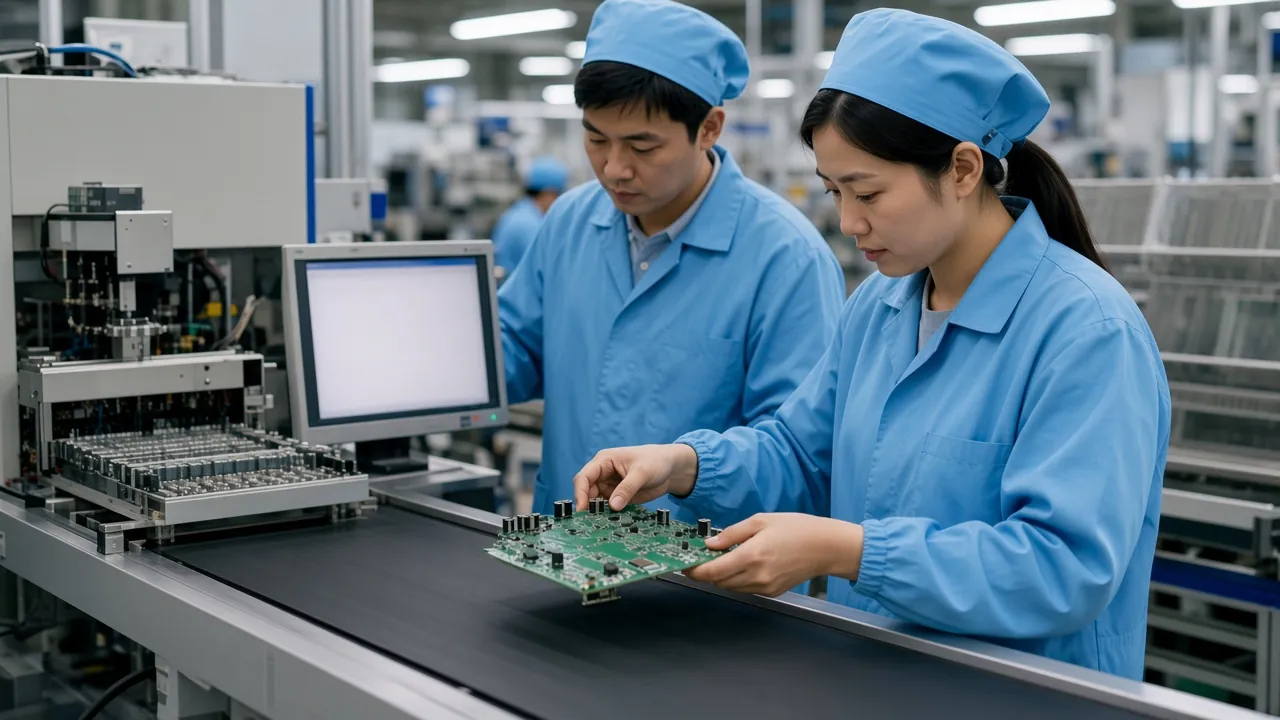
Consumer AI / AI Voice Recorder / Prototype PCBA + SMT + Testing
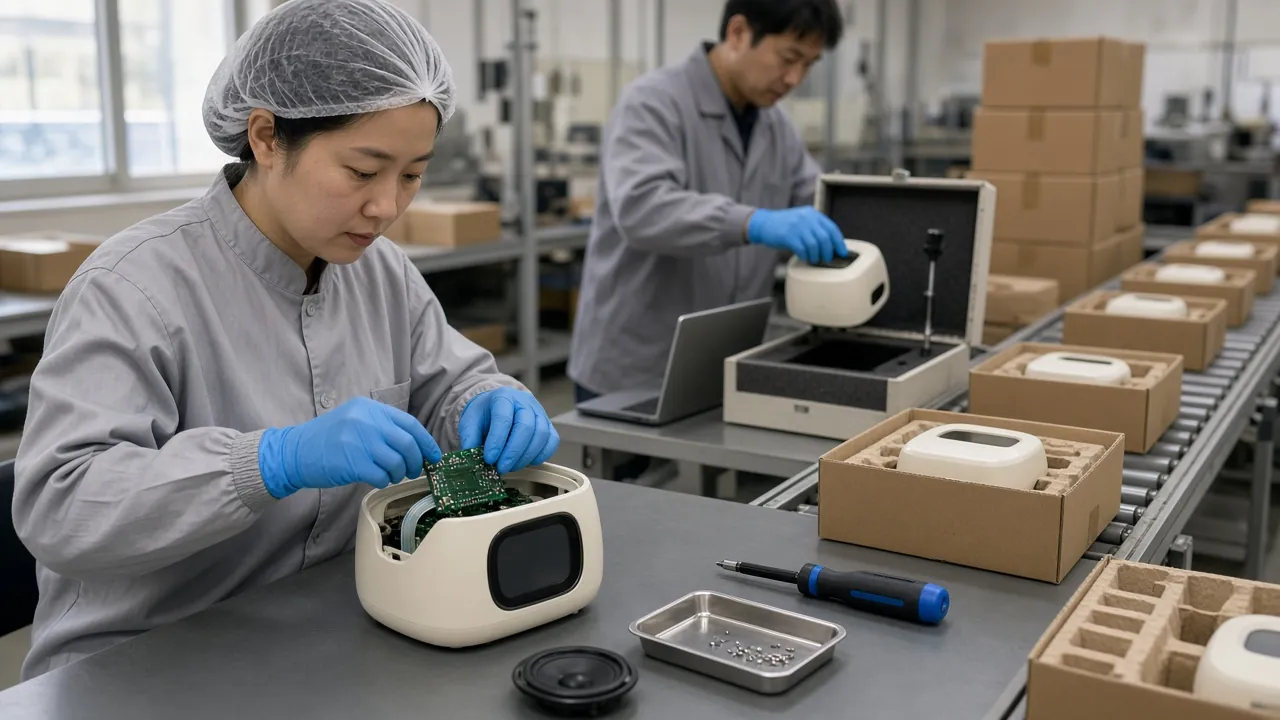
Consumer AI / Desktop AI Companion / Box Build Assembly + PCBA + Injection Molding
Let's discuss how we can help your project succeed with our end-to-end manufacturing capabilities.