On February 2, 2026, the FDA's Quality Management System Regulation (QMSR) officially replaced the decades-old Quality System Regulation (QSR) under 21 CFR Part 820. This is the most significant regulatory overhaul for medical device manufacturing in over 25 years. For companies relying on PCB assembly—whether for implantable pacemakers, diagnostic imaging systems, or wearable glucose monitors—QMSR fundamentally changes how quality is documented, traced, and verified throughout the entire PCBA lifecycle. The new regulation aligns FDA requirements with ISO 13485:2016, adding mandatory risk management per ISO 14971 and tightening supply chain accountability for contract manufacturers.
What Is QMSR and Why It Matters for PCBA
The Quality Management System Regulation (QMSR) is the FDA's modernized framework that replaces 21 CFR Part 820, which had governed medical device manufacturing since 1996. While the old QSR was effective for its era, it diverged significantly from international standards, creating redundant compliance burdens for manufacturers operating globally.
QMSR bridges this gap by incorporating ISO 13485:2016 by reference, making it the first time the FDA has formally embedded an international standard into its device quality framework. For PCBA operations, this means your quality management system must now satisfy both FDA expectations and the specific requirements of ISO 13485 clauses 7.4 (Purchasing), 7.5 (Production), and 7.6 (Control of Monitoring and Measuring Equipment).
ISO 13485 Alignment
QMSR incorporates ISO 13485:2016 by reference, eliminating dual-standard compliance costs estimated at $50K-$200K annually for mid-size manufacturers.
Risk-Based Approach
ISO 14971 risk management is now mandatory, requiring documented risk analysis at every PCBA process step—from stencil design to conformal coating.
Supply Chain Accountability
Contract manufacturers face direct FDA scrutiny under QMSR, with explicit requirements for supplier qualification and incoming material verification.
Process Validation
SMT processes including reflow profiling, solder paste inspection, and AOI must demonstrate statistical process control with documented capability indices.
Key QMSR Changes Impacting PCB Assembly
Understanding the specific regulatory shifts helps you prioritize compliance efforts where they matter most for PCBA operations.
Critical QMSR vs. QSR Differences for PCBA
The transition from QSR to QMSR introduces several material changes for PCB assembly operations:
- Design Transfer: QMSR explicitly requires documented design transfer protocols ensuring PCBA specifications are accurately translated into production processes
- Traceability Depth: Component-level traceability must extend from incoming inspection through final assembly, linking lot codes to specific production batches
- Software Validation: Any software used in PCBA processes—pick-and-place programming, AOI algorithms, X-ray inspection systems—requires validated status under QMSR
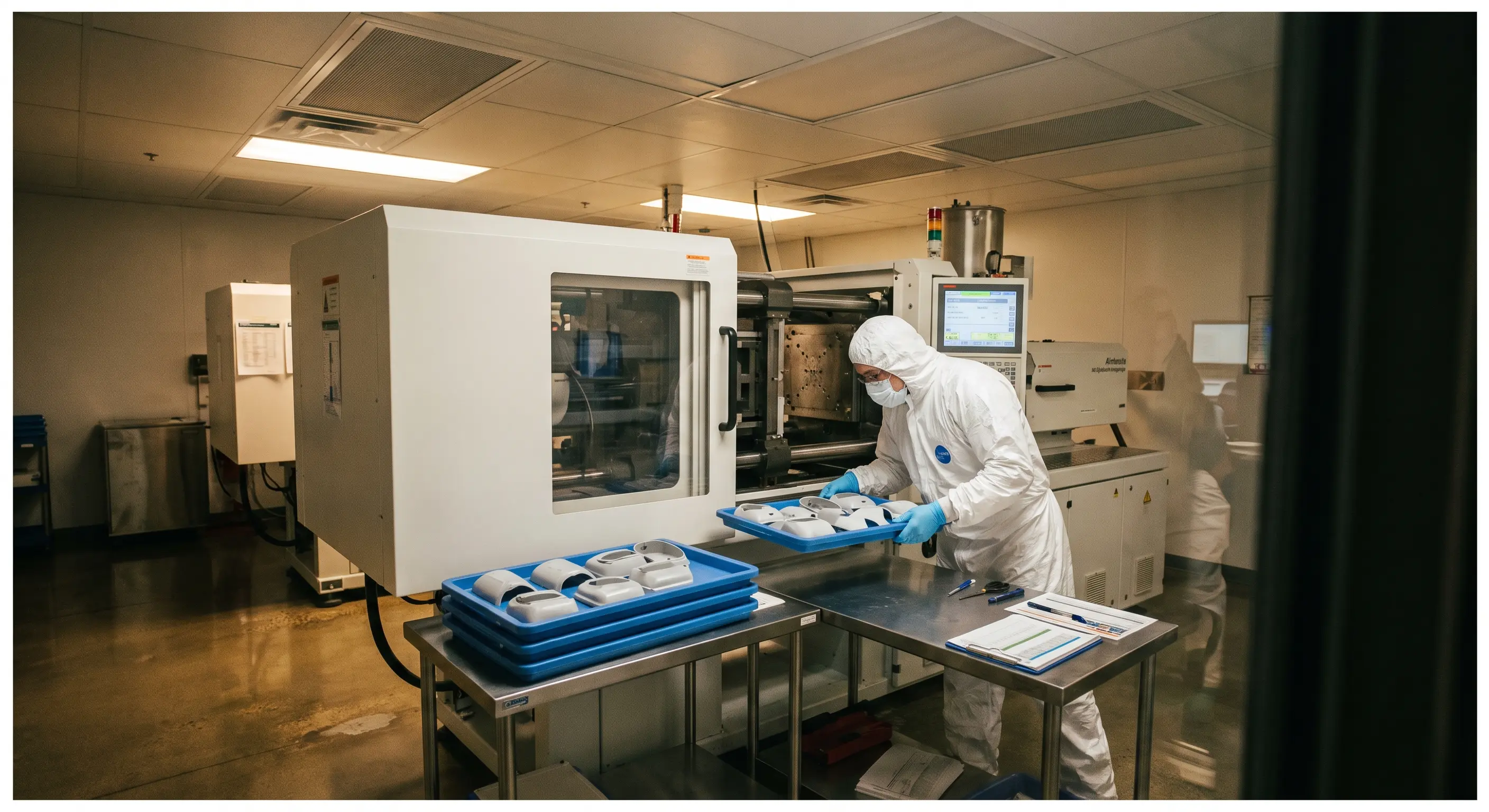
- Environmental Controls: Clean room requirements for medical PCBA are now directly referenced through ISO 13485 Clause 6.4, requiring documented contamination control programs
PCB Assembly Process Compliance Requirements
Every stage of your PCBA workflow falls under QMSR's expanded scope. Here's what needs to change and what needs documentation:
Solder Paste Application and Stencil Management
Under QMSR, solder paste processes require validated parameters including paste type, stencil thickness, aperture design, and print speed. ISO 13485 Clause 7.5.6 requires validation of processes where the resulting output cannot be verified by subsequent monitoring—solder paste deposition is a prime example. Your process validation must include:
- Solder Paste Qualification: Document incoming inspection per IPC J-STD-004, including paste activity testing and viscosity measurement for each lot received
- Stencil Life Management: Maintain stencil usage logs tracking paste transfer efficiency degradation over time, with defined replacement criteria
- Reflow Profile Validation: Thermal profiles must be validated against solder paste manufacturer specifications using thermocouple data from production-representative boards
- SPI Correlation Studies: Establish statistical correlation between solder paste inspection results and end-of-line solder joint quality to demonstrate process capability
Component Placement and Traceability
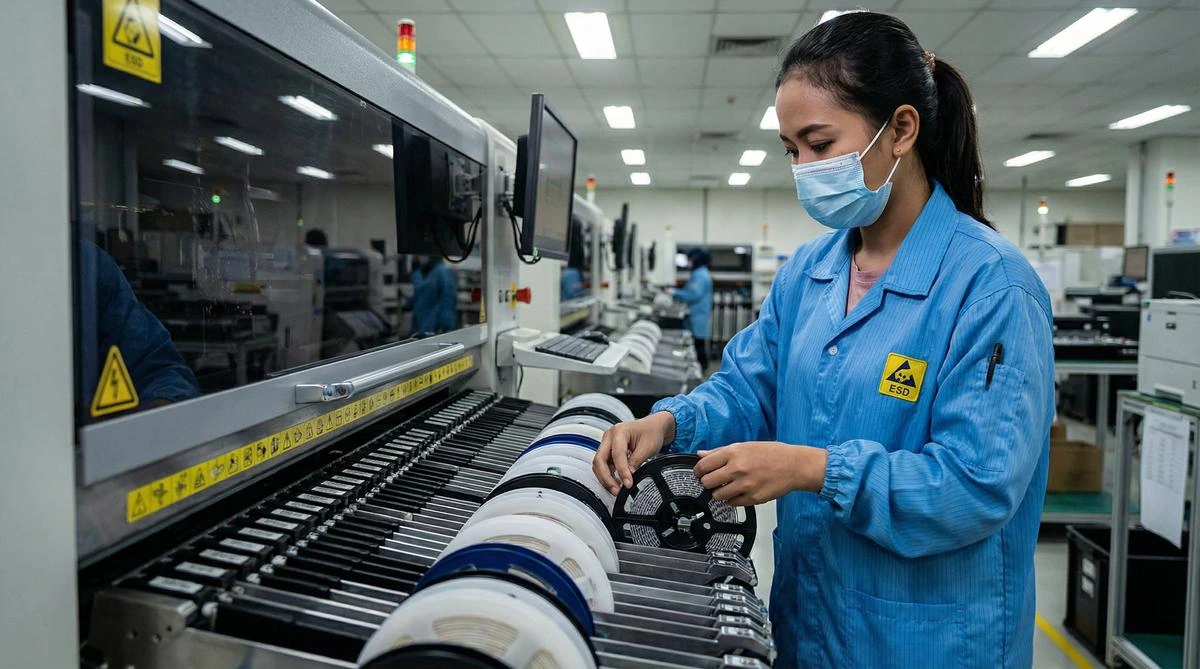
Medical device PCB assembly demands a traceability chain that satisfies both QMSR and ISO 13485 Clause 7.5.9. This means every component on every board must be traceable to its incoming lot, placement machine, operator, and production date.
Component verification per IPC-A-610 Class 3 standards with documented acceptance criteria for moisture sensitivity levels, solderability testing, and dimensional conformance.
Machine capability studies with Cpk ≥ 1.33 for placement accuracy must be documented and maintained, with requalification triggered by machine maintenance or component format changes.
Full genealogy from component lot to finished board maintained in electronic records, enabling targeted recalls within hours rather than weeks.
ANSI/ESD S20.20 program documentation required under QMSR's process environment controls, with periodic audit records for all ESD-sensitive workstations.
ISO 13485 PCBA Implementation Roadmap
Transitioning your PCBA operation to QMSR compliance requires a structured approach. Based on successful transitions we've supported across medical device manufacturers, here is a proven roadmap:
Gap Analysis
Compare current QSR processes against ISO 13485 requirements. Identify documentation gaps in purchasing controls, process validation, and risk management within 4-6 weeks.
Documentation Update
Revise quality manual, SOPs, and work instructions to reference ISO 13485 clauses. Ensure risk management per ISO 14971 is embedded in every PCBA process document.
Process Validation
Execute IQ/OQ/PQ protocols for all SMT lines, reflow ovens, and inspection equipment. Target Cpk ≥ 1.33 for critical-to-quality solder joint parameters.
Supplier Qualification
Evaluate and requalify all PCBA supply chain partners against ISO 13485 criteria, including laminate suppliers, solder paste vendors, and component distributors.
Training and Competence
Train all production staff on QMSR requirements, ISO 13485 awareness, and updated procedures. Document competence assessments for IPC-A-610 and J-STD-001 qualifications.
Internal Audit
Conduct full QMSR-aligned internal audit covering design transfer, production controls, traceability, and corrective action effectiveness before FDA inspection readiness.
QMSR Inspection Readiness for PCBA Facilities
FDA inspections under QMSR will follow a risk-based methodology. For PCBA facilities, inspectors will focus on areas where ISO 13485 requirements exceed the old QSR expectations.
Top 5 FDA Inspection Focus Areas for Medical PCBA
Based on FDA guidance documents and industry preparation, expect inspectors to prioritize:
- Risk Management Files: Complete ISO 14971 risk analysis for each PCBA process, including hazard identification, risk estimation, and control verification
- Process Validation Records: IQ/OQ/PQ documentation for reflow, wave solder, selective solder, and conformal coating processes with statistical evidence
- Traceability Systems: Demonstration of end-to-end component and process traceability with electronic retrieval capability
- Supplier Management: Approved supplier lists, qualification records, and incoming inspection data for all PCBA materials
- Corrective Action Effectiveness: CAPA records demonstrating root cause analysis methodology and verification of corrective action implementation
Choosing a QMSR-Ready PCBA Partner
Not all PCB assembly providers are prepared for QMSR. Selecting a manufacturing partner who already maintains ISO 13485 certification and has experience with FDA-regulated production can save months of qualification effort and significantly reduce compliance risk.
Key qualifications to evaluate include:
- ISO 13485 Certification: Current certification with scope covering PCB assembly for medical devices, verified through third-party audit reports
- FDA Registration: Active establishment registration and device listing, demonstrating familiarity with FDA regulatory expectations
- Medical Device History: Documented experience assembling Class II and Class III medical PCBs with traceable production records
- Clean Room Capability: ISO Class 7 or better controlled environment for medical PCBA with documented environmental monitoring program
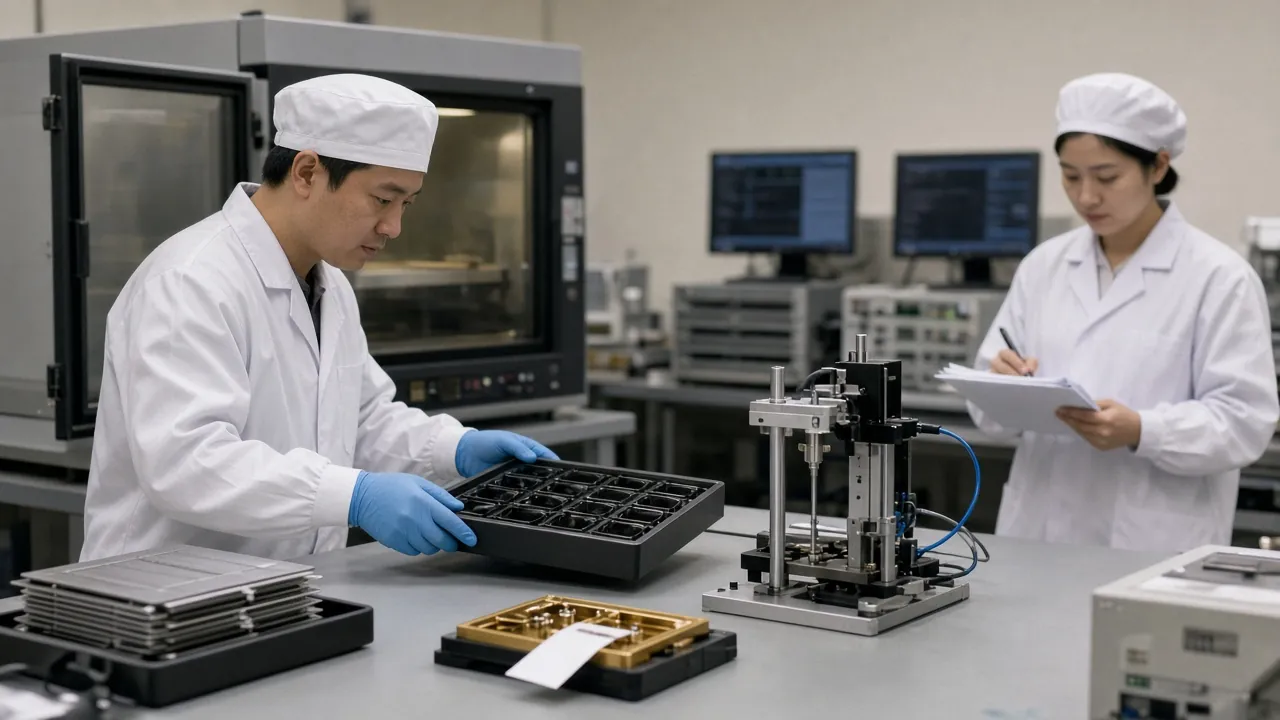
- Inspection Infrastructure: In-house AOI, X-ray, and functional test capabilities with validated inspection protocols and documented false-accept and false-reject rates
At Illuminious, our medical PCBA capabilities are built on ISO 13485-certified processes with full component traceability, risk-based quality controls aligned to ISO 14971, and experience supporting FDA submissions from prototype through production. We understand that QMSR compliance isn't just about documentation—it's about embedding quality into every solder joint, every inspection step, and every production decision.
QMSR Is Here—Is Your PCBA Operation Ready?
The FDA's Quality Management System Regulation represents both a challenge and an opportunity. Companies that proactively align their PCB assembly processes with QMSR and ISO 13485 will gain competitive advantages: faster regulatory approvals, fewer inspection findings, and stronger partnerships with medical device OEMs who increasingly demand QMSR-ready suppliers.
Don't wait for your next FDA inspection to discover compliance gaps. Contact Illuminious today to discuss how our QMSR-ready PCBA services can accelerate your medical device manufacturing while ensuring full regulatory compliance.