Medical device manufacturing is one of the most heavily regulated industries in the world. With patient safety on the line, regulatory compliance isn't just a legal requirement—it's a moral imperative. Understanding FDA requirements, quality standards, and manufacturing protocols is essential for successfully bringing medical devices to market.
Why Regulatory Compliance Matters
Non-compliance can result in FDA warning letters, product recalls, consent decrees, and criminal prosecution. In 2024, the FDA issued over 4,000 warning letters to medical device manufacturers, with the average cost of a recall exceeding $10 million. Proper compliance from day one is not optional.
FDA Device Classification 🏛️
The FDA classifies medical devices into three categories based on risk level and regulatory controls required:
Class I - Low Risk
General controls apply. Examples include tongue depressors, bandages, and non-powered wheelchairs. Most are exempt from premarket notification.
Class II - Moderate Risk
510(k) clearance typically required. Examples include powered wheelchairs, infusion pumps, and surgical drapes. Special controls apply.
Class III - High Risk
Premarket Approval (PMA) required. Examples include heart valves, implanted pacemakers, and high-risk diagnostic devices.
De Novo Pathway
For novel devices of low to moderate risk without predicate. Creates new device classification for future submissions.
The 510(k) Clearance Process 📋
Most Class II devices require 510(k) clearance, demonstrating substantial equivalence to a legally marketed predicate device. A complete submission includes:
- Device description: Detailed specifications, materials, and intended use statement
- Predicate comparison: Demonstration of substantial equivalence to the identified predicate device
- Performance testing: Bench testing, software validation, electrical safety, and EMC testing results
- Biocompatibility: ISO 10993 testing for devices with patient contact (if applicable)
- Sterilization validation: For sterile devices, validation of sterilization process and shelf-life testing
- Clinical data: May be required when nonclinical testing is insufficient to demonstrate equivalence
Timeline Expectations
FDA review of 510(k) submissions typically takes 90-180 days, though complex devices may take longer. Preparation time—including testing and documentation—can add 6-12 months before submission.
ISO 13485 Quality Management 🎯
This international standard specifies requirements for Quality Management Systems (QMS) in medical device manufacturing. Certification is widely considered essential for credible medical device manufacturers:
Design planning, input, output, review, verification, validation, and transfer must be documented and controlled throughout development.
ISO 14971 compliance requires systematic risk analysis, evaluation, control, and monitoring throughout the product lifecycle.
Complete documentation linking requirements to design, manufacturing, and testing. Design History File (DHF) maintenance is critical.
Rigorous supplier qualification and ongoing monitoring for materials and components that affect device safety and performance.
Essential Manufacturing Partner Criteria ✅
For medical devices, your manufacturing partner must meet stringent requirements:
ISO 13485 Certified
Current certification with scope covering your device type and manufacturing processes.
FDA Registered
Active FDA establishment registration and device listing for applicable operations.
Device Class Experience
Proven track record manufacturing devices in your specific risk classification.
Robust QMS
Documented quality systems with CAPA processes, internal audits, and management review.
DHF Support
Capability to maintain Design History File and support regulatory submissions.
Cleanroom Capability
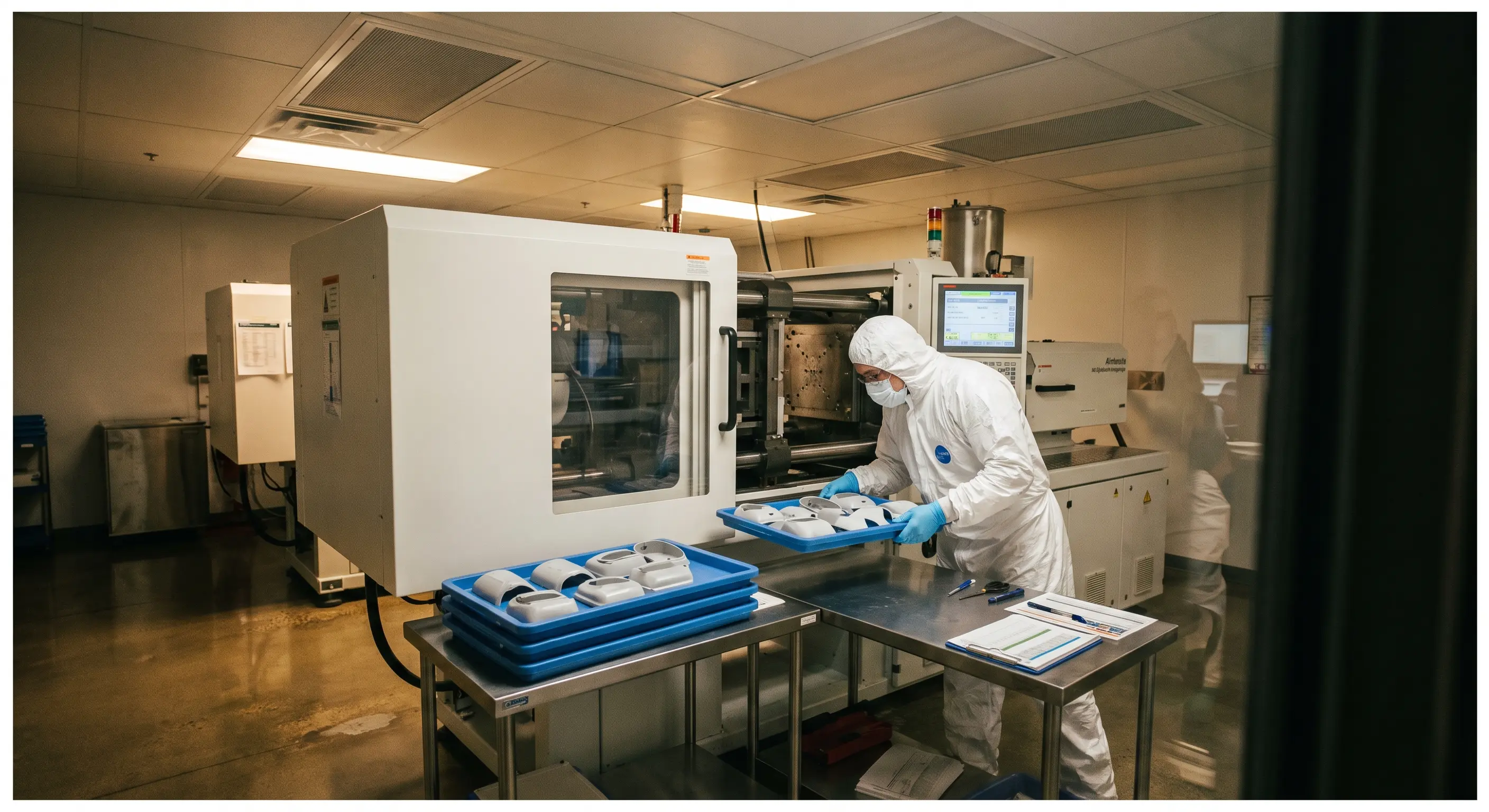
Appropriate cleanroom classifications (ISO 7/8) for sterile and critical devices.
Regulatory Strategy Best Practices 🎓
- Engage FDA early: Pre-submission meetings clarify requirements and reduce surprises during review
- Choose predicate carefully: The right predicate device simplifies the 510(k) pathway significantly
- Document everything: If it wasn't documented, it didn't happen. Comprehensive records are your defense
- Plan for post-market: MDR (Medical Device Reporting), complaint handling, and vigilance systems
- Consider international: CE marking for EU, Health Canada, and other markets in your strategy
- Maintain vigilance: Continuous monitoring of regulatory changes and guidance documents
The Path to Market Success
Successfully navigating FDA compliance requires specialized expertise, meticulous documentation, and unwavering commitment to quality. The right manufacturing partner doesn't just build your device—they help ensure it meets the rigorous standards that protect patient safety and enable market access.
Invest in compliance early. The cost of regulatory shortcuts far exceeds the investment in proper quality systems. Partner with experienced professionals who understand the unique challenges of medical device manufacturing.