NPI engineering is the work between a design that runs on your bench and a product a factory can build the same way thousands of times. New product introduction moves through a DFM report and three engineering builds, EVT, DVT and PVT, each closed by a gate with written exit criteria. This guide walks through the hardware NPI process stage by stage: what each build must prove, what you should hold in your hands at the end of it, and the questions to ask any NPI engineering team before you pay for tooling.
What NPI engineering covers
The new product introduction process connects product design to repeatable production. In practice it covers the DFM review, the EVT, DVT and PVT builds, test development such as fixtures and firmware bring-up, BOM and supply readiness, tooling, and the golden sample that every production batch is later held to. Our NPI engineering service page lists what that work includes at each stage.
Cost is set early
The Boothroyd Dewhurst DFMA work, summarized by Machine Design, puts at least 70% of final product cost as fixed at the concept stage. A DFM report is cheapest before the first build.
Schedules slip without gates
Ethan Mollick's study of Kickstarter projects in the Design and Technology categories, published in the Journal of Business Venturing (2014), found that over 75% delivered later than expected.
Fixes get dearer each stage
The Instrumental build handbook describes EVT as the least expensive time to fix an issue and mass production as the most expensive. Each gate exists to move discoveries earlier.
Yield is designed in
Yield comes from test stations, fixtures and limits that are in place before the build, so the numbers mean something. Final inspection alone only tells you what already went wrong.
The five NPI stages, gate by gate
EVT, DVT and PVT follow a stage-gate approach: every phase has deliverables and exit criteria, and the next build starts only when the gate is closed. Knowing the stages helps you plan cash, staff and investor milestones without guessing.
1. Concept, feasibility and the first DFM report
Prove the product is buildable and worth building, and get manufacturing findings while the design is still cheap to change.
2. EVT, engineering validation test
Prove the design works in its real form factor with production-intent materials and processes.
3. DVT, design validation test
Prove one frozen design passes validation on hard tooling and production procedures.
4. PVT, production validation test
Prove the line hits its yield at production speed with production operators.
5. Mass production
Hold every batch to the signed golden sample while you ramp and improve.
Stage 1: Concept, feasibility and the first DFM report
Before any production-intent hardware is built, confirm that the concept is technically and commercially viable:
- Market validation: confirm customer needs, target price and volume projections.
- Technical feasibility: assess technology risk, component availability and the radio, battery and thermal constraints of your form factor.
- Manufacturing strategy: decide what you build yourself and which NPI engineering team will run the builds.
- Initial BOM estimate: a rough cost model at your target volumes, with long-lead and single-source parts flagged.
- Certification path: list the certifications your markets require, such as FCC, CE or UL. You or a test lab you choose will make those submissions, so plan for them from the start.
- First DFM report: findings sorted by when each must be fixed. Our DFM guide for hardware startups covers what a good report contains.
Product requirements document defining features, performance targets and constraints, a risk list with the top technical and business risks, and the DFM findings report with changed files.
Go or no-go decision based on feasibility, and a budget approved for the EVT build.
Stage 2: EVT, engineering validation test
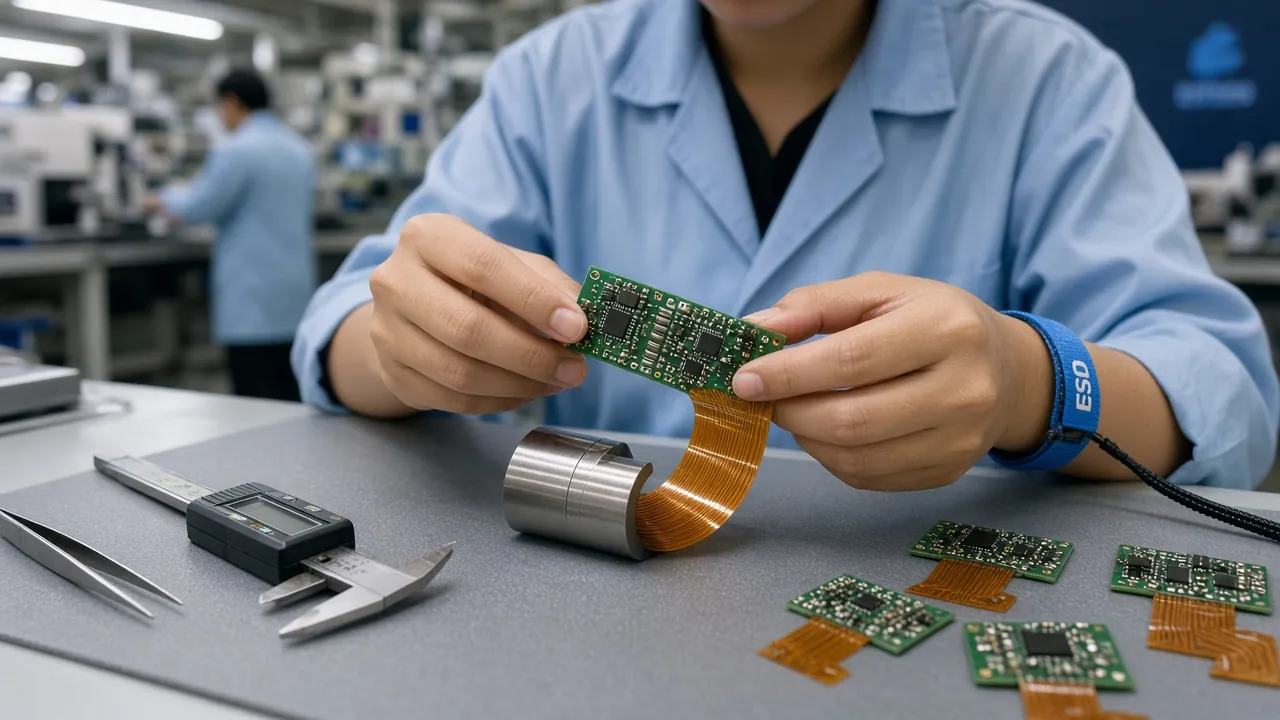
Instrumental defines EVT as the first build that combines looks-like and works-like into one form factor, using production-intent materials and processes, with soft tools allowed. Its handbook is blunt about the line: if you are still using 3D printed parts, it is not EVT.
What EVT must prove
The production-intent design works, and you have found every issue that must be fixed before DVT.
Build size
Instrumental cites 100 to 1,000 units as typical for EVT. Startups often run smaller builds; size yours by what the gate must prove, including units for reliability tests.
Key activities
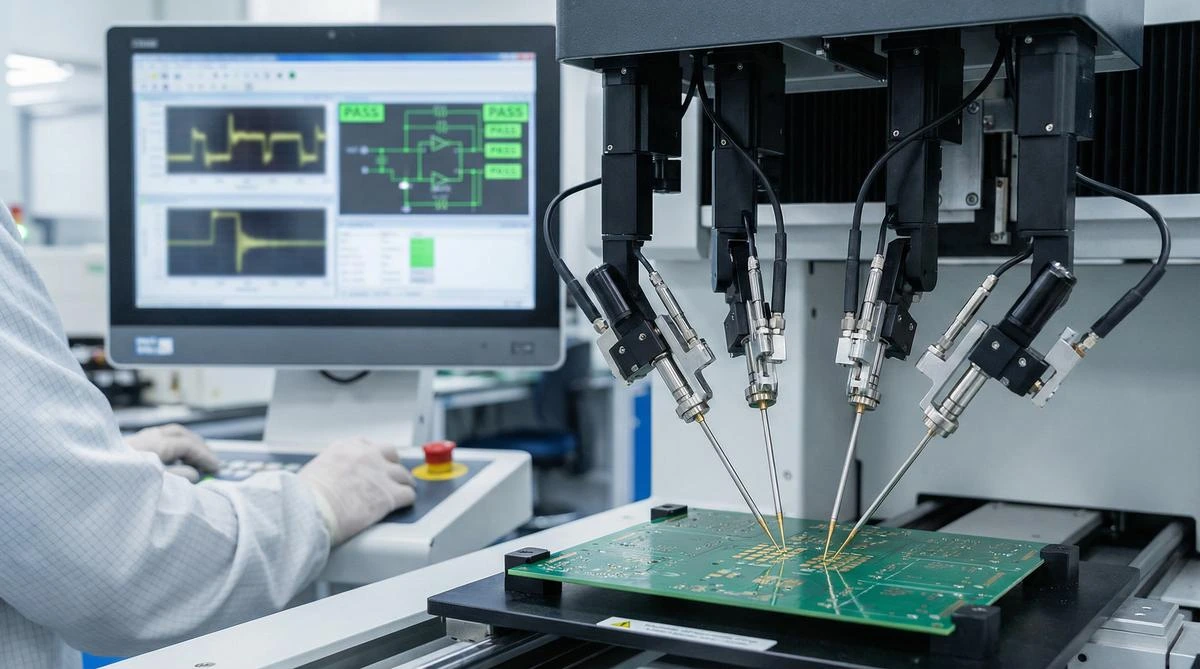
Firmware bring-up, functional testing on a fixture such as a pogo-pin bed, early environmental tests, an EMC/RF pre-scan for FCC risk, and a second DFM pass.
Exit criteria
Every function works on production-intent parts, every failure has a root cause, and the fixes are in the files for DVT.
Expect fallout. Instrumental notes that, depending on product complexity, up to about 40% of EVT units may fail for functional or performance reasons and need analysis. That is the purpose of the build, as long as each failure is understood.
EVT deliverables checklist
- EVT units with test results: functional and early environmental data for every unit.
- Updated schematics and layout: the next revision, reflecting what EVT found.
- Complete BOM: every part with a manufacturer part number and preliminary costing.
- DFM findings: the review comments on the EVT design, with owners and due stages.
- Pre-scan results: early EMC/EMI data that shows compliance risk while the layout can still change.
Stage 3: DVT, design validation test
DVT uses production-intent processes, materials and hard tools to show that one design can be validated and built consistently:
- One configuration: Instrumental puts typical DVT builds at 300 to 2,000 units of a single production-worthy design. If you are running side configurations of a few units, its handbook suggests calling the build EVT2.
- Hard tooling: injection molds and production fixtures. Repeat the DFM review before DVT and again before tooling is cut, because a mold change costs far more than a file change.
- Full validation: environmental and reliability testing, plus EMC/RF pre-scans that find problems while the design can still move.
- Certification units: DVT units and documents go to your test lab. You or the lab you choose make the FCC, CE or UL submission.
- Supply chain readiness: confirm availability and lead times for every part at your launch volume.
All design changes are locked at the end of DVT. Any later change goes through formal change control with an impact assessment.
Assembly procedures and work instructions are written, and test fixtures and quality checks are validated.
First-pass yield is tracked at every station. Agree the yield target for your product before the build, and do not start PVT until fallout causes have corrective actions you trust.
Stage 4: PVT, production validation test
PVT validates the full manufacturing system at production rate. Instrumental describes it as the last build, with units intended for sale if they pass every test station, and typical quantities of 1,000 to 20,000.
Production line
Build on the real line with production operators, procedures and test stations.
Build size
Large enough to measure yield and cycle time at the target rate, with units that can ship.
Key metrics
Yield, cycle time, defect rates and unit cost against the targets you agreed at DVT.
Exit criteria
Yield at production speed meets target, the golden sample is signed, and the line is ready to ramp.
PVT success criteria
- First-pass yield: at or above the agreed target at the end of the line.
- Production rate: the target units per hour or per day.
- Cost: actual unit cost compared with the cost model, with any gap explained.
- Certifications: granted for each market before you ship into it.
- Golden sample: the reference unit signed off, with the record both sides keep.
- Supply chain: every component qualified and available at launch volume.
Stage 5: Mass production
Mass production is where volume, cost and quality are held steady while you improve:
- Ramp to volume: scale output to the demand forecast.
- Batch comparison: each production batch is compared with the golden sample, with inspection and test results.
- Change control: a design change is re-measured against the old reference and the golden sample is re-signed.
- Statistical process control: track key measurements so drift shows up before defects do.
- Component lifecycle: watch for end-of-life notices and qualify alternates early.
- Field feedback: track returns and feed root causes into the next revision.
Common NPI pitfalls and how to avoid them
The same failures show up again and again in hardware NPI programs:
Rushing through stages
Skipping DVT to save time usually moves the failures into PVT, where tooling and parts are already paid for.
Incomplete BOM management
Missing part numbers, wrong quantities and single-source parts stall builds. Close the BOM before DVT.
Ignoring DFM findings
The people who build the product see issues designers miss. Unresolved findings return as yield problems at PVT.
Leaving certification late
Lab schedules and remediation rounds are outside your control. Run pre-scans in EVT and DVT and book the lab early.
Poor change control
Untracked changes after DVT break the link between test data and the product. Use a formal engineering change order.
No golden sample
Without a signed reference unit, quality standards drift batch by batch. Sign one before the ramp.
Questions to ask any NPI engineering team
Whoever runs your builds, the answers to these questions tell you how the stages will actually be run:
- DFM: who writes the DFM report, and is it repeated before DVT and before tooling?
- Presence at builds: will the engineers who know your design be on the line for EVT, DVT and PVT?
- Gate reports: what written report closes each stage, and what files change hands?
- Golden sample: how is the reference unit signed off, and what does the record list?
- Quality system: ISO 9001 as a baseline; ISO 13485 for medical devices and IATF 16949 for automotive parts.
- Pricing: are engineering NRE, tooling and unit costs broken out line by line?
- IP: is an NDA signed before you share files, and who owns the design files and tooling?
Red flags to watch for
- Unrealistic timelines: a two-week promise for a complex program with new tooling.
- No questions asked: a good team challenges your design and asks for test limits.
- Vague pricing: NRE, tooling and unit costs blended into one number.
- Thin documentation: sloppy paperwork early usually means sloppy process later.
If you plan to visit a factory before you commit, read our notes on NDA, IP and DFM before a Shenzhen factory visit.
Planning time and budget for NPI
Every program differs, so plan around the drivers rather than a generic calendar, and ask for each item in writing:
EVT drivers
PCB fabrication, component lead times, soft tooling and fixture build.
DVT drivers
Hard tooling, usually the longest single item, plus validation testing and lab slots.
PVT drivers
Line setup, operator training, test station capacity and the parts for a sellable build.
Budget drivers
Tooling is often the largest line, then engineering NRE, build costs and certification lab fees.
Budget for at least one extra design spin. Most programs need one, and a plan without it turns every finding into a crisis.
How Illuminious runs NPI engineering
Illuminious is a U.S. NPI engineering company. Engineered in San Francisco. Prototype builds, DFM and mass production in our own factory in Shenzhen. The Illuminious engineering team runs the stages above like this:
- NDA first: we sign your NDA before the first call, and project files live in private project storage.
- DFM report: findings sorted by when each must be fixed: before the demo build, before EVT or before production. The DFM review is repeated before DVT and before tooling. See how our DFM review works.
- Prototype builds: 72-hour prototype builds via the portal through rapid prototyping.
- Engineers at every build: Illuminious engineers attend the EVT, DVT and PVT builds in person in Shenzhen, and each stage gate ends with a written report.
- Certification path: we run EMC/RF pre-scans in DVT and build DVT units for your test lab; you or the lab you choose make the submission.
- Golden sample: the sign-off record lists the design revision, BOM, firmware release, measured values and cosmetic limits, and production batches are compared against it through testing and inspection.
- Into production: the same engineers carry the project into the Shenzhen factory, which runs 8 automated SMT lines and holds ISO 9001, ISO 13485, IATF 16949, AS9100 and ISO 14001. Read more about NPI transfer or the engineering overview.
Want to see an NPI line before you commit? The Shenzhen Founder Tour, Dec 6–11, 2026, is a licensed Future Factory program, hosted by Illuminious, for up to 20 founders. Details are on the startups page, and our comparison of a factory tour versus going alone covers the trade-offs.
Key takeaways for NPI success
- Respect the gates: each build has a job, and skipping one moves its failures downstream.
- Write it down: deliverables and exit criteria agreed in advance prevent arguments later.
- Start DFM early and repeat it: before EVT, before DVT and before tooling.
- Make EVT prove something: production-intent parts, test fixtures in place, every failure explained.
- Sign a golden sample: it is the reference that keeps mass production honest.
Talk to an engineer before your next build
Whether you are preparing a first DFM report or deciding if your design is ready for DVT tooling, a short review now costs far less than a mold change later. Send your files, BOM and test plan, and the Illuminious engineering team will tell you what each gate needs to prove.
Instant price for configurable services · Free engineering review in 1–2 business days · Official quote within 24 hours