PCBA testing is the critical gatekeeper between prototype and production—catching defects before they reach your customers. In electronics manufacturing, testing isn't optional; it's the difference between products that perform reliably in the field and costly recalls that damage your brand. This comprehensive guide walks you through the four core PCBA testing methods—ICT, Flying Probe, AOI, and Functional Testing—plus advanced techniques like X-Ray inspection, with actionable strategies to optimize your quality control process.
Why PCBA Testing Matters for Product Quality
Printed Circuit Board Assembly (PCBA) testing validates that every component is correctly placed, properly soldered, and functioning as designed. Skipping systematic testing might save time upfront, but the downstream costs are devastating:
1. Defect Detection Rates
Industry data shows that comprehensive PCBA testing catches 95-99% of defects before shipment, compared to 60-70% with visual inspection alone.
2. Cost of Quality
Fixing a defect in the field costs 10-100x more than catching it during manufacturing testing. Early detection protects margins.
3. Brand Protection
Product failures damage customer trust. Consistent quality through rigorous testing builds long-term brand reputation.
4. Faster Time-to-Market
Structured testing identifies issues early, preventing costly redesign cycles that delay launches by 8-12 weeks per iteration.
The True Cost of Skipping PCBA Testing
Industry research reveals the hidden costs of inadequate testing:
- Field failure rates: Products without systematic testing show 5-15% field failure rates vs. <1% with comprehensive testing
- Warranty costs: Each field failure costs 10-50x the original manufacturing cost in returns, replacements, and support
- Brand impact: One major quality incident can erase years of brand equity
- Regulatory risk: Safety-critical products (medical, automotive) face legal liability for inadequate testing
Four Core PCBA Testing Methods Explained
1. In-Circuit Testing (ICT) - The Bed of Nails
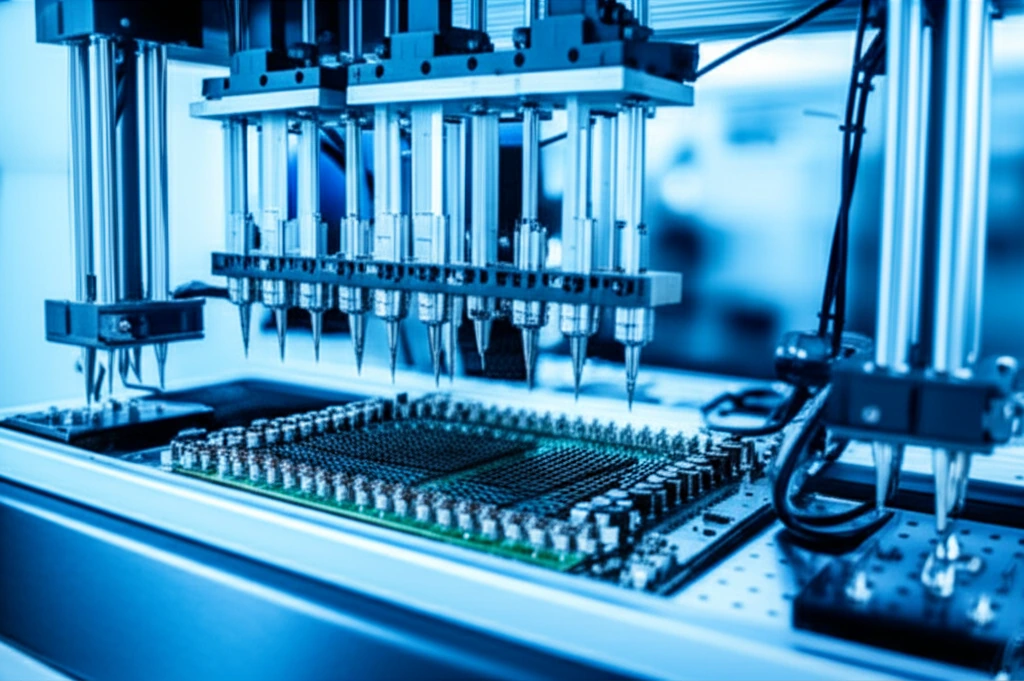
In-Circuit Testing (ICT) uses a custom fixture with spring-loaded probes ("bed of nails") to make electrical contact with specific test points on the PCBA.
Best For
High-volume production (1,000+ units). Fast, repeatable testing at low per-unit cost.
Test Speed
30-60 seconds per board. Highly automated.
Cost
High upfront ($5k-$20k fixture), low per-unit ($1-$5).
Coverage
85-95% node coverage.
2. Flying Probe Testing - Fixtureless Flexibility
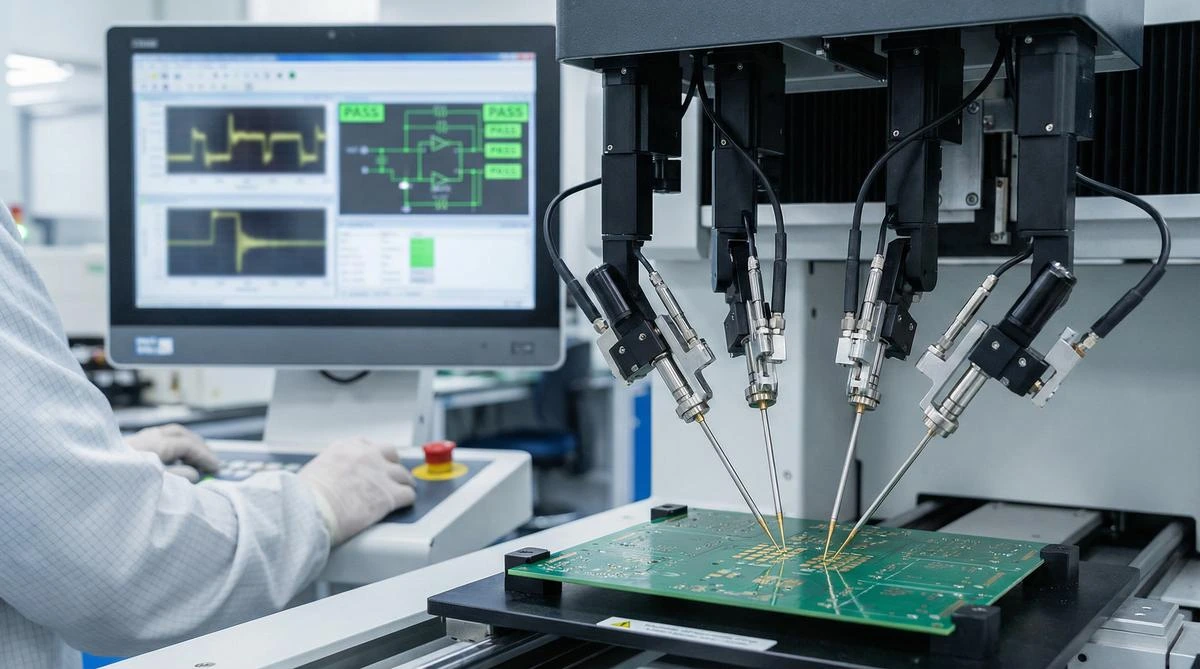
Flying Probe Testing uses movable robotic probes without a custom fixture.
Best For
Prototypes and low-volume (1-500 units).
Test Speed
5-15 minutes per board.
Cost
Low upfront, higher per-unit ($15-$50).
Coverage
80-90% node coverage.
3. Automated Optical Inspection (AOI) - Visual Quality
AOI uses cameras to inspect PCBAs for manufacturing defects.
Best For
Solder joint inspection and component placement.
Test Speed
20-40 seconds per board.
Cost
Moderate upfront, very low per-unit.
Coverage
Visual defects only.
4. Functional Testing (FCT) - Real-World Validation
FCT validates that the PCBA performs its intended function.
Best For
Final validation before shipment.
Test Speed
1-5 minutes per board.
Cost
Variable ($2k-$50k+), moderate per-unit.
Coverage
System-level validation.
How to Choose Your Testing Strategy
Flying Probe + Visual. Low NRE, fast turnaround.
Flying Probe + AOI + FCT. Balance cost and coverage.
AOI + FCT. Consider ICT if design stable.
ICT + AOI + FCT. Maximum coverage, lowest per-unit cost.
X-Ray Inspection (AXI)
Essential for BGA, fine-pitch components, and high-reliability applications.
Test Coverage vs. Defect Rate
Visual Only
3-5% defect escape.
AOI + FCT
0.5-1% defect escape.
ICT + AOI + FCT
0.1-0.3% defect escape.
Full Suite + X-Ray
<0.05% defect escape.
Looking Ahead
PCBA testing is a strategic investment in product quality and brand reputation.
The goal is optimal testing: the right methods to achieve your quality targets at the lowest total cost.
Ready to optimize your testing strategy? Learn about Illuminious NPI services.