A PVT build that passes does not mean the first mass-production lot is safe. PVT proves the line, the operators, the fixtures and the cycle time at production rate. It does not prove that supply holds at volume, that nobody will touch the design, or that lot two matches lot one. This guide covers what to lock after DVT, how to read first-pass yield by station, how material call-offs work, and how every batch is compared to the signed golden sample.
Who this is for
Founders, CTOs and hardware engineers at seed to Series B startups with wearables, IoT, wearable AI or physical-AI products who are about to close PVT and release the first mass production lot. The wording below is general guidance, not a promise of any lead time, yield figure or MOQ. Yield targets are always agreed per product.
What PVT proved and what it did not
Instrumental defines PVT as the build that verifies mass-production yields at mass-production speeds and qualifies the additional tools needed for early ramp. Typical quantities run from 1,000 to 20,000 units, and units that pass every test station are intended to be sold. That makes PVT the last build before mass production, and its exit data is the baseline for the first lot.
Proved at PVT
The line layout, operator training, work instructions, ICT and FCT fixtures, test limits and cycle time all ran at production rate.
Proved at PVT
Per-station yield and rework loops were measured on production tooling, with results stored against each serial number.
Not proved yet
Stable supply at mass-production volume. A single-sourced part or one low-yield vendor can still gate the whole lot.
Not proved yet
That the design stays untouched. Late changes are the most common reason PVT data stops matching the shipped product.
At Illuminious, PVT ends with the test plan and fixture definitions, and ICT and FCT stations run the production test firmware. Our engineers attend EVT, DVT and PVT in Shenzhen, so the people who set test limits see them run on the real line. For the firmware side of each build, read the firmware bring-up guide from EVT to PVT.
The freeze: what is locked and what an ECO costs
The Illuminious NPI engineering guide sets the rule: all design changes are locked at the end of DVT, and any later change goes through formal change control with an impact assessment. Untracked changes after DVT break the link between test data and the product. Public EMS guidance says the same thing in different words. Shenzhen Makers describes a freeze as the point where every change must be written down, checked for impact and approved before anyone acts. Amtech's rule of thumb is that a change after production release is the most expensive, because it triggers a revision update, re-kitting, process requalification and scrap or rework of work in progress.
- Locked at DVT: schematic, layout, BOM, firmware release baseline and fixture limits.
- Still allowed through an ECO: a fix for a safety, compliance or yield-limiting defect, or an approved alternate part.
- Never allowed informally: a silent BOM substitution, a firmware tweak outside the release process, or a limit change at one station.
A useful ECO names the affected part numbers and old and new revisions, the reason, the impact on tooling, firmware, certification, cost and schedule, the cut-in point by batch or serial number, and the disposition of old stock: use, rework or scrap. Both sides sign. The customer approves every change, and the factory executes it. Our NPI engineering process repeats DFM before DVT and again before tooling, so most late surprises are caught while they are still cheap.
Yield gates into the first lot
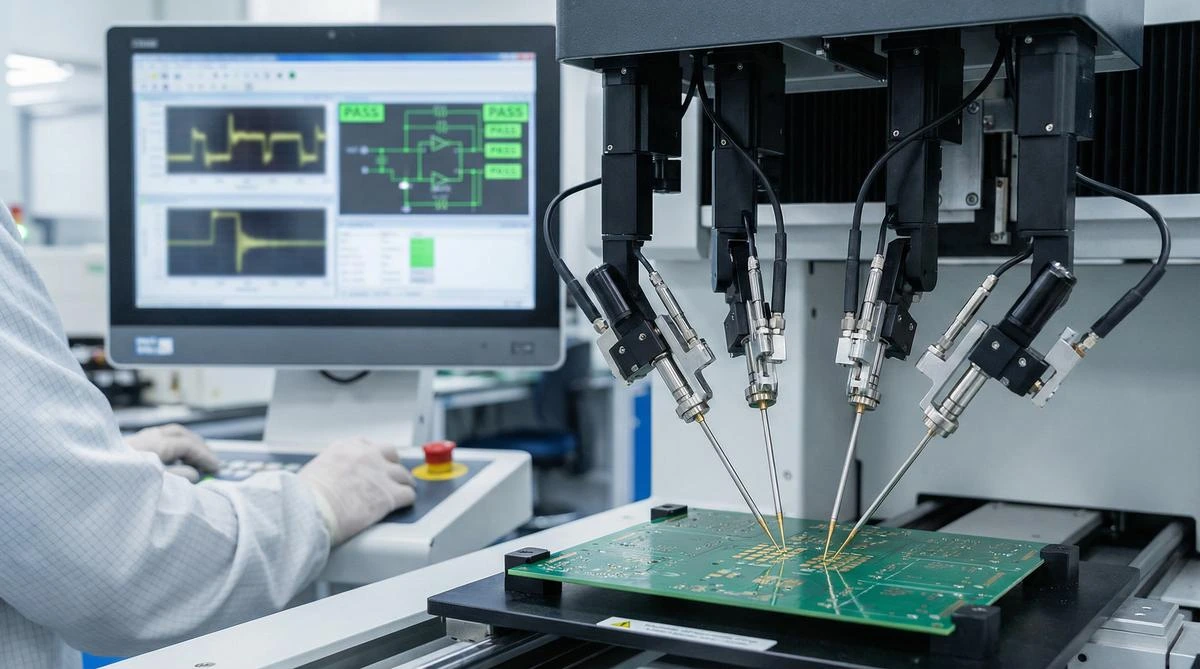
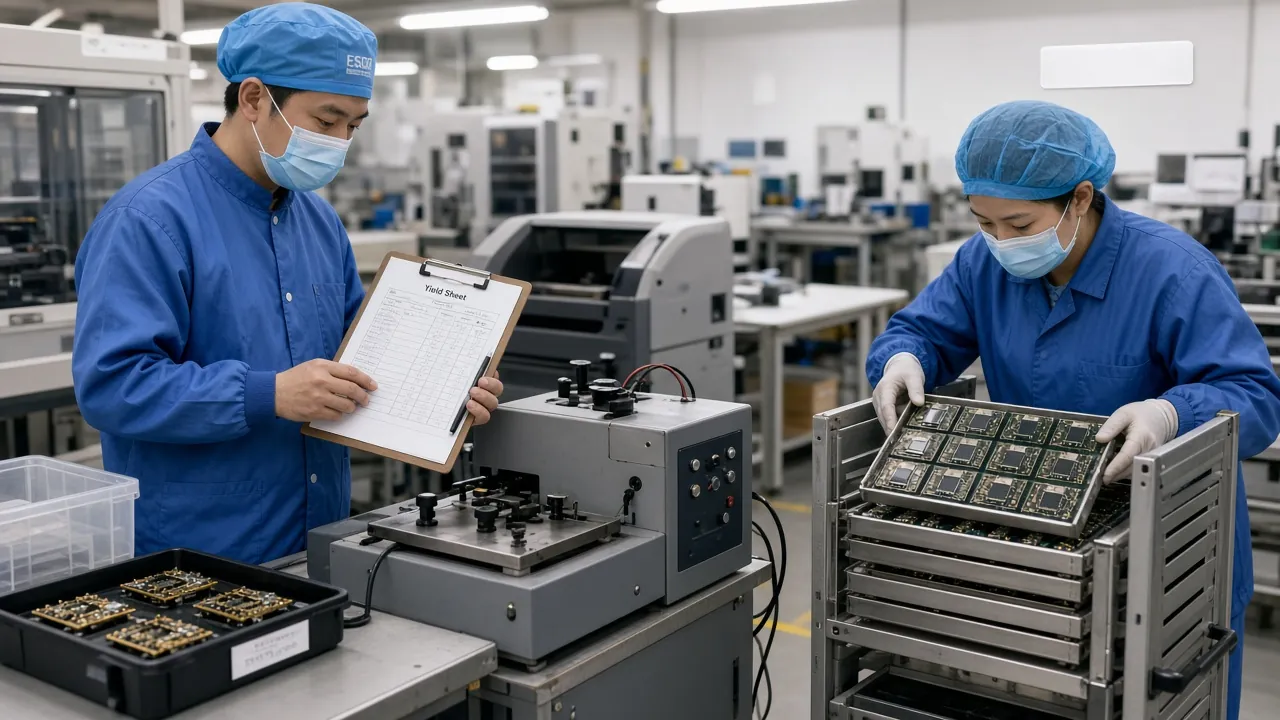
Read first-pass yield station by station, not as one number. A healthy line total can hide one station that is quietly absorbing rework. Every assembled board gets AOI, X-ray covers BGA and QFN packages, and the 30+ ICT and FCT test stations in the Shenzhen factory log results per serial number. That per-serial record is what lets you trace a field failure back to a station, a date and a firmware release.
Agree the target
Set the first-pass yield target per station with the factory before the lot is released. Use an agreed target, not a number copied from another product.
Watch the rework loop
Track what share of boards pass only after rework. High rework with a good final yield is a hidden cost and a reliability risk.
Stop or contain
Stop the line when a failure mode is unknown or growing. Continue under a written containment only when the cause is understood and every unit is retested.
Close with data
Review station yields, defect Pareto and cycle time together in a release review before the lot ships.
Boards that fail at SMT assembly or PCB assembly should be separated by defect type. Solder and placement defects point to the process; repeated functional failures point to the design or a part lot. Stations and limits are described on the testing and inspection page.
Material call-offs without silent BOM drift
PVT usually proves the line with a limited buy. The first mass-production lot needs a call-off plan: open purchase orders for long-lead parts, scheduled releases against them, and a known safety stock for parts that can allocate, such as memory and MCUs. Instrumental lists a single-sourced part becoming the supply gate as a classic ramp failure, so qualify second sources at DVT, not after a shortage.
- Open POs: place orders for long-lead parts before PVT closes, with releases matched to lot dates.
- Qualified alternates: approve second sources in the BOM at DVT, with test data for each.
- Allocation change: if an MCU or memory part is reallocated, raise an ECO with the new part, the cut-in serial range and fresh test evidence. Never swap on the line.
- Traceability: record the part lot against the board serial so a bad reel can be isolated.
The Illuminious team buys through more than 350 audited suppliers. Whether parts are consigned or kitted changes who carries allocation risk, which is covered in the guide to consigned vs kitted PCBA sourcing and on the component sourcing page.
Golden-sample comparison on every batch
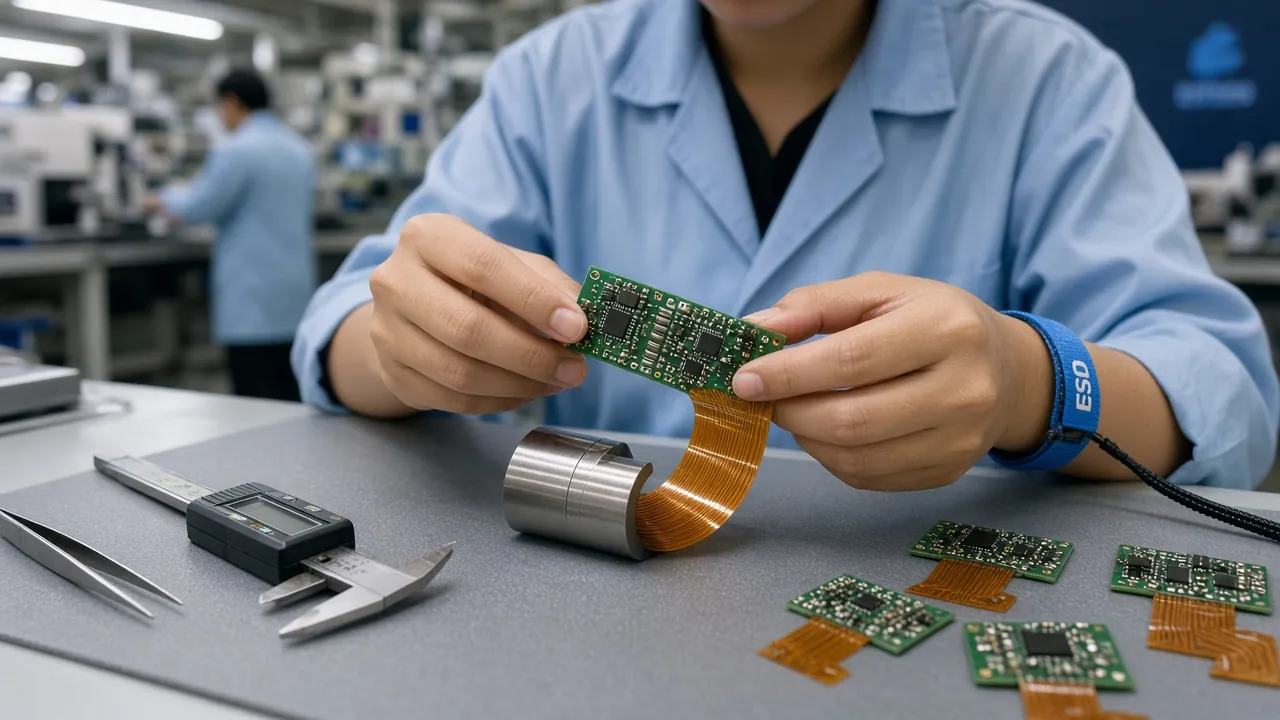
The golden sample is the reference unit signed after DVT and PVT, and production is held to it. The sign-off record lists the design revision, the BOM, the firmware release, the measured values and the cosmetic limits judged under set light at a set distance. Production results are compared batch by batch against it. If a design change is approved, it is re-measured against the old reference and re-signed, so the reference never drifts without a record.
Design revision
Matches the released files and the ECO log.
BOM
Matches the approved parts and alternates only.
Firmware release
Matches the signed image, with debug ports locked on shipping units.
Measured values
Fall inside the limits recorded at sign-off.
For the first lot, compare sample units from the start, middle and end of the run. Later batches follow the same routine, so a drift in a supplier lot, a stencil or an adhesive shows up as a measured difference rather than a customer complaint. Final packing and enclosure assembly follow the same record on the box build line.
The handover pack you keep
Before the first lot ships, the founder should hold the documents that make the line reproducible. See NPI transfer for how the handover works at Illuminious.
- Work instructions: station by station, current revision.
- Fixture definitions and test limits: the ICT and FCT files delivered at PVT.
- Serial-number data path: where per-serial test results and firmware releases are stored and who can read them.
- Golden-sample sign-off record: revision, BOM, firmware release and measured values.
- Tooling and fixture ownership: tooling the customer pays for belongs to the customer, and design files and IP are assigned to the customer.
Shenzhen Founder Tour
Want to see a PVT line and a golden-sample bench in person? The Shenzhen Founder Tour runs Dec 6–11, 2026. Early bird is USD 3,000 until Nov 15, then USD 3,500. It is a Future Factory program. Illuminious hosts the factory stop and handles applications and payments. Apply at /startups.
A first-lot readiness checklist
- Design: freeze confirmed, ECO log clean, no open informal changes.
- Yield: station targets agreed, PVT yields reviewed, rework loops understood.
- Supply: open POs, qualified alternates, safety stock for allocated parts.
- Reference: golden sample signed with revision, BOM, firmware and measured values.
- Records: per-serial data path working, handover pack in your hands.
The Shenzhen factory holds ISO 9001, ISO 13485, IATF 16949, AS9100 and ISO 14001, and builds to IPC-A-610 Class 2 and Class 3 on 8 automated SMT lines with 01005 placement. Certifications matter less than the records above, because the records are what you can audit when lot five behaves differently from lot one. US-based project managers keep the ECO log and the call-off schedule in one place, and an NDA is in place before the first call.
Ready to plan the first mass-production lot?
Walk through your freeze, yield targets, call-offs and golden-sample record with the Illuminious engineering team. Engineered in San Francisco. Prototype builds, DFM and mass production in our own factory in Shenzhen.
Talk to an engineer — Instant price for configurable services · Free engineering review in 1–2 business days · Official quote within 24 hours