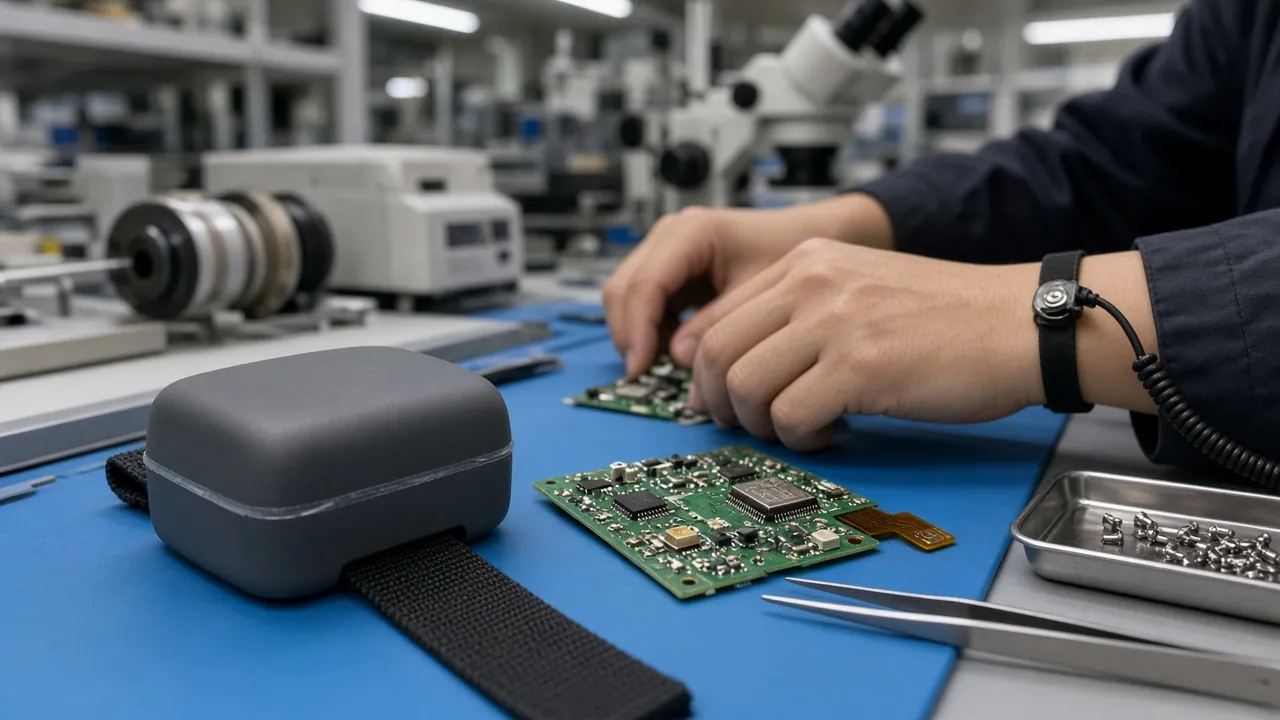
Consumer IoT / Pet Wearables / Smart Collar PCBA + Overmolding + NPI
Do you trust a factory you've never met? Go meet them.
Shenzhen tour · Dec 6–11

Medical Device / Drug Delivery / Micro-Molding + PCBA Integration
NeuroDose Therapeutics, a Cambridge, MA-based Series B medtech startup, was developing a wearable drug delivery patch with integrated electronics and ...
Walk Shenzhen factories with us, Dec 6–11. See the tour
NeuroDose Therapeutics, a Cambridge, MA-based Series B medtech startup, was developing a wearable drug delivery patch with integrated electronics and a micro-fluidic pump for precise transdermal drug dosing. Each disposable patch required an overmolded PCBA sealed in biocompatible housing, a micro-molded fluid reservoir with sub-millimeter channel geometry, and a snap-fit enclosure assembly — all manufactured under ISO 13485 cleanroom conditions. Their previous approach used separate molding and PCBA vendors, resulting in a 4.2% defect rate at assembly, 12-week lead times, and persistent alignment issues between the molded reservoir and the overmolded electronics. Drug contact parts required USP Class VI biocompatible materials, micro-molded fluid channels demanded 0.3mm wall thickness at plus or minus 0.01mm tolerance with zero flash, and the TPU overmold onto populated circuit boards needed to pass ASTM D903 peel testing for patient contact safety. NeuroDose needed a single partner who could perform precision micro-molding, PCBA overmolding, and final device assembly under one ISO 13485 certified roof with full FDA 21 CFR Part 820 device history record compliance.
Illuminious deployed its ISO 13485 certified ISO Class 8 cleanroom with integrated injection molding, PCBA assembly, and final device build under one roof. The program combined scientific decoupled molding with cavity pressure sensing on a 50-ton micro-molding press, specialized COC and medical-grade PC material processing, TPU overmolding directly onto populated PCBAs with pre-heating and 100% peel testing, IPC Class 3 PCBA with 01005 component placement and Parylene C conformal coating, inline vision inspection of micro-molded channels at plus or minus 0.01mm, 100% post-overmold electrical test, leak testing at 0.5 bar, and complete device history record documentation with lot traceability for FDA audit readiness. A dedicated US-based regulatory liaison coordinated directly with NeuroDose's FDA submission team.
The Challenge: NeuroDose Therapeutics had spent four years and $42 million in Series B funding developing a wearable drug delivery patch that could replace insulin injections for type 2 diabetes patients. The device was elegant in concept: a disposable patch the size of a credit card, worn on the abdomen, containing a micro-fluidic pump driven by a tiny PCBA that delivered precise transdermal doses controlled via Bluetooth from a mobile app. But manufacturing was killing the program. Their previous setup split production across two vendors — a micro-molder in the Midwest and a PCBA EMS in California — and the results were predictable. The molded fluid reservoirs arrived with dimensional variation that caused misalignment with the overmolded electronics. TPU overmolding onto populated boards failed peel tests at a 4.2% rate. The 12-week lead time across two vendors meant quality issues were discovered months after the parts were made, not on the line. And because neither vendor operated under ISO 13485, there was no unified device history record for FDA submission. NeuroDose's clinical trial timeline was slipping. Their investors were asking hard questions. They needed a fundamentally different manufacturing approach.
Illuminious consolidated the entire patch manufacturing process into a single ISO 13485 certified ISO Class 8 cleanroom facility, integrating precision micro-molding, PCBA assembly, overmolding, and final device build under one quality management system. Every process step — from COC resin drying to final sterile packaging — occurred in the same controlled environment, eliminating the inter-vendor alignment issues that had driven NeuroDose's 4.2% defect rate. Key elements include:
From 4.2% to 0.02% — a 99.5% quality improvement across 150,000+ units produced.
50% reduction from 12 weeks through single-facility integration of all processes.
Cleared on first submission with zero manufacturing-related questions from FDA.
Per-unit cost down 28% versus previous dual-vendor approach with higher quality.
Illuminious began with a six-week process development phase, starting with Design for Manufacturing review of NeuroDose's patch design. The team identified three critical risk areas: the COC fluid reservoir micro-molding, the TPU overmold adhesion to populated PCBA, and the dimensional compatibility between molded and overmolded components. For each risk, a dedicated process validation was executed per IQ/OQ/PQ protocols. The micro-molding process was developed on a 50-ton Arburg press with a Class 101 mold machined from stainless 420SS, featuring full hot runner systems and cavity pressure sensors at three locations. Scientific decoupled molding methodology was applied — fill, pack, and hold phases separated and optimized using RJG eDart data, reducing part-to-part variation by 85%. For the TPU overmolding, Illuminious developed a proprietary pre-heating protocol that raised the PCBA surface temperature to optimize TPU adhesion without exceeding solder joint reflow thresholds. The result was a validated process producing channel tolerance at plus or minus 0.008mm — 20% tighter than the plus or minus 0.01mm specification.
With validated molding and overmolding processes, Illuminious transitioned to integrated production within the ISO Class 8 cleanroom. The PCBA line was configured for IPC Class 3 standards with 01005 component placement capability to meet the miniaturized form factor requirements. Parylene C conformal coating was applied via chemical vapor deposition, providing uniform coverage at controlled thickness — critical for protecting the BLE microcontroller, dosing circuitry, and temperature sensors from drug compound exposure over the 3-day wear period. The PCBA was then transferred to the overmolding station within the same cleanroom, where the TPU overmold was applied directly onto the populated and coated board. Post-overmold, every unit received 100% electrical testing to verify that the overmolding process had not compromised any solder joints or component connections. Bond strength averaged 4.2 lb/in per ASTM D903, exceeding the 3.0 lb/in requirement by 40%.
Final device assembly occurred at dedicated cleanroom workstations, with each patch built in sequence: PCBA overmold inspection, fluid reservoir insertion, adhesive bonding of reservoir to overmolded housing, snap-fit enclosure closure, functional test simulating dosing cycles, and sterile packaging. Leak testing at 0.5 bar verified fluid path integrity on every unit. Illuminious provided complete device history record documentation for every production lot — material certificates with USP Class VI biocompatibility data, molding process parameters and cavity pressure profiles, PCBA inspection records, overmold peel test data, functional test results, and operator traceability. This documentation package became the manufacturing evidence section of NeuroDose's FDA 510(k) submission. The FDA cleared the submission on first review with zero manufacturing-related questions — a rare outcome for a combined drug-device product.
"We were spending more time managing our two separate suppliers than improving our device. The misalignment between the molder and the PCBA house was eating 4.2% of every lot, and nobody could tell us why. Illuminious didn't just solve the manufacturing problem — they redesigned the entire production system around a single cleanroom. Micro-molding, PCBA, overmolding, assembly, testing, documentation — all under one ISO 13485 roof. Our defect rate dropped from 4.2% to 0.02%. Our lead time halved. And when the FDA reviewed our 510(k), they had zero manufacturing questions. That is what integrated cleanroom manufacturing looks like, and I wish we had found it two years earlier."
Eliminated inter-vendor alignment failures: By combining micro-molding, PCBA, overmolding, and assembly in one ISO 13485 cleanroom, Illuminious removed the logistics, handling, and tolerance stack-up issues that drove NeuroDose's 4.2% defect rate with separate vendors.
RJG eDart process control: Cavity pressure sensing at three locations enabled scientific separation of fill, pack, and hold phases, reducing dimensional variation by 85% and holding channel tolerance at plus or minus 0.008mm across 1M+ cycles.
COC and TPU processing mastery: Specialized drying and processing parameters for USP Class VI Cyclic Olefin Copolymer and medical-grade TPU ensured consistent material performance across drug-contact and patient-contact surfaces.
FDA audit-ready on day one: Full device history records with lot traceability, material certificates, process monitoring data, and test records enabled first-submission 510(k) clearance with zero manufacturing-related questions.
Zero-defect quality through total inspection: Vision measurement of channel dimensions, 100% post-overmold electrical test, and leak testing at 0.5 bar on every unit ensured that no defective patch reached a patient.
For a wearable drug delivery device, every manufacturing defect is a potential patient safety event. Illuminious combines ISO 13485 certified cleanroom manufacturing, scientific micro-molding process control, and integrated PCBA overmolding to deliver 99.98% yield on the most demanding medical device programs. From FDA submission support to 200,000-unit field deployment with zero adverse events, we build the manufacturing foundation that medtech startups need to succeed. Start a conversation about your medical device manufacturing requirements.
"We were spending more time managing our two separate suppliers than improving our device. Illuminious didn't just solve the manufacturing problem — they redesigned the entire production system around a single cleanroom. Our defect rate dropped from 4.2% to 0.02%. And when the FDA reviewed our 510(k), they had zero manufacturing questions."
Consumer IoT / Pet Wearables / Smart Collar PCBA + Overmolding + NPI
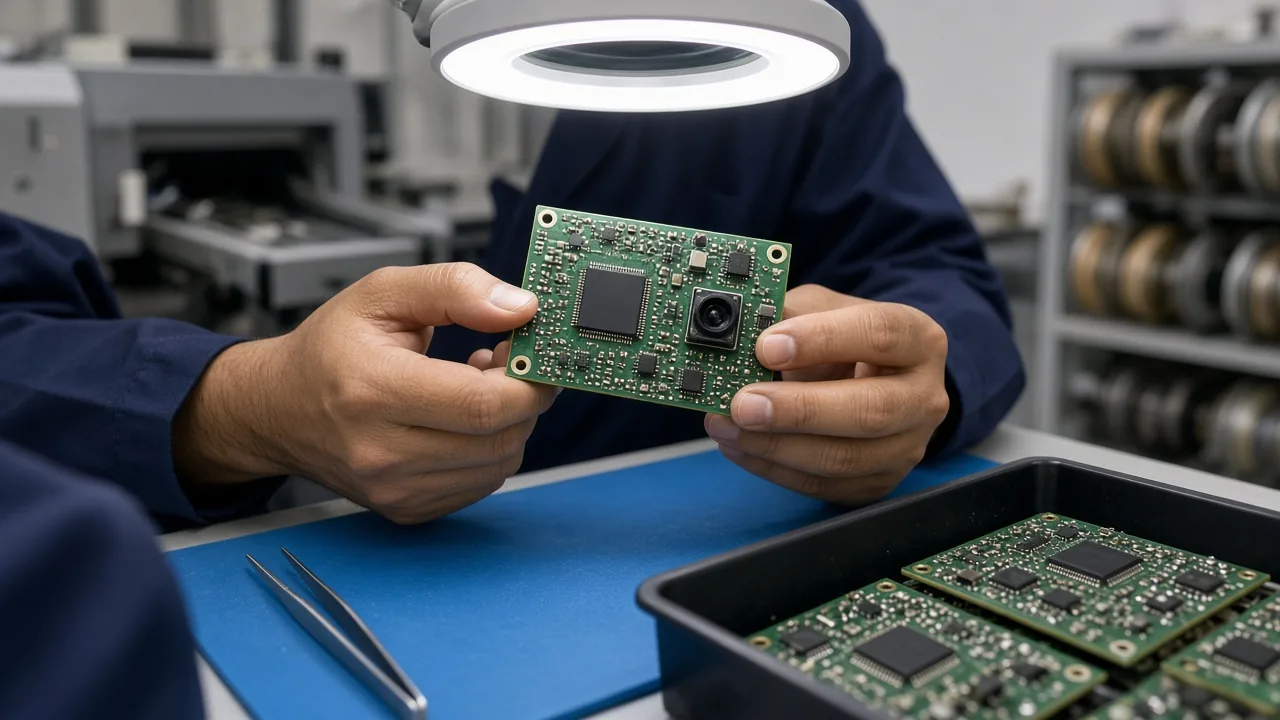
Physical AI / Warehouse Robotics / Edge-AI Perception Module + Quick-Turn PCBA + NPI
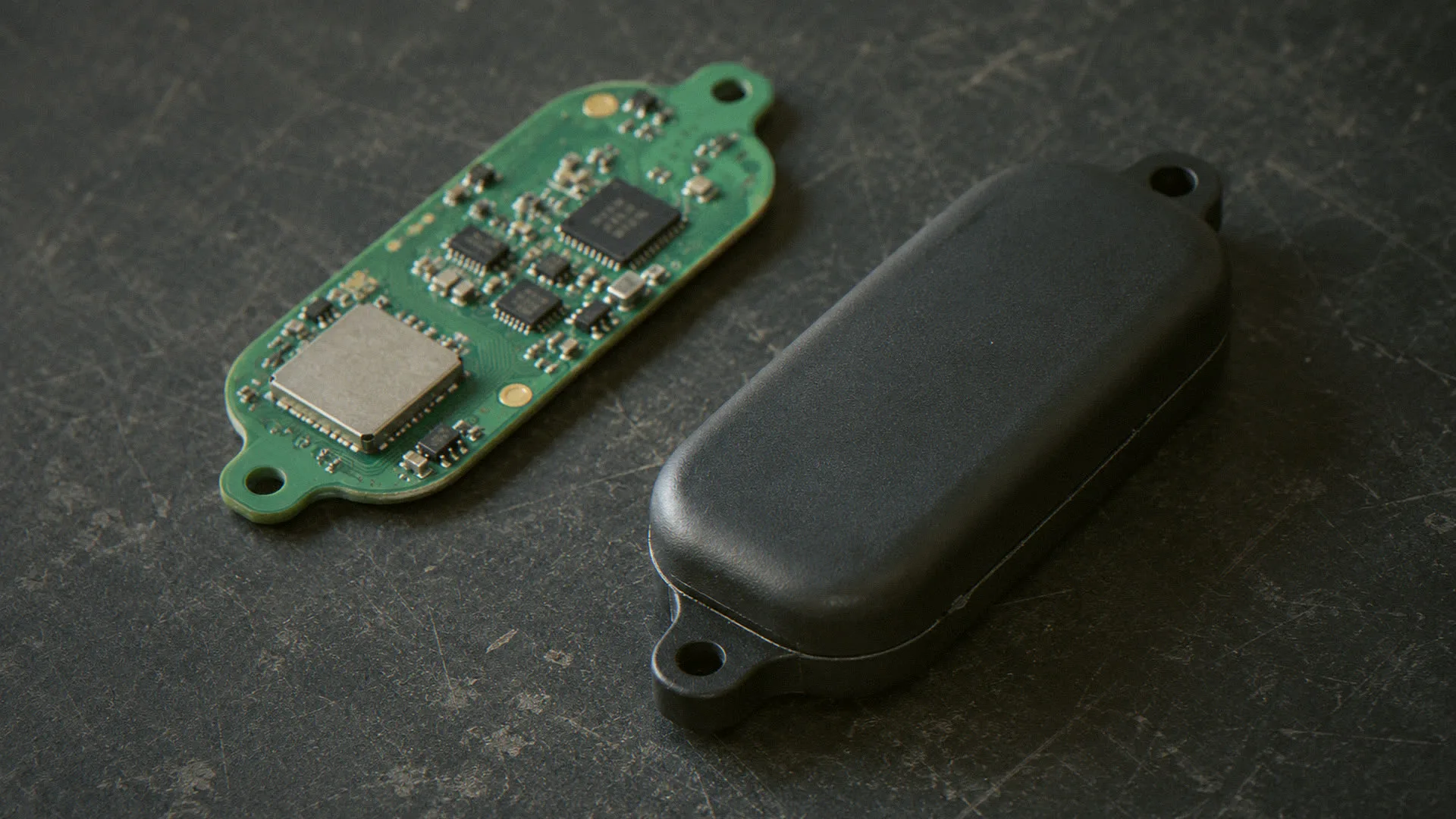
Logistics / Asset Tracking IoT / Overmolded Enclosure + LoRa PCBA + NPI
Let's discuss how we can help your project succeed with our end-to-end manufacturing capabilities.