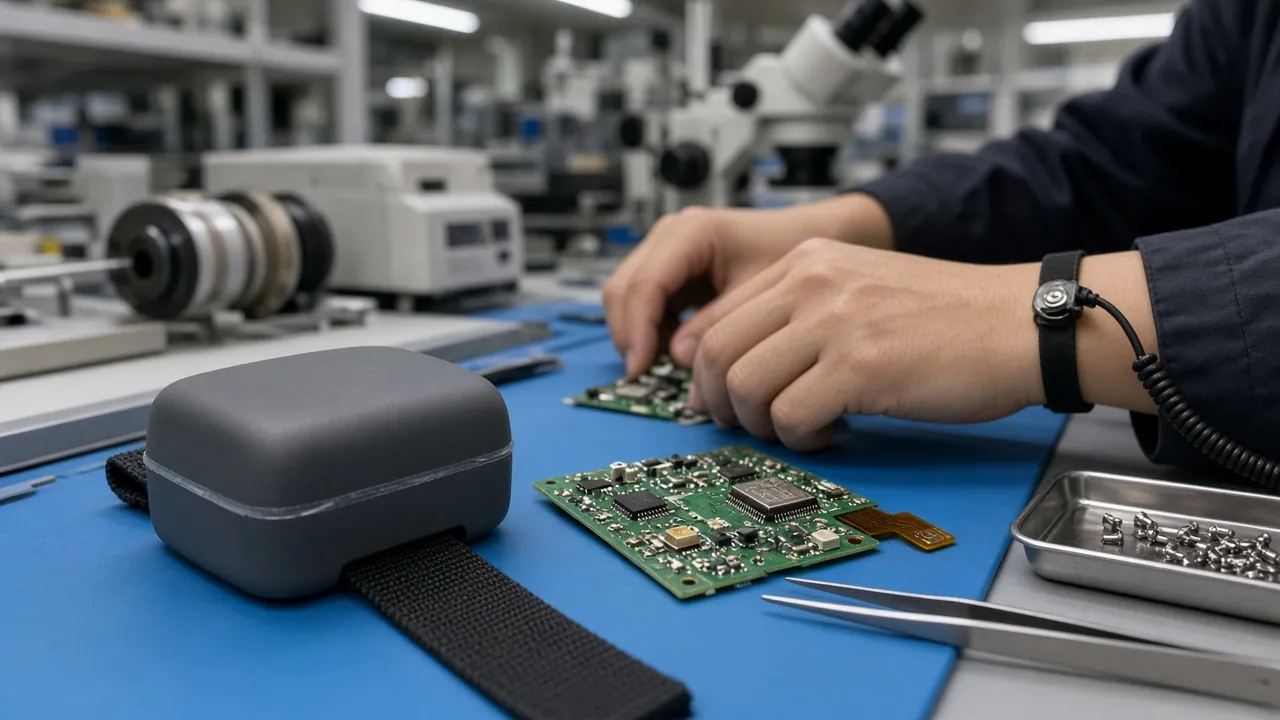
Consumer IoT / Pet Wearables / Smart Collar PCBA + Overmolding + NPI
Do you trust a factory you've never met? Go meet them.
Shenzhen tour · Dec 6–11

Edge Computing / Data Center Infrastructure / Sheet Metal + PCBA Integration
NexusEdge Computing, an Austin-based Series B edge computing startup, built the NexusEdge R1 — a 1U rack-mount edge inference server with 4x GPU accel...
Walk Shenzhen factories with us, Dec 6–11. See the tour
NexusEdge Computing, an Austin-based Series B edge computing startup, built the NexusEdge R1 — a 1U rack-mount edge inference server with 4x GPU acceleration for AI workloads deployed in factory floors, retail stores, and hospital data closets. Their manufacturing was fragmented across three vendors: a Mexico sheet metal shop producing 5052 aluminum enclosures at $42 each with 10-week lead times, a Taiwan PCBA house assembling HDI carrier boards and backplanes at $89 per board set with 8-week lead times, and a US integration contractor performing manual rack assembly and burn-in testing at $38 per unit with 5-week lead times. The cumulative 14-week lead time and 6.8% defect rate — driven by thermal throttling from inconsistent enclosure-to-PCBA airflow gaps, EMI leakage from poor seam contact causing 8% FCC Part 15 Class A first-pass failures, and enclosure dimensional variation causing rack mounting issues — made it impossible to meet customer deployment schedules for 5,000 annual units.
Illuminious consolidated sheet metal fabrication, HDI PCBA assembly, and box build integration into a single Shenzhen facility under one ISO 9001 quality management system. 5052 aluminum enclosures were produced with fiber laser cutting and CNC press brake forming for tight bend tolerances, with ventilation patterns CFD-optimized to match actual GPU thermal output. HDI carrier boards (8-layer, 0.15mm laser via, IPC Class 3) and backplanes were assembled on the same factory floor, followed by box build integration with thermally conductive gap pads, EMI gasket installation with controlled compression, 48-hour burn-in testing at 70C ambient, and full functional AI inference workload testing — all under unified quality accountability.
The Challenge: NexusEdge Computing had engineered a product that the edge AI market desperately needed — a 1U rack-mount inference server packing 4x GPU acceleration into a compact 44mm-height chassis, designed for deployment in factory floor cabinets, retail back rooms, and hospital data closets where AI inference had to happen at the point of data generation rather than in a distant cloud. The NexusEdge R1 was technically excellent. Its manufacturing supply chain was a disaster.
Three vendors on three continents, each with independent quality systems and no shared accountability, produced a cumulative 14-week lead time that made it impossible to meet customer deployment schedules. The Mexico sheet metal shop produced 5052 aluminum enclosures at $42 each with 10-week lead times, but dimensional variation across the 440mm enclosure length caused rack mounting issues in 12% of deployments. The Taiwan PCBA house assembled HDI carrier boards and backplanes at $89 per board set with 8-week lead times, but had no visibility into enclosure thermal design and couldn't optimize component placement for airflow. The US integration contractor performed manual rack assembly at $38 per unit with 5-week lead times, but spent enormous time reworking thermal module installations and chasing EMI leakage points that should have been designed out from the start.
The consequences were severe. Thermal throttling affected 12% of fielded units because inconsistent airflow channeling — caused by enclosure-to-PCBA gap variation — starved GPU heatsinks of the airflow they needed. EMI compliance suffered an 8% first-pass failure rate on FCC Part 15 Class A because inconsistent seam contact and inadequate EMI gasket compression allowed radiation leakage. Quality disputes consumed engineering bandwidth weekly: the sheet metal vendor blamed PCBA layout for thermal issues, the PCBA vendor blamed enclosure airflow design, and the integration contractor simply rejected parts and passed the cost upstream. No single vendor owned the quality outcome, and NexusEdge's engineering team was spending a third of its time mediating supplier conflicts instead of improving the product for the next generation.
Illuminious consolidated the entire NexusEdge R1 manufacturing process — sheet metal fabrication, HDI PCBA assembly, and box build integration — into a single Shenzhen facility operating under one ISO 9001 certified quality management system. Every process step, from aluminum sheet stock to AI inference burn-in testing, occurred under one roof with unified quality accountability. Key elements include:
Per-unit manufacturing cost reduced from $169 to $108 at 5K annual volume through vendor consolidation, enclosure design optimization, and defect elimination.
Cumulative lead time cut 43% from 14 weeks through single-facility sheet metal, PCBA, and box build with parallel NPI processing.
Quality defects reduced 87% from 6.8% — driven by unified quality accountability across all manufacturing processes under one ISO 9001 system.
Field MTBF increased 29% from 48,000 hours across 4,200 deployed units over 18 months of enterprise edge installations.
Illuminious engineers began with a comprehensive Design for Manufacturing review of the NexusEdge R1 enclosure and PCBA designs. The existing enclosure, designed by NexusEdge's mechanical team without manufacturing input, used a uniform ventilation perforation pattern that looked logical but bore no relationship to the actual thermal output of the 4 GPU modules. The sheet metal vendor in Mexico had followed the drawings faithfully — the problem was the drawings themselves. Illuminious thermal engineers ran CFD simulation on the full enclosure-PCBA-GPU assembly and redesigned the perforation pattern to concentrate airflow precisely where GPU heatsinks needed it. Bend geometry was optimized to eliminate stress cracks that had appeared at mounting tab locations during the previous vendor's production run. Enclosure flatness was tightened to plus or minus 0.3mm across the full 440mm length for consistent rack mounting. Separate EMI shielding cans were eliminated entirely — shielding features were integrated directly into bend geometry, reducing part count, assembly time, and enclosure weight by 19%. A tool-less service access panel with captive screws was added for field serviceability. The redesigned enclosure weighed 2.6kg — down from 3.2kg — while improving structural stiffness and eliminating the dimensional variation that had caused rack mounting failures.
With the optimized enclosure design approved, Illuminious fabricated 5052 aluminum panels on a fiber laser cutting system for dimensional precision, then formed them on a 250-ton CNC press brake with a 4000mm bed — holding bend tolerances far tighter than the Mexico vendor's conventional equipment could achieve. PEM self-clinching fasteners were inserted automatically. EMI gasket grooves were machined into all seam surfaces to ensure consistent gasket compression and reliable EMI performance. A thermo-vacuum powder coat process applied a black textured finish that was both durable and aesthetically appropriate for data center environments. On the same factory floor, the SMT line assembled NexusEdge's HDI carrier boards — 8-layer constructions with 0.15mm laser vias built to IPC Class 3 standards. High-speed connectors on the backplane were placed at plus or minus 0.05mm coplanarity to ensure reliable mating with GPU modules. The power distribution board used 4oz heavy copper for current-carrying capacity. Selective gold plating was applied to contact pads for long-term connector reliability. 3D AOI inspected every solder joint, and X-ray inspection verified BGA device integrity — all before the boards left the same building where their enclosures were being formed.
With completed enclosures and tested PCBAs both available within the same facility, box build assembly proceeded without the scheduling delays, shipping damage, and finger-pointing that had plagued the previous three-vendor workflow. Thermally conductive gap pads were precisely positioned between each GPU module and the enclosure's heat sink features — the CFD-optimized gap dimensions ensuring consistent thermal transfer across all 4 GPUs regardless of unit-to-unit variation. Custom cable harnesses were assembled for internal power distribution and high-speed signal routing. EMI gaskets were installed with controlled compression to ensure consistent seam contact across all enclosure joints. Thermal interface material was dispensed at precise volumes. Every completed unit then entered a 48-hour burn-in test at 70C ambient temperature with continuous thermal logging — identifying any latent thermal issues before shipment. Final functional testing ran actual AI inference workloads, verifying that all 4 GPU modules operated within thermal limits under sustained load. EMI pre-scan was performed on every production batch to catch any compliance drift. The integrated production line achieved 99.2% FCC Part 15 Class A first-pass compliance, 99.7% first-time rack install success, and 0.3% field thermal throttle rate — quality levels that the previous three-vendor approach had never approached.
"Our previous manufacturing setup was three vendors on three continents, each with their own quality system and their own version of whose fault the latest defect was. Thermal throttling was our biggest field issue — 12% of units were throttling because the enclosure airflow design and the PCBA layout had never been co-optimized. Illuminious ran CFD simulation on the full assembly, redesigned the ventilation pattern, and built both the enclosure and the PCBA on the same factory floor. Thermal throttling dropped to 0.3%. EMI first-pass compliance went from 92% to 99.2%. And when something does come up, there is one team that owns the entire quality outcome. That is what integrated manufacturing actually delivers."
Airflow co-optimization: By running computational fluid dynamics simulation on the complete enclosure-PCBA-GPU assembly, Illuminious engineers redesigned the ventilation perforation pattern to match actual GPU thermal output. Sheet metal shroud dimensions were optimized for the 38mm GPU heatsink height with 2mm gap tolerance, delivering consistent airflow across all 4 GPU modules and reducing GPU junction temperature by 8C.
Design-out, not bandage-on: EMI shielding features were integrated directly into sheet metal bend geometry during DFM review, eliminating separate shielding cans entirely. Controlled gasket compression on all seam surfaces — ensured by machined EMI gasket grooves — drove first-pass FCC Part 15 Class A compliance from 92% to 99.2%.
One quality system, one quality owner: By consolidating sheet metal fabrication, HDI PCBA assembly, and box build integration under one ISO 9001 QMS, NexusEdge eliminated the inter-vendor finger-pointing that had made quality issues unresolvable. CMM inspection of enclosure flatness on every 50th unit and 3D AOI on every PCBA ensured dimensional consistency across all production units.
Rack mount reliability: Fiber laser cutting and CNC press brake forming held enclosure flatness at plus or minus 0.3mm across the full 440mm length — a level of precision the previous sheet metal vendor could not achieve. This eliminated the rack mounting issues that had plagued 12% of field deployments and drove first-time rack install success to 99.7%.
Field reliability: Every unit completed a 48-hour burn-in test at 70C ambient with continuous thermal logging, followed by functional testing with actual AI inference workloads. This screening process — impossible when manufacturing was split across three vendors — drove field MTBF from 48,000 to 62,000 hours across 4,200 deployed units over 18 months.
Faster time-to-production: With sheet metal tooling fabrication and PCBA NPI occurring in parallel within the same facility, the total NPI cycle compressed from 14 weeks to 8 weeks — enabling NexusEdge to respond faster to customer deployment schedules and capture edge computing market opportunities.
When your sheet metal vendor, PCBA house, and integration contractor each answer to a different quality system, your product pays the price — in thermal throttling, EMI failures, rack mounting issues, and engineering hours lost to supplier mediation. Illuminious consolidates sheet metal fabrication, HDI PCBA assembly, and box build integration under one ISO 9001 certified roof, with one quality system and one team accountable for the outcome. Send us your enclosure design and board files — we will show you where you can cut cost, weight, lead time, and thermal issues simultaneously.
"Our previous setup was three vendors on three continents. Thermal throttling was our biggest field issue at 12%. Illuminious ran CFD simulation, redesigned the ventilation, and built everything under one roof. Thermal throttling dropped to 0.3%, EMI compliance hit 99.2%, and one team owns the entire quality outcome."
Consumer IoT / Pet Wearables / Smart Collar PCBA + Overmolding + NPI
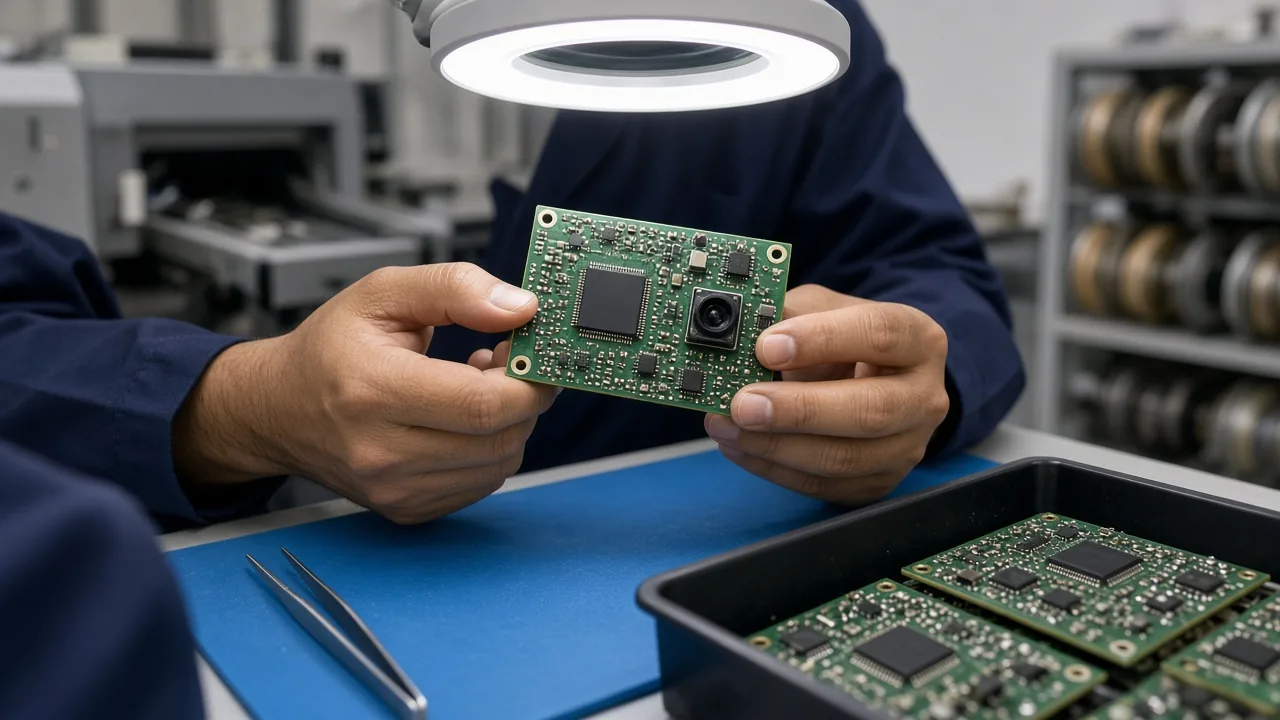
Physical AI / Warehouse Robotics / Edge-AI Perception Module + Quick-Turn PCBA + NPI
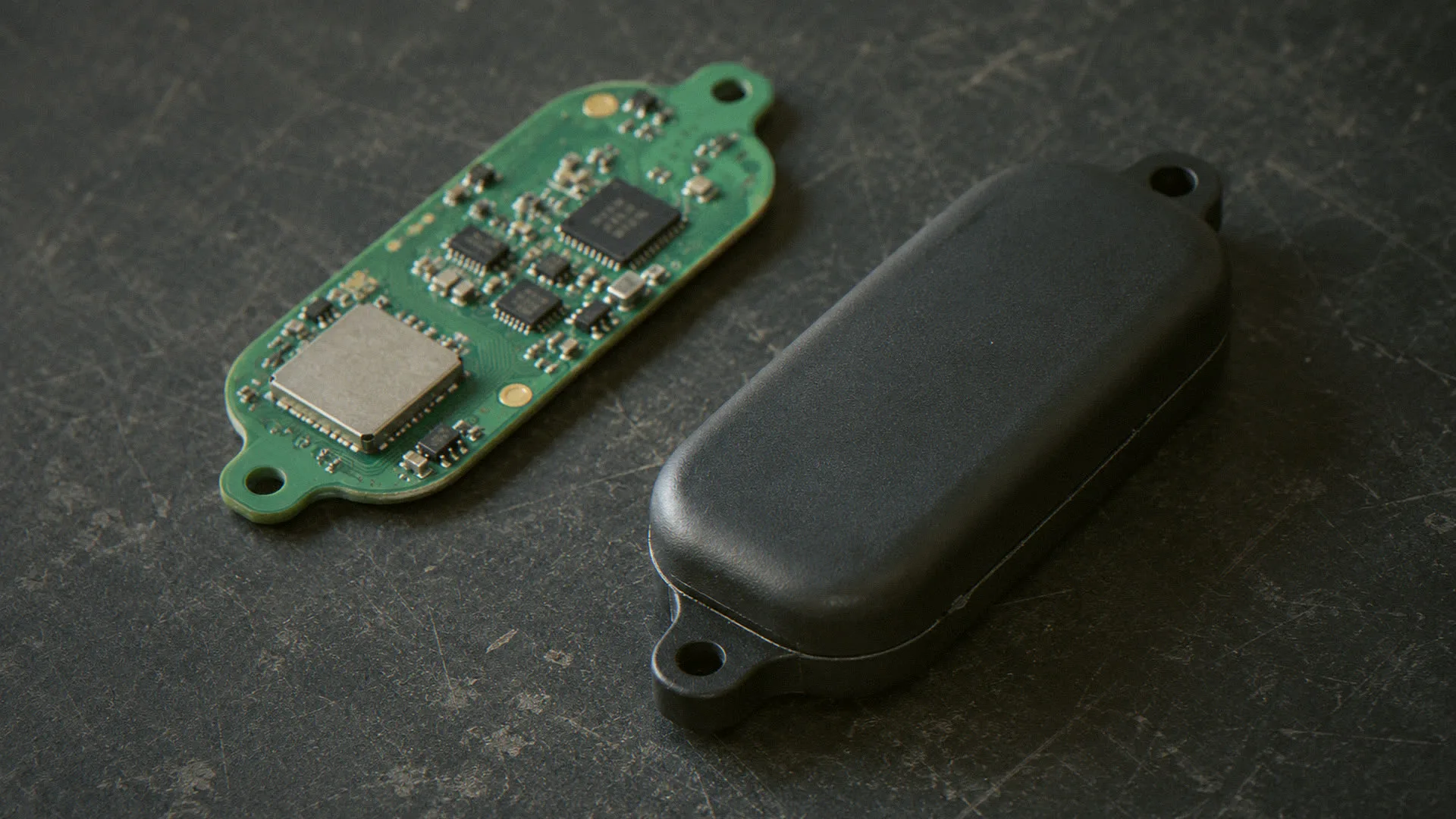
Logistics / Asset Tracking IoT / Overmolded Enclosure + LoRa PCBA + NPI
Let's discuss how we can help your project succeed with our end-to-end manufacturing capabilities.