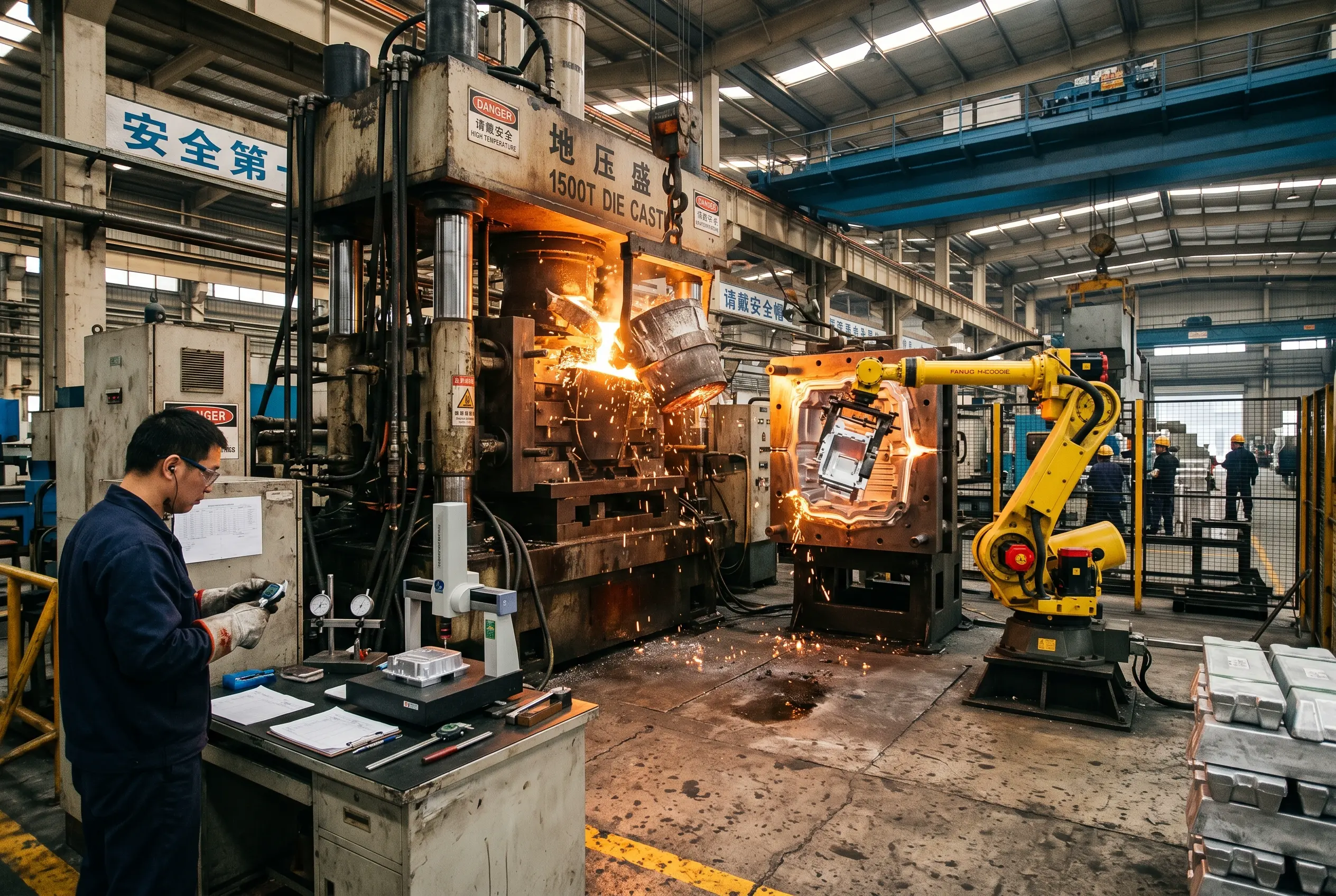
The global aluminum die casting market has surged to $90.46 billion in 2026, with projections placing it at $152 billion by 2033 — a 5.8% compound annual growth rate driven by automotive electrification and the explosion of AI hardware startups. For founders and NPI engineers choosing between CNC-machined and die-cast aluminum enclosures, the economics have shifted decisively. Volume production via pressure die casting now delivers 60–80% cost savings per unit compared to machining, while built-in thermal management and EMI shielding eliminate secondary operations.
Key Details
- Market size: The global die casting market reached $90.46 billion in 2026 and is projected to grow to $152 billion by 2033 at a 5.8% CAGR, according to Precedence Research.
- Automotive electrification: EV production accounts for over 35% of new die casting demand, with aluminum A380/A383 alloys becoming the standard for battery enclosures, motor housings, and structural components.
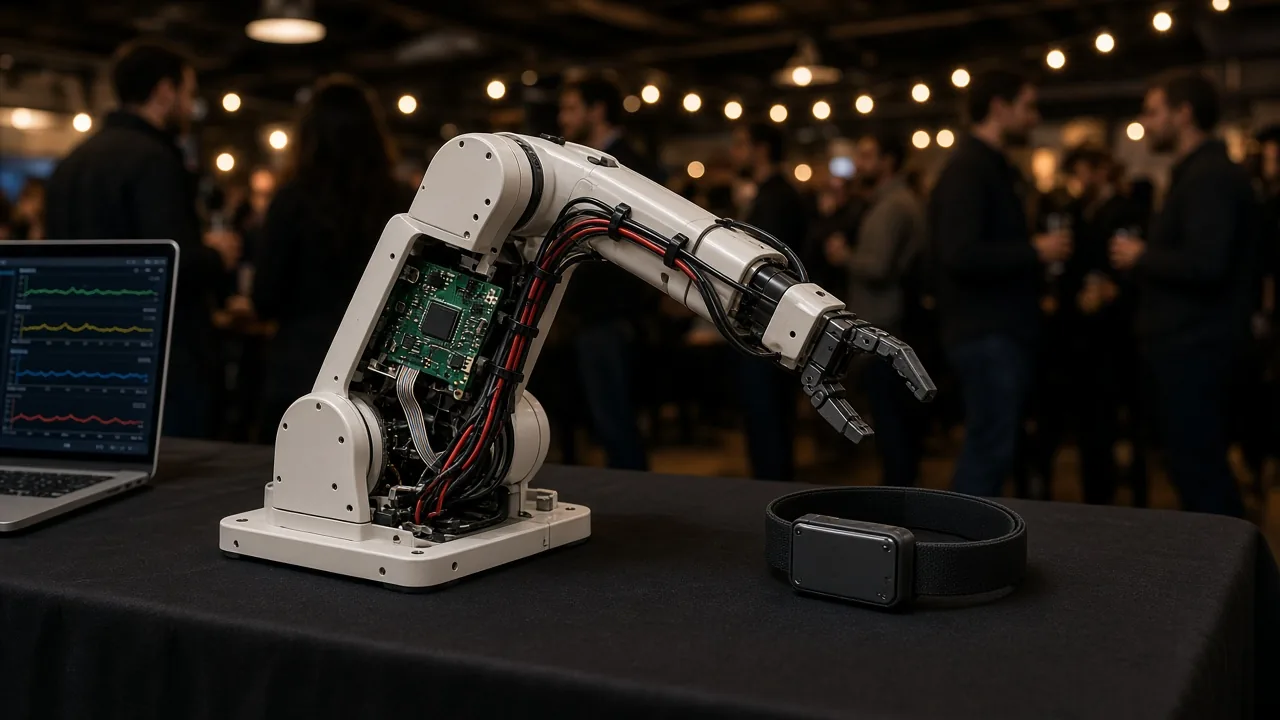
- AI hardware boom: Startups building edge AI devices, robotics platforms, and IoT gateways are adopting die-cast aluminum enclosures for thermal dissipation and EMI shielding — properties built into the housing at no extra cost.
- Cost advantage at scale: Die casting delivers 60–80% per-unit cost reduction compared to CNC machining at volumes above 1,000 units, with tooling amortization typically breaking even at 500–800 pieces.
Integrated Thermal Management
Die-cast aluminum enclosures double as heat sinks. A380 alloy offers thermal conductivity of 96 W/m·K, eliminating the need for separate thermal interface materials in many edge AI and robotics applications.
Built-In EMI Shielding
Aluminum housings provide 60–80 dB of EMI attenuation across 100 MHz–1 GHz, meeting FCC Class B requirements without conductive coatings or shielding cans required by plastic enclosures.
Complex Geometry, Single Operation
Features like mounting bosses, cable channels, snap-fit features, and threaded inserts are cast directly into the part, reducing assembly steps and eliminating multiple machining setups.
Near-Net-Shape Precision
High-pressure die casting achieves ±0.1 mm tolerances on critical dimensions with as-cast surface finishes of Ra 0.8–1.6 μm, often eliminating secondary machining entirely.
60–80% Cost Reduction
Per-unit savings vs. CNC at production volumes above 1,000 pieces.
3–5 Week Tooling Lead Time
Steel mold tooling completed in weeks, not months, with progressive die life of 100,000+ shots.
Superior Thermal Performance
Aluminum A380 conducts heat 4x better than steel, ideal for high-power electronics.
EMI Shielding Included
Cast aluminum blocks electromagnetic interference without additional coatings.
Box-Build Ready
Cast enclosures integrate directly with box-build assembly and PCBA workflows.
Design for Manufacturing
NPI engineering support ensures DFM-optimized castings from prototype to mass production.
— Ethan Yip, CTO at Illuminious"We are seeing a clear shift among hardware startups — die casting used to be a last resort for high-volume automotive only. Now, founders building AI devices and robotics platforms are specifying die-cast enclosures from the NPI stage because the thermal, EMI, and cost advantages are simply too significant to ignore."
The Die Casting Decision for Hardware Startups
As the $90 billion die casting market accelerates toward $152 billion, the question for hardware startups is no longer whether to consider die casting — it's when in the product lifecycle to make the switch. Companies that transition from CNC prototypes to die-cast production at the right volume threshold gain a compounding cost and quality advantage.
Illuminious offers die casting, CNC machining, PCBA, and box-build assembly under one roof — book a factory tour or startup consultation to explore your enclosure manufacturing options.