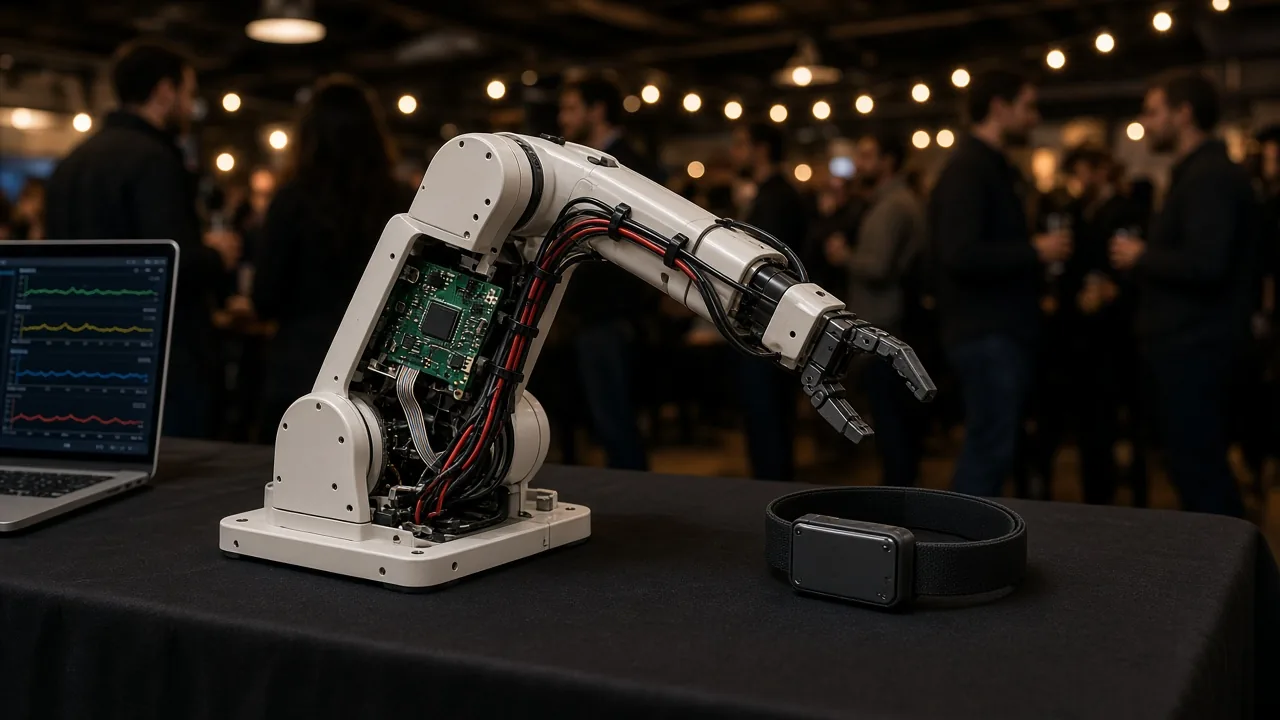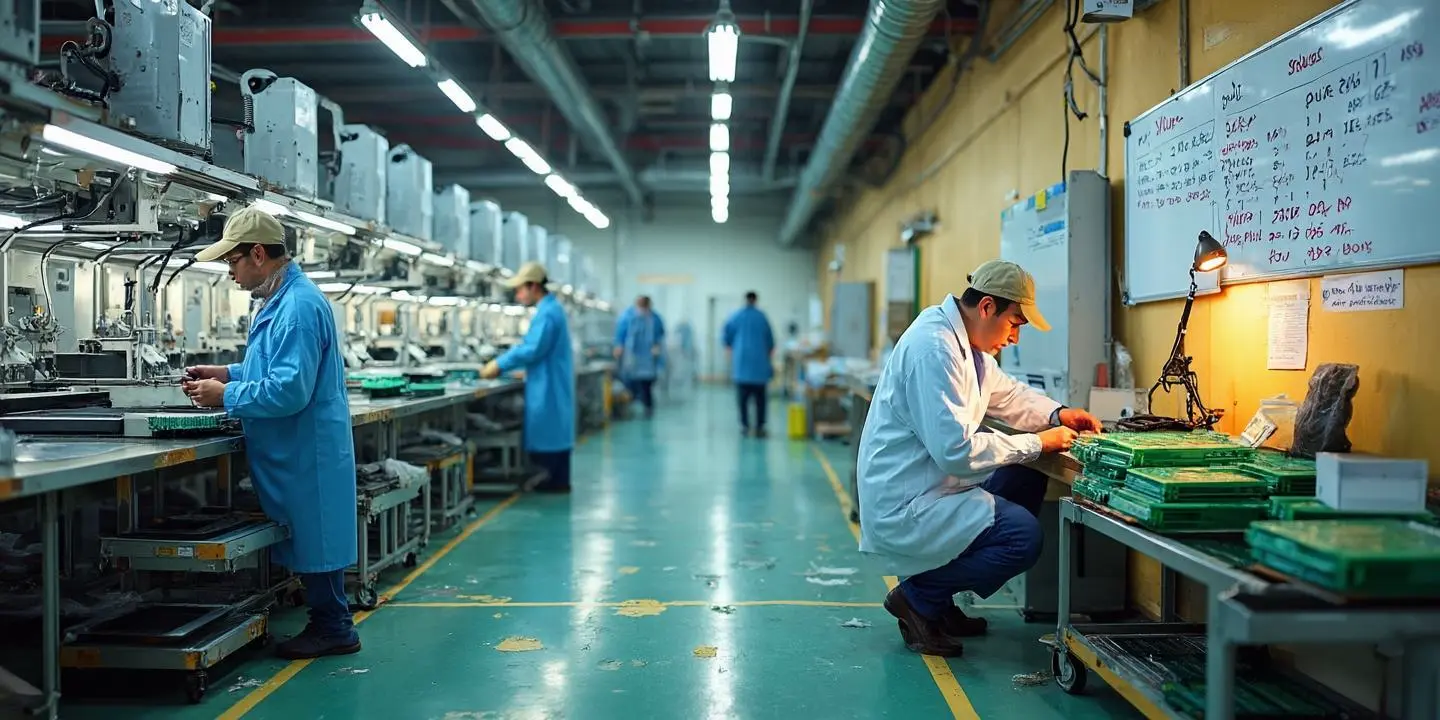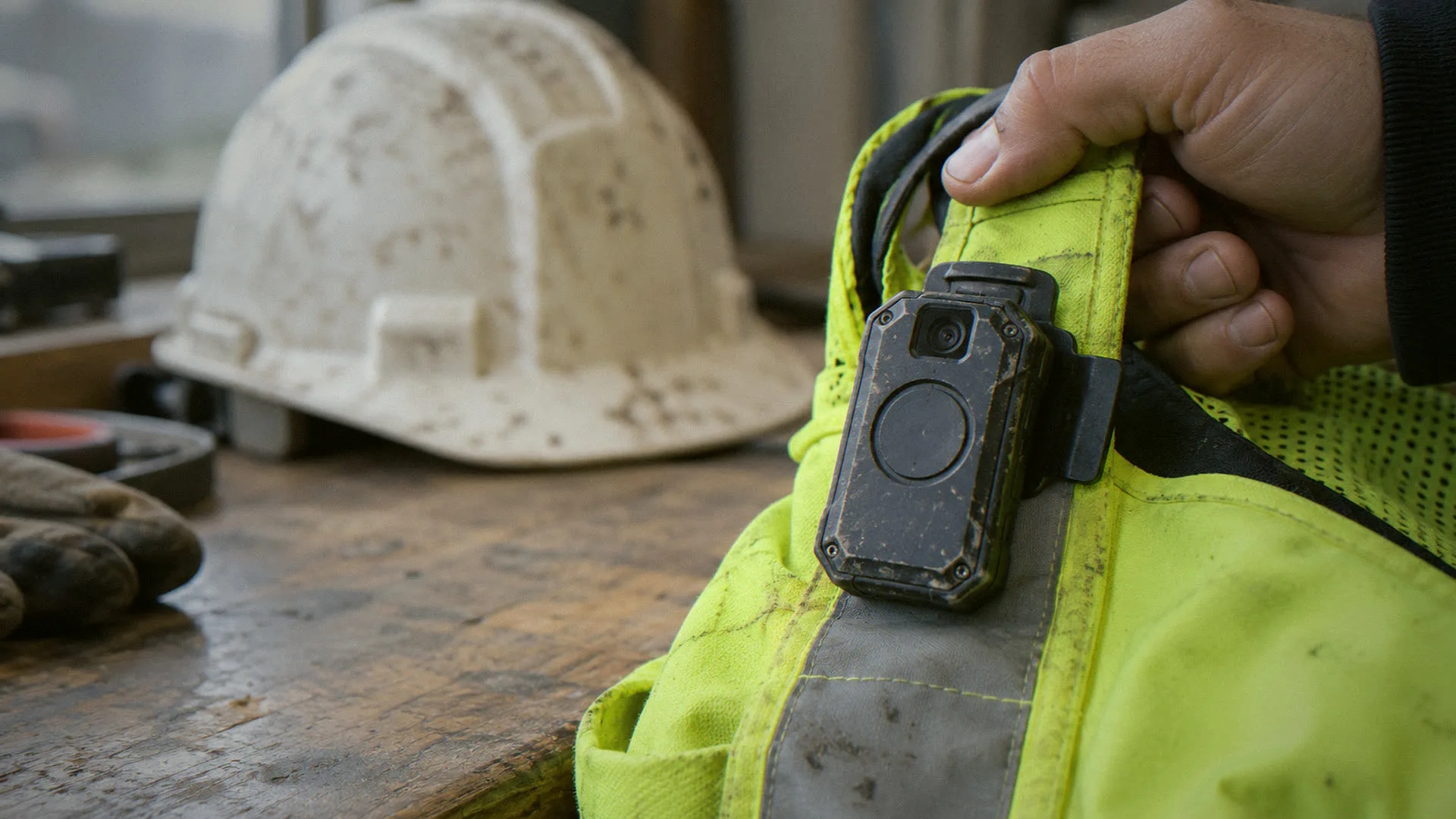
Connected worker wearables are leaving the demo booth and heading for the shop floor. MarketsandMarkets projects the global connected worker market will grow from $8.62 billion in 2025 to $20.18 billion by 2030, an 18.5% CAGR, with hardware expected to hold the largest share and manufacturing the leading vertical. At CES 2026 in Las Vegas, Siemens used its keynote to bring industrial AI to Ray-Ban Meta glasses for factory workers, while Vuzix ran live warehouse-picking and work-instruction demos. For prototype-stage hardware startups, the question has shifted from whether enterprises want industrial wearable devices to who can build a rugged first batch fast enough to win the pilot.
What are connected worker wearables? Connected worker wearables are industrial wearable devices such as smart glasses, sensor badges, smart helmets, gloves and wristbands that link frontline workers to enterprise systems in real time. They deliver hands-free guidance, remote expert support, lone-worker alerts and safety compliance data, and they must survive drops, dust, sweat and long shifts.
Key Details
- Market size: MarketsandMarkets forecasts $8.62B in 2025 rising to $20.18B by 2030 at an 18.5% CAGR, citing growing adoption of safety-focused wearables. Mordor Intelligence publishes a higher estimate of $27.52B by 2030.
- CES 2026 workplace demos: Siemens announced industrial AI on Ray-Ban Meta glasses with hands-free audio guidance, safety insights and feedback for shop-floor workers. Vuzix showed logistics, field-service and step-by-step work-instruction demos, and GE Aerospace with PwC demonstrated remote-expert troubleshooting of a robotic work cell through smart glasses.
- Eyewear volume: Counterpoint Research reports global intelligent eyewear shipments grew 83% YoY in Q1 2026, with AR glasses up 136% and display-less smart glasses up 210%. IDC forecasts roughly 13.6 million display-less smart glasses shipments for full-year 2026.
- From pilot to rollout: IDC's 2026 Commercial XR Survey finds commercial AR has moved beyond the pilot stage but is still deployed selectively, by role and by site, with cost, support and consistent partner options as the barriers to scale.
Why Industrial Wearables Are a Startup Opportunity, Not Only a Big-Tech Play
MarketsandMarkets names Honeywell, Microsoft and Siemens as leading players, but it also highlights startups and SMEs that have won footholds in specialized niches. That pattern matters for founders. Enterprise buyers roll out wearables role by role and site by site, which leaves room for focused products: a lone-worker fall-detection badge for utilities, a heat-stress sensor for construction crews, a cold-chain PPE tag for food logistics or a lightweight camera module for remote inspection. Each is a small device in a harsh environment, and each starts with a factory pilot of a few dozen to a few hundred units.
Industrial smart glasses
Remote-expert calls, picking and work instructions are the proven use cases. Industrial smart glasses manufacturing adds flex interconnects through hinges and temples, battery placement for balance, and camera and antenna keep-outs inside a frame measured in millimeters.
Rugged sensor badges and pendants
BLE or LTE-M connectivity plus an IMU for fall detection. The rugged IoT sensor PCBA needs conformal coating or overmolding, a sealed charging path and an antenna that still performs against a body and a safety vest.
Smart helmets and PPE add-ons
Gas, heat and impact sensing attached to existing PPE. Safety wearable manufacturing here means vibration-resistant solder joints, strain relief on cables and housings that pass the buyer's own drop and ingress tests.
Gloves, straps and patches
Flex and rigid-flex boards that move with the body. Bend radius, stiffener placement and connector retention decide whether a strap survives a full shift or cracks in the second week of a pilot.
What Rugged Actually Means on a Wearable BOM
Enterprise pilots stall on reliability, not on features. Before a safety team signs off, a connected worker wearable usually has to prove ingress protection, drop survival and battery safety. Those requirements land on the BOM and the layout long before the first enclosure is cut:
- IP rating path: decide early whether the target is IP54, IP65 or IP67, because it drives gasket design, port sealing and whether the board needs coating at all.
- Conformal coat vs. overmold: coating protects against humidity and condensation, while overmolding adds impact and chemical resistance but requires keep-out zones, test access planned before molding and a battery strategy that tolerates molding temperatures.
- Battery and antenna keep-outs: lithium cells need clearance, protection circuitry and a charging path that tolerates sweat and dust, and wireless antennas need copper-free zones and tuning against the body.
- Drop and vibration test hooks at EVT: add test pads, a debug header and firmware fault logging in the first spin so drop, tumble and vibration failures can be traced to a joint, a connector or a component.
- Long-life component choices: industrial buyers expect multi-year availability, so avoid parts near end of life and allocation-sensitive memory where a smaller part works.
Memory Costs: The 2026 BOM Headwind to Plan Around
Counterpoint Research flags rising memory prices as a significant headwind for XR and smart glasses in 2026 and notes that some OEMs have delayed launches or reassessed roadmaps. AR glasses and display-less smart glasses have been more resilient because they carry less memory content. For industrial wearable devices the lesson is practical: right-size DRAM and flash, qualify an alternate part and confirm pricing before a pilot quote goes to an enterprise buyer.
The Startup Gap: Why Enterprise EMS Terms Stall Seed-Stage Wearables
Many connected worker wearables start inside seed-stage teams with a working prototype and one or two enterprise pilot conversations. Traditional EMS programs are built around high MOQs and long pilot queues, which forces founders to overbuy inventory or wait while a pilot window closes. The faster path is a staged build plan that matches what enterprise customers actually ask for:
Free engineering review before you pay
DFM and DFT review of schematic, layout and BOM that flags antenna, battery and coating risks before any order. See how our NPI engineering team runs it.
A 5-piece EVT build with 72-hour quick-turn PCBA
No-MOQ PCB assembly on 8 SMT lines with 01005 capability and AOI, so the first rugged IoT sensor PCBA builds reach your bench for drop and ingress testing. Our guide to 72-hour rapid prototyping from CAD to first article walks through the timeline.
Flex and rigid-flex where the body bends
Temples, straps and helmet liners often need flex PCB or rigid-flex interconnects. Designing them in at EVT avoids a costly re-spin at DVT.
A test strategy sized to the pilot
Functional test, programming and burn-in that fit a pilot batch without enterprise-scale fixture costs. Our small-batch PCBA testing budget guide shows how to prioritize.
Box build for site-by-site rollout
Overmolded or injection-molded housings, final assembly and packaging, with IPC Class 3 workmanship available when the buyer requires it. The box build assembly guide covers what to lock before you scale.
Ingress and drop data
Safety teams want test results from real units, not datasheet claims.
Battery safety documentation
Cell, protection circuit and charging design reviewed before the pilot ships.
Unit-level traceability
Serial numbers tied to build records make field failures diagnosable.
Lifetime availability
A BOM with alternates shows the device can be supported across a multi-site rollout.
Firmware update path
Secure over-the-air or dock-based updates keep a fleet maintainable after deployment.
Quotable pilot lead time
A clear answer on when the next batch ships keeps the pilot on the buyer's calendar.
— Angela Lee, COO at Illuminious"Industrial buyers do not ask whether a wearable is clever. They ask whether it survives a shift, a drop and a wash-down, and whether the next batch will match the first one. Founders who bring test data from a 5-piece run and a reviewed BOM reach a pilot decision much faster."
From Factory Demo to Factory Pilot
The connected worker market is forecast to reach about $20 billion by 2030, and industrial safety wearables are where hardware startups can win specific, defensible niches. The teams that turn CES-style demos into enterprise pilots will treat safety wearable manufacturing as an EVT decision, right-size their memory BOM and build in small, testable batches.
Building a connected worker wearable, a rugged sensor badge or industrial smart glasses? The Illuminious Startup Bridge Program offers no MOQ from 5 pieces, 72-hour quick-turn PCBA, free engineering review before you pay and a US-based PM, with production in our own factory in Shenzhen. Talk to our engineering team to plan your first rugged build.