Indonesia is having its electronics manufacturing moment in 2026 — and this time it is about capacity, not just tariffs. Batam's largest EMS players are adding entire production floors, the government has extended tax holidays of up to 20 years for qualifying electronics investments, and global OEMs are physically shifting SMT and PCBA volume to the island as part of the China Plus One buildout. For AI hardware startups, the question is no longer whether Indonesia manufacturing capacity is real. It is how to plug a qualified NPI package into it without starting engineering from zero.
The investment data tells the story. PT Sat Nusapersada, one of Batam's anchor EMS providers, announced a new ten-storey electronics manufacturing plant with automated storage and multiple additional production floors, sized to serve both export customers and Indonesia's growing domestic TKDN-driven demand from 2026 onward. The Wiraraja Green Industrial Park in Batam has been designated a national strategic project positioned as a future semiconductor ecosystem hub. The Singapore Manufacturing Federation is actively encouraging its electronics members to expand into Batam, and Batam itself now ranks among the region's fastest-growing destinations for Chinese manufacturing FDI. Behind these individual moves sits a bigger number: Indonesia's manufacturing output has reached roughly $256 billion — the largest in Southeast Asia — and electronics is one of the fastest-growing slices of it.
Key Details
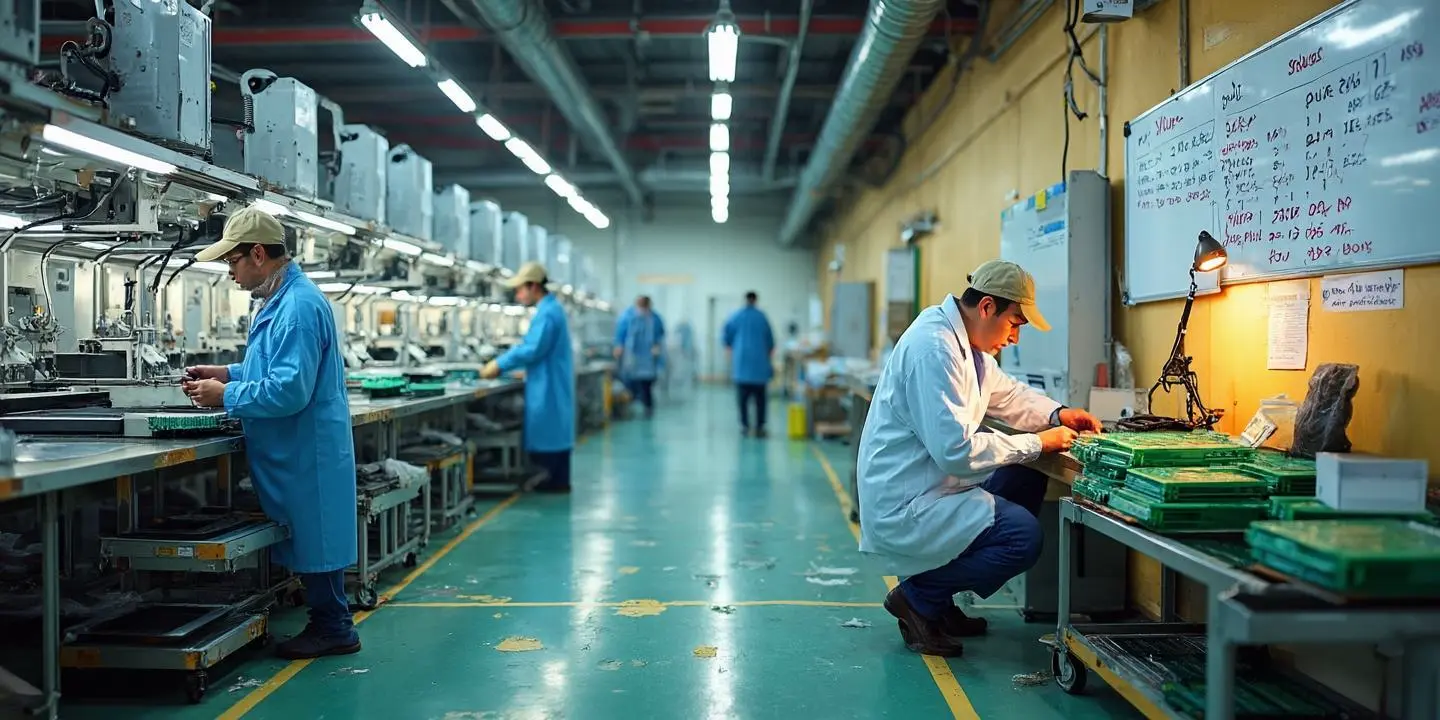
- Capacity expansion: Batam EMS providers are adding multi-storey production space — including PT Sat Nusapersada's announced 10-storey plant with automated storage — aimed at export PCBA volume and domestic TKDN demand from 2026.
- Government incentives: Indonesia's tax holiday regime grants 100% corporate income tax exemption for 5 to 20 years on new investments of at least IDR 500 billion, plus a 50% reduction for two additional years — a structure explicitly used to pull electronics investment onshore.
- Labor economics: Batam manufacturing labor typically runs roughly $300-450 per month all-in, versus roughly $950-1,100 for comparable Shenzhen line roles — a structural gap of 60%+ that compounds across every SMT shift.
- Logistics advantage: Batam sits under an hour by ferry from Singapore — giving Indonesia economics with same-day access to one of the world's densest electronics supply and airfreight ecosystems.
Why the Capacity Story Is Different From the Tariff Story
Most coverage of Indonesia manufacturing in 2026 has focused on tariffs: diversifying out of China to manage exposure and rules-of-origin scrutiny. That story is real, but it undersells what is happening on the factory floor. The new wave of Batam investment is about physical capacity — SMT lines, cleanroom space, test capacity, and trained operators — being added at a moment when AI hardware demand is stretching Shenzhen's EMS sector thin. Data center buildout, AI wearables, and edge devices are all competing for the same line time. When Shenzhen capacity tightens, quotes stretch and MOQs climb, and buyers start looking for the second shore.
Indonesia's incentive structure is designed to meet that demand. The tax holiday regime — 100% CIT exemption for 5-20 years on investments above IDR 500 billion, stepping down for smaller commitments — is one of the most aggressive in the region. Combined with Batam's free trade zone status, decades of electronics assembly heritage, and a young technical workforce, the economics now justify not just relocating final assembly but standing up genuine SMT and PCBA capacity.
Capacity Depth
Batam has four decades of electronics assembly heritage and is now adding multi-storey EMS campuses with automated storage and expanded SMT floors to serve export and domestic demand.
Labor Economics
All-in line labor at roughly $300-450 per month versus $950-1,100 in Shenzhen — a 60%+ structural gap that matters most in labor-intensive PCBA and box-build stages.
Logistics Position
Under an hour from Singapore by ferry — component sourcing, airfreight, and customer engineering visits all stay practical while production costs drop.
Policy Tailwind
Tax holidays up to 20 years, free trade zone status, and national strategic project designations signal a decade-long government commitment, not a cycle.
Why Dual-Shore Beats Single-Shore in 2026
For AI hardware startups, the most practical way to capture Indonesia economics is not to move — it is to split production across two regions. The market pattern is straightforward: qualify an NPI package in Shenzhen, where engineering depth and component supply are unmatched, then ramp volume in Batam, where labor economics and tariff positioning are stronger. The same product can live in both regions, giving you capacity overflow when one region tightens and a hedge against tariff or logistics shocks.
The critical insight most teams miss is that qualification transfers far better than they expect. The golden sample, boundary samples, ICT and FCT test fixtures, AOI inspection programs, and the DFM package all carry over between shores. A product qualified in Shenzhen does not need a new DFM cycle to ramp at a second-shore partner — the stackup, the stencil designs, the reflow profiles are the same documents. What does need re-qualification at the new site is narrower: local laminate and component supply sources, workmanship certification audits against the IPC class, and ESD program verification. Teams that understand this distinction move NPI packages between shores in weeks, not quarters.
— Ethan Yip, CTO at Illuminious"Startups assume a second site means a second NPI. It does not. The golden sample and test fixtures carry over — what gets re-qualified is the local supply chain and the workmanship audit. Done right, a second-site ramp is an extension of the first qualification, not a repeat of it."
How to Evaluate an Indonesia Electronics Contract Manufacturer
The surge in interest means buyer diligence matters more than ever — not every new line is a Class 3 line. Before committing volume to an Indonesia EMS partner, verify the fundamentals:
IPC Certification
Confirm current IPC-A-610 certification at the class your product requires — Class 3 workmanship is audited per site, not per company.
SMT Line Audit
Walk the floor: solder paste inspection, pick-and-place accuracy specs, reflow profile controls, and AOI coverage on every panel.
ESD and Cleanroom Controls
Check ESD program documentation, wrist-strap test logs, humidity controls, and cleanroom class certification for your product category.
Export Compliance
Verify free trade zone export documentation, rules-of-origin handling, and experience shipping to US distribution centers.
IP Protection
Review NDA enforcement, network segregation, and how golden samples and firmware are controlled between shifts and sites.
Dual-Shore Playbook
Ask how they transfer qualification between shores — a partner with a documented golden-sample and fixture-transfer process saves you a quarter.
What This Means for Hardware Startups
The 2026 Batam surge changes the calculus for early-stage hardware teams. Indonesia economics are no longer locked behind mega-OEM volumes, and the qualification-transfer playbook is mature. Teams that pursue this route need a qualified partner at each site — so the NPI is qualified once and ramped where the economics are best, with project management and fulfillment handling the logistics complexity that stops most startups from capturing the savings.
Run Both Shores, Not One
Indonesia's electronics manufacturing capacity is real, incentivized, and growing — and two-region PCBA is how some startups capture it without sacrificing Shenzhen's engineering depth or adding a second NPI cycle. Illuminious operates 8 SMT lines in our own factory in Shenzhen with IPC Class 3 workmanship, 72-hour DFM feedback, and US-based project management with US fulfillment.
Planning 2026 production? Read the Indonesia Electronics Manufacturing Guide and the hardware startup manufacturing costs guide for the full economics. Then talk to our NPI team.