Editor's note (2026-10): Illuminious runs no free trade zone site; we build in our own Shenzhen factory. Market facts below are third-party context.
A Batam Free Trade Zone (FTZ) manufacturing facility can deliver substantial cost advantages for US-bound electronics, enabling customers to reduce import tariffs by 15-25% compared to traditional China manufacturing. Located on Indonesia's strategically positioned Batam Island, such a facility operates under special economic zone benefits; the strongest ones keep equipment, processes, and quality systems identical to a mature plant elsewhere, giving customers a seamless "China Plus One" manufacturing strategy.
Key Details
- Tariff Savings: US customers save 15-25% on import duties by manufacturing in Batam FTZ versus China-based production.
- Identical Quality: A strong FTZ factory uses the same equipment, processes, and quality management systems as its Shenzhen counterpart.
- Seamless Transfer: Products can move from Shenzhen NPI/prototyping to FTZ mass production without requalification when the process documents carry over.
- FTZ Benefits: Batam's Free Trade Zone status provides duty exemptions, simplified customs, and streamlined export procedures.
Understanding Batam Free Trade Zone Advantages 🌴
Batam Island, part of Indonesia's Riau Islands province, operates as a designated Free Trade Zone under Indonesian government special economic zone policies. This status provides significant advantages for electronics manufacturing destined for export markets, particularly the United States.
Duty Optimization
15-25% tariff reduction on US-bound electronics compared to China origin, leveraging Indonesia's trade agreements and FTZ status.
Strategic Location
20 minutes from Singapore by ferry, providing access to world-class logistics infrastructure and regional supply chains.
Streamlined Customs
Simplified export procedures with reduced documentation, faster clearance times, and duty exemptions for imported components.
ASEAN Benefits
ASEAN trade agreements provide preferential access to Southeast Asian markets in addition to US exports.
Tariff Comparison: Batam vs China Manufacturing 💰
For US-bound electronics, country of origin significantly impacts import duty rates. The US-China trade landscape has introduced additional Section 301 tariffs on many Chinese-made electronics categories, while Indonesian-manufactured goods benefit from standard MFN (Most Favored Nation) rates.
- China Origin: Standard electronics tariffs (3-8%) plus Section 301 additional duties (7.5-25%), totaling 10.5-33% depending on product category
- Indonesian Origin: Standard MFN rates (0-5%) with no additional punitive tariffs, typically 0-5% total
- Net Savings: 15-25% reduction in total landed cost for US customers manufacturing in Batam versus China
— Angela Lee, COO at Illuminious"Tariff exposure on China-manufactured products is one of the top concerns we hear from US hardware companies. An FTZ route can cut that burden by 15-25%, but it adds a second site to qualify. We build in our own factory in Shenzhen and help customers weigh landed cost, schedule and risk before they choose. This isn't just about cost savings—it's about supply chain resilience and predictable landed costs."
Identical Quality: Shenzhen Standards at an FTZ Site 🎯
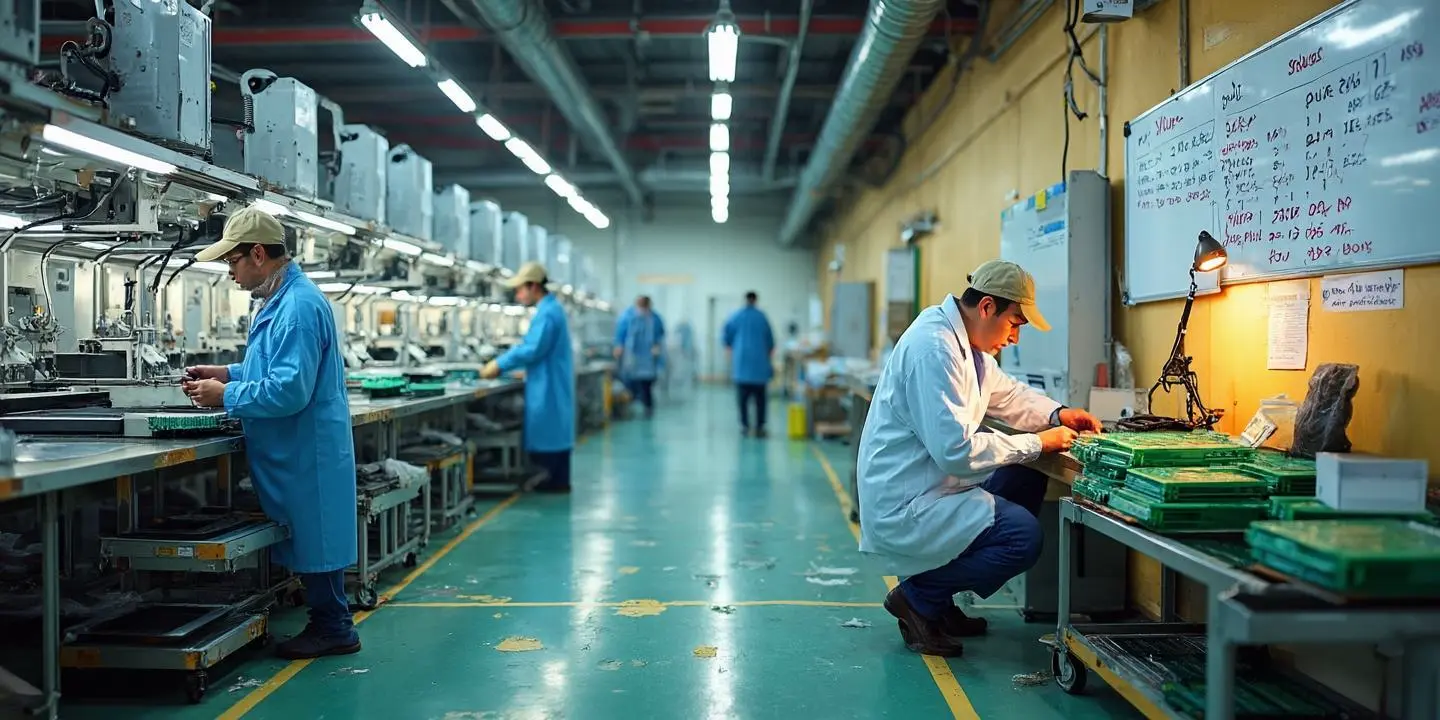
A common concern when diversifying manufacturing locations is maintaining consistent quality. The proven answer is to replicate a Shenzhen factory's equipment, processes, and quality management systems exactly at the FTZ site.
Same Equipment
Identical SMT lines, AOI systems, and test equipment from same manufacturers and model series.
Same Processes
Standard work instructions, process controls, and manufacturing procedures replicated exactly.
Same Quality System
ISO 9001-certified quality management system with identical inspection criteria and documentation.
Trained Personnel
FTZ technicians trained in Shenzhen with certification requirements and ongoing skill development.
Same Metrics
First-pass yield, defect rates, and quality KPIs tracked identically across both facilities.
Cross-Audit Program
Regular quality audits between the Shenzhen and FTZ sites ensure continuous alignment and improvement.
Seamless NPI to Mass Production Transfer 🔄
A dual-factory strategy lets companies leverage Shenzhen's rapid prototyping and NPI capabilities while transitioning to an FTZ site for cost-optimized mass production—without product requalification or quality risks when it is done well.
- Shenzhen Prototyping: Fast-turn PCB assembly, functional prototypes, design validation, and DFM optimization
- Process Documentation: Complete manufacturing files, test procedures, and quality plans transferred digitally
- Batam Ramp-Up: Production line setup using identical equipment, technician training, and pilot run validation
- Mass Production: Full-scale manufacturing in Batam with same quality standards and customer visibility
NPI in Shenzhen
72-hour prototype turnaround, engineering support, DFM feedback, and design iteration.
Digital Transfer
Complete BOM, Gerber, and assembly files transferred securely to the FTZ production team.
Technician Training
Shenzhen-trained FTZ staff ensure process knowledge and quality standards transfer seamlessly.
Production Ramp
Pilot run validation followed by scalable mass production with identical quality metrics.
Real Customer Impact: $120K First-Year Savings 📈
A representative IoT customer case study demonstrates the tangible financial benefits of Batam FTZ manufacturing:
- Product: IoT sensor device with annual volume of 50,000 units, average unit value $45
- China Scenario: 25% total tariff rate (including Section 301) = $562,500 annual duty cost
- Batam Scenario: 3% MFN tariff rate = $67,500 annual duty cost
- Net Savings: $495,000 annual tariff reduction; after accounting for slightly higher logistics costs, net first-year savings of approximately $120,000
In this representative case, quality stayed at the level the team expected from Shenzhen while tariff costs dropped by over 20%. For a hardware startup watching every dollar, about $120K in first-year savings directly extends the runway and improves unit economics.
Batam FTZ Infrastructure and Capabilities 🏭
A well-equipped Batam FTZ facility serves export-focused electronics manufacturing with comprehensive capabilities:
SMT Assembly
High-speed surface mount technology lines for PCB assembly with 0201 component capability.
AOI Inspection
Automated optical inspection systems ensure solder joint quality and component placement accuracy.
Functional Testing
Custom test fixtures and in-circuit testing validate product functionality before shipment.
Box Build
Complete product assembly including enclosure integration, cable assembly, and packaging.
Environmental Testing
Temperature, humidity, and vibration testing chambers for product validation.
Quality Lab
On-site quality laboratory for incoming inspection, failure analysis, and continuous improvement.
Getting Started: FTZ Route or Shenzhen Build 🚀
For companies comparing an FTZ route with building in our own factory in Shenzhen, Illuminious offers a structured engagement process:
- Initial Consultation: Review product requirements, volume projections, and tariff impact analysis
- DFM Review: Shenzhen engineering team provides design for manufacturability feedback
- Prototype Phase: Rapid prototyping in Shenzhen to validate design and establish baseline quality
- Production Planning: Joint planning for the volume ramp including timeline, tooling, and quality validation
- Pilot Run: Small-batch production in Shenzhen to validate the process and quality
- Mass Production: Full-scale manufacturing with ongoing quality monitoring and continuous improvement
Optimize Your Tariff Strategy with Batam FTZ Manufacturing
A Batam Free Trade Zone facility can give US-bound electronics manufacturers a strategic advantage: 15-25% tariff savings without compromising quality or capability. Illuminious builds in its own factory in Shenzhen, after initial development in the U.S., and helps hardware companies of all sizes compare that route with an FTZ option before they commit.
Ready to explore tariff optimization for your product? Contact our team today to discuss how to reduce your landed costs and improve supply chain resilience.