The global electronics manufacturing services market is projected to reach $663 billion in 2026, with hybrid and turnkey manufacturing models growing at 7.02% CAGR — the fastest-growing segment in the industry. After decades of fragmented supply chains where hardware brands managed separate PCBA, custom enclosure, and box build assembly vendors across multiple countries, the market is decisively shifting toward single-source integrated manufacturing. Brands that once accepted 3+ logistics handoffs as the cost of doing business are now demanding unified production under one roof — and manufacturers without cross-pillar capabilities are losing contracts.
Key Details
- Market shift to turnkey: The EMS market grows from $648 billion in 2025 to $690 billion in 2026 at 6.8% CAGR, but hybrid and turnkey models outpace traditional contract manufacturing at 7.02% CAGR — the fastest business model shift in a decade according to Mordor Intelligence.
- Cost of fragmentation: Managing separate PCBA, enclosure, and assembly vendors adds $8-15 per unit in logistics, rework, and quality handoff costs. For a 50,000-unit consumer electronics run, that is $400,000-750,000 in avoidable overhead.
- Lead time reduction: Integrated manufacturing reduces total NPI lead time by 40-60% by eliminating inter-vendor alignment delays, reducing shipping steps, and enabling concurrent engineering during DFM review.
- Quality consolidation: Single-source manufacturing enables unified quality management — ISO 9001, IATF 16949, ISO 13485 — across both electronics and mechanical production. No finger-pointing between vendors when issues arise.
PCBA + Injection Molding Integration
Overmolded enclosures applied directly on populated boards eliminate housing gaps and improve drop resistance. Insert-molded threaded inserts provide precision PCBA mounting points built into the enclosure tool. Integrated snap-fit features replace screws entirely, cutting assembly time by 30%. This level of integration requires both capabilities under one DFM review — something fragmented vendor networks cannot achieve.
PCBA + Die Casting Integration
Aluminum die-cast housings with integrated EMI shielding eliminate separate shielding cans, saving $0.80-2.50 per unit. Thermal management fins cast directly into the enclosure replace aftermarket heatsinks. Precision-machined mounting surfaces achieve ±0.05mm flatness for PCBA contact — critical for thermal transfer in high-power devices.
PCBA + Sheet Metal Integration
Laser-cut sheet metal enclosures with stamped airflow vents, CNC press brake formed panels, and integrated cable management features replace multi-part assemblies. EMI gasket channels formed during stamping eliminate secondary machining. The result: fewer parts, tighter tolerances, and faster assembly.
Box Build: Everything in One Line
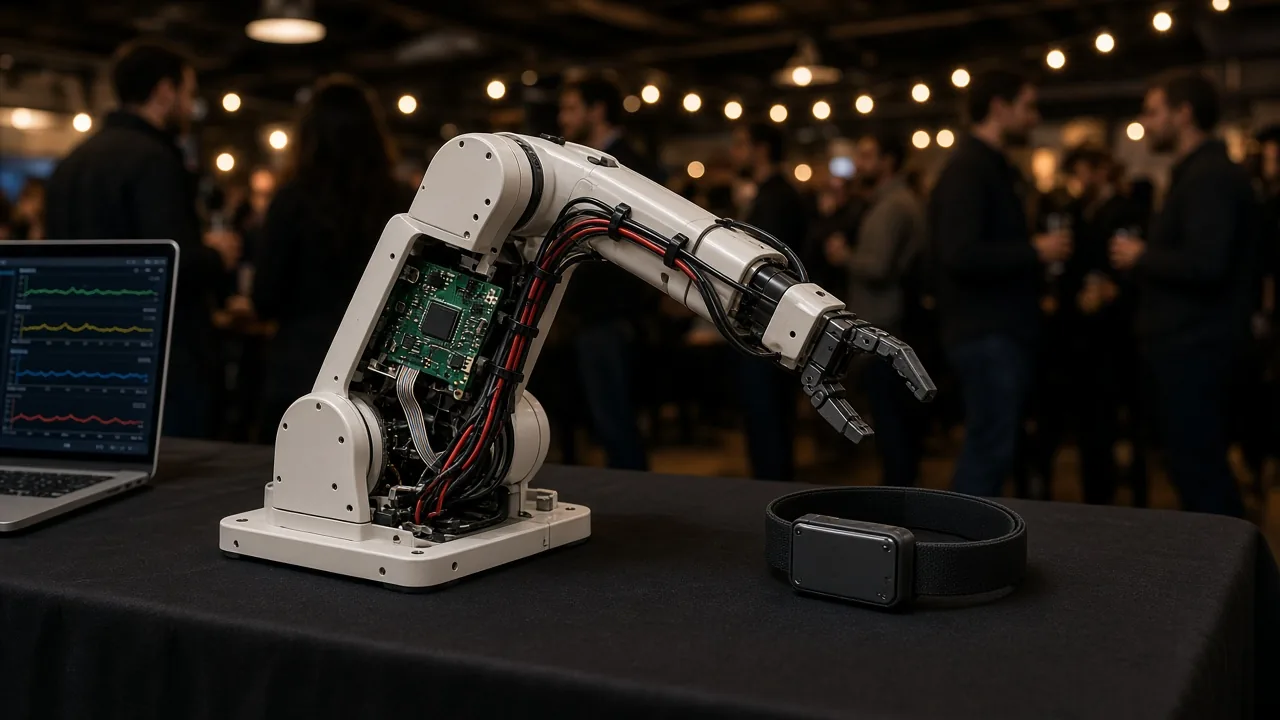
Full box build assembly combines PCBA + custom enclosure + cable harness + firmware flashing + functional test + packaging in one continuous production flow. No shipping between facilities. No rework from transit damage. No miscommunication between vendors about revision changes. One PM, one quality system, one set of documentation.
40-60% Faster Lead Times
Concurrent DFM review of electronics and mechanical design eliminates sequential vendor approval cycles that typically add 4-8 weeks to NPI timelines
$8-15 Unit Cost Savings
Eliminating inter-vendor logistics, rework at handoff boundaries, and duplicate quality inspections captures savings that drop directly to the bottom line
Unified Quality Management
One ISO 9001 / IATF 16949 / ISO 13485 quality system spanning PCBA and mechanical — root cause analysis instead of vendor finger-pointing
Concurrent Engineering
Mechanical and electrical DFM reviews happen simultaneously during NPI, catching integration issues before tooling investment rather than after
Single Point of Contact
One dedicated US-based project manager coordinates all manufacturing milestones — no more juggling 5+ vendor relationships across time zones
No MOQ for Startups
The Startup Bridge Program eliminates minimum order quantities, making integrated manufacturing accessible from prototype through volume production
— Ethan Yip, CTO at Illuminious"The fragmented manufacturing model is collapsing under its own weight. When a hardware brand has to coordinate a PCBA vendor in Shenzhen, an injection molder in Dongguan, and a box build partner in another province, they are spending more time managing logistics than improving their product. Our integrated NPI process reviews the electronics and mechanical design at the same table — literally — during DFM, EVT, DVT, PVT, and golden sample phases. That concurrent review catches integration failures that sequential vendors miss until production, when fixes cost 100x more."
The market data supports what hardware teams already feel. The global electronic contract manufacturing and design services market reaches $879 billion in 2026 and is projected to hit $1.85 trillion by 2033 at 11.2% CAGR, according to Coherent Market Insights. But within that growth, the share captured by integrated turnkey providers is expanding fastest. Brands are outsourcing not just assembly but entire manufacturing operations — from NPI engineering through US fulfillment — to partners who can handle every step without logistics friction.
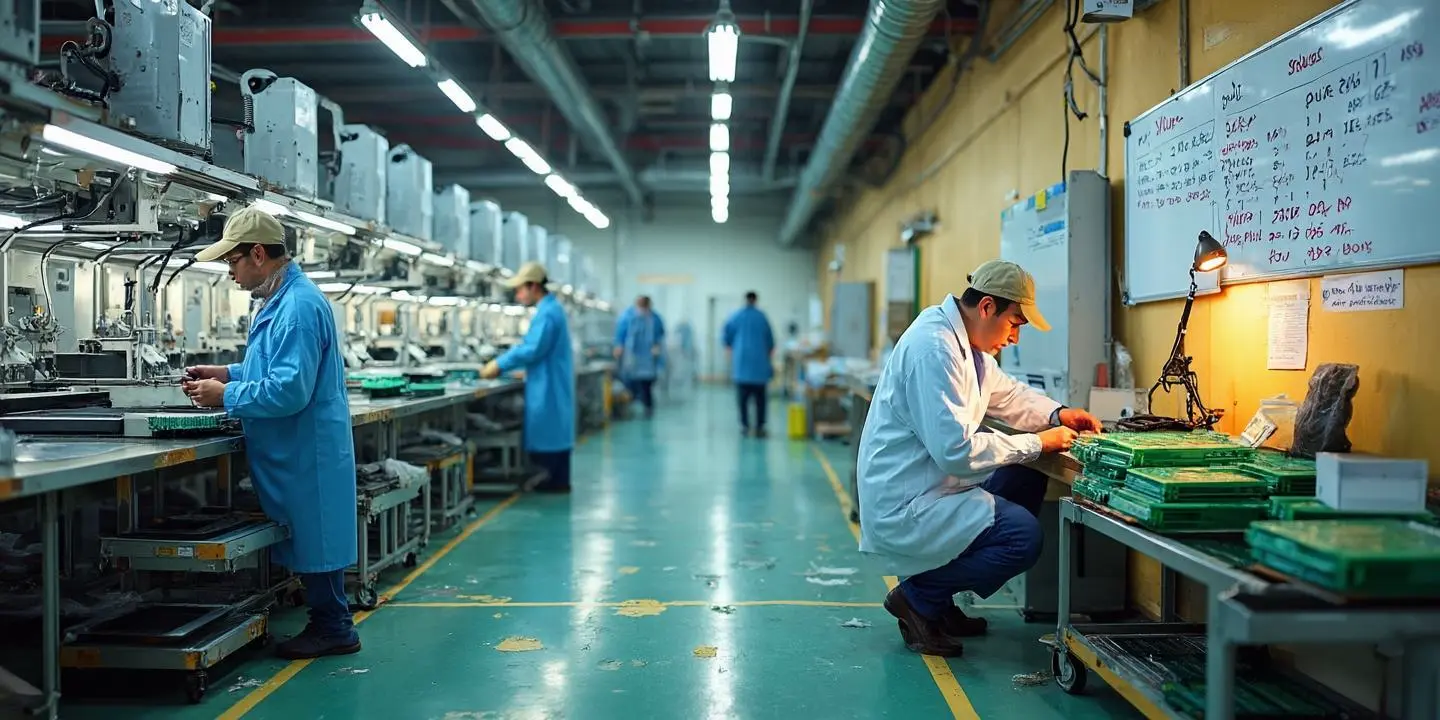
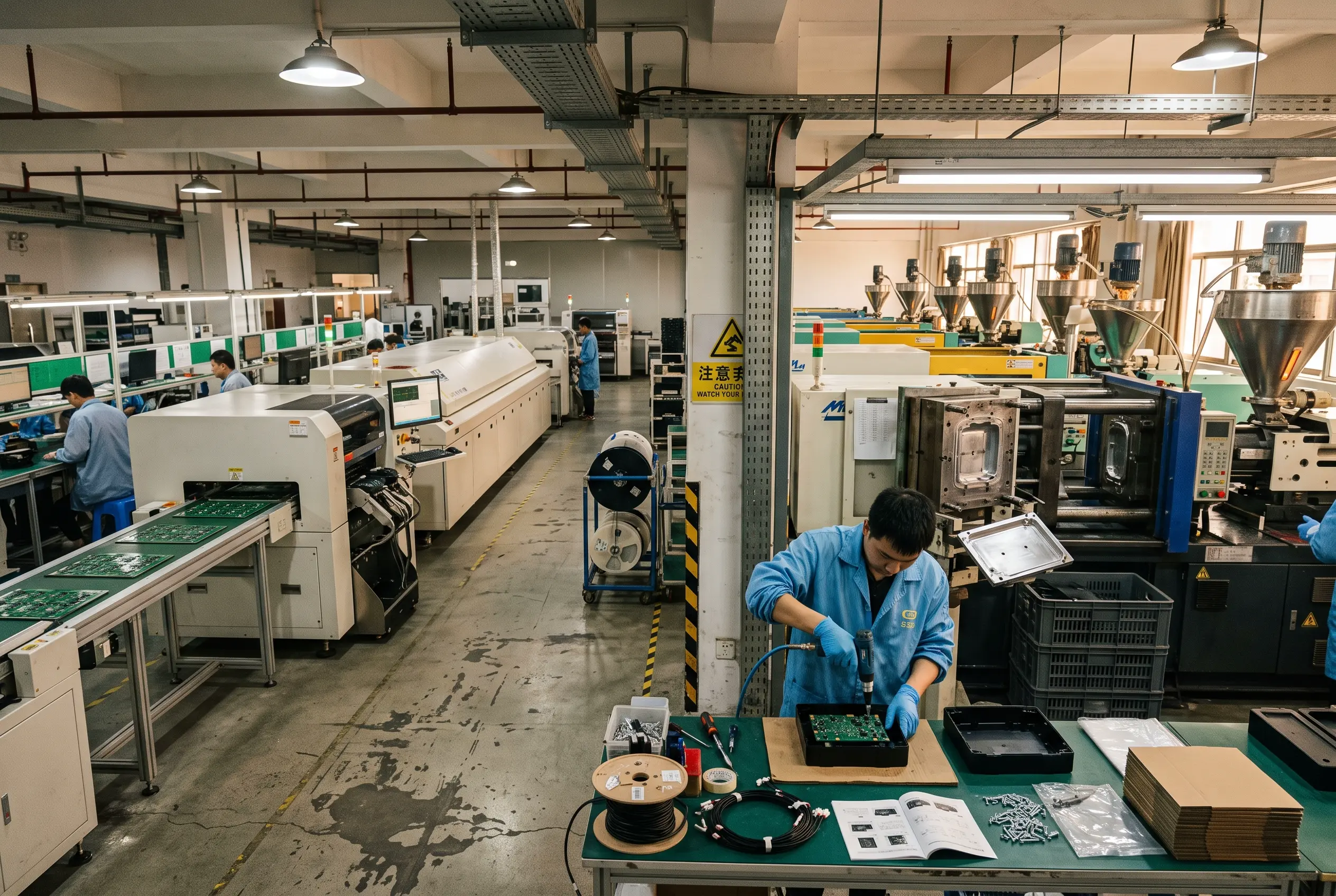
Illuminious addresses this shift through full-spectrum capabilities under one quality management system. Eight SMT lines handle PCBA from 01005 micro-components through large-board assembly. Injection molding presses ranging 50-1,000 tons produce custom plastic enclosures with overmolding, insert molding, and two-shot capabilities. CNC machining centers in 3-axis, 4-axis, and 5-axis configurations deliver precision metal components. Die casting machines from 150-3,000 tons produce aluminum and zinc housings with integrated thermal features. Sheet metal fabrication covers laser cutting, stamping, and press brake forming. All of this feeds into box build assembly lines where finished products are tested, packaged, and shipped.
Integrated Manufacturing Is No Longer Optional
The data is unmistakable: hybrid and turnkey EMS models are the fastest-growing segment in a $663 billion market. Hardware brands that continue with fragmented vendor networks pay 40-60% longer lead times, $8-15 more per unit, and carry significantly higher quality risk. The 2026 standard is clear — one manufacturing partner, one quality system, one project manager, end-to-end accountability.
Ready to consolidate your manufacturing? Get an integrated DFM review for your product.